

NCLEX-RN Maternal Electronic Fetal Monitoring (EFM) Workbook: 40 Strip Case Studies
Maternal electronic fetal monitoring for the Next-Gen NCLEX-RN — every topic with its discriminating cues and mechanism, its closest look-alike, the assessment, priority, action and reassessment logic, the red flags, an original worked case, and the explicit exceptions.
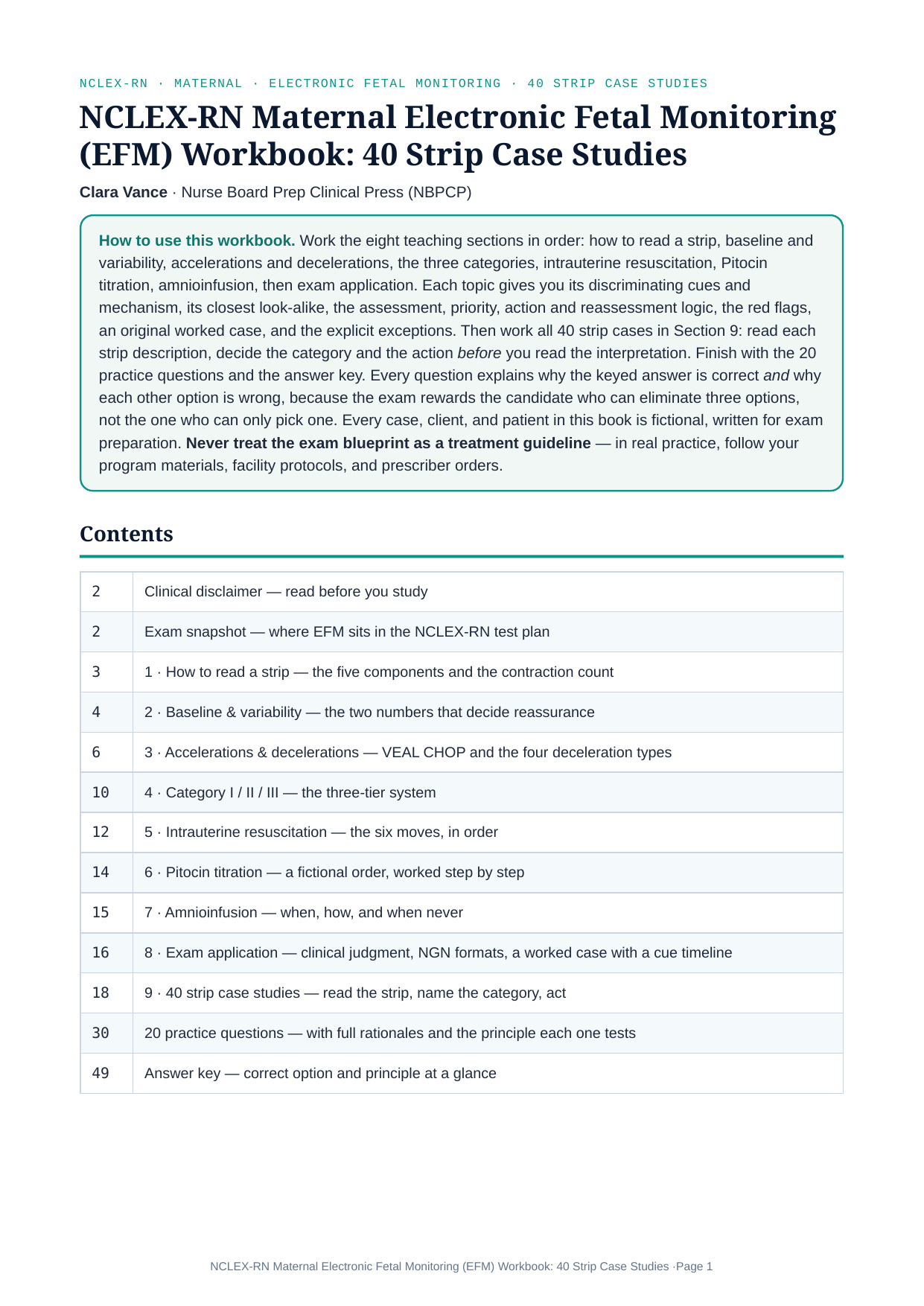
Inside:
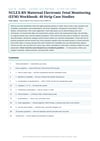
- How to read a strip: the five components in order — baseline, variability, accelerations, decelerations, contractions — and the 5-in-10-minutes rule
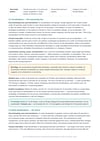
- Baseline & variability: normal 110–160 bpm, tachycardia and bradycardia, the four variability bands (absent, minimal 5 or fewer, moderate 6–25, marked over 25), the sleep-cycle and medicine exceptions
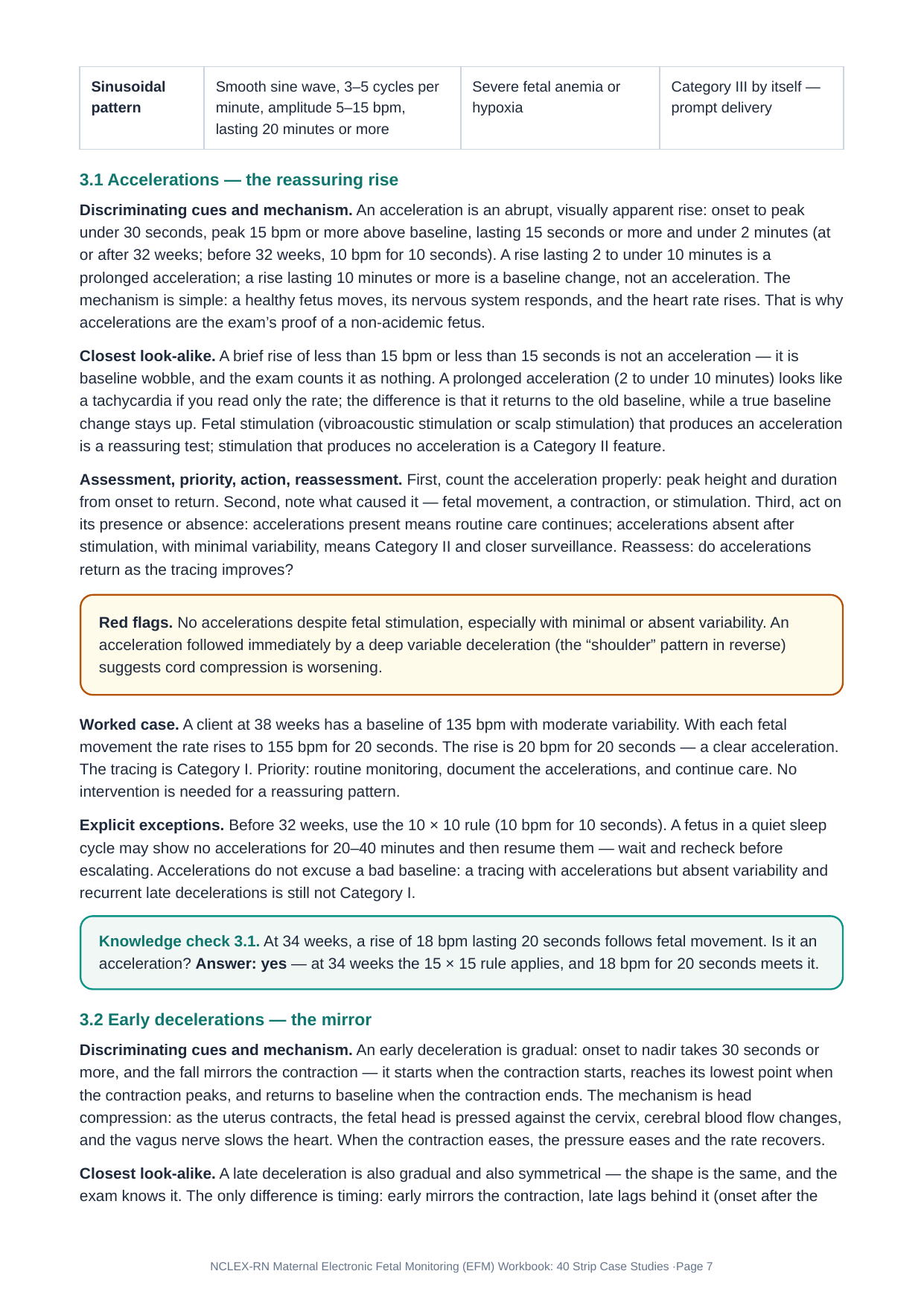
- Accelerations & decelerations: VEAL CHOP, the 15 x 15 acceleration rule (10 x 10 before 32 weeks), early vs. late vs. variable by timing, prolonged decelerations, the sinusoidal pattern
- Category I / II / III: the three-tier checklist — Category I routine, Category II evaluate + intervene + watch, Category III prompt delivery
- Intrauterine resuscitation: the six moves in order (lateral position, fluids 500–1,000 mL over 20 minutes, oxygen 10 L/min, stop or reduce oxytocin, tocolytic for tachysystole, amnioinfusion for recurrent deep variables), recheck in 15–20 minutes
- Pitocin titration: a fictional order worked step by step with full givens and a reverse-check (30 units in 500 mL = 60 milliunits/mL); never increase against a nonreassuring tracing
- Amnioinfusion: 500 mL warmed fluid over 30 minutes, then 200 mL/hr, through an intrauterine pressure catheter; never with a prior caesarean
- Exam application: NCJMM, NGN formats, a worked case with a dated cue timeline and answer-to-cue crosswalk
- 40 strip case studies: each with a strip description, interpretation, category, action, and rationale — verified count 40/40
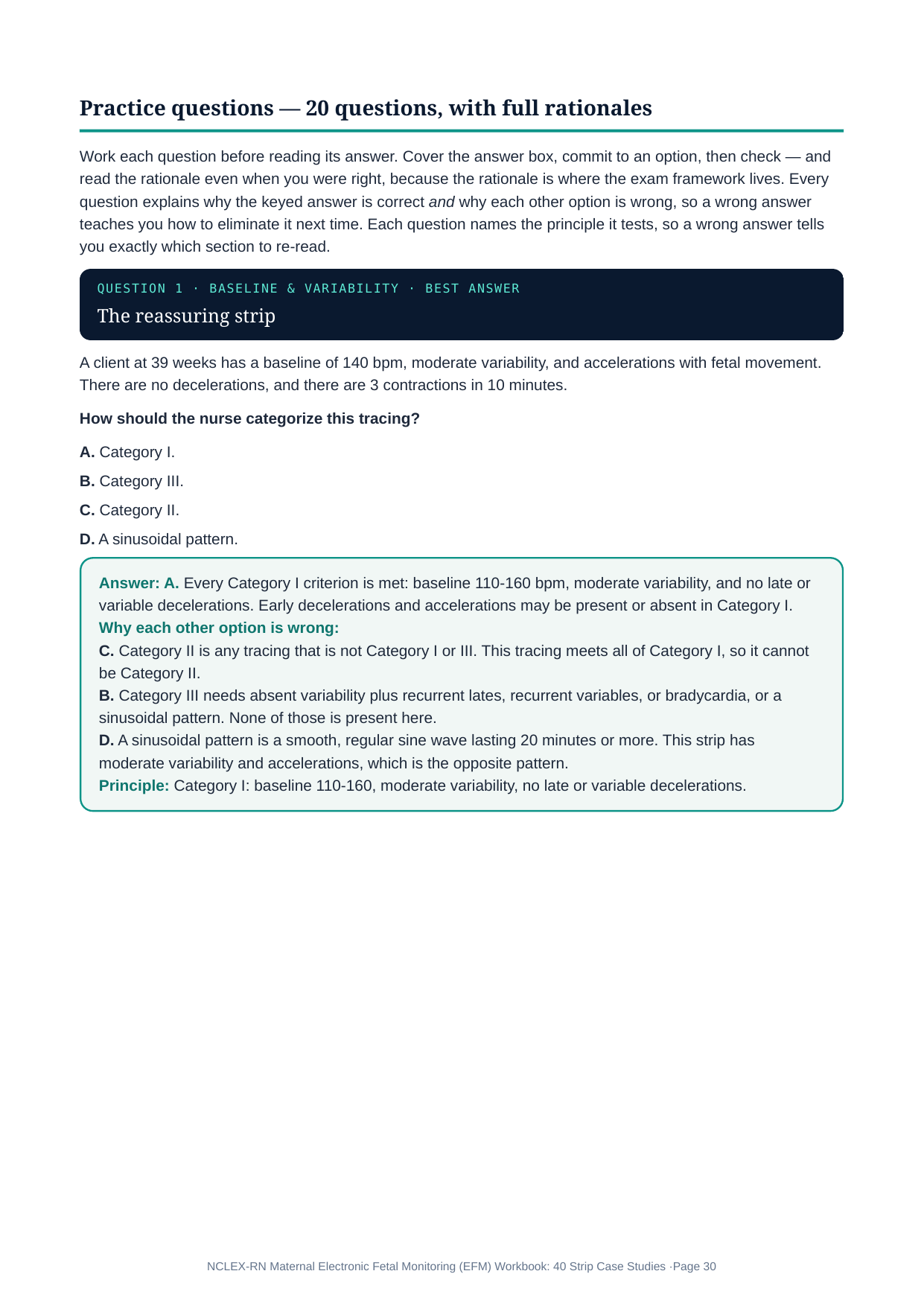
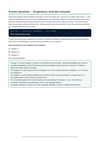
- 20 practice questions with full rationales — why the keyed answer is correct AND why each other option is wrong — plus an answer key and glossary
No real medicine doses are asserted in this book — the one infusion calculation uses a clearly labelled fictional order for teaching only, and the resuscitation measures are the verified ACOG teaching values, always qualified as ordered. Original teaching cases written for exam practice. This guide is not affiliated with NCSBN and does not guarantee a pass. If you find an error, a corrected version will be sent free.