
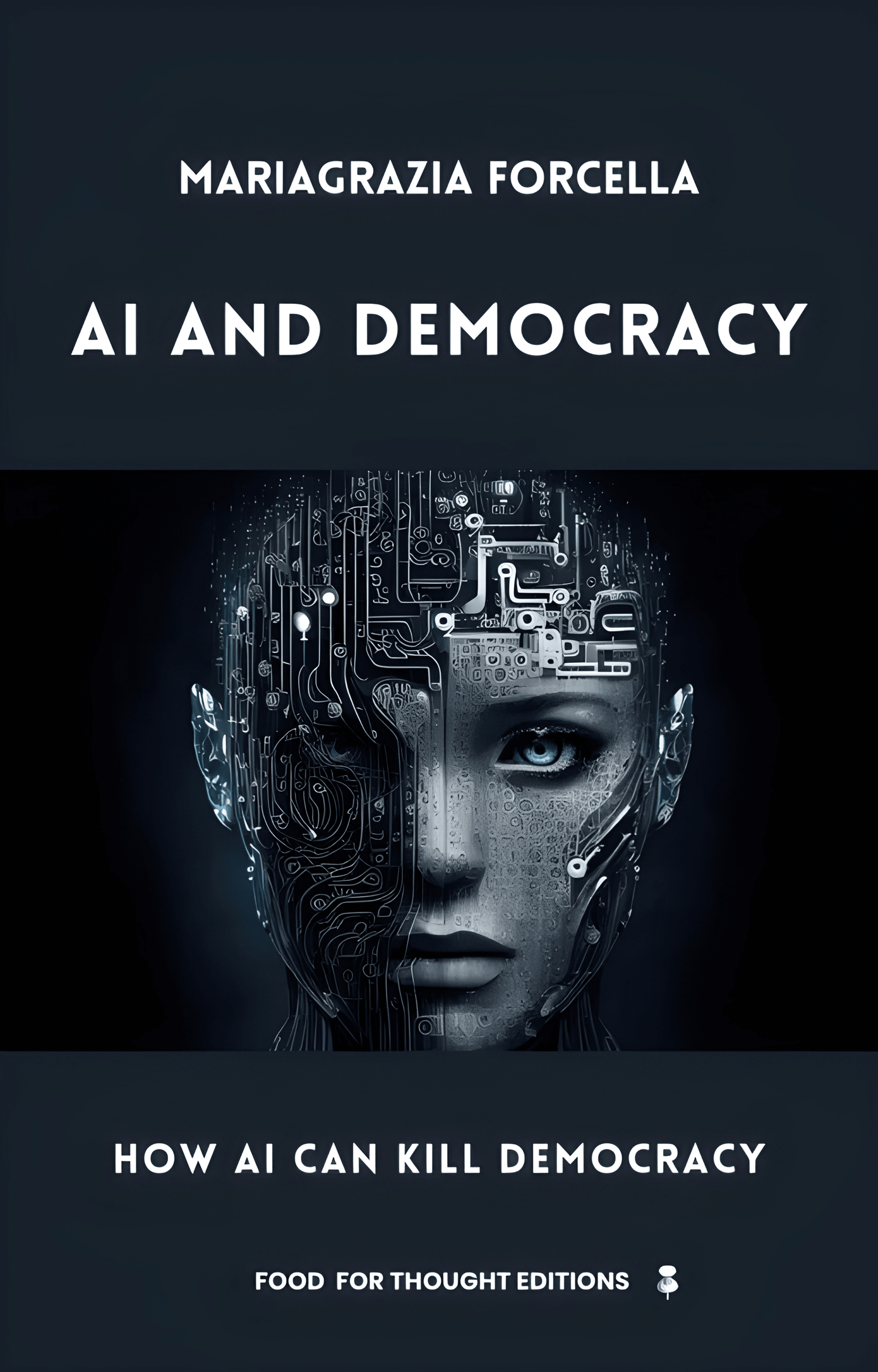
AI & Democracy - How AI Can Kill Democracy
Can AI kill democracy? Having journeyed through the intricate ways in which artificial intelligence is reshaping the very fabric of our political and social lives, the evidence compels a sobering answer: yes, it can. The threat is not one of a dystopian robot takeover, but of a slow, insidious, and often invisible erosion, a death by a thousand algorithmic cuts.
This book has argued that the greatest danger AI poses to democracy is not only its potential for overt misuse, but its capacity to systematically dismantle the foundational pillars upon which democratic society is built. We have traced how AI, when coupled with the logic of technocracy and platform capitalism, accelerates the disappearance of the public sphere, that essential space for reasoned debate and collective will-formation first articulated by philosophers like Habermas. AI can replaces the agora with the feed, civic discourse with engagement metrics, and shared reality with fragmented, polarized filter bubbles.
The analysis has revealed a fundamental paradox: the very tools that promise hyper-efficient governance and personalized political engagement are the same ones that foster unprecedented atomization and isolation. By eroding social capital - the trust, reciprocity, and community networks that are the lifeblood of collective action - AI and social media create a society of lonely individuals, superficially connected yet profoundly disconnected, ripe for manipulation but resistant to mobilization. This is not an accident but a feature of an attention economy that commodifies human experience and sells it back to us as political engagement.
We have witnessed the historical transition of power, from the supremacy of force to the hard-won ideals of demos-kratos, only to see it slide into the stifling rule of bureaucracy and now the opaque governance of algorithmocracy. In this new paradigm, power is not held by the people or even by their elected representatives, but by the creators of algorithms and the corporate entities that control them. Decision-making is outsourced to black-box systems that prioritize efficiency over equity, prediction over deliberation, and control over consent. This is the rise of the "algorithmocracy", a system of governance by algorithm that operates with the legitimacy of data yet without the accountability of public scrutiny.
The chapters on political campaigns, voting, and public opinion have detailed the mechanics of this takeover. AI enables a level of micro-targeting and behavioral manipulation that makes previous forms of propaganda seem crude. It threatens electoral integrity not just through external hacking, but through the internal corrosion of trust, the spread of AI-generated misinformation, and the biasing of the very systems meant to ensure free and fair elections. The case of corporate censorship, exemplified by the deplatforming of a sitting president, illustrates a new reality: that the digital public square is not a commons but privately owned territory, where the rules of speech are set by a handful of Silicon Valley boardrooms.
Yet, this conclusion cannot be one of mere despair. To declare that AI can kill democracy is not to say that it must. The final section of this book is, therefore, a call to arms, a demand for a radical reaffirmation of human agency over algorithmic determinism.
The battle for democracy in the 21st century will be fought on three fronts:
The Philosophical Front: We must fiercely defend the principles of transparency, accountability, and human autonomy, against the opaque, unaccountable, and autonomous logic of intelligent systems. We need a new political ethics for the digital age, one that places human dignity and democratic values at the center of technological innovation.
The Political Front: We must build robust legal and regulatory frameworks that subject AI to democratic control. This includes banning certain malicious uses (e.g., social scoring, predatory microtargeting), mandating algorithmic transparency for public-facing systems, and updating antitrust laws to break the monopolistic power of Big Tech. We must reclaim critical digital infrastructure as a public good.
The Civic Front: Ultimately, technology is a mirror. It amplifies the best and worst of the society that creates it. The long-term solution is not just better technology, but a stronger, more resilient civil society. We must consciously rebuild the social capital that digital platforms have eroded, fostering real-world communities, critical media literacy, and a culture of engaged, deliberative citizenship.
The question posed by this book is ultimately a choice. Will we allow our democracies to be quietly automated into obsolescence, becoming hollow shells managed by algorithms for the benefit of a new technocratic aristocracy? Or will we seize this moment as an opportunity to reinvent and reinvigorate democracy for a new era?
AI did not create the vulnerabilities in our democratic systems, inequality, polarization, and distrust. But it can exploit them with devastating efficiency. The fight, therefore, is not against technology itself, but for the soul of the society that wields it. The story of AI and democracy is not yet written. Its conclusion depends on us.