
Norwegian.HO 23andme format
Norwegians are a North Germanic people native to Norway, shaped by a long history of life in Scandinavia’s rugged landscapes and along its coasts. From the Late Iron Age onward, their ancestors were central participants in the Viking Age, when Norse seafarers from what is now Norway explored, traded, raided, and settled across the North Atlantic. Norwegian Vikings played a major role in the settlement of Iceland, the Faroe Islands, and parts of Greenland, and this connection remains visible today in shared culture, surnames, and striking linguistic similarity between Norwegian and Icelandic.
The Norwegian language belongs to the North Germanic branch of the Indo-European language family, alongside Swedish, Danish, Icelandic, and Faroese. Modern Norwegian exists in two written standards: Bokmål, historically influenced by Danish due to centuries of political union, and Nynorsk, which was developed in the 19th century from rural Norwegian dialects. Spoken Norwegian consists of a wide range of dialects, many of which preserve archaic features that help linguists reconstruct Old Norse, the language spoken by the Vikings and still closely mirrored in modern Icelandic.
Norway has also produced several influential inventors whose work had a global impact. Ole Kirk Christiansen built the LEGO company in Norway’s cultural sphere before it became a global phenomenon, revolutionizing modular toy design. Svend Foyn, a Norwegian whaler and inventor in the 19th century, developed the modern harpoon cannon, which transformed industrial whaling. Thor Bjørklund, a Norwegian carpenter, invented the cheese slicer in 1925—now a household staple across much of the world.
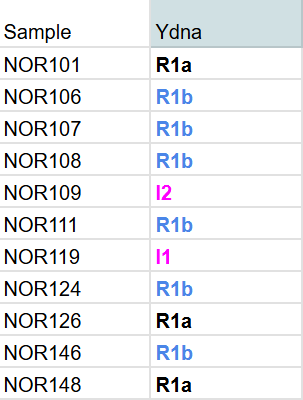
For this video, I’ve gathered the genomes of 11 Norwegians from the Human Origins dataset. I used admixtools 1, admixtools 2, and my Trait Predictor to analyze these samples.