

U.S. Birdwatching List – 20 Common Birds Kids Can Find in North America
U.S. Birdwatching List – 20 Common Birds Kids Can Find in North America
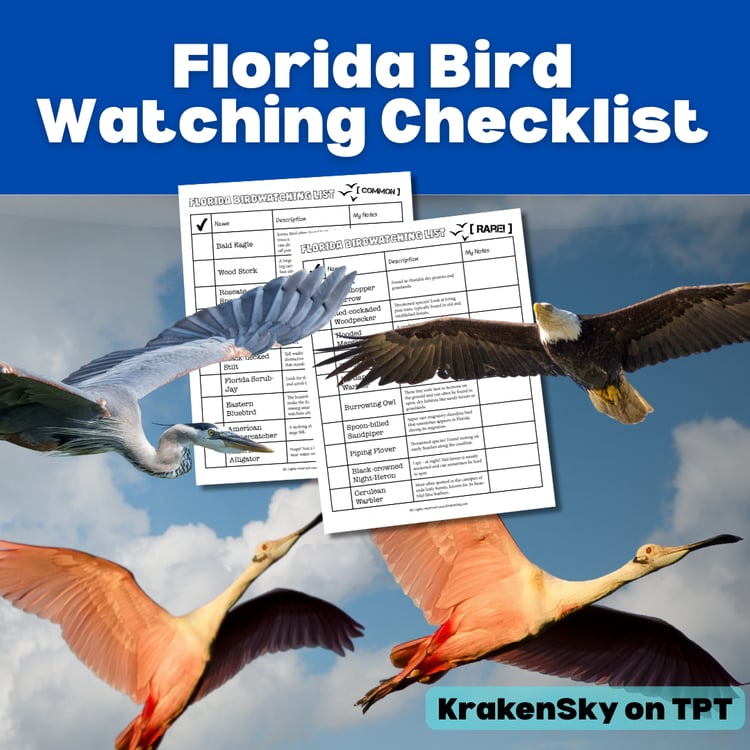
Help your students fall in love with nature with this kid-friendly Birdwatching List, featuring 20 of the most common North American birds—each with simple descriptions and space for student observations. This no-prep printable is perfect for science centers, nature walks, classroom ecology units, early-finisher activities, homeschooling, and outdoor learning.
Students will discover familiar species such as the American Robin, Northern Cardinal, Blue Jay, Mourning Dove, Goldfinch, Chickadee, Great Blue Heron, Bald Eagle, and more, all clearly listed with beginner-friendly descriptions from the printable itself.
This handout encourages kids to observe, record, compare, and reflect—essential science practices that build curiosity and support NGSS-aligned learning. Teachers love using this resource during spring migration, Earth Day, ecosystem lessons, field trips, or any time students explore the outdoors.
What’s Included
- Printable 20-bird observation checklist with a “My Notes” column for sketching or reflection
- Easy-to-read descriptions of each bird to support beginning scientists
- Great for grades K–6, homeschool, nature clubs, or science enrichment
Skills & Learning Goals
- Observation skills and data collection
- Understanding animal traits and behaviors
- Comparing similarities and differences across species
- Building science vocabulary
- Developing appreciation for local wildlife
Perfect For
- Life science lessons
- NGSS-aligned activities
- Earth Day & outdoor learning
- Sub plans and early finishers
- Student science journals
NGSS Alignment
Grades K–2
K-LS1-1: Students use observation to describe what animals (birds) need to survive—food, habitat, and environmental patterns.
2-LS4-1: Students make observations of plants and animals to compare their diversity in different habitats. (Birdwatching supports comparing common species.)
Grades 3–5
3-LS3-1 / 3-LS3-2: Students notice traits (color, size, song, behaviors) and recognize how traits help identify species.
3-LS4-3: Students observe that some organisms thrive in certain habitats (ex: wetlands vs. backyards).
4-LS1-1: Students examine bird structures (beaks, wings, legs) and infer how they help birds survive.
5-LS2-1: Supports understanding food webs—birds as consumers, decomposers (e.g., Turkey Vulture)
CCSS ELA Alignment
Reading Informational Text
- RI.1.1, RI.2.1, RI.3.1: Students ask and answer questions about key details from the descriptions on the checklist.
- RI.4.2 & RI.4.3: Students summarize and explain bird characteristics using structured information from the table.
Writing & Science Journaling
- W.2.8 / W.3.8: Students record observations and gather information from print sources.
- W.4.7 / W.5.7: Students conduct short research projects using real-world observation data (bird sightings).
Speaking & Listening
- SL.K–5.4: Students share observations with partners or groups, describing their findings clearly.