



How to Create Your First Restaurant Business Plan: Step-by-Step for Complete Beginners
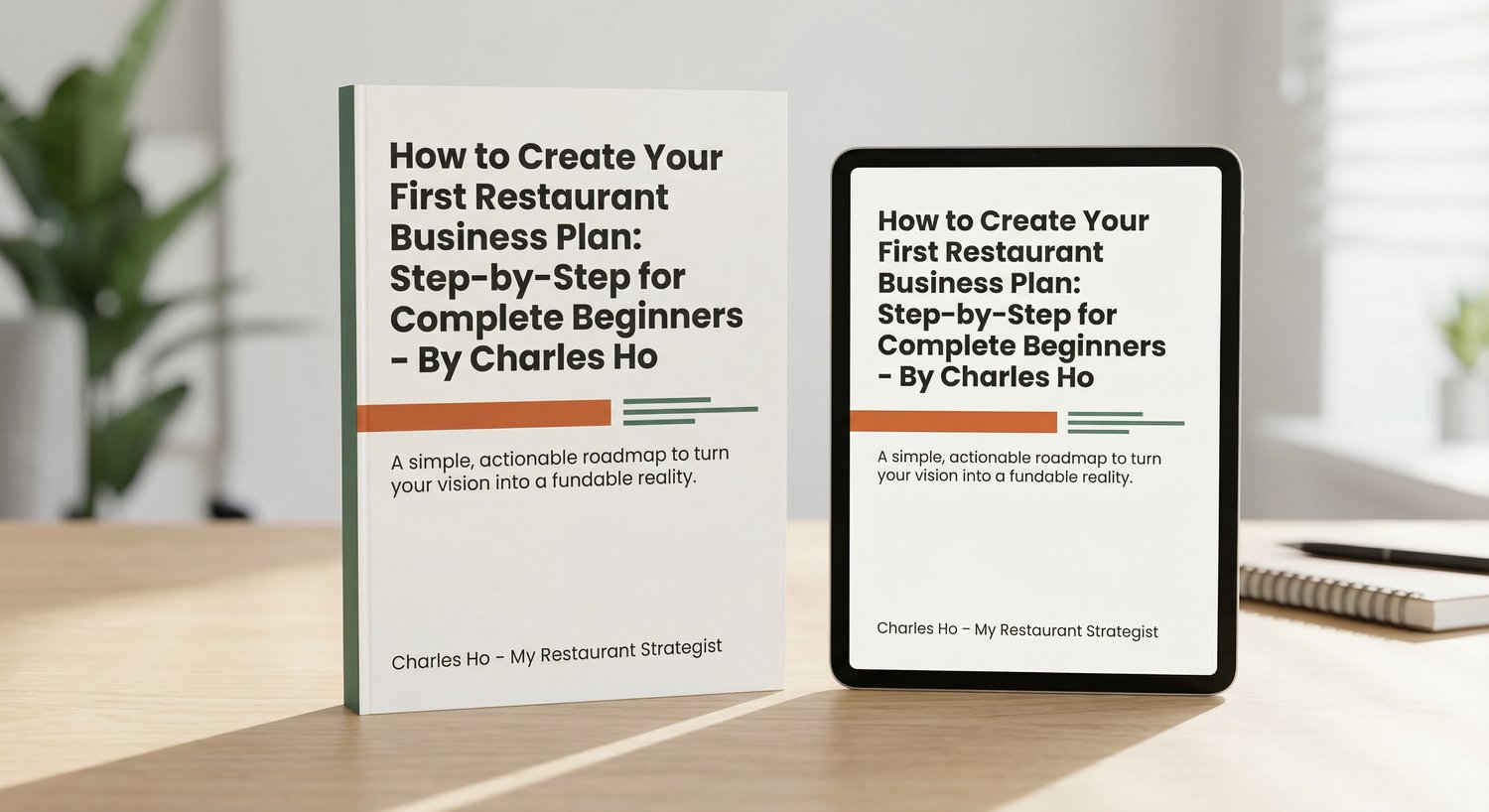
How to Create Your First Restaurant Business Plan: Step-by-Step for Complete Beginners – By Charles Ho
Turn Your Restaurant Idea into a Fundable, Realistic, and Profitable Plan
Opening a restaurant without a business plan is like signing a lease blindfolded.
This guide shows you exactly how to build a serious, investor-ready restaurant business plan—even if you’ve never written one before and hate spreadsheets.
If you’re dreaming of launching a café, bar, bistro, food truck, or ghost kitchen, this step-by-step guide walks you through every section, every number, and every decision so you don’t become part of the 60% of new restaurants that fail in the first year due to poor planning.
This isn’t theory. It’s a practical blueprint you can follow from blank page to finished business plan.
Who This Guide Is For
This guide is perfect if you are:
- A complete beginner who’s never written a business plan before
- An aspiring restaurant owner who wants to launch in the next 6–24 months
- A first-time operator who wants to secure funding, impress landlords, or de‑risk a major life decision
- A chef, manager, or hospitality pro who knows operations but needs help with the business side
- A cautious planner who refuses to gamble savings or investor money on guesswork
This guide is not for:
- People who think “passion and good food” are enough without numbers or research
- Anyone looking for a quick template to copy-paste and wing it with unrealistic projections
- Franchise buyers who will use a fully provided corporate plan
What You’ll Learn (Step-by-Step Breakdown)
This guide is structured to walk you from big-picture vision down to detailed numbers and investor-ready documents.
You’ll learn how to:
1. Understand What a Restaurant Business Plan Really Is (and Why It Matters)
- What a proper restaurant business plan includes—and what investors actually look for
- How formal planning increases your odds of success and funding
- The four true functions of your plan: attract capital, guide operations, anticipate problems, and measure progress
You’ll see how skipping this step destroys restaurants that otherwise had good food and good intentions.
2. Define a Clear, Compelling Restaurant Concept That Actually Makes Sense
In Chapter 2: Laying the Foundation – Your Restaurant Concept, you’ll learn how to:
- Choose and refine your concept: fine dining, casual, fast-casual, food truck, ghost kitchen, etc.
- Develop a unique selling proposition (USP) that’s more than “great food and great service”
- Clarify your “why,” your ideal guest, and what makes you irreplaceable in your market
- Model your concept on proven winners (with real examples like Sweetgreen, Momofuku, etc.)
You’ll also complete guided exercises to define:
- Why your restaurant should exist
- Who it’s truly for
- How you’ll stand out in a crowded market
3. Do Real Market Analysis (Not Just Vibes)
In Chapter 3: Market Analysis – Know Your Customers and Competition, you’ll discover how to:
- Define a real target market beyond vague “everyone who likes good food”
- Study competitors properly—menus, pricing, reviews, and positioning
- Identify gaps in your market you can profitably fill
- Validate demand with surveys, pop-ups, focus groups, or test events
- Use simple tools (census data, Google Trends, industry reports) to get hard numbers
You’ll also see how to visually map your market and competitors so you don’t sign a lease in the wrong spot.
4. Plan a Menu That Supports Your Brand and Your Numbers
In Chapter 4: Menu Planning – The Heart of Your Restaurant, you’ll learn how to:
- Align every menu item with your concept and your target guest
- Balance “sexy” dishes with high-margin workhorses
- Set pricing using real food cost targets and perceived value—not just guesswork
- Use simple menu design psychology to nudge guests toward profitable items
- Avoid bloated menus that destroy margins, slow service, and increase waste
You’ll walk away with a rational, focused menu approach that investors and landlords take seriously.
5. Choose the Right Location and Layout (Without Sinking Yourself on Rent)
In Chapter 5: Location and Layout – Setting the Stage for Success, you’ll learn:
- What actually matters in a location beyond “busy street” and pretty frontage
- How to evaluate foot traffic, accessibility, and local demographics properly
- How to avoid overpaying for “trophy” locations that kill your profitability
- Smart layout choices that keep service efficient, staff sane, and guests comfortable
You’ll see real-world examples and cautionary tales to keep you from signing the wrong lease.
6. Build a Team Structure That Won’t Collapse in the First 6 Months
In Chapter 6: Staffing Your Restaurant – Building the Right Team, you’ll learn how to:
- Decide which roles you truly need at opening (and which can wait)
- Structure your kitchen, front of house, and management for your concept and budget
- Use practical hiring strategies when you can’t afford “big-name” talent
- Implement training and onboarding that reduce turnover and protect consistency
You’ll also get high-level staffing templates and guidance on culture, training, and retention.
7. Design a Realistic Marketing and Branding Strategy
In Chapter 7: Marketing and Branding – Attracting and Retaining Customers, you’ll see:
- What brand actually means (beyond logo and colors)
- Which marketing channels matter most for independent restaurants today
- How much to budget for marketing in your first year
- How to plan your pre-opening buzz, launch campaign, and retention strategy
You’ll leave with a practical, focused approach—not random boosts and “hope marketing.”
8. Create an Operational Plan That Makes Day-to-Day Reality Work
In Chapter 8: Operational Plan – Day-to-Day Management, you’ll learn:
- How to structure inventory, suppliers, quality control, and compliance
- Which technology tools are essential (and which are shiny distractions)
- How to keep operations tight so you’re not constantly fighting fires
This section helps you write the “Operations Plan” part of your business plan with confidence and real detail.
9. Build Financial Projections You Can Actually Defend
In Chapter 9: Financial Projections – The Numbers Behind Your Dream, you’ll learn:
- How to estimate startup costs realistically (equipment, build-out, deposits, working capital)
- How to model operating expenses: rent, labor, food, insurance, marketing, etc.
- How to project revenue based on covers, average check, and realistic growth
- How to calculate break-even, cash flow, and profitability timelines
- The key benchmarks (food cost %, labor %, rent %) investors will expect to see
You’ll see sample dashboards, target metrics, and guidance that make the math less scary and more honest.
10. Understand Your Funding Options and How to Pitch Properly
In Chapter 10: Funding Your Restaurant – How to Secure Capital, you’ll learn:
- The pros and cons of personal savings, bank loans, angel investors, and crowdfunding
- What investors and lenders really want to see in your plan and pitch
- How to structure a clear “ask” and use of funds
- Common pitch mistakes that instantly destroy credibility
You’ll also see how your written plan connects to an investor pitch deck.
11. Cover Legal, Regulatory, and Risk Management the Right Way
In Chapters 11 & 12, you’ll discover:
- How to choose the right legal structure (sole prop, partnership, LLC, corporation)
- The essential licenses, permits, and insurance types you’ll need
- How to build contingency plans for economic shifts, supply chain issues, and crises
- How to treat your business plan as a living document you update regularly
No fluff—just the non-negotiables you can’t afford to ignore.
12. Put It All Together into a Professional, Polished Business Plan
In Chapter 13: Putting It All Together – Writing Your Business Plan, you’ll get:
- A clear structure for your full restaurant business plan:
- Executive Summary
- Company Description
- Market Analysis
- Organization & Management
- Service & Menu
- Marketing Strategy
- Operations Plan
- Financial Projections
- Practical writing tips that make your plan clear, credible, and investor-friendly
- Guidance on what belongs in the appendix vs the main document
Then in Chapter 14, you’ll see how to present it—to investors, banks, landlords, and partners—without looking unprepared.
Bonus Sections Included
You’re not just getting theory. You also get practical extras you can adapt directly into your own plan:
- Sample Restaurant Business Plan Template (structure + what to include)
- Glossary of Restaurant Business Terms so you sound like you know what you’re talking about in meetings
- Checklists for opening, health and safety, marketing, and operations
- Sample Investor Pitch Deck Outline to match your written plan
- Success Stories & Pitfalls to Avoid from real first-time owners who did it right (and wrong)
These bonuses help you move faster from “idea” to “finished, credible document.”
What You’ll Walk Away With
By the time you finish this guide, you will have:
- A clear, well-defined restaurant concept that actually fits your market
- A realistic understanding of your startup and operating costs
- A focused menu approach tied to profitability, not ego
- A structured operations and staffing plan that makes sense on paper and on the floor
- A marketing and branding plan beyond “we’ll post on Instagram”
- Financial projections and benchmarks you can explain and defend
- A complete, investor-ready restaurant business plan you can share with:
- Banks and SBA lenders
- Angel investors and partners
- Landlords and property managers
- Key team members and advisors
Most importantly, you’ll avoid the blind spots and rookie mistakes that quietly kill most first-time restaurants before they ever hit their stride.
About the Author – Charles Ho, Restaurant Strategist
Charles Ho is a restaurant strategist and consultant who specializes in helping first-time and independent restaurant owners plan, launch, and stabilize their businesses.
He’s seen both sides: talented chefs and passionate founders who failed purely because they had no plan—and ordinary operators who succeeded because they took planning seriously and treated their restaurant like a real business.
This guide distills the way he walks clients through building a proper plan that:
- Investors can respect
- Landlords can trust
- And operators can actually execute
If you want blunt, practical guidance instead of “follow your passion” fluff, you’re in the right place.
Format & Access
- Format: Digital PDF
- Length: Comprehensive, structured to be worked through section-by-section
- Skill Level: Complete beginners and first-time restaurant owners
- Access: Instant download after purchase—yours to keep and refer back to as a living document
Ready to Turn Your Restaurant Idea Into a Real Business?
Don’t sign a lease. Don’t borrow a dollar. Don’t spend serious money on equipment or build-out…
…until you’ve built a business plan you can stand behind.
Use this guide to create your first restaurant business plan—step-by-step, from scratch—so you can move forward with clarity, confidence, and a realistic shot at joining the minority that actually make it.