

Cold Water Exposure Benifits and Risks
Cold exposure one of the simplest ways to effectively lower chronically elevated levels of cortisol (stress hormone). But there are rules one should follow and it is not without risks. When done right it can quite literally make you live longer if you do struggle with chronic stress by lowering the constantly elevated levels of cortisol over time. Chronically elevated cortisol levels in the blood are highly damaging long term and results in a significant increase in dementia risks, diabetes risks, cancer risks, it actively breaks down muscle mass, fucks up metabolism resulting in faster fat gain, weakens bones and connective tissue, increasing blood pressure resulting in increased risk of heart issues, and the list goes on. The main reason for this is that cortisol is there to serve as a survival signal, not a permanent operating mode. It tells the body: raise blood sugar, raise blood pressure, mobilize energy, suppress non-urgent repair, and prioritize immediate survival over long-term maintenance. That is useful for minutes. It is destructive when it becomes the body’s default state. It is also a symptom of modern life, as we now live in a way we are not designed biologically for. Evolution takes thousands and thousands of years, modern technology dramatically changed how we live in a couple of hundred years. Our biology lags behind society, and one of the symptoms are chronically elevated cortisol levels becoming a population-wide health problem.
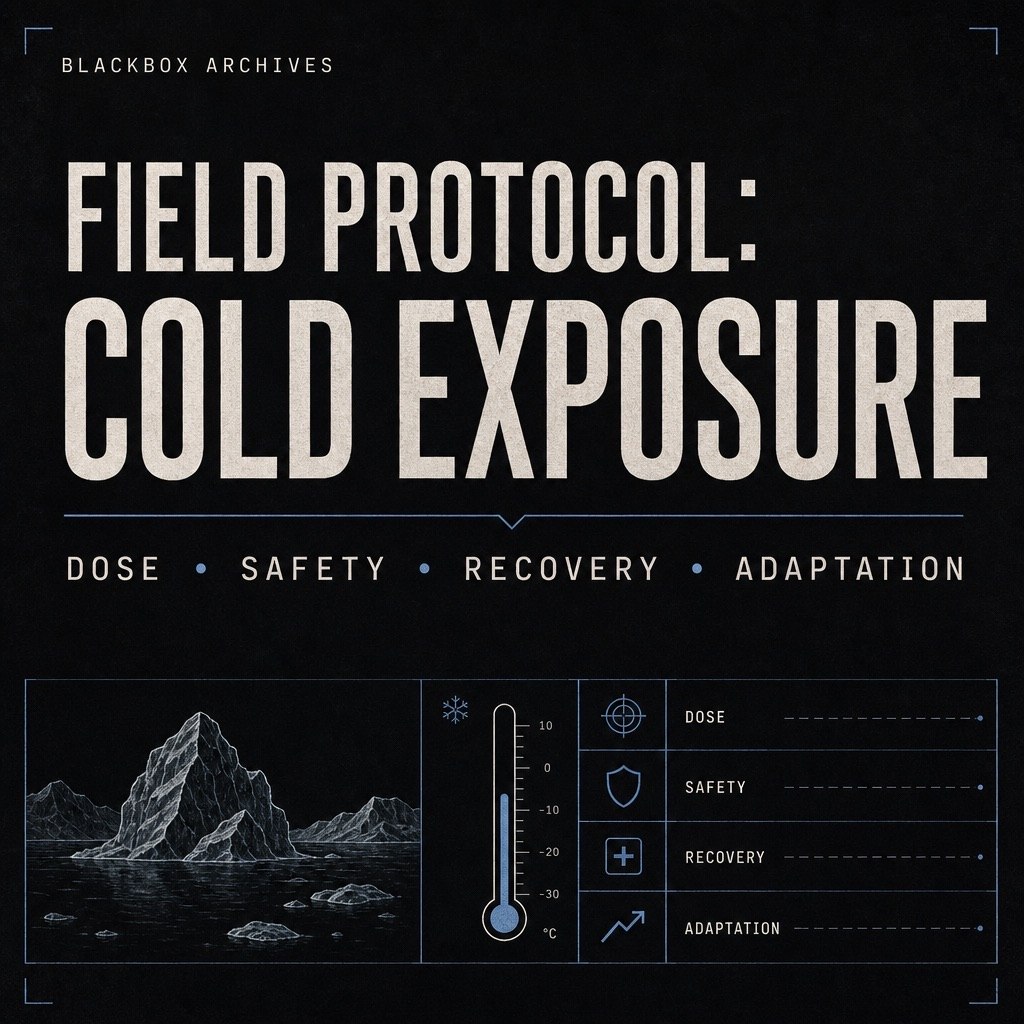
This Blackbox Archives field protocol turns cold water exposure into a clear operating brief: how long to stay in, how to progress safely, when to stop, when not to do it, and what the science actually says.
Inside you’ll find:
• 2–3 minute core cold exposure protocol
• daily frequency rule: once per day unless ill
• gradual adaptation ladder
• cold shock, habituation, and stress inoculation explained
• cortisol and chronic stress explained without wellness hype
• why unresolved chronic stress/allostatic load is physiologically costly
• illness rule: never do cold exposure when sick or when immune defence needs priority
• cardiovascular and familial heart disease cautions
• pre-check / during / exit sequence
• stop signs and red flags
• printable field card for quick reference
• evidence quality map: what is supported vs. overclaimed
• appendix with named sources and DOI references
• conservative safety disclaimer