
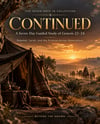



CONTINUED — A Seven-Day Guided Study of Genesis 22–24
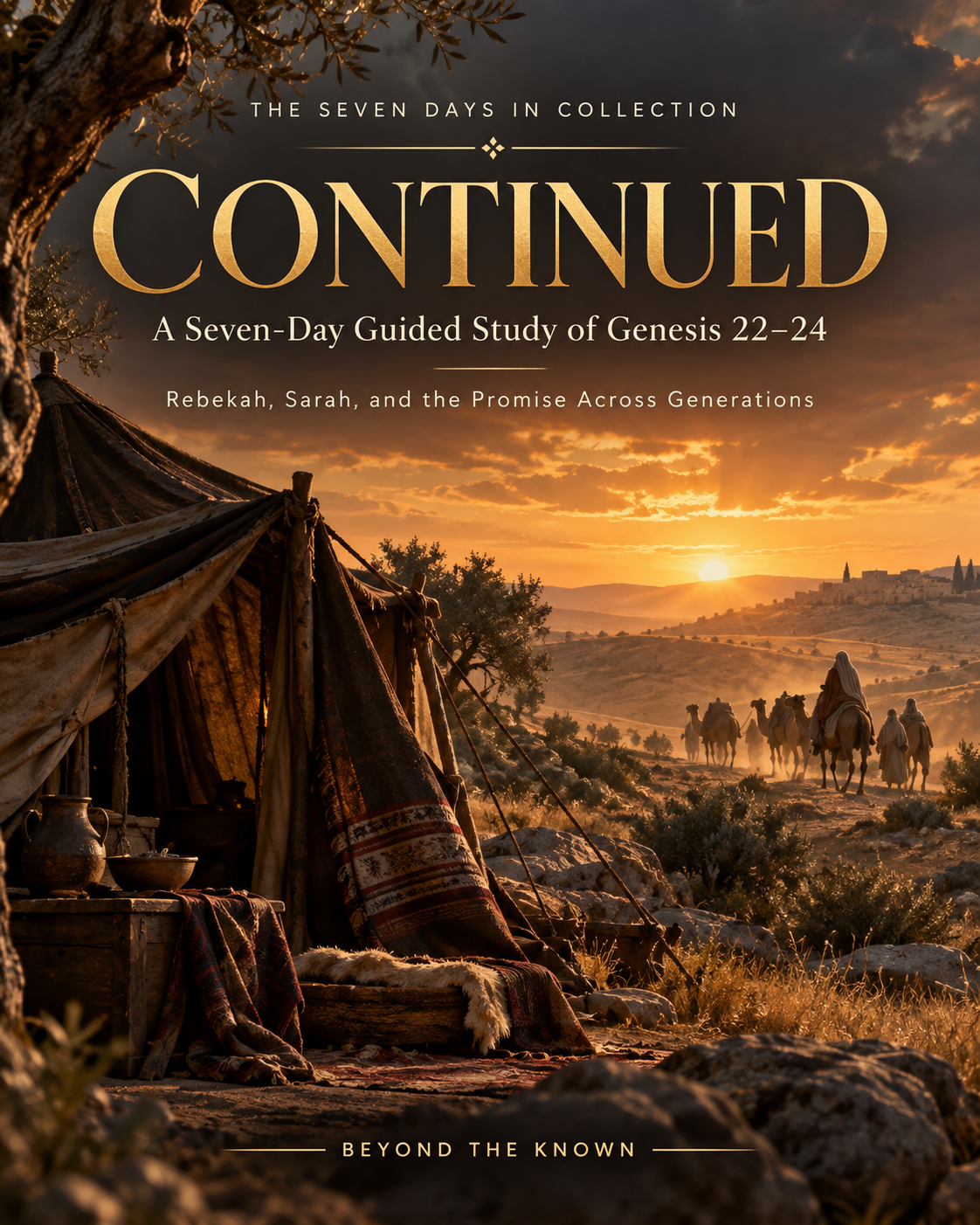
CONTINUED
A Seven-Day Guided Study of Genesis 22–24
Why does Genesis introduce Rebekah before Sarah dies?
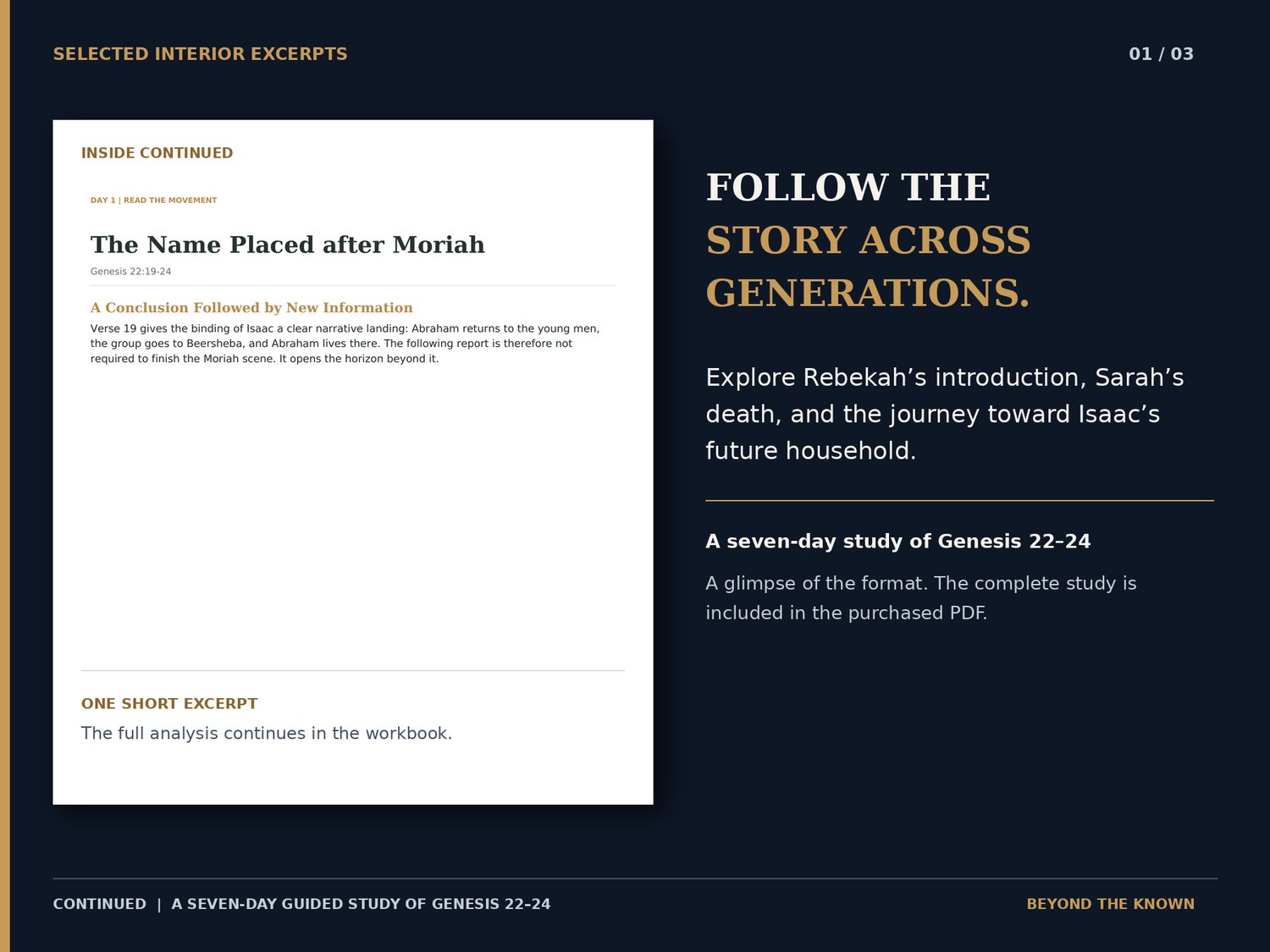
After Abraham returns from Moriah, a family report names Rebekah. The story then turns to Sarah’s death, Abraham’s mourning, and the purchase of a burial place.
Only afterward does the journey to find a wife for Isaac begin.
Why are these scenes placed together—and what becomes visible when we read them as a connected story?
CONTINUED guides you through this transition between generations, helping you examine how family, grief, land, and promise shape the movement from Genesis 22 to Genesis 24.
Across seven focused sessions, follow Rebekah from her first mention to her actions at the spring, her decision to leave home, and her arrival in Isaac’s household.
Explore the connections between the scenes
- The name after Moriah: What does the family report tell us about Rebekah—and what does it leave unknown?
- Sarah’s death: Why does Genesis pause for mourning and burial before continuing toward marriage?
- Land and household: How do the purchase of Machpelah and Abraham’s commission to his servant relate to the family’s future?
- Rebekah at the spring: What do her actions reveal before the marriage arrangements are discussed?
- The servant’s retelling: How does he interpret the journey, and why does the narrative repeat so much of it?
- “I will go”: What place does Rebekah’s own answer hold within the departure scene?
- Sarah’s tent: How does the ending connect marriage, love, memory, and Isaac’s consolation?
Selected discussions examine genealogy, chronology, kinship, Hebrew vocabulary, and narrative structure, distinguishing explicit statements from literary and theological interpretation.
Study the transition without overlooking the people
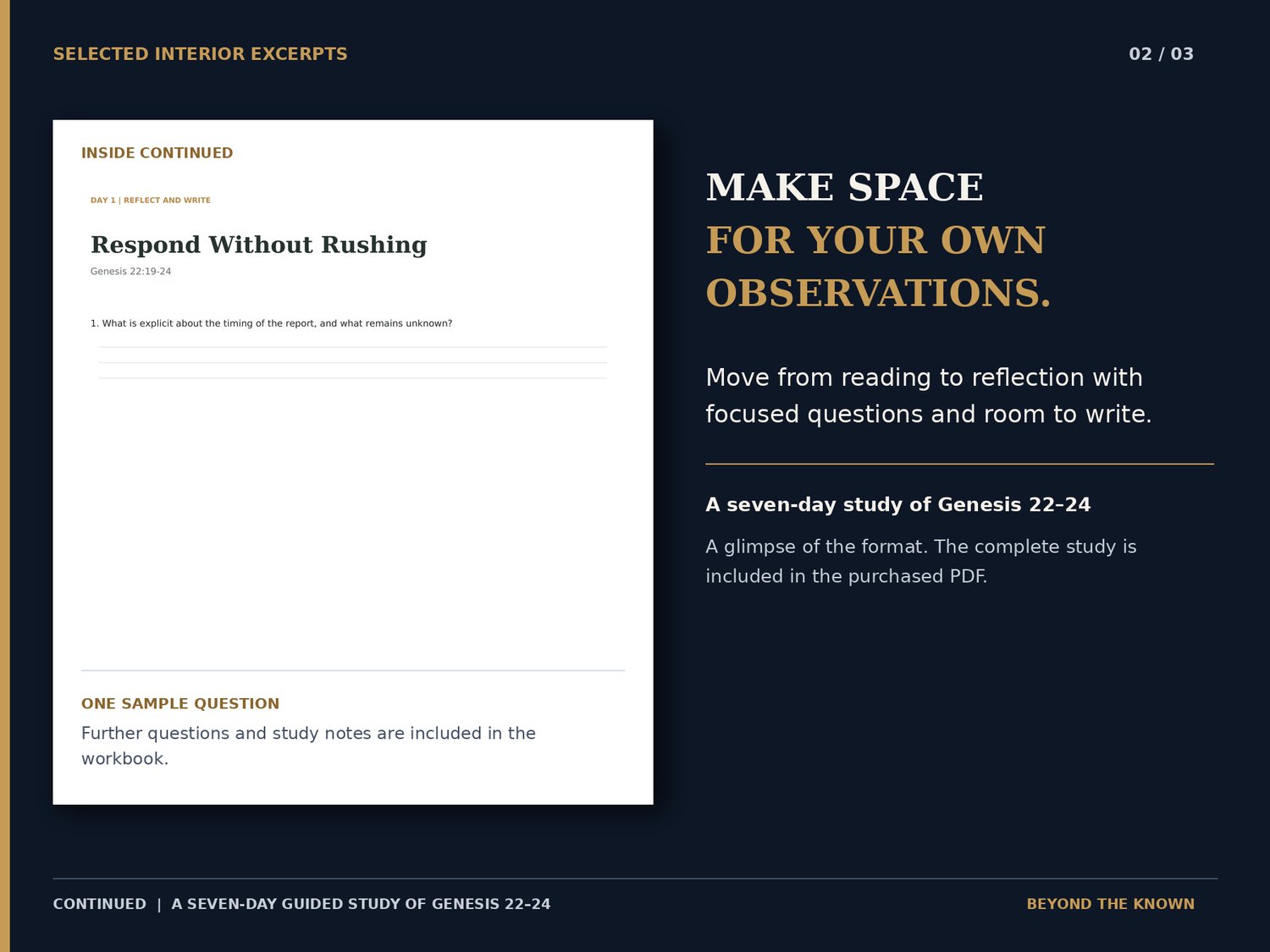
Each session combines biblical reading, textual observation, explanation, and reflection, with space to record your own responses.
The guide takes Sarah’s loss seriously and gives careful attention to Rebekah’s actions and words. It also examines the servant’s prayer and discernment without turning one narrated mission into a universal formula for choosing a spouse.
You will practice tracing connections while recognizing where the text leaves questions open.
What’s inside
- Seven complete study sessions, with a suggested pace of approximately 20–30 minutes per day.
- Scripture readings from the World English Bible Updated.
- Focused study of Genesis 22:19–24, Genesis 23, and selected passages from Genesis 24, with guidance to read the wider context.
- Narrative, theological, and linguistic analysis of the transition across generations.
- Reflection questions and writing space for your observations and responses.
- A seven-day progress tracker to organize your study.
- A narrative map and comparison chart to help you connect the scenes.
- Seven central discoveries to revisit after completing the sessions.
- An Observation Guide to help you check your textual observations.
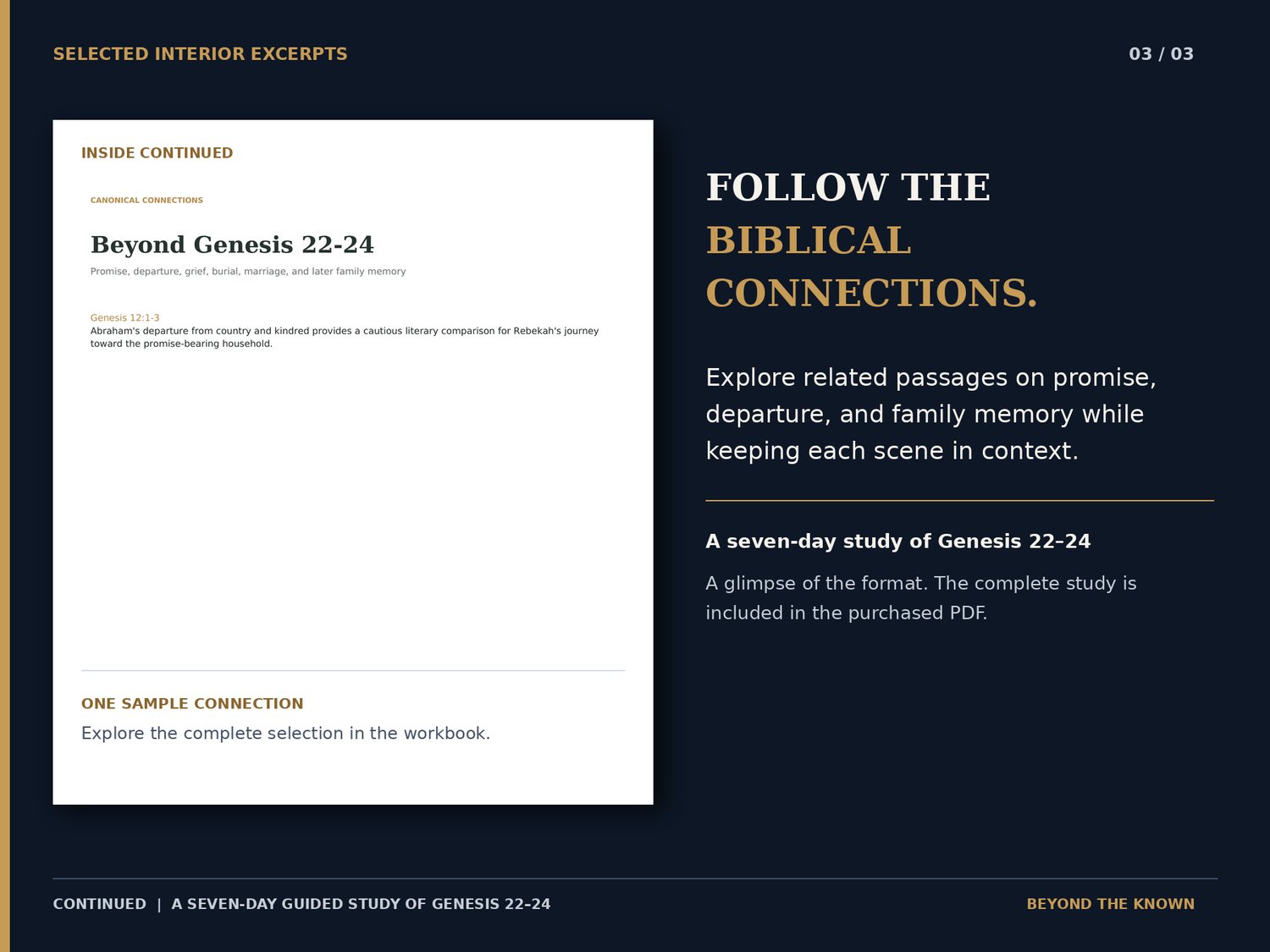
- Biblical connections with the wider family story in Genesis and the reflection on promise and pilgrimage in Hebrews 11.
- A key-term reference, research notes, and selected academic sources for further exploration.
Two PDF editions included
Print Edition: Print the workbook and write your observations by hand.
Fillable Digital Edition: Type your responses using a PDF reader that supports fillable forms.
Who is CONTINUED for?
This guide is for thoughtful Bible readers who want to understand how Genesis connects familiar episodes into a larger story of promise and family continuity. It also supports the personal study and preparation of pastors, teachers, seminarians, and small-group leaders.
Digital download only. No physical book will be shipped. For personal use; copying or distributing the workbook to a group requires written permission.
Explore the interior previews above, then begin seven days of close reading through Rebekah’s introduction, Sarah’s remembered place, and the next chapter of Isaac’s household.
Beyond The Known
Biblical studies beyond the familiar.