
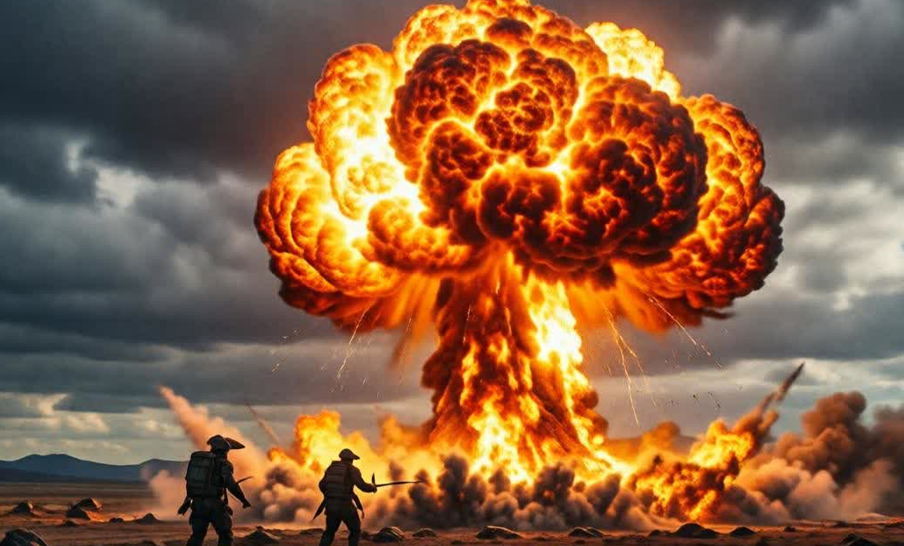
WMD_15_MEGATON_NUCLEAR_EXPLOSION_A_Complete_Technical_Analysis
This paper provides a complete technical analysis of a 15‑megaton (Mt) nuclear explosion, using the Castle Bravo test (1954) as the primary real‑world example. The analysis covers general energy distribution, fireball characteristics, air blast effects, thermal radiation, prompt nuclear radiation, radioactive fallout, crater and base surge formation, and electromagnetic pulse (EMP). The study demonstrates that a 15 Mt surface burst produces a fireball radius of 3.3–3.7 km, a 5 psi blast radius of approximately 16 km, a third‑degree burn radius of up to 38 km, and a lethal fallout zone extending over 560 km downwind. The Castle Bravo test also produced a crater 2 km in diameter and 76 m deep, and contaminated over 7,000 square miles. The findings are compared with yields of 1 Mt and 50 Mt (Tsar Bomba), highlighting the non‑linear scaling of nuclear effects.https://medium.com/@jorbenadze65/wmd-15-megaton-nuclear-explosion-a-complete-technical-analysis-b542826ad839https://www.academia.edu/170116048/WMD_15_MEGATON_NUCLEAR_EXPLOSION_A_Complete_Technical_Analysishttps://www.youtube.com/watch?v=Irmmvx4bqWQ