
At home on the road
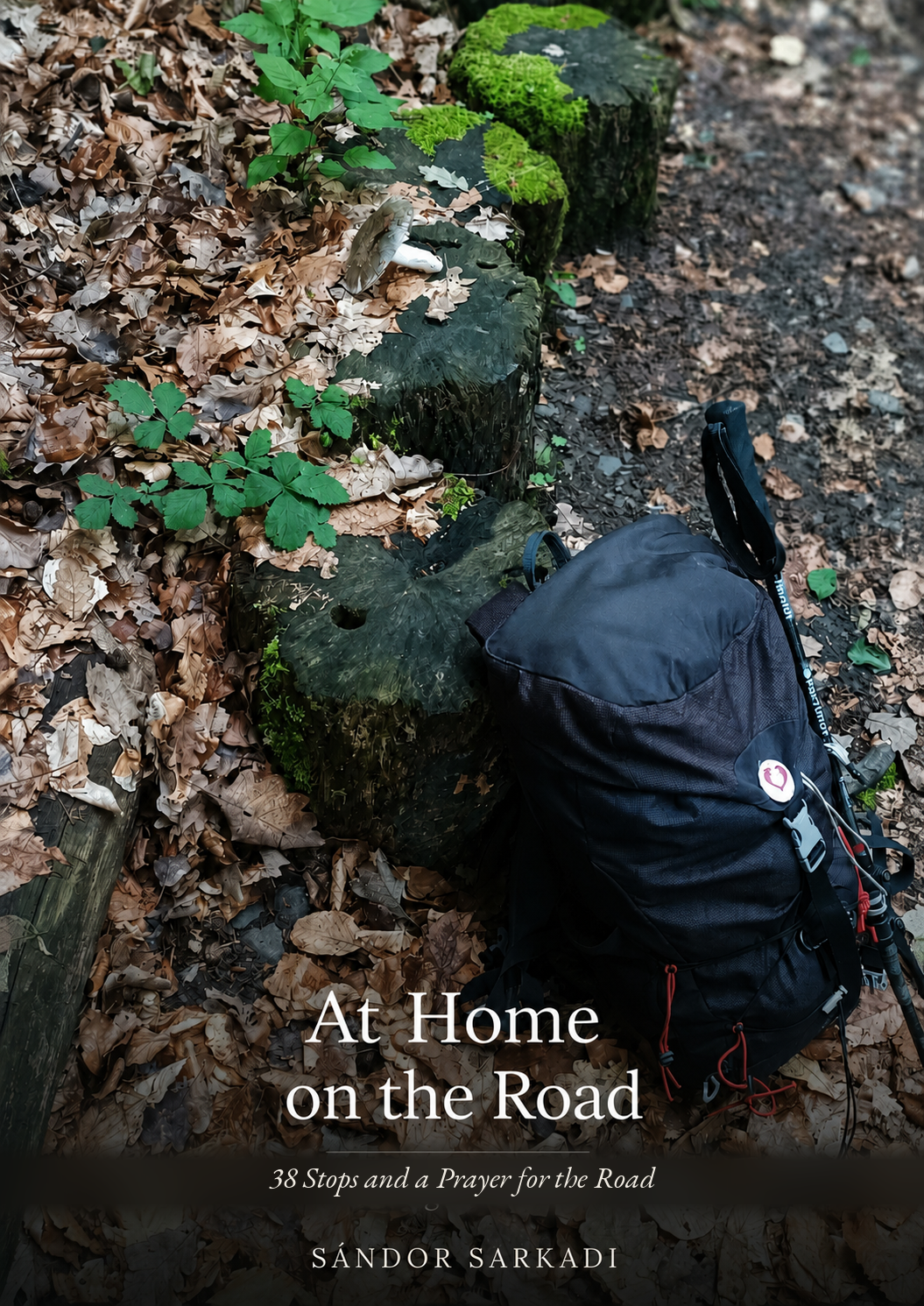
At Home on the Road
38 Stops on What We Carry — and What We Could Set Down
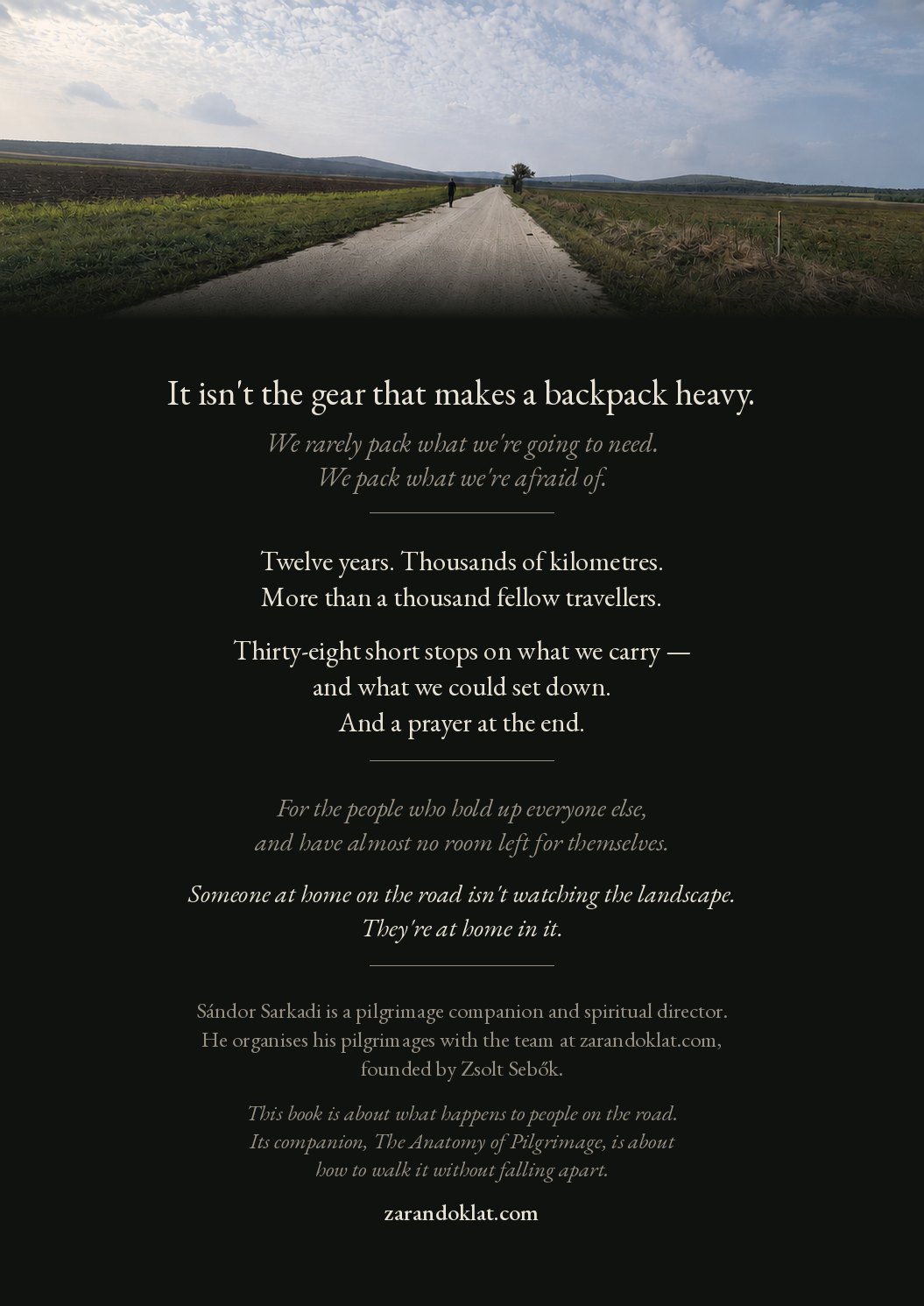
It isn't the gear that makes a backpack heavy.
On the first morning of every pilgrimage the same thing happens. Someone can barely lift their pack. Someone unpacks for the third time before we set off. Someone proudly shows how little they've brought — and by the afternoon it turns out they have no water.
I've been watching this for twelve years.
People rarely pack what they're going to need. They pack what they're afraid of.
What this book is
Thirty-eight short stops from a pilgrimage companion's notebook, and a prayer at the end.
Not a guide. Not a spiritual programme. Nobody in these pages is transformed, and nothing is fixed. They are simply things that happened on real roads, between Pannonhalma and Tihany in Hungary — and what I learned from them, usually late, and usually after getting it wrong myself.
A man who carried three kilos of tinned stew because he didn't believe anyone would feed him. A woman who spent four days in silence, and taught the whole group her hand signs. A company director who wouldn't take the rest day, and only a year later asked why we'd taken the longer road. A young man who took his boots off and walked on in sandals — and finally moved at his own speed instead of his boots'.
Each stop is a page or two. Each ends with an invitation — one question, nothing you have to answer.
Who it's for
The people who hold up everyone else, and have almost no room left for themselves.
Leaders, doctors, teachers, carers, parents, anyone who has been the reliable one for too long. People who are tired in a way that a weekend doesn't touch.
You don't have to be a walker. You don't have to be religious. Several of these stories happen to people who came expecting nothing at all.
How to read it
One stop a day, and it lasts five and a half weeks.
Or open it wherever you like — there's a finder at the front that asks only one question: where are you right now? You're carrying too much. Your body is signalling something. You lead, and you decide alone. You find it hard to ask for help. You've come home, and now what.
Then it points you to the stories that speak to that.
Who wrote it
Sándor Sarkadi has accompanied pilgrims for twelve years, on the roads between Pannonhalma and Tihany, through the Bakony hills of Hungary. More than a thousand people have walked with him.
He is not the hero of these stories. In most of them he is the one who got it wrong — who gave the confusing instruction, who tried to take away the very burden that was holding someone together, who said nothing more useful than oh when someone told him something that couldn't be fixed.
That is rather the point.
What you get
EPUB and PDF, both included in one purchase. The EPUB reflows on a phone or e-reader at whatever text size suits you; the PDF keeps the layout, and prints if you'd rather hold it.
Language: English · Author: Sándor Sarkadi
Its companion volume, The Anatomy of Pilgrimage, is the practical handbook: how to walk for days without falling apart.
More about the roads: zarandoklat.com
Some of these stories touch on grief, exhaustion and old wounds. The last page lists helplines — international, European and Hungarian — for anyone who needs them.