
My Safety Plan: When Adults Argue or I Feel Unsafe at Home
My Safety Plan: When Adults Argue or I Feel Unsafe at Home
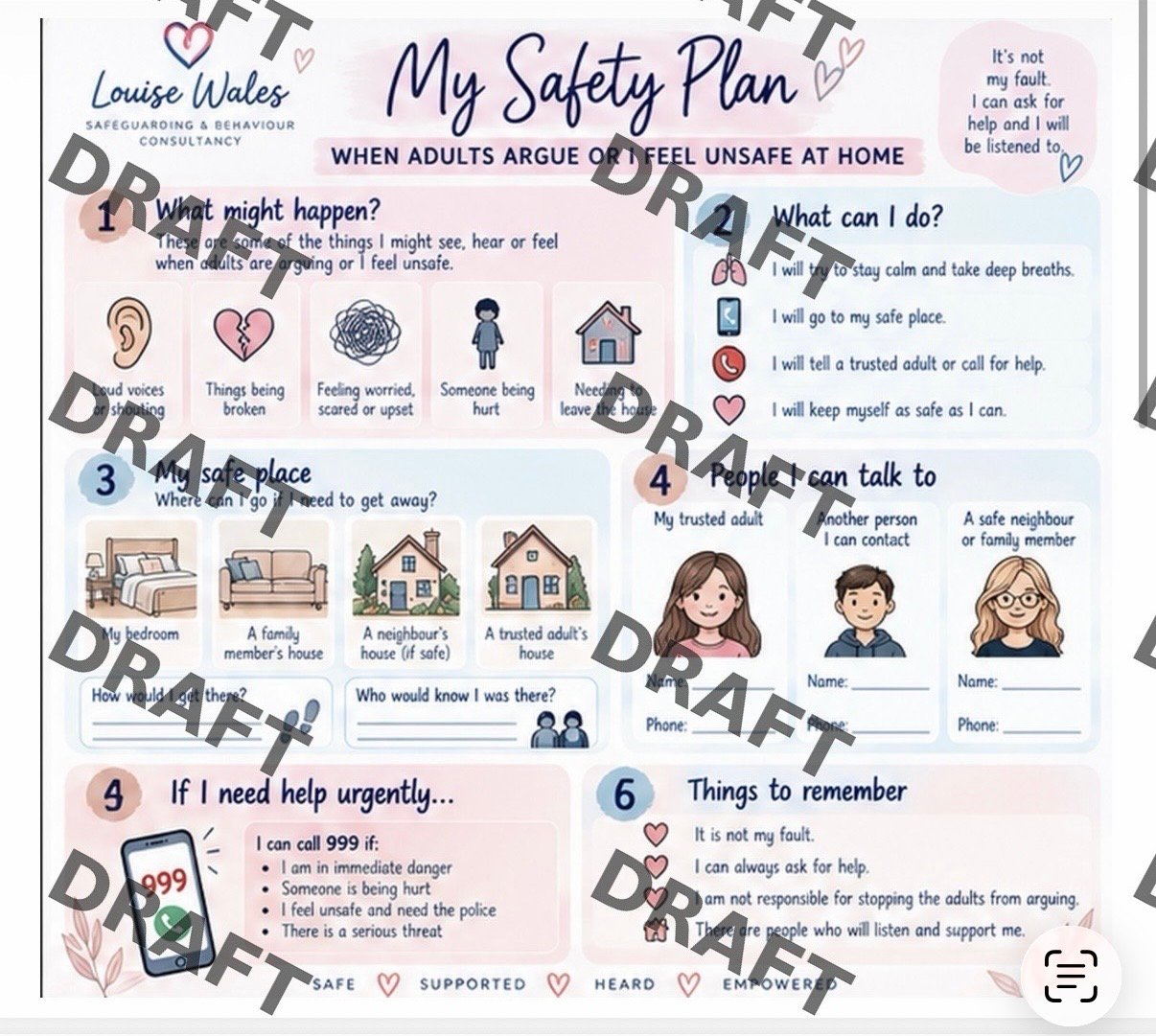
A child-centred safety planning resource to help children explore their feelings and identify ways to seek support when adults argue or home feels unsafe.
When adults argue, children may experience a range of emotions, including fear, worry, confusion or sadness. They may not always understand what is happening, and some children may feel responsible for things that are not their fault.
This printable My Safety Plan provides a supportive starting point for professionals to help children explore what they might see, hear or feel, identify safe places and recognise the trusted adults who can help them.
What’s included?
This resource helps children explore:
- What might happen? – identifying situations that may feel frightening or upsetting, such as shouting, things being broken or someone being hurt.
- What can I do? – considering practical ways to seek support and move towards safety if they feel unsafe.
- My safe place – identifying an appropriate place to go if they need space or protection.
- People I can talk to – identifying trusted adults who can listen, help and offer reassurance.
- If I need help urgently – helping children understand when emergency assistance may be needed.
- Things to remember – reinforcing that arguments between adults are not the child’s fault and that they are not responsible for stopping adults from arguing.
Who is this resource for?
Suitable for:
- Designated Safeguarding Leads (DSLs) and Deputy DSLs
- School pastoral and inclusion teams
- Early help and family support professionals
- Professionals working directly with children experiencing family conflict or feeling unsafe at home
How can it be used?
Use this resource to support a sensitive, age-appropriate conversation with a child about their feelings, worries and individual safety needs.
It can help professionals explore protective strategies, identify trusted adults and consider what support the child may need. The plan should be completed collaboratively and adapted to the child’s circumstances, ensuring that any identified risks are addressed through appropriate safeguarding procedures.
Please note: This resource is a discussion aid and does not replace safeguarding procedures, an individual risk assessment or a tailored safety plan. Where there are concerns about domestic abuse, violence or a child being harmed, professionals must follow their safeguarding procedures. Children should never be made responsible for managing adult behaviour or keeping themselves safe without appropriate adult protection.
Louise Wales Safeguarding & Behaviour Consultancy
See the child. Hear their story. Change their future. 🤍