

Body Language for Character Inference Body Language Position Anchor Charts
Body Language for Character Inference | Visual Supports & Reading Comprehension Toolkit
Some students understand what happened in a story but need more support noticing the body language clues that help explain how a character may be responding.
Body Language for Character Inference gives students an explicit way to slow down and examine those clues using a simple progression:
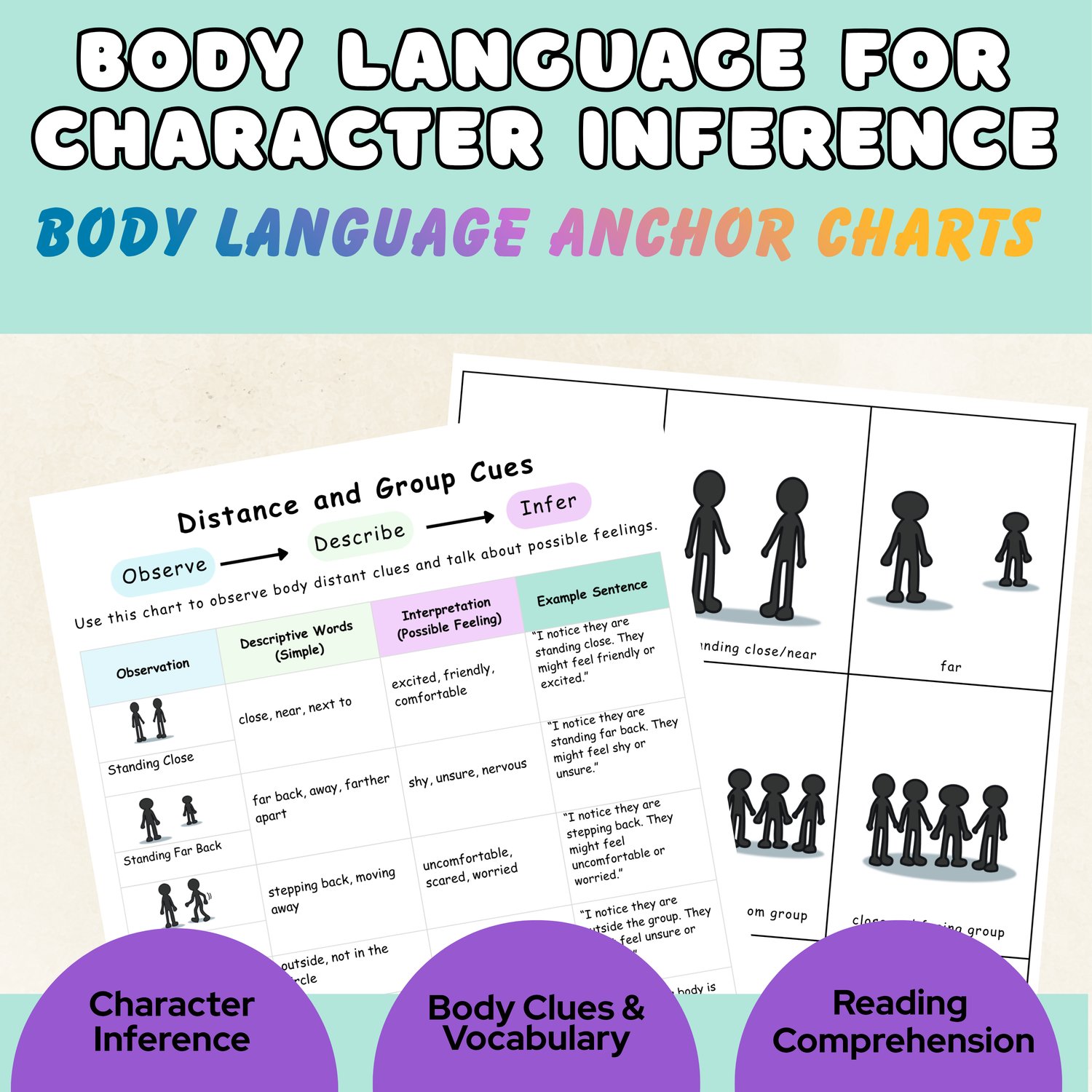
Observe → Describe → Infer
Instead of jumping from a body position directly to an emotion, students first notice what the character’s body is doing, build vocabulary to describe the clue, and then consider what it might mean within the surrounding context.
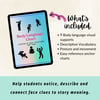
What’s Included
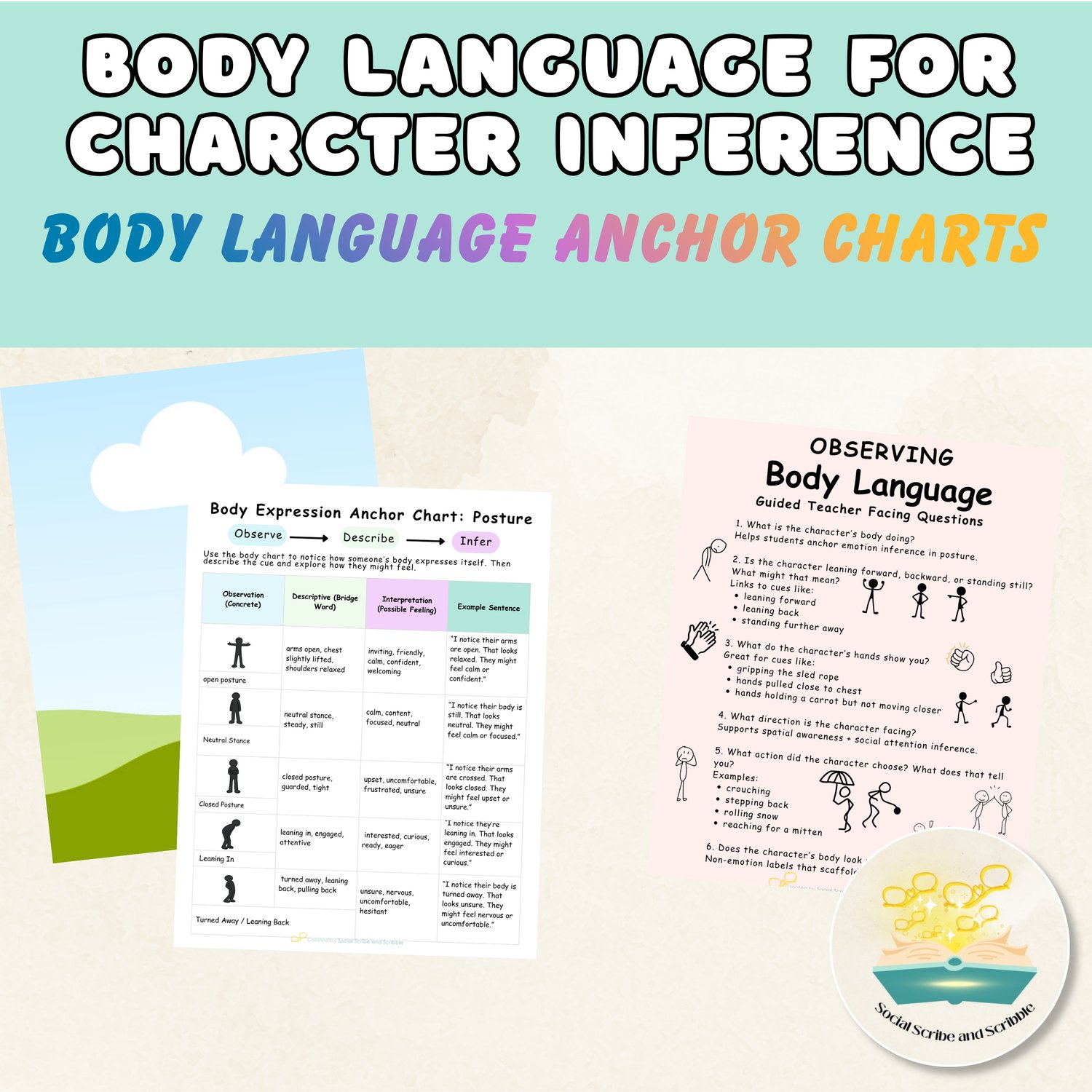
- 6 guided teacher questions for exploring body language
- Body Expression Anchor Chart
- Energy Clues visual support
- Distance & Group Clues visual support
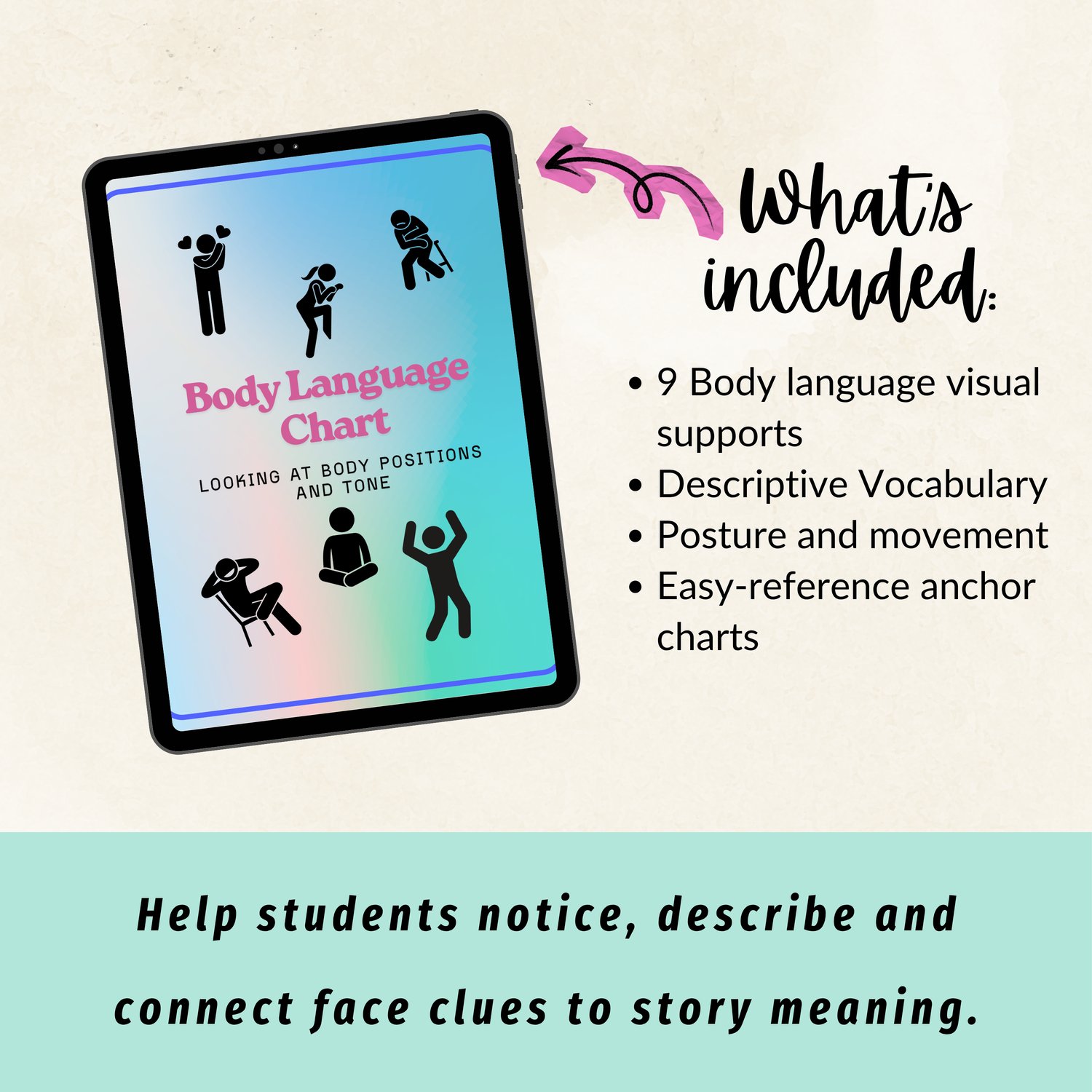
- Reusable body language visual cards
- Observe → Describe → Infer sentence starters and examples
- Teacher + student question guides to support noticing and discussing body and facial clues
Build Stronger Character Inferences
Students practice noticing posture, movement, body direction, energy, and distance while using descriptive bridge words and sentence frames to explain their thinking.
Body language does not have one fixed meaning. These supports encourage students to consider body clues alongside the character’s words, actions, and story context rather than assigning one emotion to a particular posture.
Use the toolkit with books, picture scenes, video clips, social narratives, or other classroom and therapy materials.
Perfect For
- Reading comprehension & character inference
- Speech-language therapy
- Special education & intervention
- Students who benefit from explicit visual and language support
Notice the clue 👉 Describe what you see 👉 Connect it to the story.