
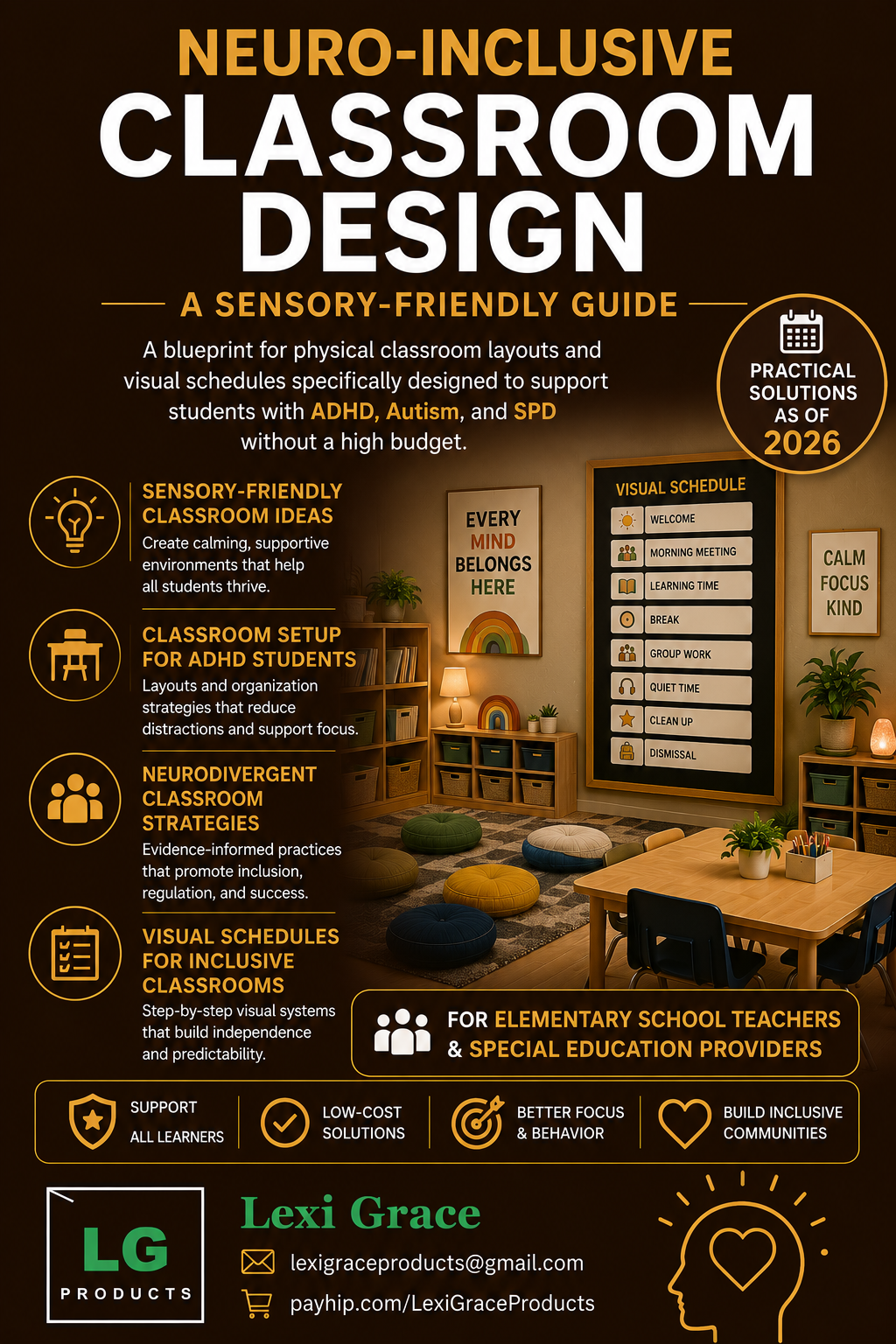
Neuro-Inclusive Classroom Design: A Sensory-Friendly Guide — 130+ Low-Cost Strategies for Supporting Students with ADHD, Autism, and SPD in Elementary Classrooms
Every classroom has neurodivergent students. Most classrooms were not designed for them.
1 in 6 children has a developmental disability. ADHD affects nearly 1 in 10 children. Autism diagnoses have reached 1 in 36. Sensory Processing Disorder affects an estimated 1 in 20 students. These are not rare edge cases — they are the children sitting in your classroom right now. And the environment most of them are sitting in was designed for a nervous system they do not have.
The good news is that most of what neurodivergent students need costs almost nothing to provide. A lamp instead of fluorescents. A calm corner in an unused classroom corner. A visual schedule on a whiteboard. Tape on the floor. Breathing posters printed for free.
This guide gives you the complete blueprint — 130 plus strategies, ideas, and systems for building a classroom that works for every nervous system in the room.
Neuro-Inclusive Classroom Design: A Sensory-Friendly Guide is a practical, research-grounded blueprint for elementary school teachers and special education providers who want to build calming, inclusive, and highly functional learning environments for students with ADHD, Autism Spectrum Disorder, and Sensory Processing Disorder — without a large budget, without a renovation, and without waiting for administrative approval. Every strategy is updated as of 2026.
What's Inside:
✅ Introduction — Every Mind Belongs Here — the complete research case for neuro-inclusive classroom design in 2026, a comparison table showing what ADHD, Autism, and SPD each look like in the classroom and what helps most for each condition, and the foundational principle that designing for the most sensitive nervous system in the room improves outcomes for every student not just those with identified needs.
✅ Section 1 — Sensory-Friendly Classroom Ideas — 50 Low-Cost Solutions — fifty practical ideas organized with cost ratings (FREE, Under $5, Under $20, Under $50) covering warm lighting alternatives and lamp zones, window light management, wall decoration reduction for focus, color-coded floor zones, flexible seating options including wobble cushions and floor pillows, seating bands for movement while seated, standing desk options, noise-reducing headphones, white noise machines, soft background music, classroom noise dividers, calm corner setup and sensory box contents, feelings check-in charts, texture wall panels, scent-free classroom policies, clutter-free desk systems, individual work dividers, organized supply stations, nature elements, weighted lap pads, sensory paths, movement zones, fidget tool libraries, chewelry options, putty stations, individual sensory kits, sand trays, low-stimulation work areas, canopy enclosures, consistent furniture arrangement, comfort objects, visual room maps, temperature management, transition warning timers, soft start morning routines, snack access policies, sunglasses for light sensitivity, classroom aquariums, nature sound playlists, breathing posters, and DIY sensory bottles every idea with what it is, how to do it, and why it works for sensory-sensitive students.
✅ Section 2 — Classroom Setup for ADHD Students — 30 Layout and Focus Strategies — thirty specific layout and organization strategies covering proximity seating, distraction-away seating from doors and windows, individual desk islands, U-shape seating arrangements, clear transition pathways, supply staging systems, homework take-home organization, task commitment boards, color-coded subject materials, morning routine visual checklists, work-in-progress tray systems, minimal transition object rules, distraction-free assessment setups, break card systems, anchor activities, scheduled sensory movement breaks, brain gym cross-lateral activities, two-minute desk clean routines, whisper phones for reading, visual desk anchor cards, partner seating systems, two-choice decision making, homework modification protocols, self-monitoring checklists, transition countdown systems, individualized reward systems, homework hub binder systems, success snapshot boards, designated landing spots for commonly lost items, and collaborative seating map reviews each strategy includes who it helps, the specific strategy, how to implement it, and the expected result.
✅ Section 3 — Neurodivergent Classroom Strategies — 25 Evidence-Informed Practices — twenty-five research-grounded practices updated for 2026 covering co-regulation before self-regulation, the power of predictability, strengths-based language, visual instruction paired with verbal, explicit transition preparation, low and slow verbal communication, least invasive intervention first, sensory preference assessment, flexible response mode options, emotional vocabulary building, choice provision across the day, error-tolerant classroom culture, whole-body listening redefined by neuroscience, scheduled check-in check-out systems, positive behavior narration, sensory break menus, explicit social script teaching, avoiding sarcasm and indirect language, interest integration in instruction, sensory diet integration, universal regulation language using the Zones of Regulation framework, flexible deadline policies, classroom community agreements, daily gratitude and positive close routines, and family partnership protocols.
✅ Section 4 — Visual Schedules for Inclusive Classrooms — 25 Step-by-Step Systems — twenty-five complete visual support systems with implementation instructions covering daily class schedule strips, morning meeting visual agendas, First-Then boards, visual transition warning cards, task analysis strips, classroom jobs visual charts, feelings and needs boards, group work role cards, individual student schedules, behavior expectation posters by zone, visual timer displays, work system folders, social story cards, choice board displays, classroom rule anchor charts, emergency calm-down procedure cards, homework visual organizers, lunch and recess transition visuals, waiting visual supports, peer helper visual systems, reward menu boards, partner work protocol cards, clean-up visual sequences, individualized behavior goal cards, end-of-day packing visuals, and a whole-class weekly schedule board every system includes what it is, how to implement it step by step, and why it works.
✅ Bonus — The Low-Budget Neuro-Inclusive Classroom Shopping Guide —a complete three-tier shopping reference organized by price point: fifteen completely free implementations you can start today with zero budget, ten under-five-dollar items available at any dollar store with specific use guidance, twelve under-twenty-dollar purchases that provide the highest sensory impact per dollar spent, and a curated list of ten free online resources including Do2Learn, Boardmaker Share, Teachers Pay Teachers free section, Understood.org, CHADD.org, the Autism Speaks School Community Tool Kit, CDC Inclusive Childcare Resources, GoNoodle movement break videos, and Canva free tier for creating custom visual supports
This guide is perfect for:
- Elementary school teachers in general education classrooms who have neurodivergent students and want practical, immediately implementable environmental strategies that do not require special education training
- Special education teachers and resource room providers who want a comprehensive reference for classroom design recommendations to share with general education co-teachers
- Instructional coaches and school psychologists who want a research-informed classroom environment guide to recommend to teachers working with high-need students
- Occupational therapists working in school settings who want a teacher-facing resource that translates sensory processing concepts into practical classroom implementation
- School administrators who want a low-cost, high-impact professional development resource for teaching staff on neuro-inclusive practice
- Parents of neurodivergent children who want to understand what a well-designed inclusive classroom looks like and advocate for environmental accommodations
130 plus strategies. Four complete sections. One practical blueprint. Every mind belongs here.
You do not need a grant. You do not need administrative approval. You do not need to wait for next year's budget. You need this guide and the willingness to make your classroom work for every nervous system in the room.
The student whose whole year changes because you switched off the fluorescents may never tell you. But you will see it in their body, in their face, and in the way they walk through your door each morning.
Calm. Focus. Kind. Build the room that proves every mind belongs here.
Instant digital download. Start transforming your classroom today.
Note: This guide is for informational and educational purposes only and is not a substitute for professional medical, psychological, or special education advice. Always consult qualified professionals regarding individual student IEP requirements and specific learning needs.
© 2026 Lexi Grace Products | LexiGraceProducts@gmail.com | payhip.com/LexiGrace