
Private Limited Registration in India – Step-by-Step Guide
Starting a Private Limited Company in India is a preferred choice for entrepreneurs who want legal protection, growth opportunities, and credibility in the market. The registration private limited company registration India is fully online and governed by the Ministry of Corporate Affairs (MCA). This article explains the process step by step in a simple and practical way.
Step 1: Plan Your Business and Structure
The first step is to clearly define your business idea and structure. A Private Limited Company requires at least two directors and two shareholders. The same individuals can act as both. At least one director must be a resident of India. This structure is suitable for startups and small to medium-sized businesses.
Step 2: Obtain Digital Signature Certificate (DSC)
A Digital Signature Certificate (DSC) is mandatory for all directors. It is used to electronically sign documents during the registration process. Since everything is filed online, DSC ensures security and authenticity. It can be obtained from authorized certifying agencies in India.
Step 3: Apply for Director Identification Number (DIN)
Every director must have a Director Identification Number (DIN), issued by the MCA. It serves as a unique identification for company directors. In modern registration systems, DIN is often generated automatically while filing the incorporation form SPICe+.
Step 4: Select and Reserve Company Name
Choosing a unique company name is very important. The name must comply with MCA guidelines and should not match or resemble existing companies or trademarks. You can apply for name approval through the RUN service or directly via the SPICe+ form. It is always recommended to keep alternative names ready in case of rejection.
Step 5: Prepare Required Documents
Proper documentation is essential for smooth registration. Common documents include:
PAN card and Aadhaar card of directors
Passport-size photographs
Address proof (bank statement, electricity bill, etc.)
Proof of registered office (rent agreement or ownership documents)
No Objection Certificate (NOC) from the property owner
All documents must be valid and clearly readable.
Step 6: File SPICe+ Incorporation Form
The SPICe+ (Simplified Proforma for Incorporating Company Electronically Plus) form is the main application for company registration. It integrates multiple services like PAN, TAN, GST registration, EPFO, and ESIC. All details about directors, company name, and registered office are submitted here.
Step 7: Verification by Registrar of Companies (ROC)
Once submitted, the Registrar of Companies (ROC) reviews the application and documents. If everything is correct, the application is approved. If there are errors or missing details, corrections may be requested.
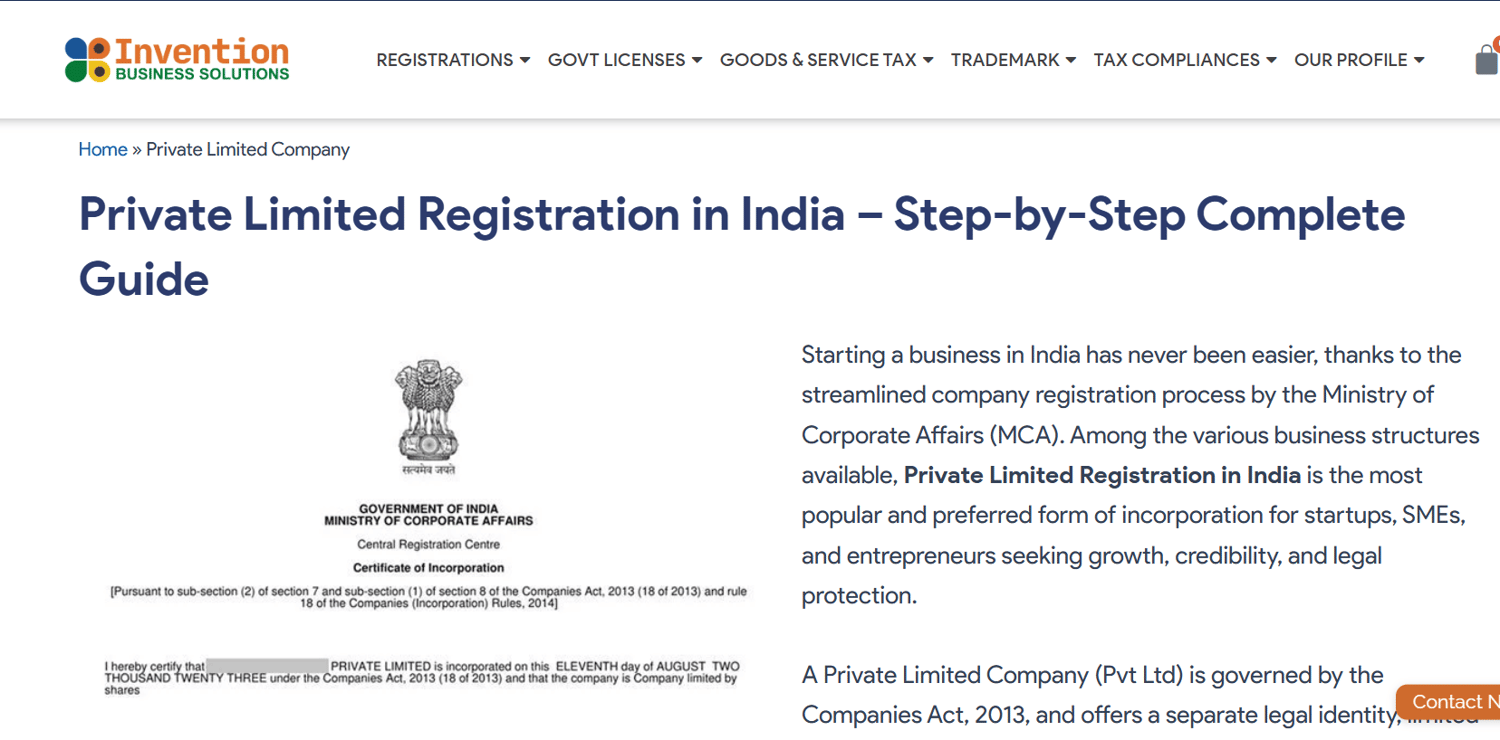
Step 8: Certificate of Incorporation
After approval, the ROC issues the Certificate of Incorporation. This document legally confirms the formation of the company. It also includes the Corporate Identification Number (CIN), which is required for all official filings and compliance activities.
Step 9: Post-Incorporation Compliance
After registration, the company must open a current bank account, deposit share capital if required, and maintain proper accounting records. Regular compliance such as annual returns, financial statements, and tax filings must be followed under the Companies Act.
Conclusion
Private Limited Company registration in India is a simple but structured process when followed correctly. By completing each step carefully, entrepreneurs can establish a legally strong business with long-term growth potential.