
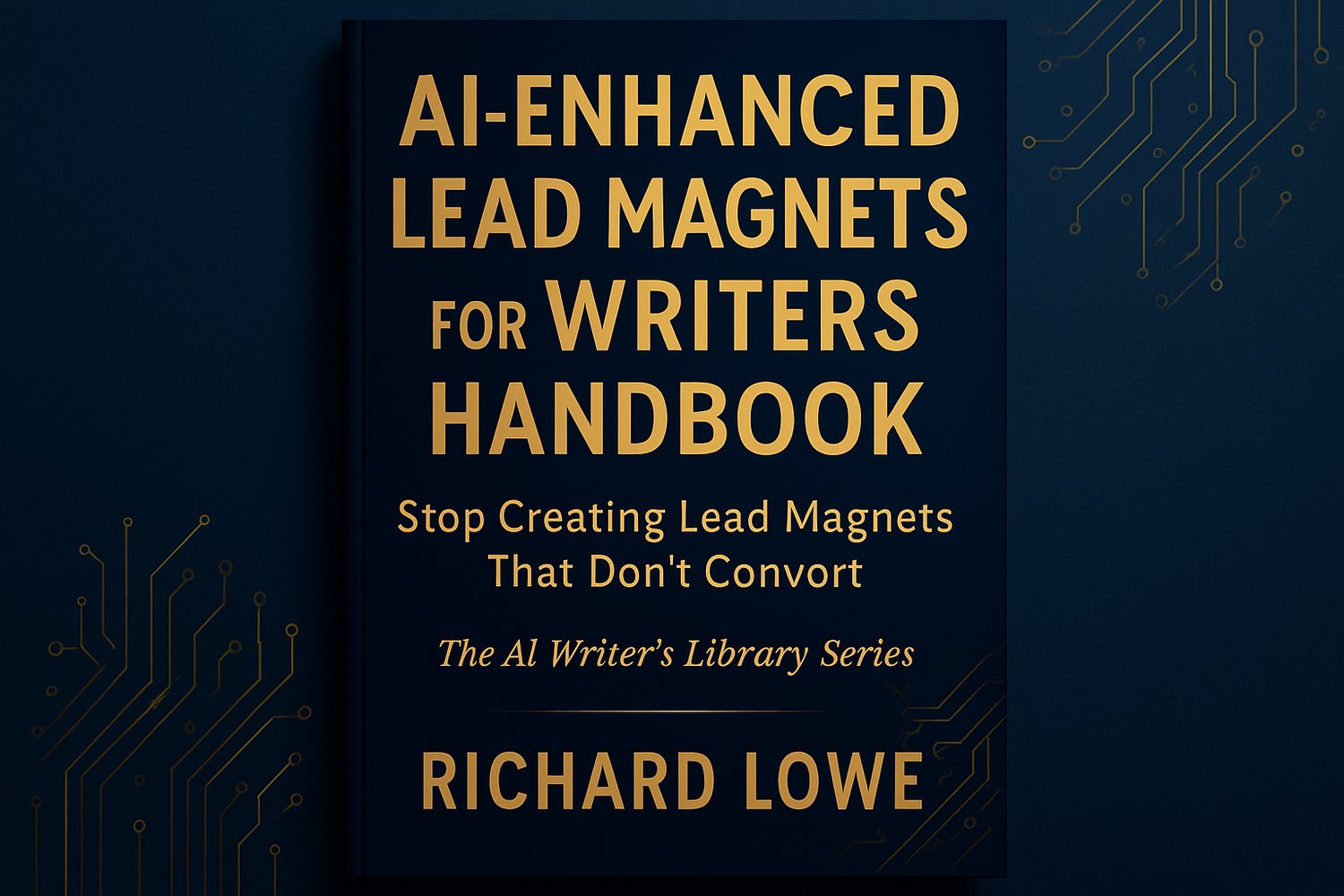
AI-Enhanced Lead Magnets Handbook
Stop Building Email Lists That Never Buy Your Books
You created the character development worksheet. The plotting template. The writing prompts collection. They looked professional, contained valuable information, and solved real problems. Your email list still grows slower than moss on a rock.
Meanwhile, writers with less experience and fewer credentials build massive audiences. Their lead magnets get shared everywhere while your carefully crafted resources sit in download folders, unopened since 2019.
Your lead magnets aren't list-building tools for marketing metrics. They're relationship foundations that demonstrate whether readers can trust you to solve bigger problems through your books, courses, and coaching. Downloads that vanish into digital folders mean you're solving the wrong problems for the wrong people.
Why Most Author Lead Magnets Fail
Lead magnets that fail showcase your expertise. Lead magnets that convert solve a specific problem. Lead magnets that fail target "aspiring writers." Lead magnets that convert target writers with specific struggles. Lead magnets that fail provide comprehensive overviews of topics. Lead magnets that convert deliver complete solutions to one problem. Lead magnets that fail tease content to sell the course. Lead magnets that convert deliver full value and build trust for bigger problems. Lead magnets that fail get downloaded and forgotten. Lead magnets that convert get implemented and recommended.
The handbook teaches you to create lead magnets that build relationships instead of just email addresses.
Writer-Specific Lead Magnet Categories
Not all lead magnets work for authors. The handbook covers categories that leverage your storytelling expertise.
Craft resources include character development frameworks, plotting templates, and dialogue worksheets. These work when they solve specific problems, not when they showcase everything you know about craft. Process guides cover writing routines, revision systems, and productivity approaches. Writers struggling with process will trade email addresses for solutions that actually work. Knowledge tools provide research shortcuts, genre conventions, and market insights. Information that saves time or prevents mistakes has clear value. Community resources include beta reader guides, critique group frameworks, and accountability systems. Writers are often isolated, so resources that connect them have built-in sharing incentives. Genre-specific solutions cover romance beat sheets, mystery clue-planting guides, and fantasy worldbuilding frameworks. The more specific to your genre, the more valuable to the right readers.
What's Inside
The handbook covers why writer lead magnets fail, explaining the real reasons your downloads vanish into digital folders. The psychology of reader investment explains what makes people download, implement, and recommend. Writer-specific lead magnet categories covers craft resources, process guides, knowledge tools, and community needs. The psychology-first creation process provides a four-step system from reader analysis to testing.
What's in it for them teaches you to stop creating content you want to share and start solving problems they need fixed. AI integration strategies and prompts generate authentic content that matches your voice. Distribution and integration strategy teaches you to reach real readers through systematic promotion. Case studies illustrate what works versus what fails through fictional scenarios showing psychology in action.
From lead magnet to writing career covers technical foundations, welcome sequences, and conversion systems. Legal and technical requirements addresses privacy policies, GDPR compliance, and protecting yourself. When lead magnets stop working provides diagnosis and recovery for declining performance. Managing your lead magnet audience covers boundaries that protect creativity while serving readers. The email platform provider guide offers honest assessments of Beehiiv, ConvertKit, Mailchimp, Substack, and more.
Built for Writers Who Use AI
AI can accelerate lead magnet creation. It can also generate the same generic "10 Tips for Better Writing" content that floods every inbox.
The problem isn't the AI. It's what you're asking for. "Create a writing tips guide" produces generic content. AI needs psychological frameworks. What specific writers worry about at 2 AM. What problems feel urgent enough to trade an email address for. What transformations they're actually seeking.
The handbook shows you how to prompt AI for lead magnet content that solves real problems. Research your target readers' actual frustrations. Generate content that matches your author voice. Create resources that readers implement instead of file and forget.
AI is your content development partner, not your creative replacement.
From an Author With 113 Published Books
My ghostwriting clients have secured over $30 million in venture capital with books that understand their audience psychology. My brain doesn't accept "create valuable content" as methodology. When I realized my carefully crafted lead magnets generated almost no downloads despite 113+ published books and a reputation for practical writing instruction, I dug until I found the systems underneath.
The breakthrough came when I stopped creating lead magnets for "aspiring writers" and started solving specific problems for specific people. Romance writers attempting science fiction. Experienced authors switching genres. Writers who understood craft but felt lost in new territory.
124 pages of psychology-first lead magnet strategy. 15 chapters from reader psychology to email platform selection. Case studies, troubleshooting, and implementation templates.
Stop making excuses and start making fans.