
Thermography Fundamentals
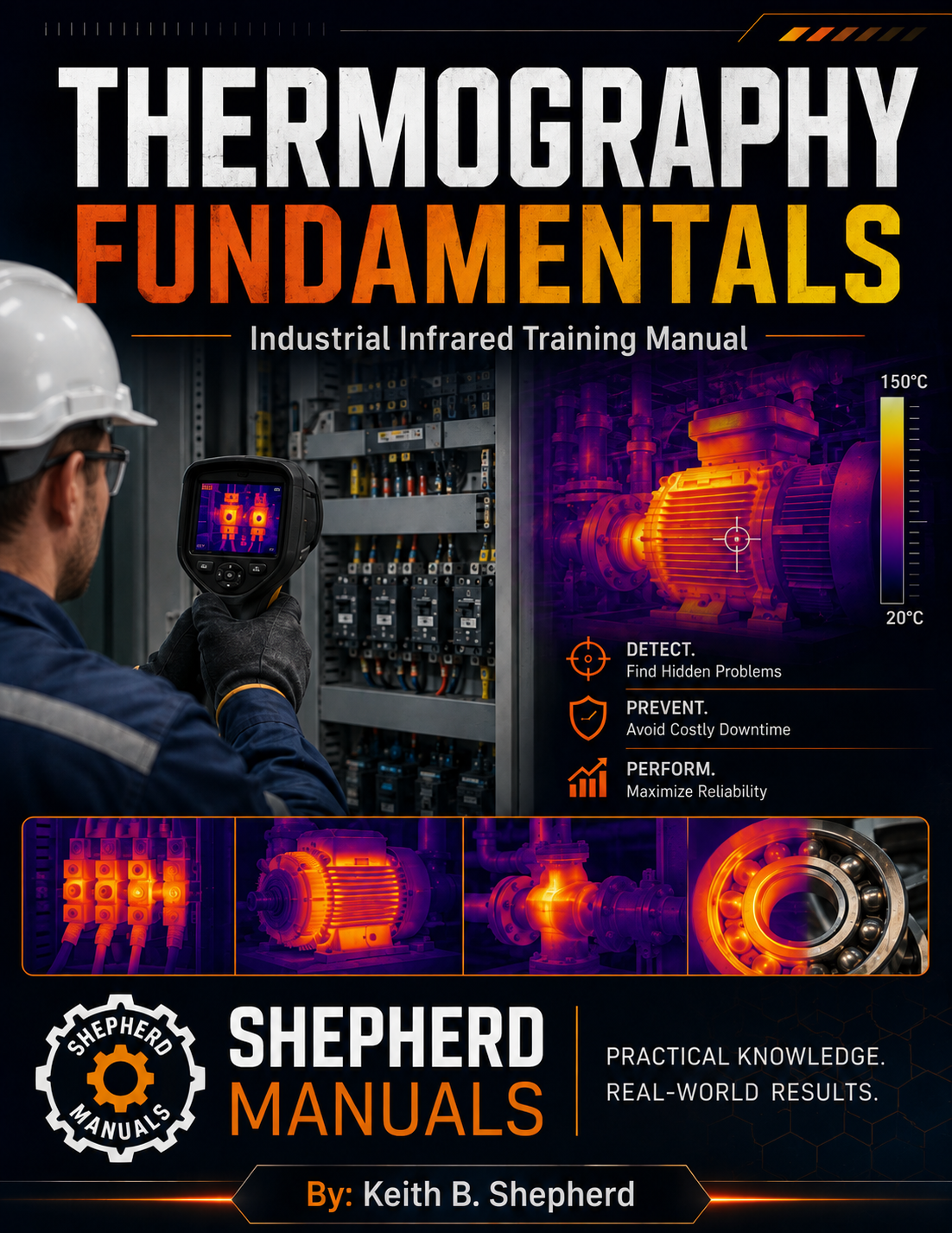
THERMOGRAPHY FUNDAMENTALS
Industrial Infrared Training Manual
Shepherd Manuals
Learn the practical fundamentals of industrial thermography and discover how infrared inspection can help identify developing equipment problems before they become costly failures.
Thermography Fundamentals is a practical training manual designed for maintenance technicians, electricians, mechanics, reliability personnel, supervisors, instructors, and anyone who wants a solid working introduction to infrared thermography in an industrial environment.
Rather than simply showing thermal images, this manual explains what the images mean, why temperature differences occur, what conditions can affect readings, and how thermography can be applied as part of a sound maintenance and reliability program.
WHAT YOU WILL LEARN
- Fundamentals of infrared energy and heat transfer
- Temperature measurement using thermal imaging
- Conduction, convection, and radiation
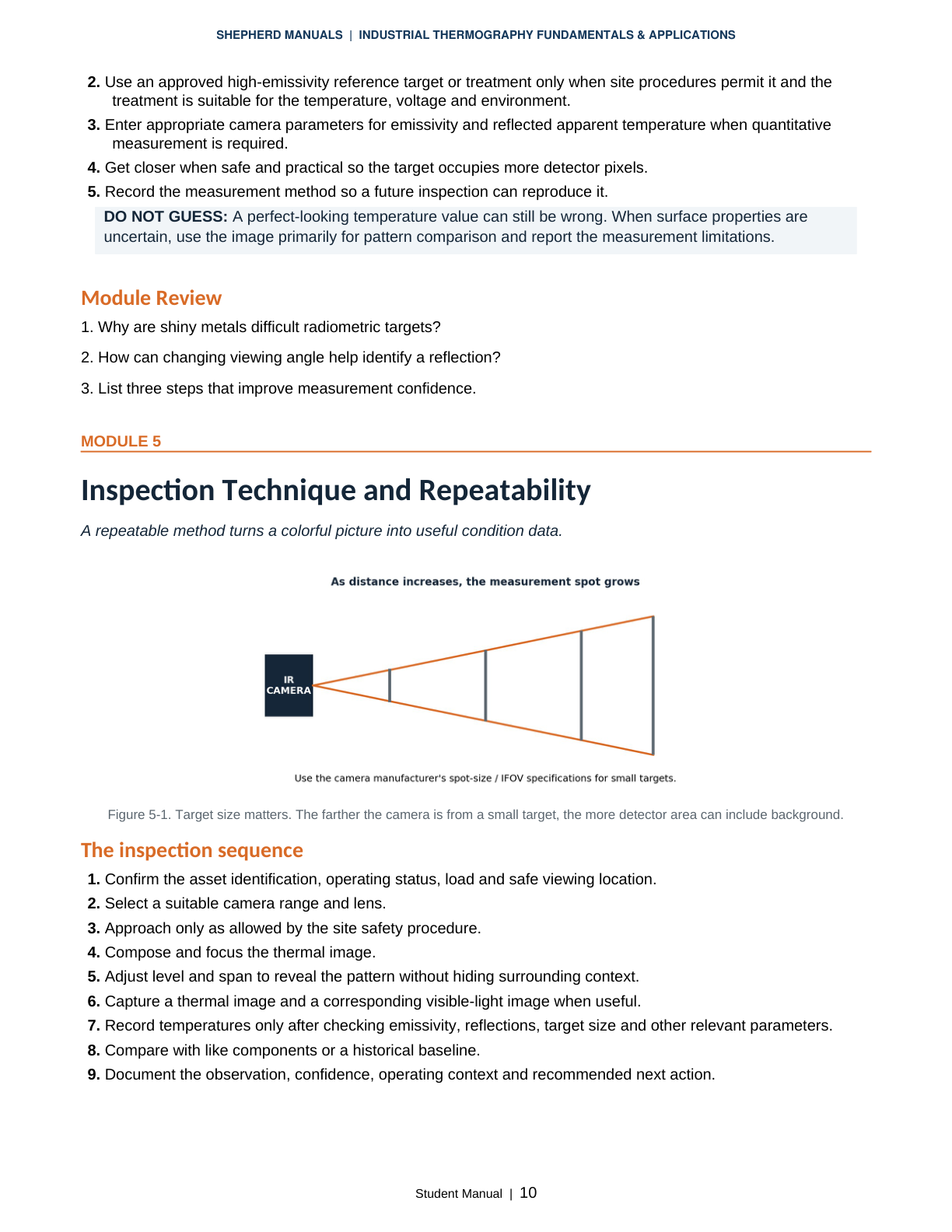
- Emissivity and reflected temperature
- Understanding thermal patterns
- Proper use of an infrared camera
- Electrical thermography applications
- Motors, bearings, couplings, and rotating equipment
- Mechanical equipment inspections
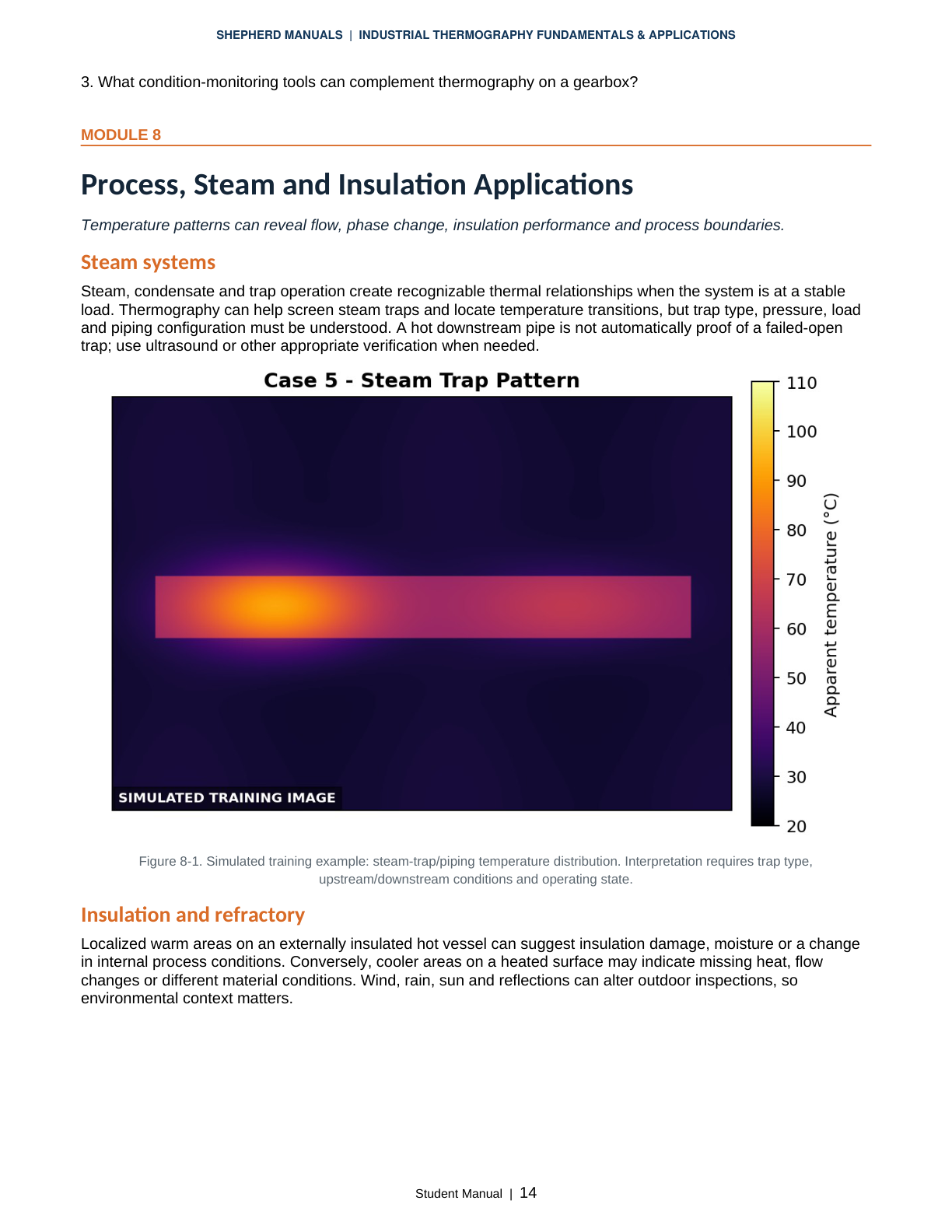
- Pumps, valves, piping, and process equipment
- Detecting abnormal heating
- Comparing similar components and operating conditions
- Establishing useful thermal inspection routes
- Avoiding common thermography mistakes
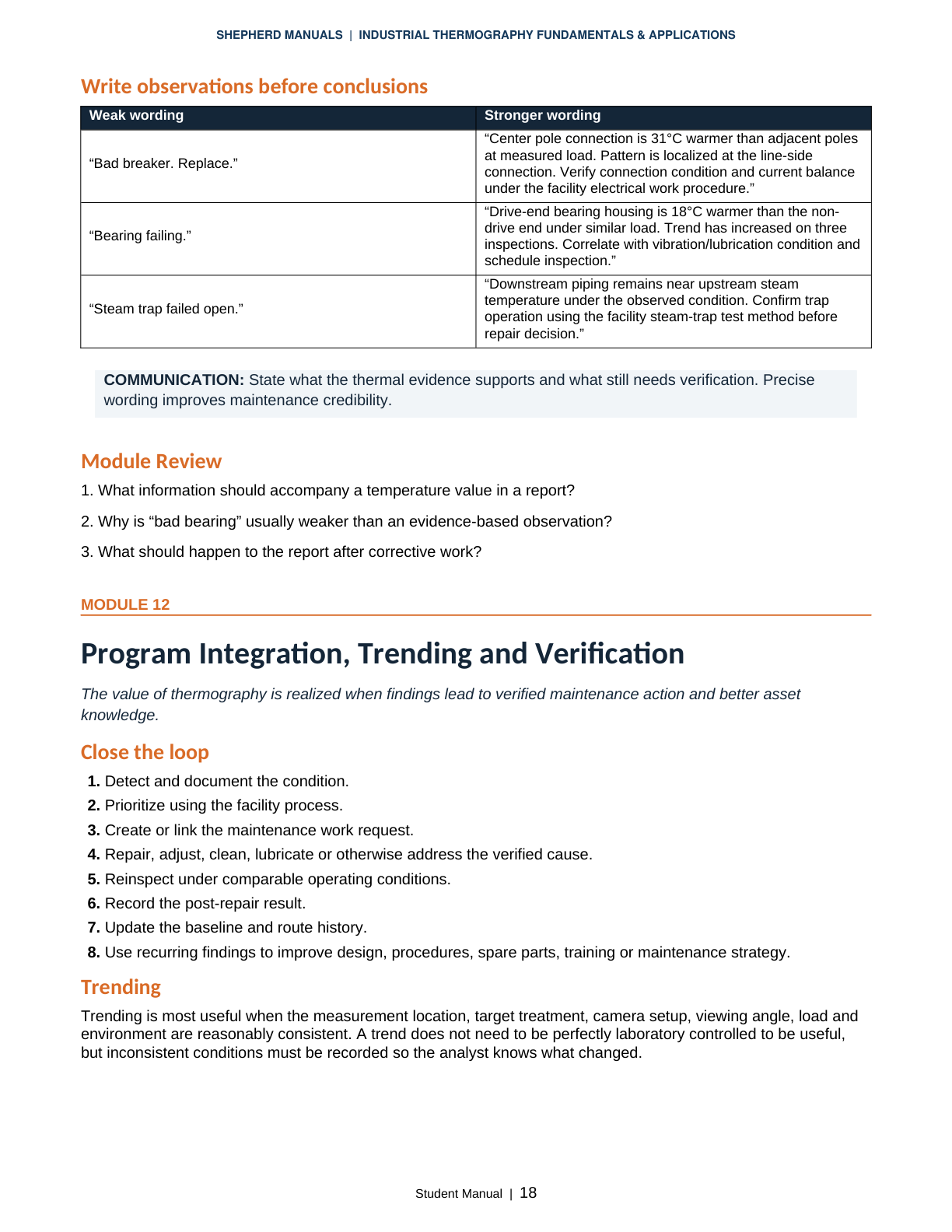
- Documenting inspection findings
- Using thermography in preventive and predictive maintenance
- Reliability-based troubleshooting
- Practical industrial examples and applications
- Safety considerations when performing inspections
BUILT FOR THE REAL INDUSTRIAL ENVIRONMENT
Thermal imaging is much more than pointing a camera at a machine.
A reliable inspection requires the technician to understand operating load, equipment condition, environmental influences, emissivity, reflections, accessibility, safety, and the relationship between temperature and equipment performance.
This manual emphasizes a simple principle:
Knowledge Before Assumption.
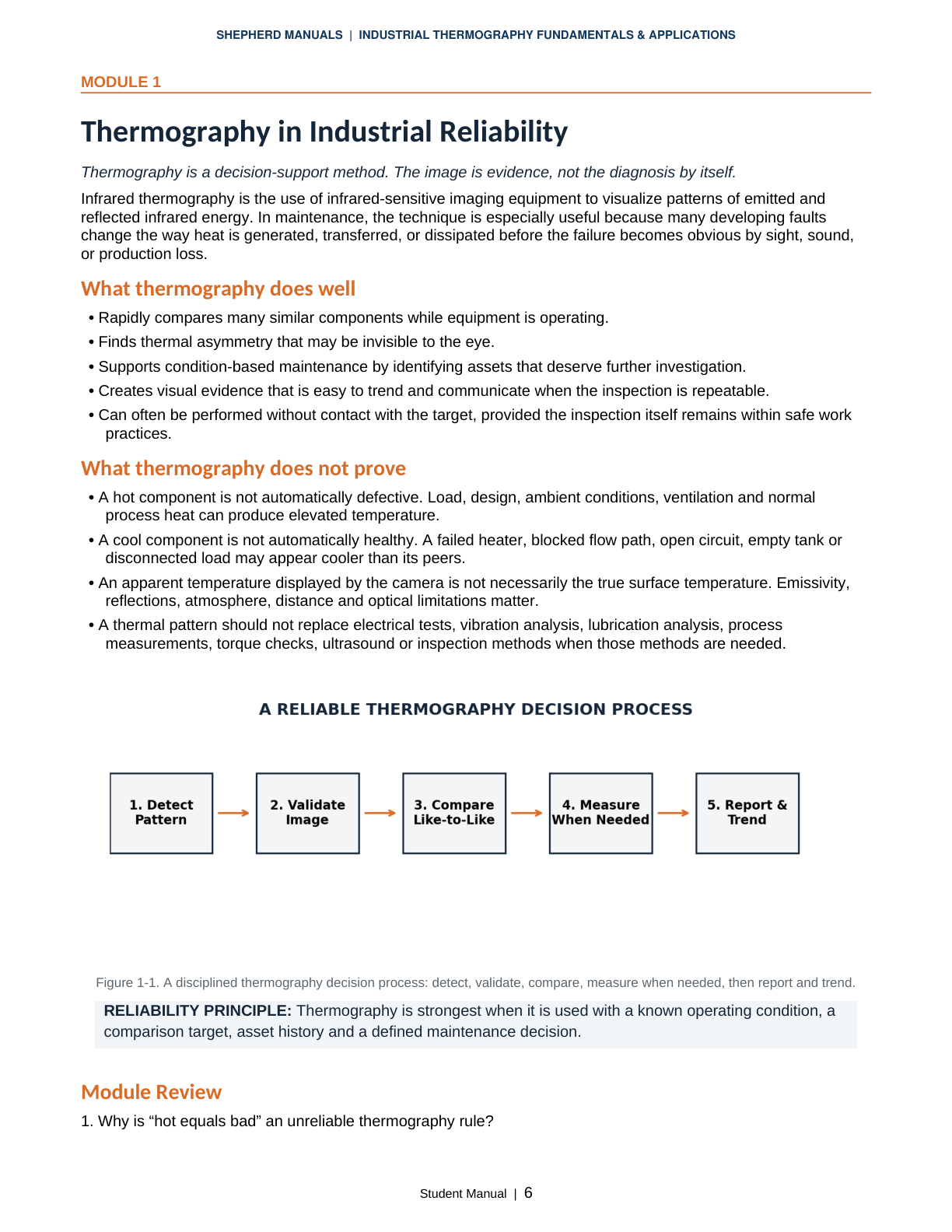
A hot component is not automatically a failed component. A cool component is not automatically healthy. The thermographer must gather information, compare conditions, understand the equipment, and make decisions based upon evidence.
IDEAL FOR
- Industrial maintenance technicians
- Industrial electricians
- Mechanical maintenance personnel
- Reliability technicians
- Predictive maintenance personnel
- Maintenance supervisors
- Engineering personnel
- Technical instructors
- Apprenticeship programs
- Industrial training departments
- Community and technical college programs
- Individuals preparing to expand their condition-monitoring knowledge
PRACTICAL KNOWLEDGE. REAL-WORLD RESULTS.
Thermography can help maintenance organizations:
DETECT developing problems.
PREVENT unnecessary equipment failures and downtime.
PERFORM more effective maintenance using condition-based information.
The goal of this course is not simply to teach the operation of a thermal camera. It is to help the student understand how thermography fits into industrial troubleshooting, maintenance, safety, and reliability.
IMPORTANT COURSE INFORMATION
This is a fundamentals training program and educational resource.
Completion of this course does not represent certification as a Level I, Level II, or Level III thermographer and should not be represented as equivalent to certification issued by a recognized thermography certification organization.
Always follow applicable electrical safety procedures, lockout/tagout requirements, arc-flash requirements, company policies, equipment manufacturer instructions, and applicable regulations when performing infrared inspections.
Published by Shepherd Manuals
Technical Knowledge. Practical Solutions.
Reliability • Safety • Performance
By Keith B. Shepherd