

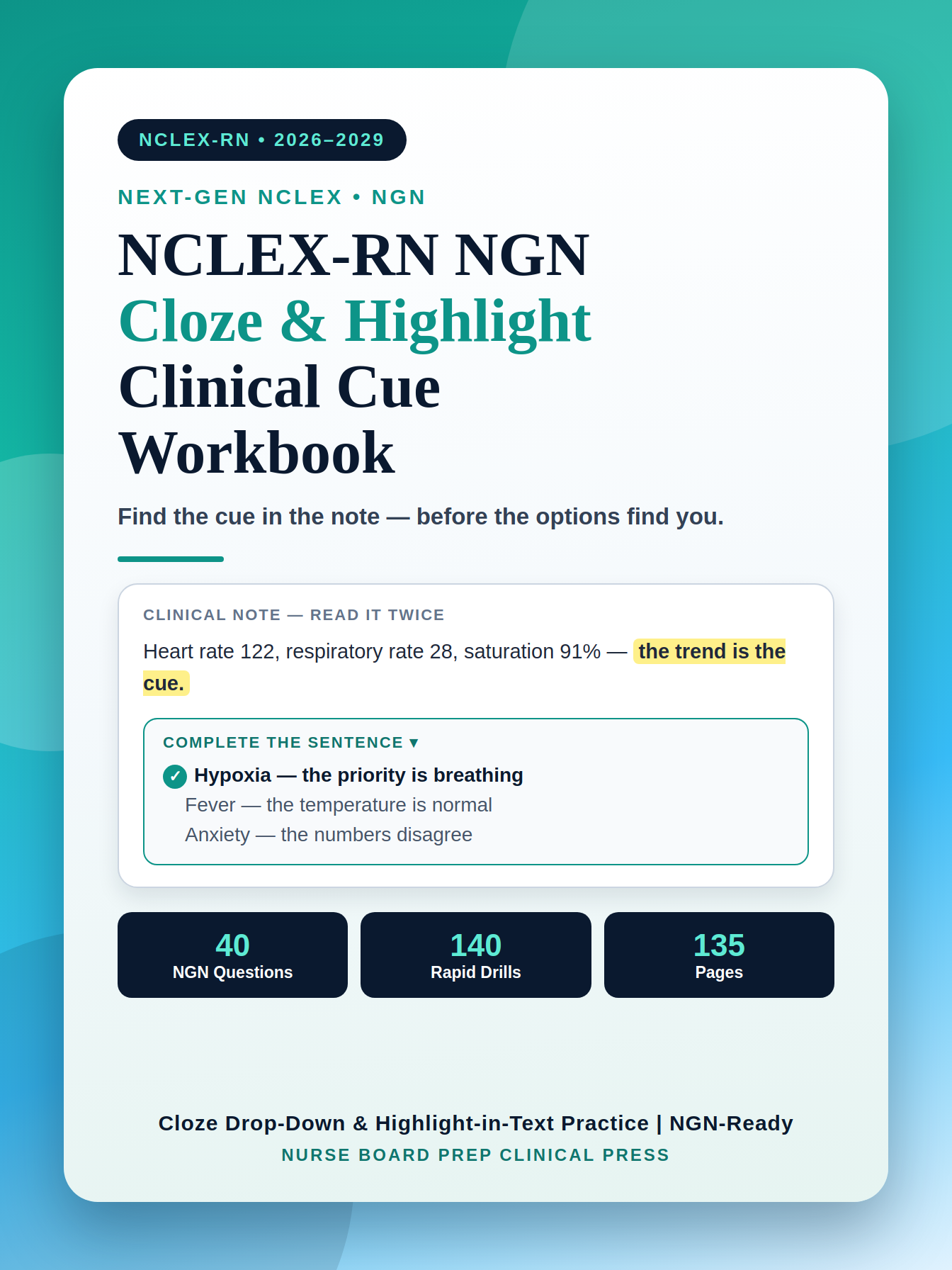
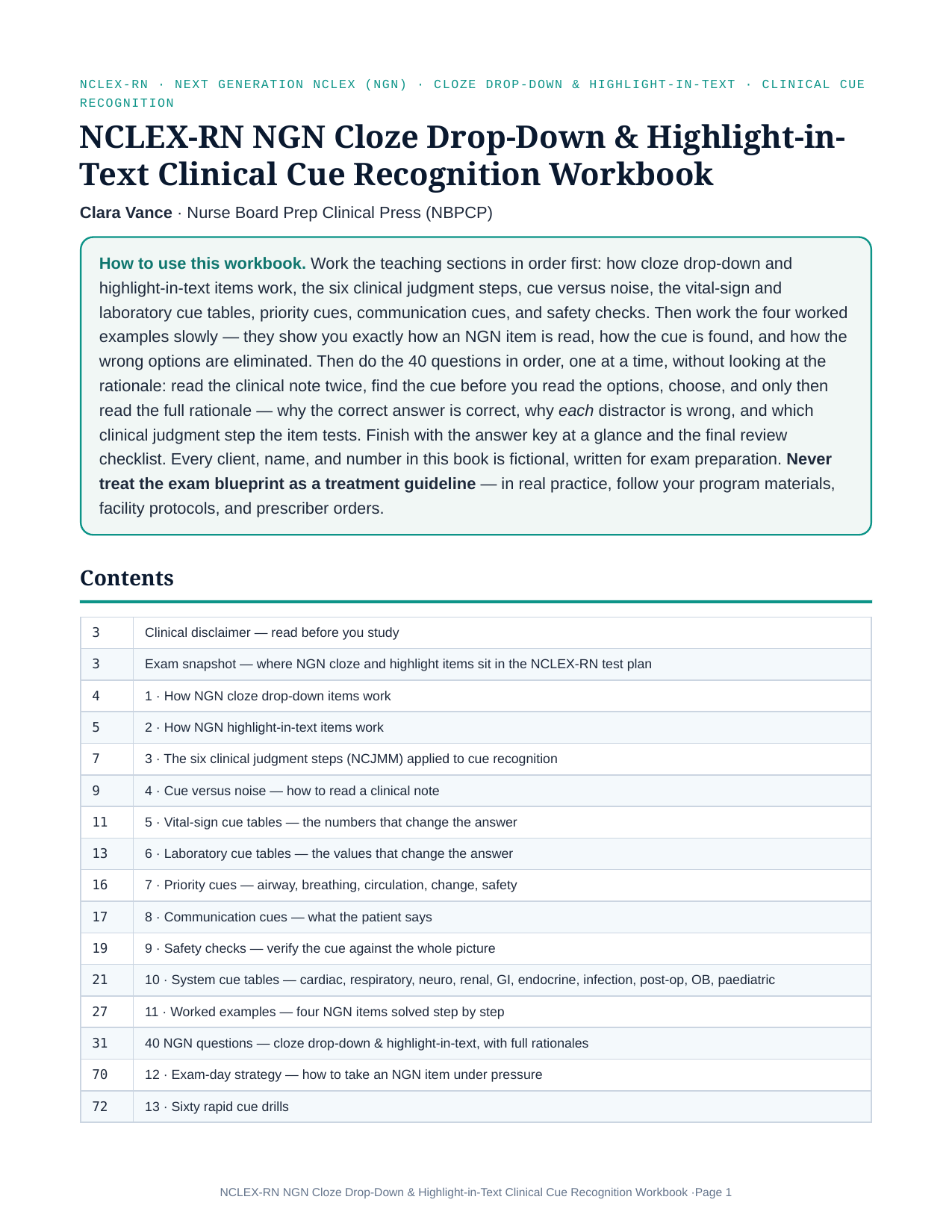
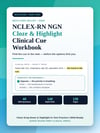
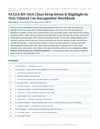
NCLEX-RN NGN Cloze Drop-Down & Highlight-in-Text Clinical Cue Recognition Workbook
On Sale
$22.00
(60% off)
$8.80
Next-Gen NCLEX cloze drop-down and highlight-in-text items, taught as a skill: read the clinical note twice, find the cue before you read the options, and eliminate the distractors one by one.
Inside:
- How NGN cloze drop-down items work — the five cloze traps, and the six-step routine for every item (about 85 seconds per item)
- How NGN highlight-in-text items work — highlight the smallest phrase that proves the cue: the finding, not the label; the change, not the baseline
- The six clinical judgment steps (NCJMM) applied to cue recognition, with cue clusters that form patterns (sepsis, volume loss, pulmonary embolism, stroke, ketoacidosis, anaphylaxis)
- Cue versus noise — the four questions (new? abnormal? getting worse? changes what I do next?) and the six kinds of noise, with a worked line-by-line mini-note
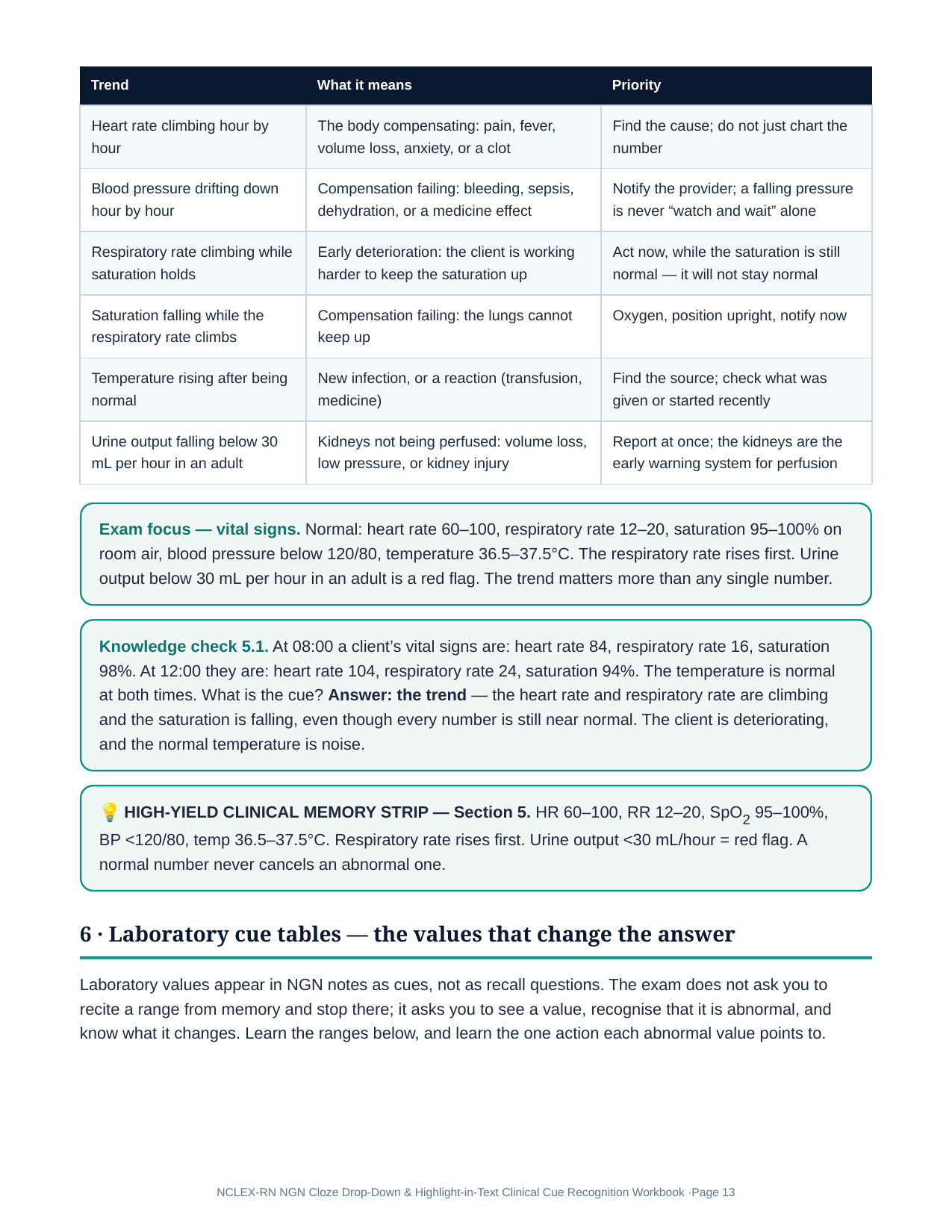
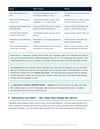
- Vital-sign cue tables — HR 60–100, RR 12–20, SpO2 95–100% on room air, BP below 120/80, temp 36.5–37.5°C; the respiratory rate rises first; urine output below 30 mL/hour is a red flag; trend tables
- Laboratory cue tables — Na 135–145, K 3.5–5.0, glucose below 70 (treat at once), pH 7.35–7.45, PaCO2 35–45, bicarbonate 22–26, haemoglobin 12–16 / 14–18, WBC 4,500–11,000, platelets 150,000–400,000; the acid–base rule (read the pH first; PaCO2 = respiratory, bicarbonate = metabolic); hyperkalaemia with peaked T waves = cardiac arrest risk
- Priority cues — airway, breathing, circulation, change in condition, safety, then everything else; communication cues (the five patient statements that must never be ignored); safety checks (baseline, trend, second finding, recent change, the client in front of you)
- Ten system cue tables — cardiac, respiratory, neuro, renal, GI, endocrine, infection, post-op, OB, paediatric
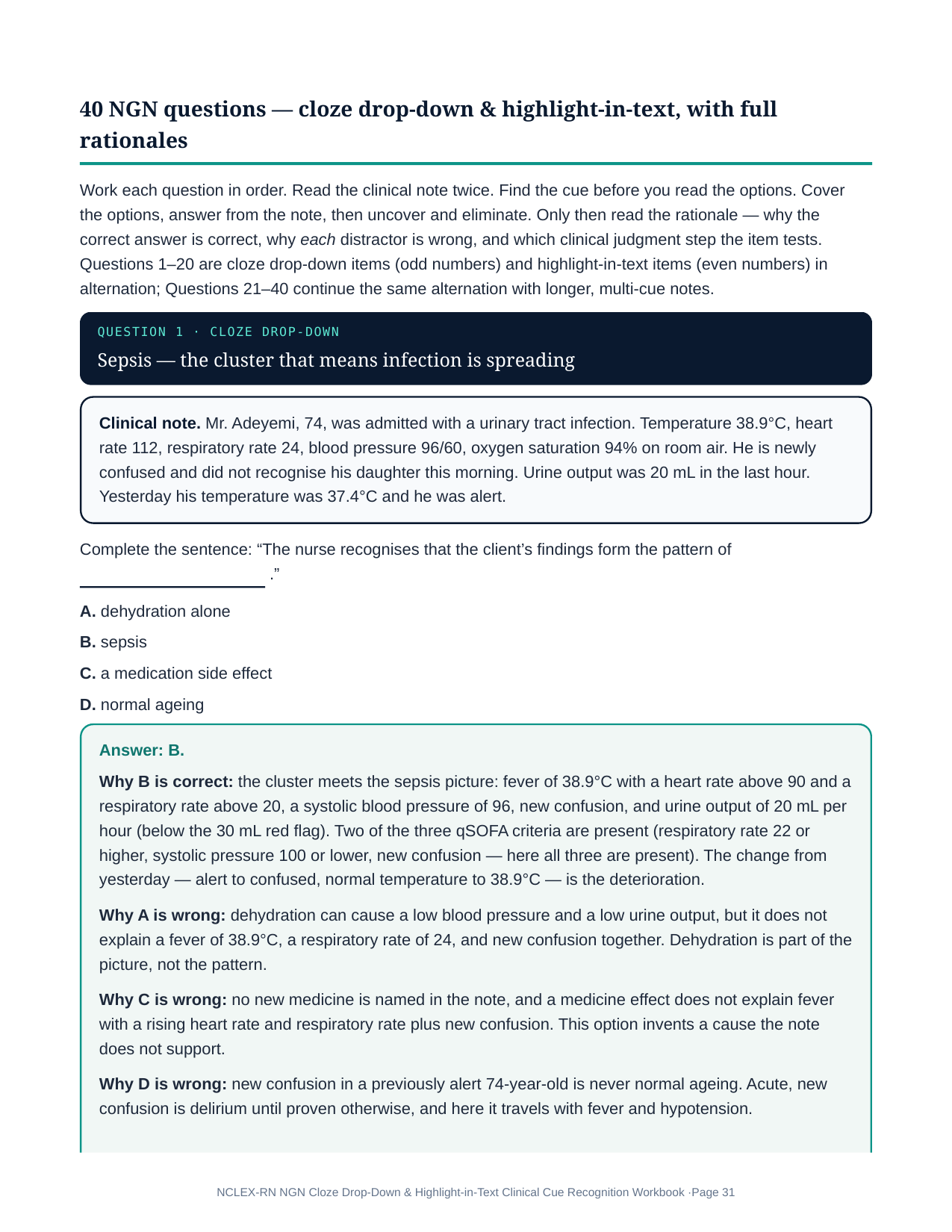
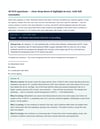
- 4 worked examples solved step by step, then 40 NGN questions (cloze drop-down and highlight-in-text in alternation) — every question with a clinical note, a full rationale (why the correct answer is correct AND why each distractor is wrong), the clinical judgment step it tests, a cue hunt, and a follow-up — plus an answer key at a glance
- Exam-day strategy, 140 rapid cue drills, 10 system mini-cases, 20 worked mini-notes, 15 trap dissections, look-alike tables, medication cue tables (recognition, priority, reporting only — no doses), safety tables, a full 6-item NGN case study, a 30-item cue-or-noise table, glossary, quick-reference cards, a 7-day study plan, and a 10-item self-test
No real medicine doses are asserted in this book — dosing is prescriber-ordered and product-specific. Where a medicine is named, this book teaches recognition, priority, and reporting — not a dose. Original teaching cases written for exam practice. This workbook is not affiliated with NCSBN and does not guarantee a pass. If you find an error, a corrected version will be sent free.