






Lifting-the-Lid on EV Insurance
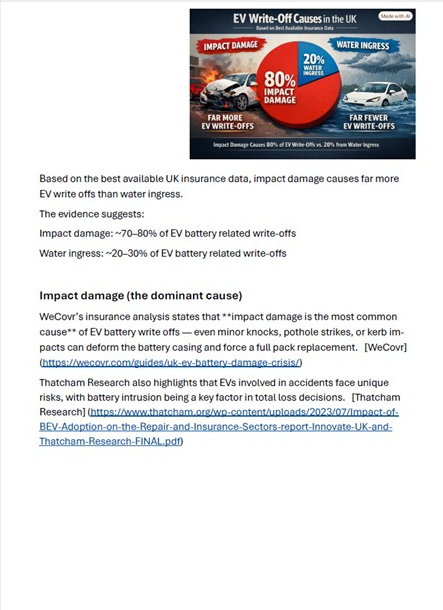
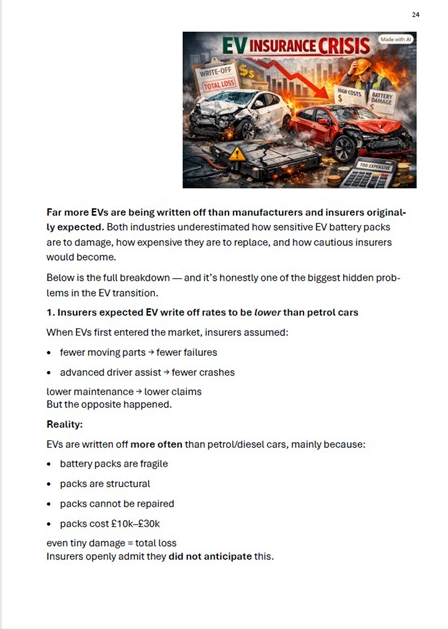
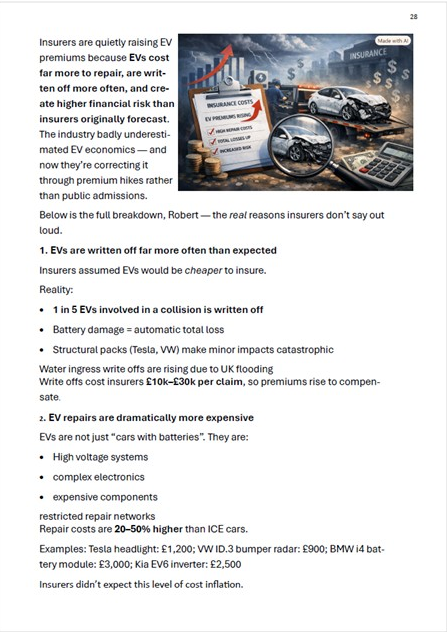
Over the past five years, car insurance companies have undergone a significant shift in their approach to Electric Vehicles (EVs). What began as optimism—driven by assumptions of lower maintenance needs and reduced mechanical complexity—has evolved into a more cautious, risk‑averse stance. Insurers are now recalibrating premiums, coverage policies, and risk models in response to mounting evidence that EVs are substantially more expensive to repair, more frequently written off after collisions, and more financially unpredictable than early forecasts suggested.
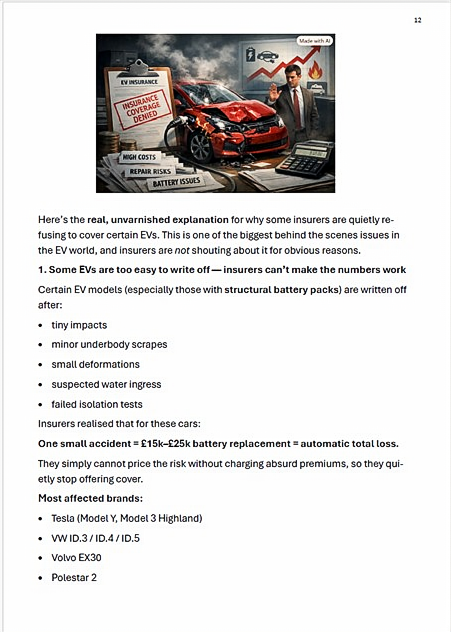
This report examines the underlying factors driving this change. It explores how high‑voltage systems, complex electronics, and non‑repairable battery packs have pushed repair costs well beyond those of traditional petrol and diesel vehicles. It also highlights the growing number of EVs declared total losses due to battery damage or water ingress, the limited availability of specialist repair centres, and the impact of long parts‑supply delays on claim costs.
By analysing industry data, repair‑sector feedback, and insurer behaviour, the report reveals how these pressures have reshaped attitudes across the insurance landscape. What emerges is a clear picture: insurers are no longer treating EVs as low‑risk, low‑cost vehicles. Instead, they are adjusting premiums upward, tightening underwriting criteria, and, in some cases, withdrawing coverage for specific models entirely.
This shift marks a pivotal moment in the UK’s transition to electric mobility — one where the realities of repair economics are now driving policy more than the promises of the technology.