
Frankenstein Novel Study | 4-Week Literature Unit for Grades 9–12 | Mary Shelley
Frankenstein Novel Study | 4-Week Literature Unit for Grades 9–12 | Mary Shelley
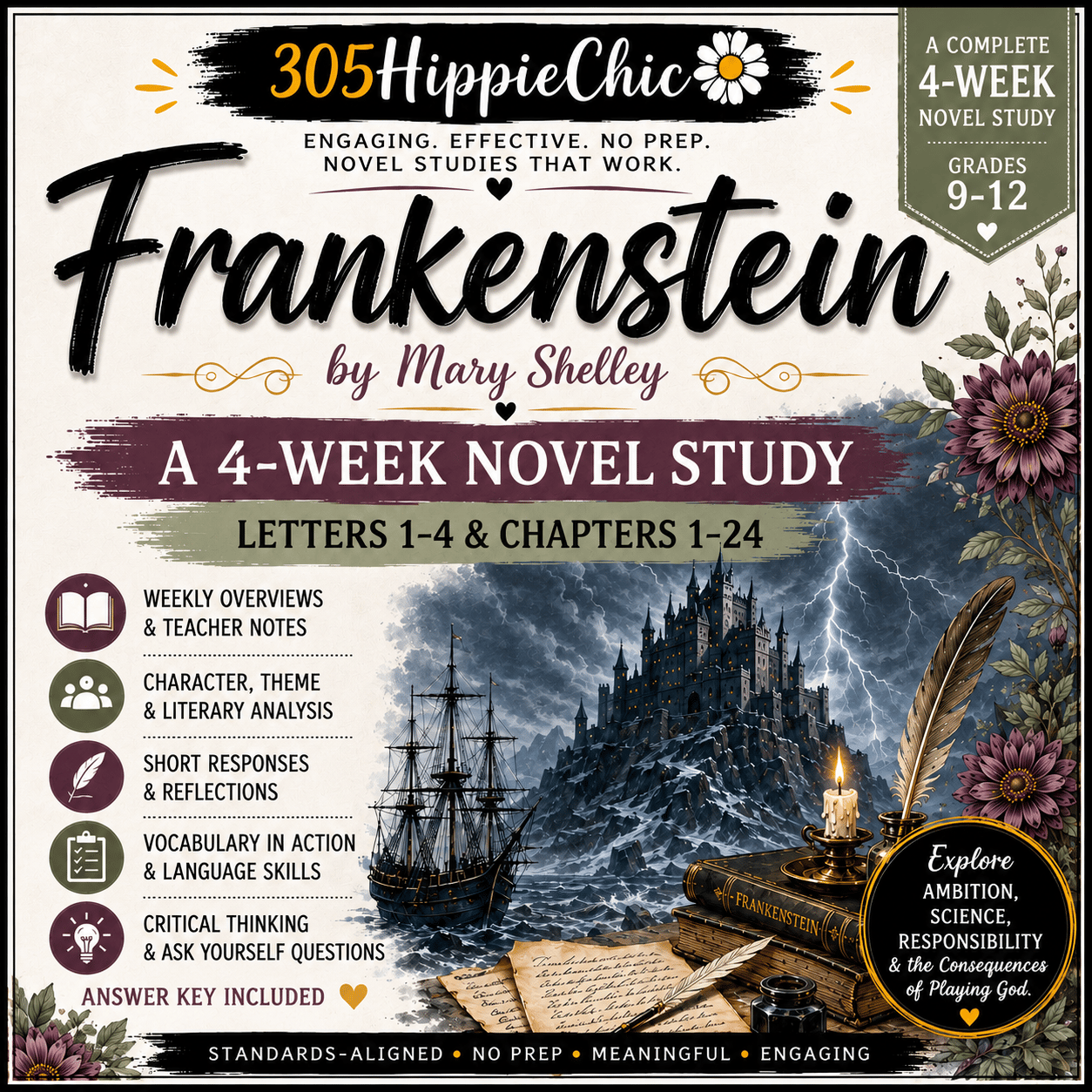
Teach Mary Shelley’s Frankenstein with a complete, structured 4-week novel study designed for high school English classrooms, Grades 9–12.
This ready-to-use literature unit guides students through Letters 1–4 and Chapters 1–24 while moving beyond basic comprehension into meaningful analysis of character, theme, conflict, author’s craft, and the ethical questions at the heart of Shelley’s novel.
Students explore Victor Frankenstein’s ambition and growing obsession, the creature’s experiences with rejection and isolation, and the consequences that unfold as both characters struggle with responsibility, revenge, morality, and accountability. The resource also develops students’ understanding of literary techniques including frame narration, foreshadowing, imagery, symbolism, shifting perspectives, characterization, and Gothic elements.
WHAT’S INCLUDED
- Complete 4-week Frankenstein novel study
- Coverage of Letters 1–4 and Chapters 1–24
- Weekly teacher notes and instructional overviews
- Vocabulary in Action activities using context clues and textual connections
- Reading comprehension and literary-analysis questions
- Character Focus activities
- Theme Focus activities
- Text-evidence practice
- Short-response writing
- Critical-thinking and reflection activities
- Ask Yourself / Think About questions
- Discussion questions
- Literary-focus guidance for character, conflict, and author’s craft
- Complete answer keys with sample responses
Students are consistently asked to support their thinking with evidence from the novel rather than simply recall plot details. For example, the resource asks students to analyze Victor’s character development, connect his ambition to his decisions, make evidence-based predictions, and consider the consequences of his choices.
Major Themes & Literary Concepts
Throughout the four weeks, students examine ideas including ambition, responsibility, science and ethics, isolation, appearance vs. reality, prejudice, compassion, justice, nature vs. nurture, rejection, revenge, redemption, accountability, and consequences.
The unit also encourages students to consider some of the novel’s larger questions: What responsibilities accompany knowledge and scientific discovery? How do rejection and prejudice shape behavior? When does ambition become dangerous? And what happens when people refuse to accept responsibility for their choices?
Flexible for Your Classroom
Use the activities for whole-class instruction, independent work, small groups, homework, literature study, intervention, enrichment, or substitute plans. The four-week organization makes it easy to follow the novel from beginning to end while still allowing teachers to select individual activities based on their students’ needs.
Perfect for:
High School ELA • Grades 9–12 • British Literature • Gothic Literature • Classic Literature • Frankenstein Units • Novel Studies • Literature Circles • Homeschool
No-prep. Standards-aligned. Thoughtful. Engaging.
Help students do more than simply finish Frankenstein. Give them opportunities to read closely, think critically, support their ideas with evidence, and wrestle with the questions that have kept Mary Shelley’s novel relevant for more than two centuries.
305HippieChic — Print. Think. Write. Learn.
