
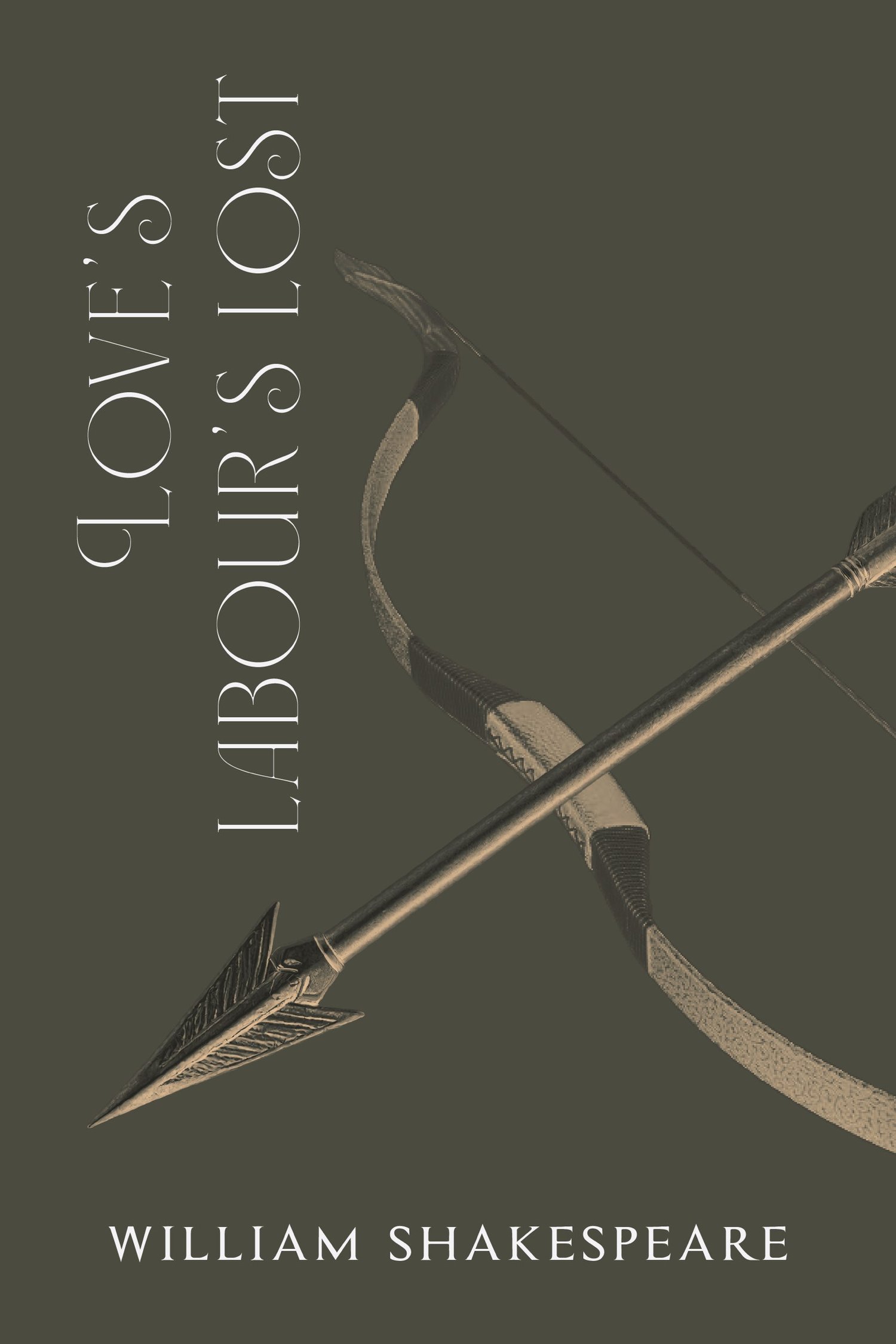
Love’s Labour’s Lost
The worst idea in Shakespeare? Four brilliant men swearing off women for three years to build a legendary academy. In Love’s Labour’s Lost, the King of Navarre and his lords make this spectacularly doomed vow—then the Princess of France shows up with three equally clever attendants, and the oath shatters instantly. Each man falls for his perfect match, launching a comedy of secret romance, broken promises, and increasingly desperate attempts to hide their hypocrisy. The problem? These women are smarter, funnier, and ten steps ahead of every scheme.
Watch the men crash and burn: terrible love sonnets that get publicly roasted, a masquerade as Russian visitors that backfires when the ladies swap identities and make each man woo the wrong woman, and constant verbal sparring where the women win every round. Shakespeare’s dialogue explodes with puns and wordplay as the Princess and her crew demolish male arrogance with surgical precision. They won’t be won by fancy rhetoric or empty gestures—they want authenticity, not performance. And they’re willing to wait for it.
Then comes Shakespeare’s revolutionary ending: the women refuse the fairy tale. A death interrupts the courtship, and when the men beg for immediate marriage, the ladies impose a one-year test. Live in isolation. Use your wit to help the sick, not seduce women. Prove your love means something. Only then can you return. Love’s Labour’s Lostgives us Shakespeare at his most linguistically dazzling and surprisingly modern—championing intelligent women who know their worth, demand equal partnership, and understand that real love requires more than clever words. If you want romance with actual substance, verbal brilliance that crackles off the page, and an ending that challenges everything you expect from a comedy, this is your play.
About the author
William Shakespeare (1564-1616) is widely regarded as the greatest writer in the English language and the world’s preeminent dramatist. Born in Stratford-upon-Avon, he wrote approximately 39 plays and 154 sonnets that have shaped literature, theater, and the English language itself for over four centuries. His works, from tragedies like Hamlet and King Lear to comedies like A Midsummer Night’s Dream and histories like Henry V, explore the full range of human experience with unmatched psychological insight, poetic brilliance, and emotional power. Shakespeare’s influence extends far beyond the stage; his phrases and characters have become woven into the fabric of modern culture, and his exploration of timeless themes—love, power, ambition, jealousy, mortality—continues to resonate with audiences worldwide. Despite the passage of centuries, his work remains startlingly contemporary, speaking to each new generation with fresh relevance and inexhaustible depth.