

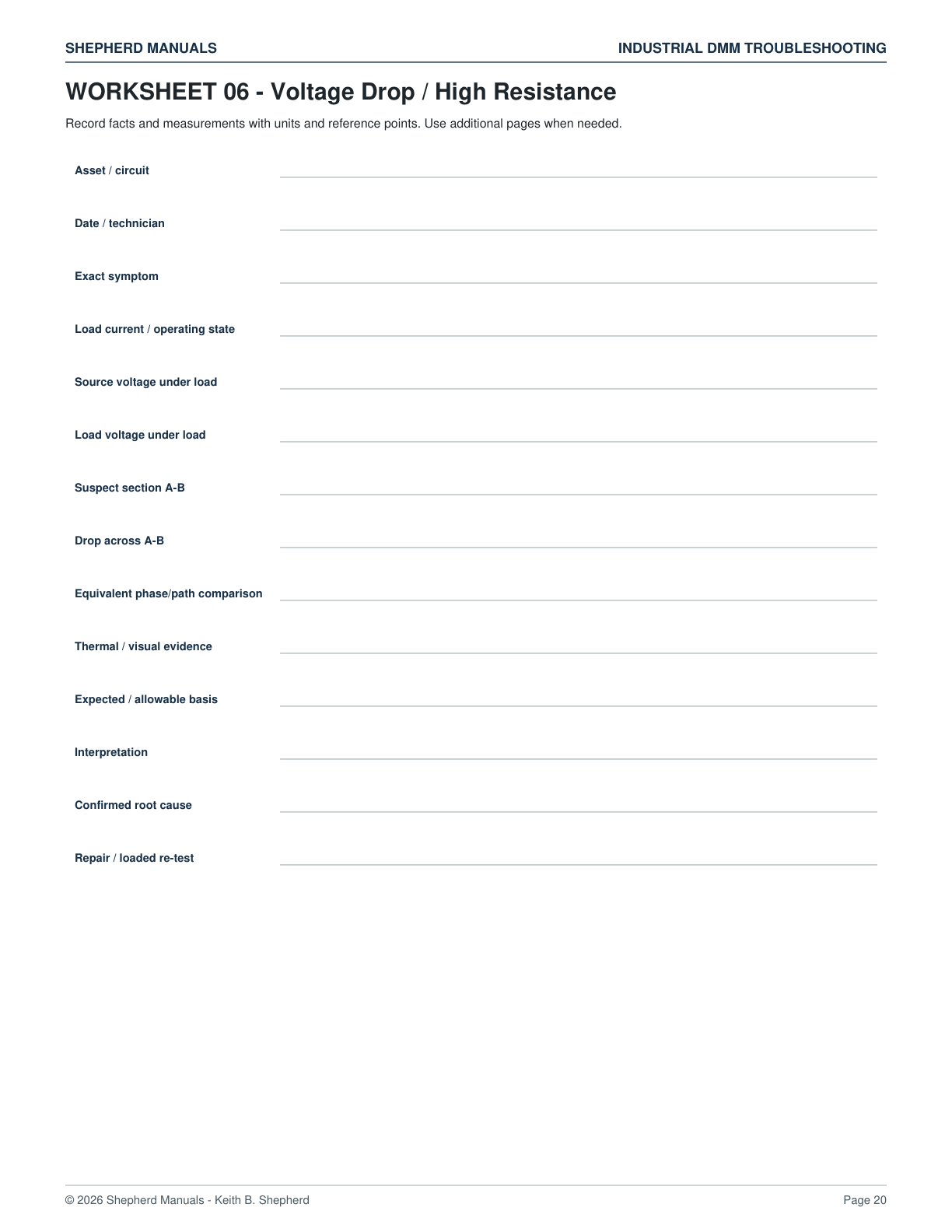
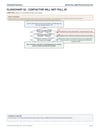
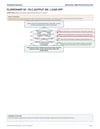
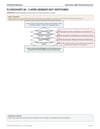
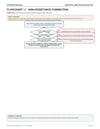
DMM Troubleshooting Flow Charts and Field Work
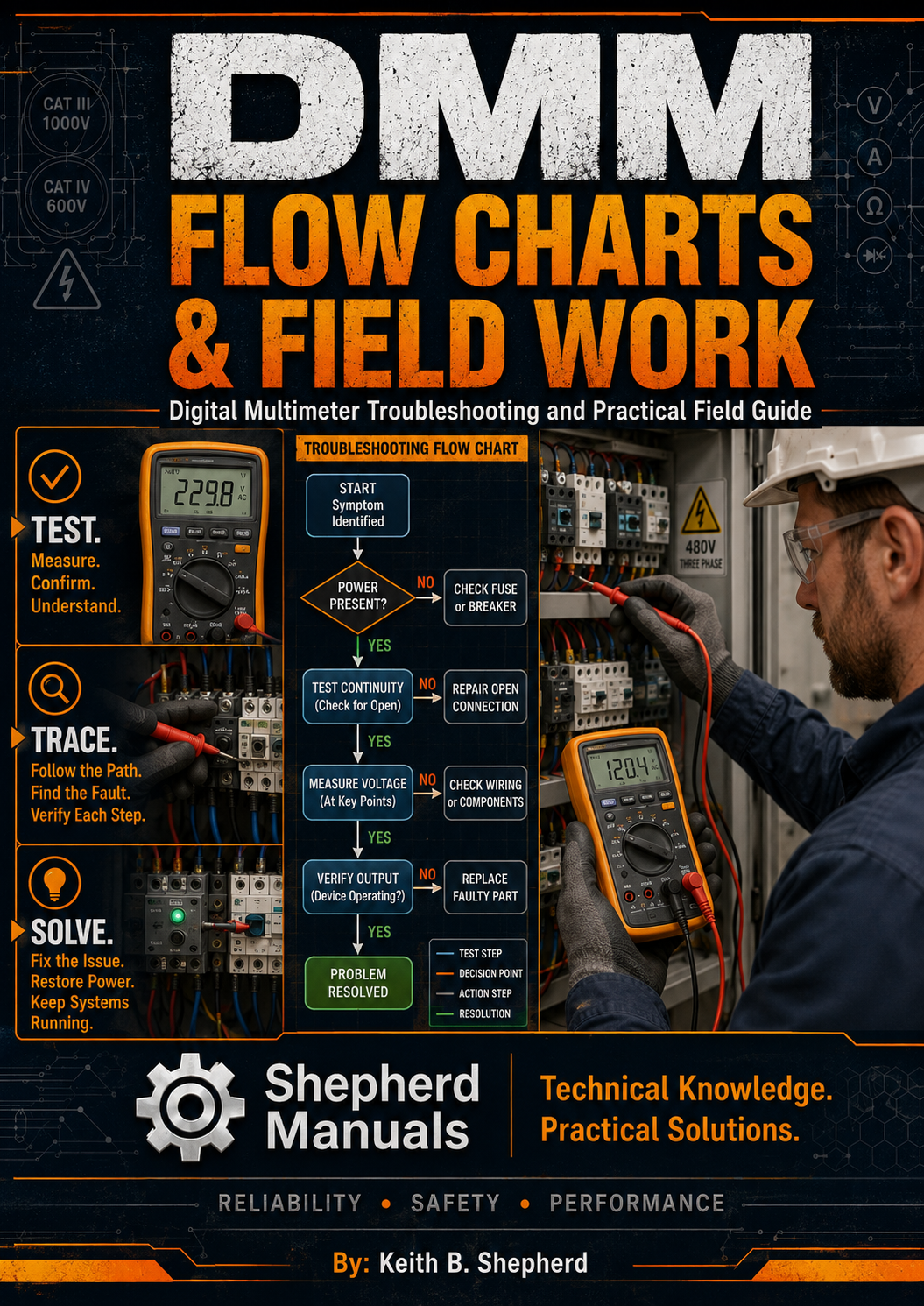
DMM FLOW CHARTS & FIELD WORK
Digital Multimeter Troubleshooting and Practical Field Guide
Shepherd Manuals
DMM Flow Charts & Field Work is a practical troubleshooting guide designed to help technicians, electricians, maintenance personnel, apprentices, and students use a digital multimeter in real-world industrial situations.
This guide goes beyond meter basics and focuses on how to think through an electrical problem step by step, using clear troubleshooting flow charts, practical field methods, and hands-on measurement guidance.
Instead of guessing, replacing parts at random, or jumping to conclusions, this guide teaches the user to follow a logical process:
Test. Trace. Solve.
WHAT THIS GUIDE HELPS YOU DO
- Use a digital multimeter with greater confidence
- Follow step-by-step troubleshooting paths
- Check voltage, continuity, resistance, and basic circuit conditions
- Verify whether power is present
- Trace faults through a circuit logically
- Identify open circuits, blown fuses, loose connections, and failed components
- Confirm control-circuit operation
- Troubleshoot relays, contactors, switches, and power circuits
- Make field checks more organized and repeatable
- Reduce wasted time and unnecessary parts replacement
- Improve troubleshooting consistency in the field
FLOW CHARTS FOR PRACTICAL TROUBLESHOOTING
One of the greatest challenges in electrical work is knowing what to check next.
This guide is built to help answer that question.
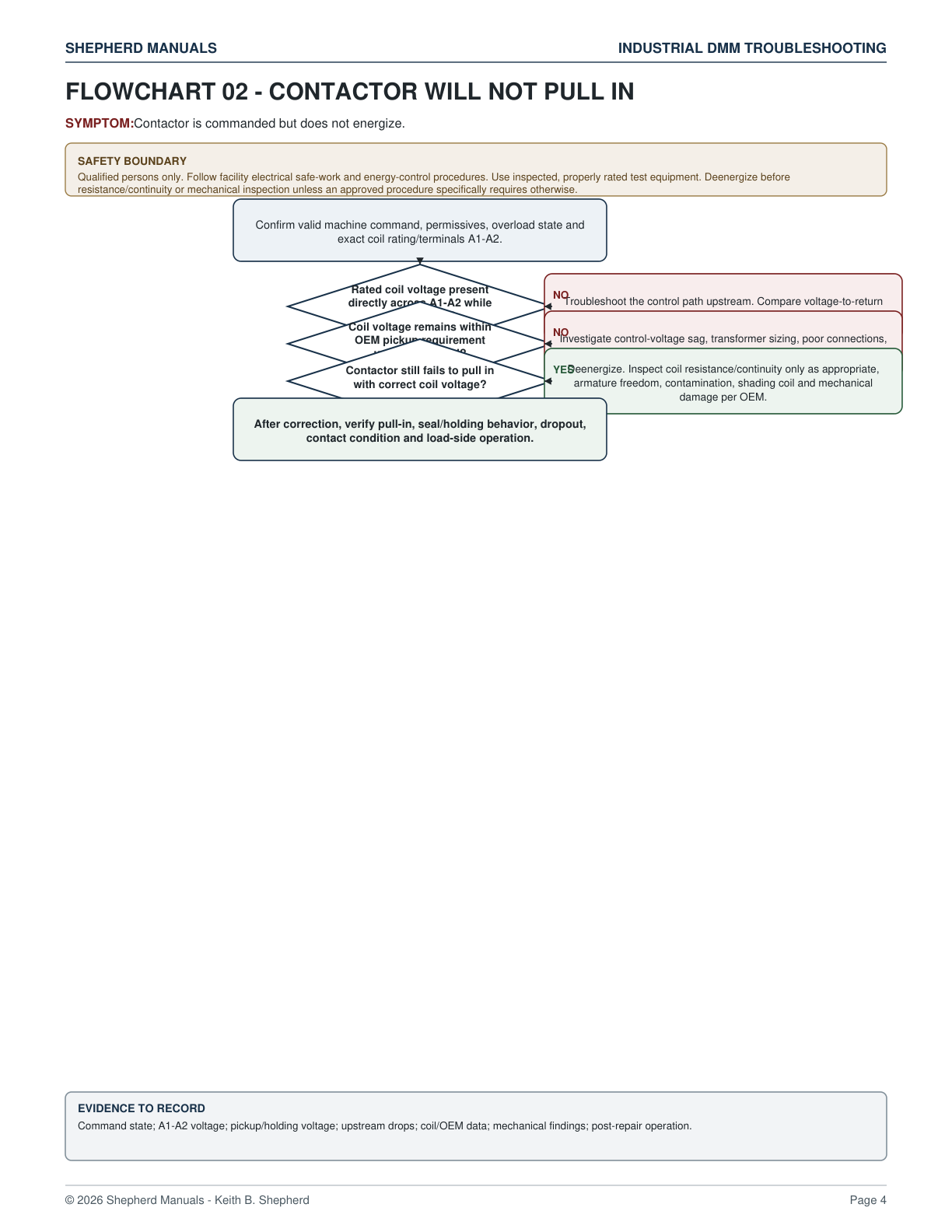
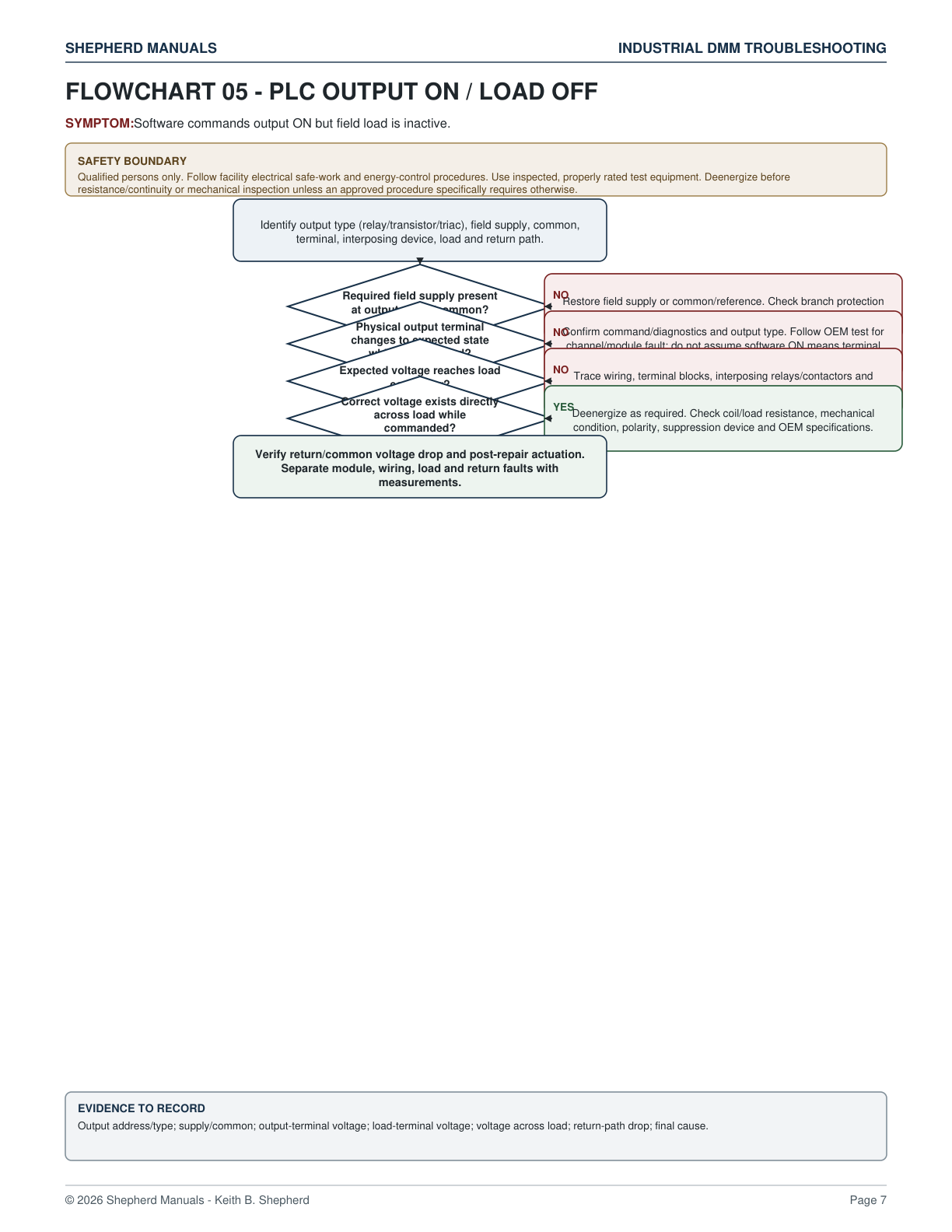
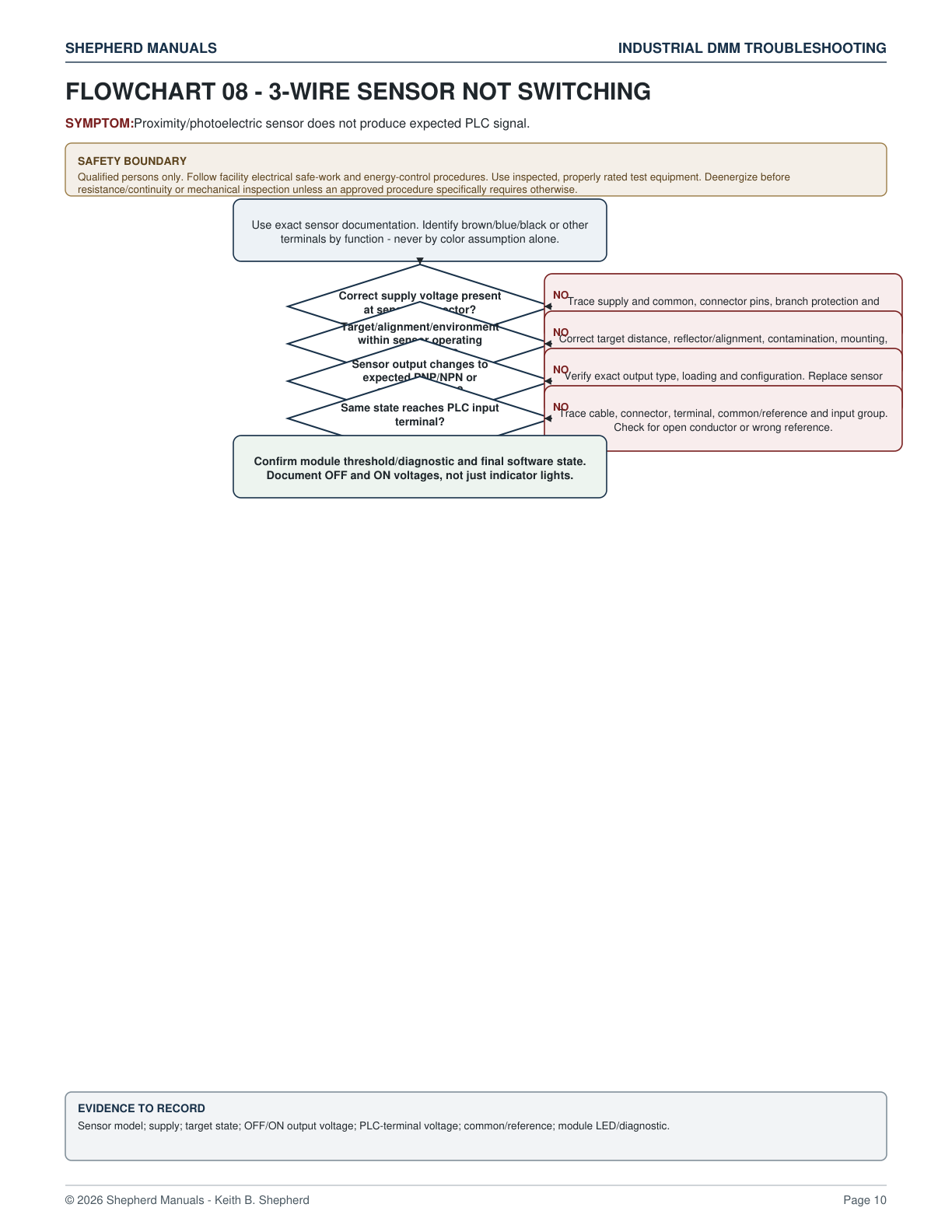
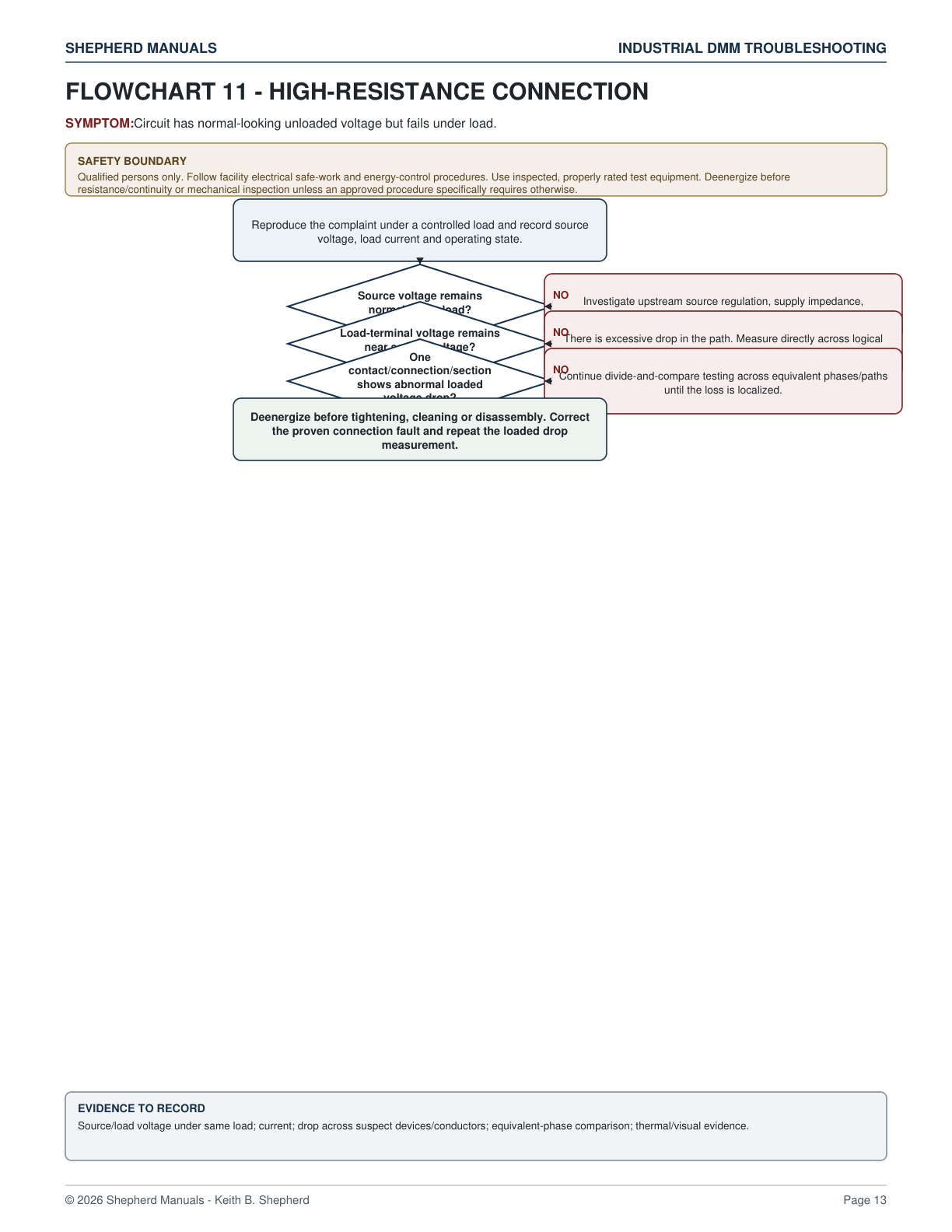
The flow charts are designed to help technicians move from:
- Symptom identified
- Power verification
- Continuity checks
- Voltage checks at key points
- Component and wiring checks
- Cause identification
- Corrective action
This makes the guide especially useful for field personnel who need a practical path to follow when troubleshooting under real working conditions.
FIELD WORK THAT MAKES SENSE
This is not just theory.
The guide is written for people working around:
- Industrial control panels
- Motor starters
- Contactors and relays
- Fuses and breakers
- Three-phase systems
- Control transformers
- Switches and sensors
- Power distribution equipment
- Machine control systems
- Maintenance and repair situations
It emphasizes the practical use of a DMM in the field, helping the technician understand what the reading means and how to use that information to move to the next step.
TEST • TRACE • SOLVE
TEST
Take the right measurement in the right place.
TRACE
Follow the electrical path and verify each stage.
SOLVE
Identify the actual problem and take the proper corrective action.
KNOWLEDGE BEFORE ASSUMPTION
This guide follows a core Shepherd Manuals principle:
Knowledge Before Assumption.
Good troubleshooting depends on facts, not guesswork.
Before replacing a part, verify the problem.
Before assuming power is present, measure it.
Before blaming a component, check the circuit feeding it.
Before declaring the problem solved, confirm proper operation.
Facts Before Fixes. Data Before Decisions.
IDEAL FOR
- Industrial electricians
- Maintenance technicians
- Electrical apprentices
- Mechanical technicians who perform electrical checks
- Technical students
- Workforce development programs
- Company training departments
- Maintenance supervisors
- Electrical instructors
- Anyone wanting a practical troubleshooting reference for DMM field use
PRACTICAL, CLEAR, AND READY TO USE
DMM Flow Charts & Field Work is designed as a practical reference you can keep available for training, field review, troubleshooting support, and skill development.
Its purpose is simple:
Help technicians measure correctly, think logically, troubleshoot faster, and work more safely.
IMPORTANT SAFETY NOTICE
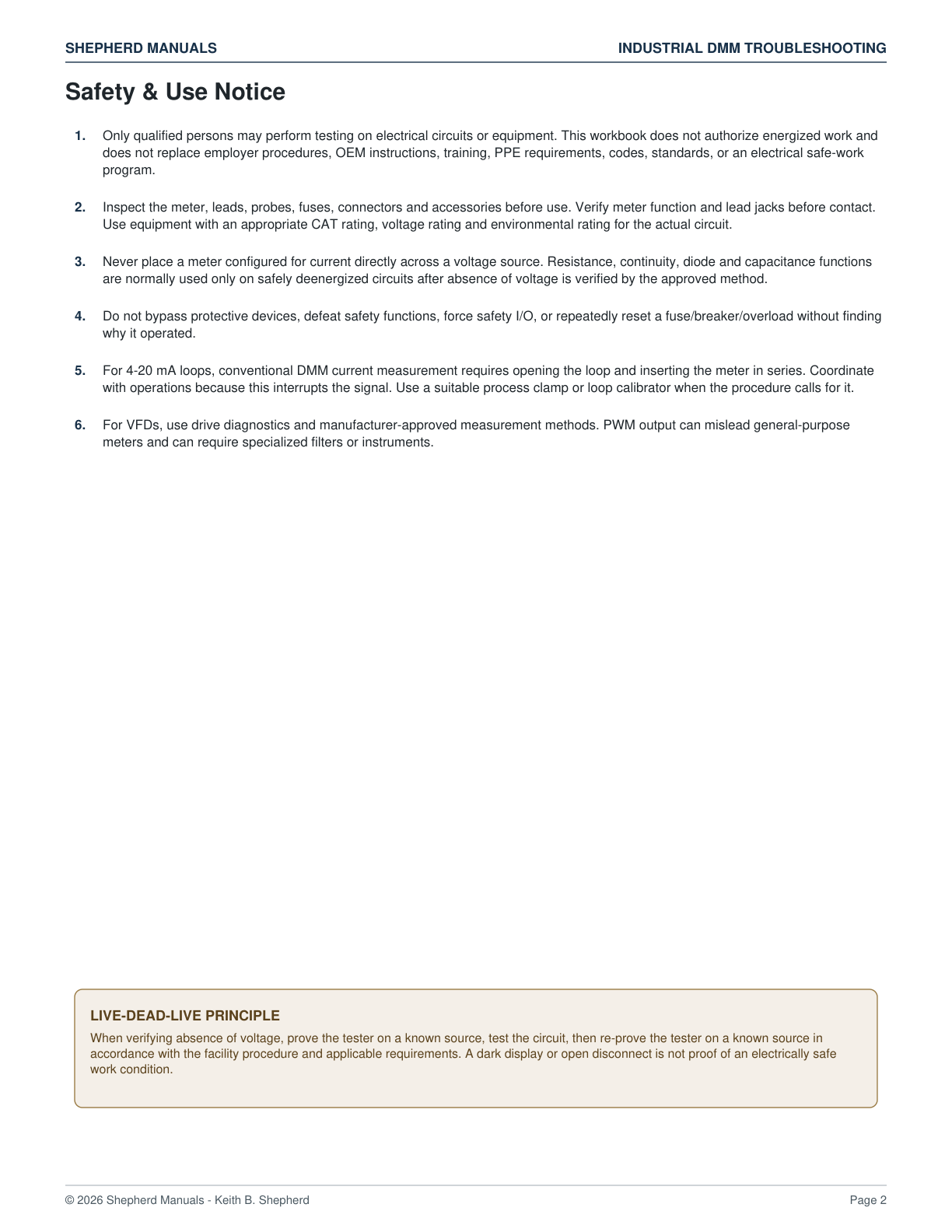
Electrical troubleshooting can expose personnel to shock, arc-flash, burns, equipment damage, and other serious hazards.
This guide does not replace proper electrical training, employer procedures, lockout/tagout requirements, arc-flash safety practices, PPE requirements, equipment manufacturer instructions, or applicable regulations.
Only qualified personnel should perform electrical testing, especially on energized equipment.
Always use properly rated meters, properly rated leads, appropriate PPE, and safe work practices for the circuit and environment involved.
SHEPHERD MANUALS
Technical Knowledge. Practical Solutions.
Reliability • Safety • Performance
By Keith B. Shepherd