
Industrial DMM Field Guide
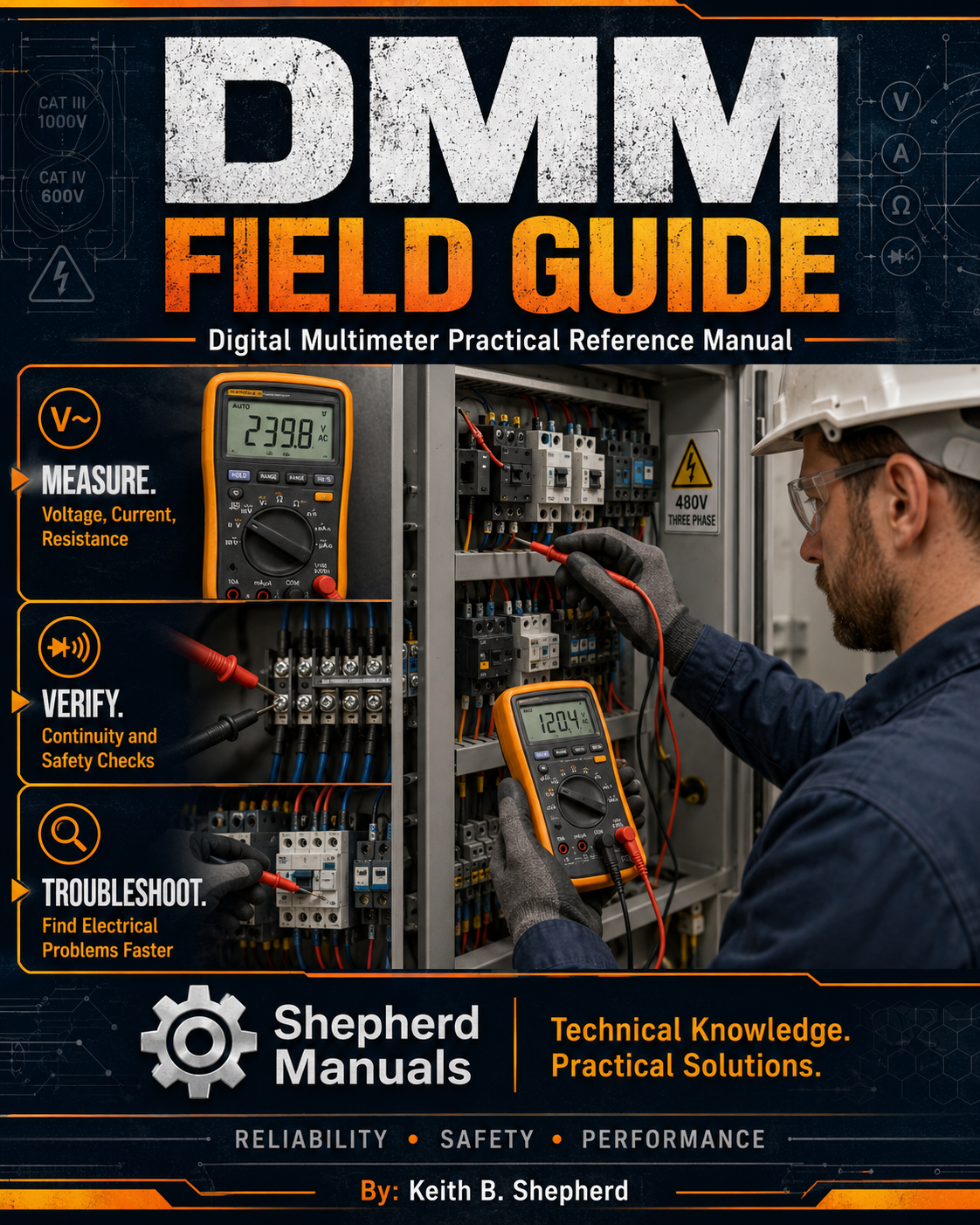
DMM FIELD GUIDE
Digital Multimeter Practical Reference Manual
Shepherd Manuals
The DMM Field Guide is a practical industrial reference for technicians, electricians, maintenance personnel, apprentices, students, and anyone who uses a digital multimeter for electrical testing and troubleshooting.
This guide focuses on the real-world use of the DMM—not just what the meter buttons do, but how to select the correct function, make safe measurements, interpret the results, and use those readings to troubleshoot electrical problems logically.
Whether you are checking voltage at a control panel, verifying continuity, testing resistance, confirming a power supply, or tracing an electrical fault, this guide is designed to help you work with greater confidence and accuracy.
WHAT YOU WILL LEARN
- Digital multimeter fundamentals
- Meter functions and controls
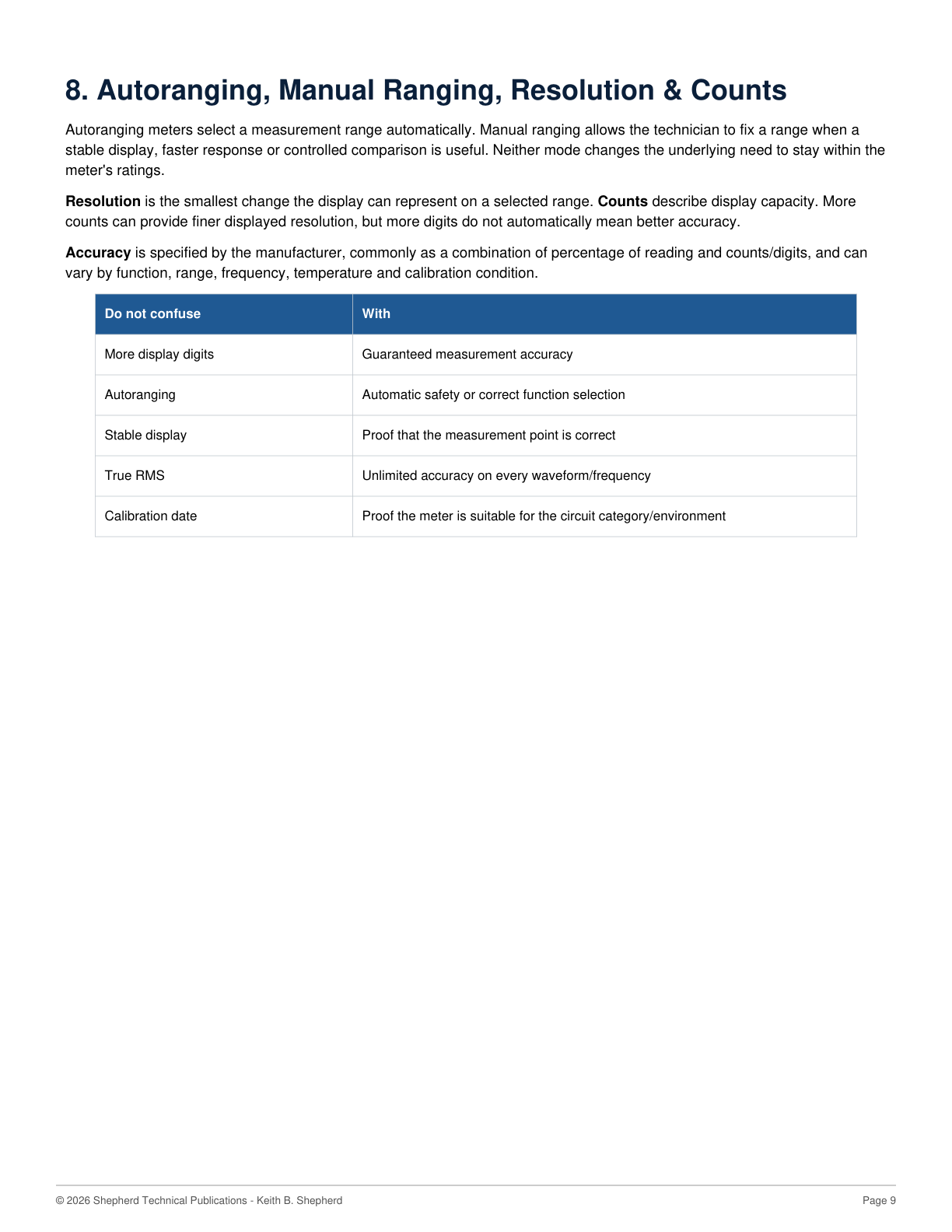
- Selecting the correct measurement range
- AC and DC voltage measurements
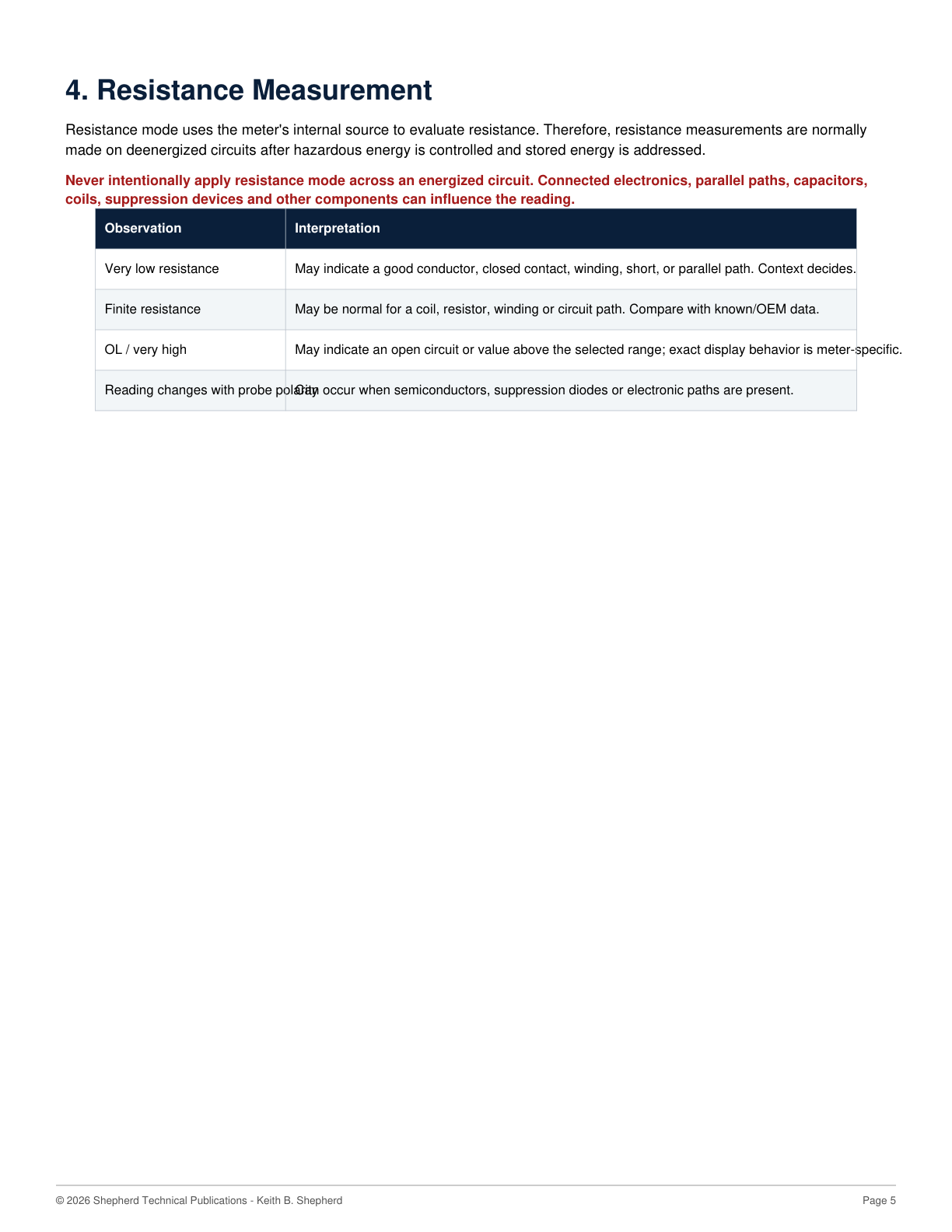
- Resistance measurements
- Continuity testing
- Current measurement fundamentals
- Diode testing
- Polarity and electrical reference points
- Proper test-lead connections
- Understanding COM, voltage, resistance, and current terminals
- Interpreting meter readings
- Open circuits and short circuits
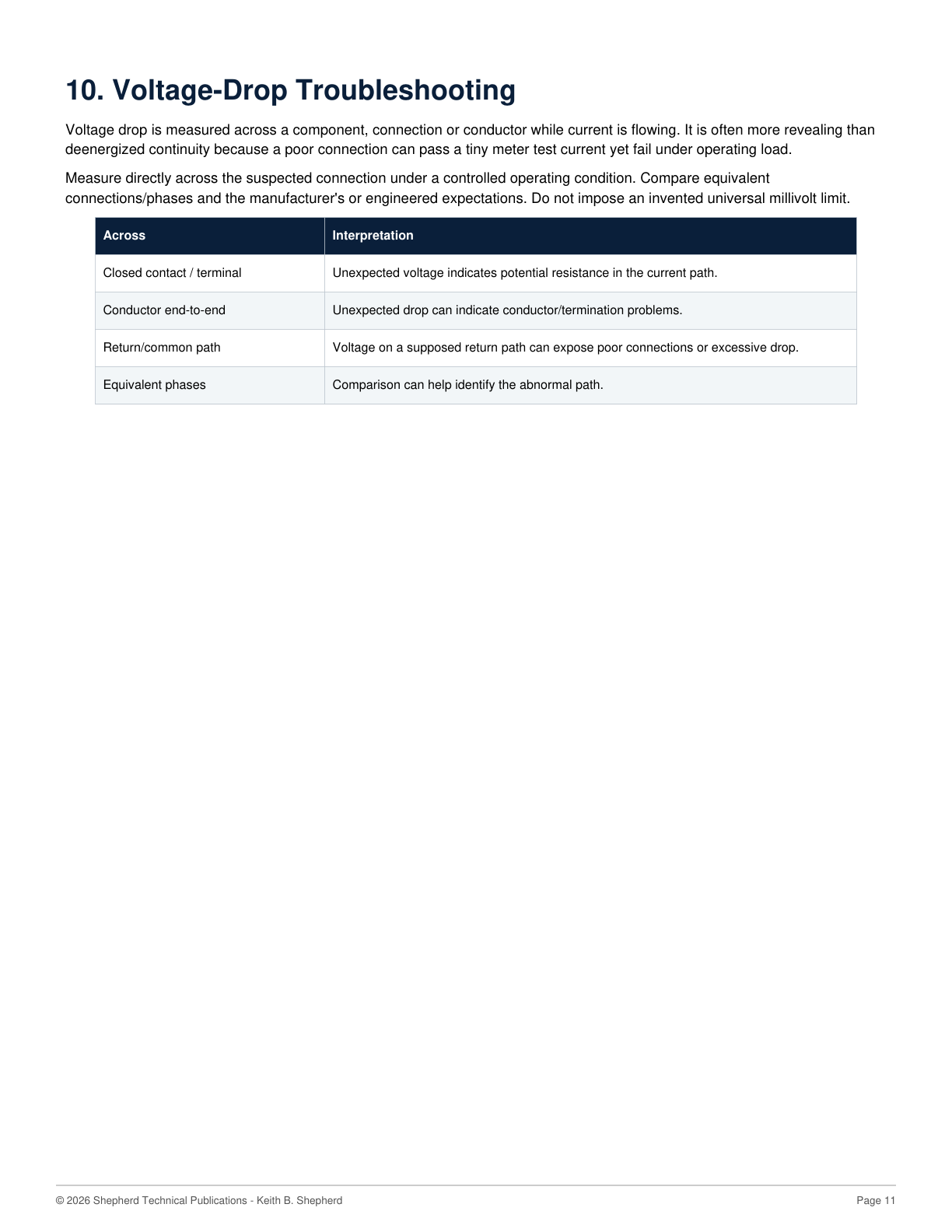
- Voltage drop testing
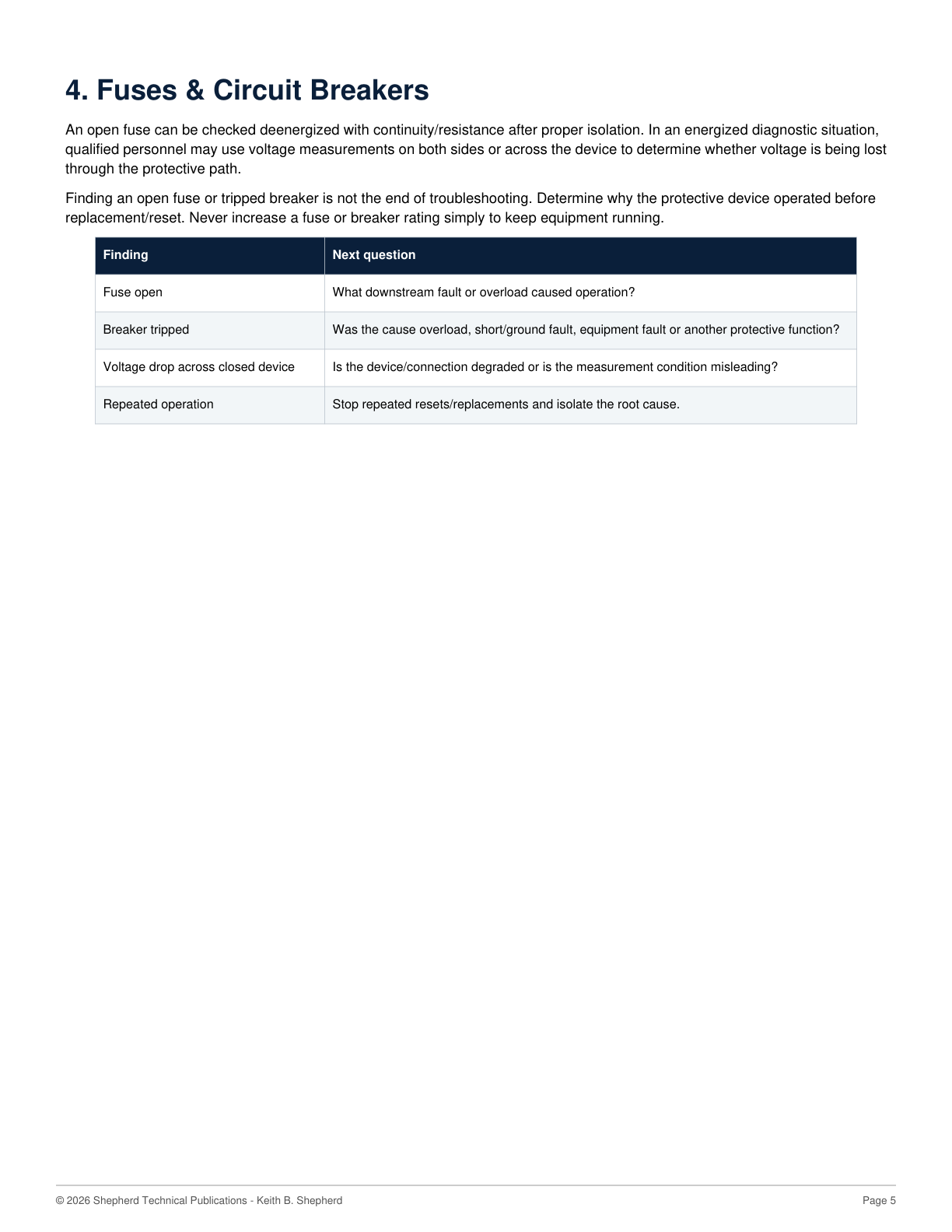
- Checking fuses and switches
- Testing control circuits
- Troubleshooting relays and contactors
- Checking power supplies
- Basic three-phase electrical measurements
- Identifying common electrical faults
- Developing a logical troubleshooting process
- Common DMM mistakes and how to avoid them
- Electrical measurement safety
MEASURE • VERIFY • TROUBLESHOOT
MEASURE
Learn how to obtain useful voltage, resistance, continuity, and other electrical measurements.
VERIFY
Use the meter to confirm circuit conditions instead of relying on assumptions.
TROUBLESHOOT
Use measured information to isolate electrical problems systematically and reduce unnecessary parts replacement.
KNOWLEDGE BEFORE ASSUMPTION
Electrical troubleshooting becomes much more effective when decisions are based on actual measurements.
The DMM Field Guide reinforces a core Shepherd Manuals principle:
Knowledge Before Assumption.
Before replacing a component, determine what the circuit is doing.
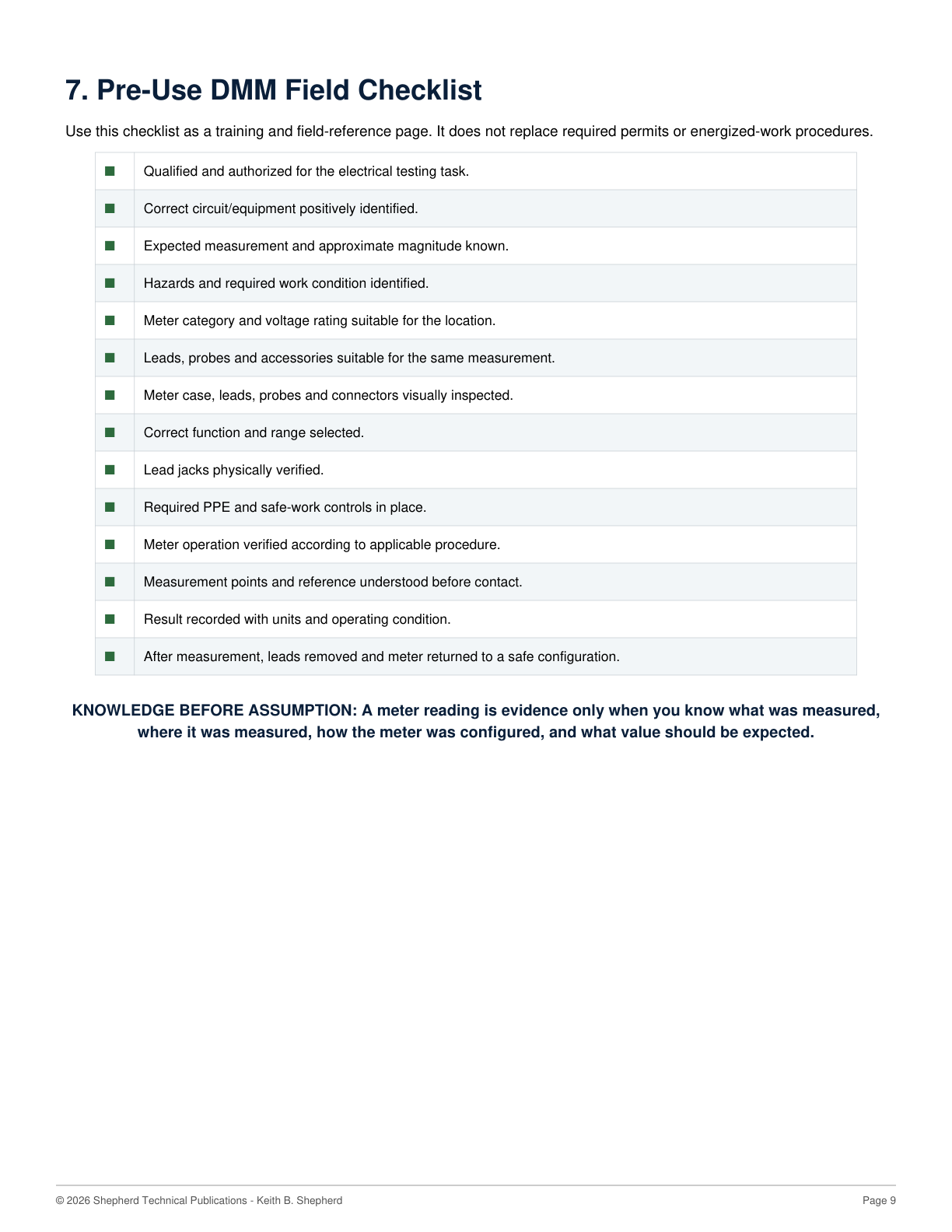
Before assuming power is present, measure it.
Before assuming a wire is good, verify it.
Before declaring a component defective, gather the evidence.
Facts Before Fixes. Data Before Decisions.
BUILT FOR THE INDUSTRIAL ENVIRONMENT
The examples and methods in this guide are intended for practical electrical and industrial applications, including:
- Electrical control panels
- Motors and motor controls
- Contactors and relays
- Control transformers
- Power supplies
- Fuses and circuit protection
- Sensors and switches
- Industrial machinery
- Maintenance troubleshooting
- Electrical preventive maintenance
IDEAL FOR
- Industrial electricians
- Maintenance technicians
- Electrical apprentices
- Mechanical technicians who perform electrical checks
- Industrial maintenance students
- Technical college students
- Electrical instructors
- Maintenance supervisors
- Reliability personnel
- Manufacturing training departments
- Anyone wanting stronger practical DMM skills
A FIELD REFERENCE YOU CAN USE
The DMM Field Guide is designed to be more than a textbook.
Keep it available as a practical reference when reviewing measurement procedures, training employees, refreshing electrical knowledge, or working through troubleshooting situations.
Its purpose is simple:
Help the technician measure correctly, think logically, troubleshoot efficiently, and work safely.
IMPORTANT SAFETY NOTICE
Electrical testing can expose personnel to hazardous voltage, arc-flash energy, shock, burns, equipment damage, and other serious hazards.
This guide does not replace qualified electrical training, applicable safety regulations, employer procedures, manufacturer instructions, PPE requirements, lockout/tagout procedures, or arc-flash safety requirements.
Only qualified personnel should perform energized electrical testing when such testing is permitted and necessary.
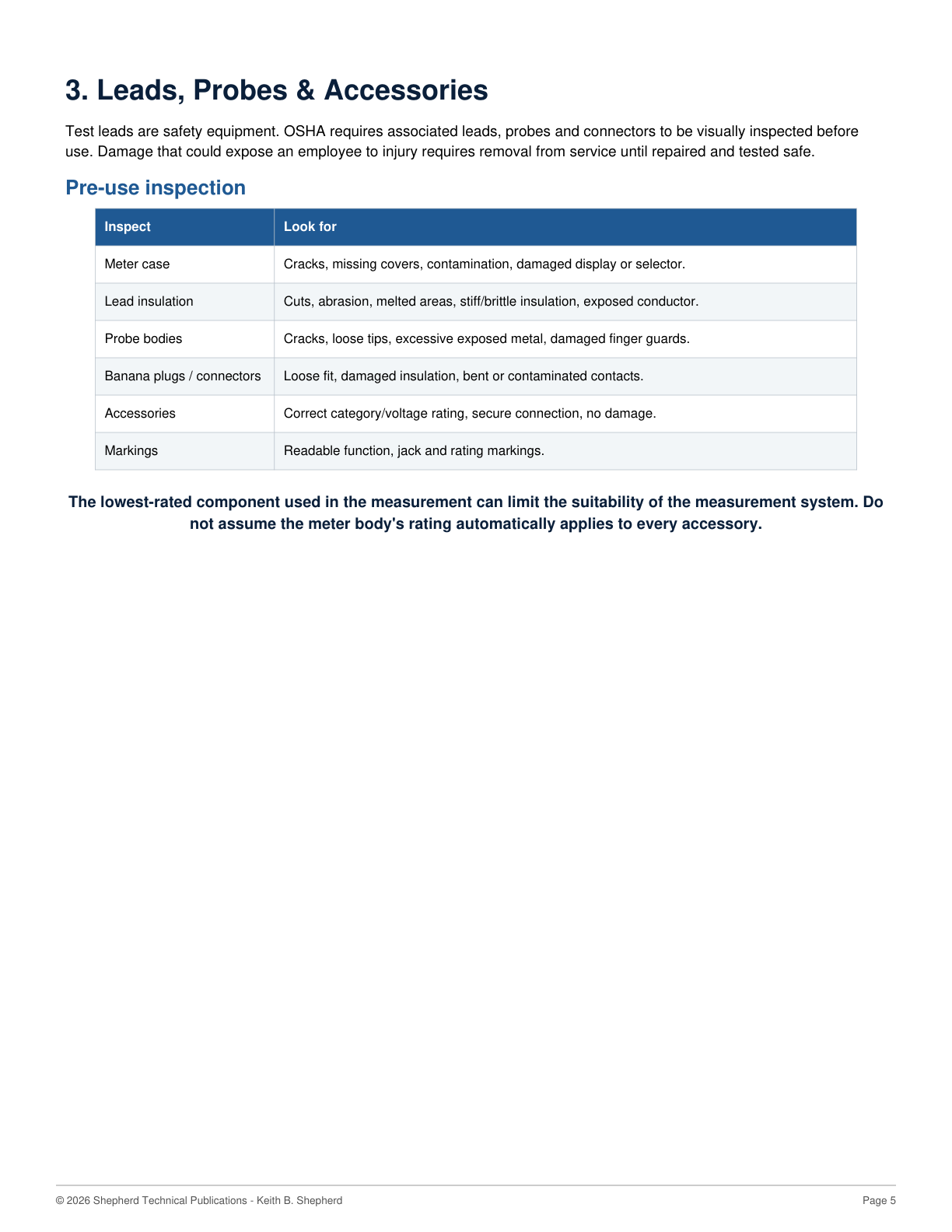
Always use a properly rated meter, properly rated test leads, appropriate PPE, and safe work practices for the equipment and environment being tested.
SHEPHERD MANUALS
Technical Knowledge. Practical Solutions.
Reliability • Safety • Performance
By Keith B. Shepherd