



13 Colonies Simulation Game | Found a Colony in New England, the Middle Colonies or the South | Grades 5-8
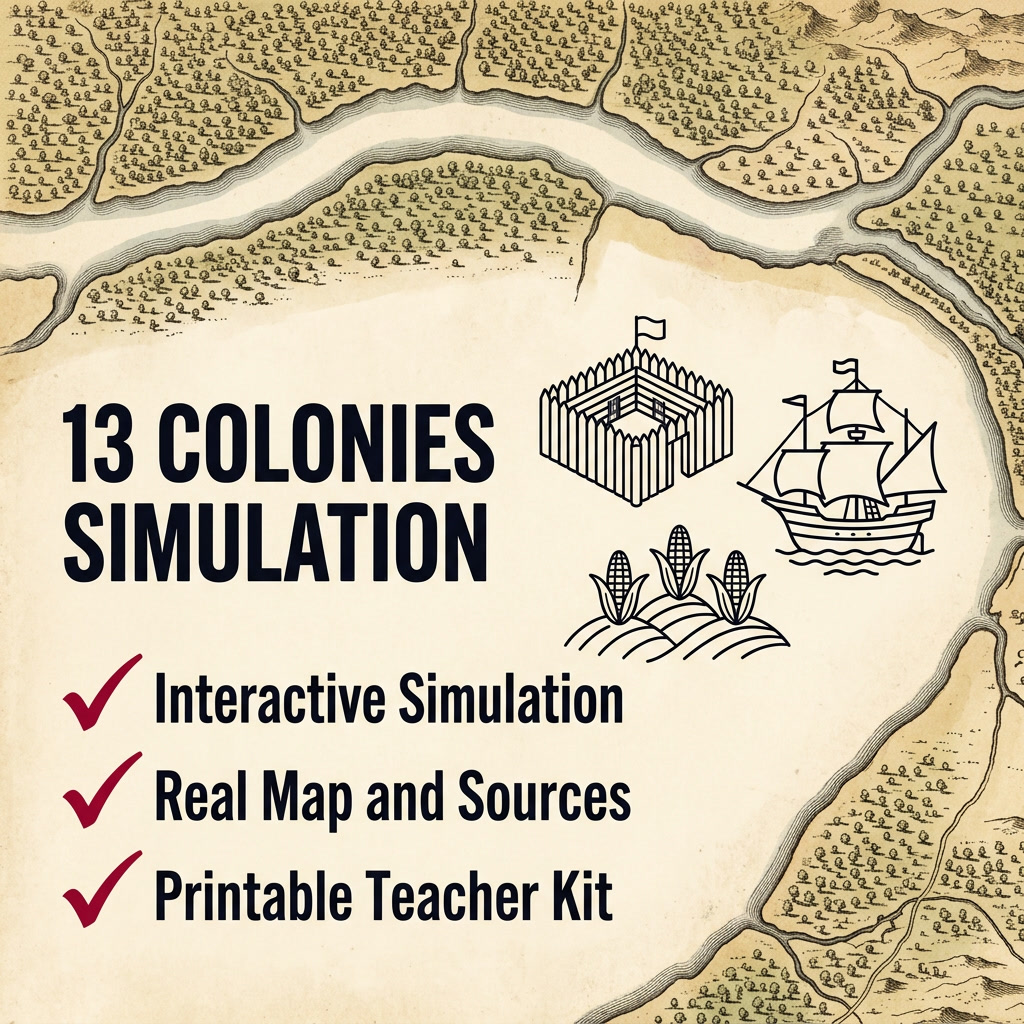
Your students found a colony in 1607 and run it for three years, season by season. Each season they set ten work crews, answer the news from the real record, and watch the consequences land on a hand-drawn settlement. Run out of corn, lose the trust of the Powhatan, or send London nothing worth selling, and the colony ends early. Three real foundings to choose from: James Fort from 1607, Plymouth Plantation from 1620, and Philadelphia from 1682.
What's Included
- The simulation: one file that opens in any web browser, for the projector or student laptops
- Three complete scenarios on one engine, twelve seasons each, every one starting in its real season: Jamestown in spring, Plymouth in a New England winter, Philadelphia in autumn
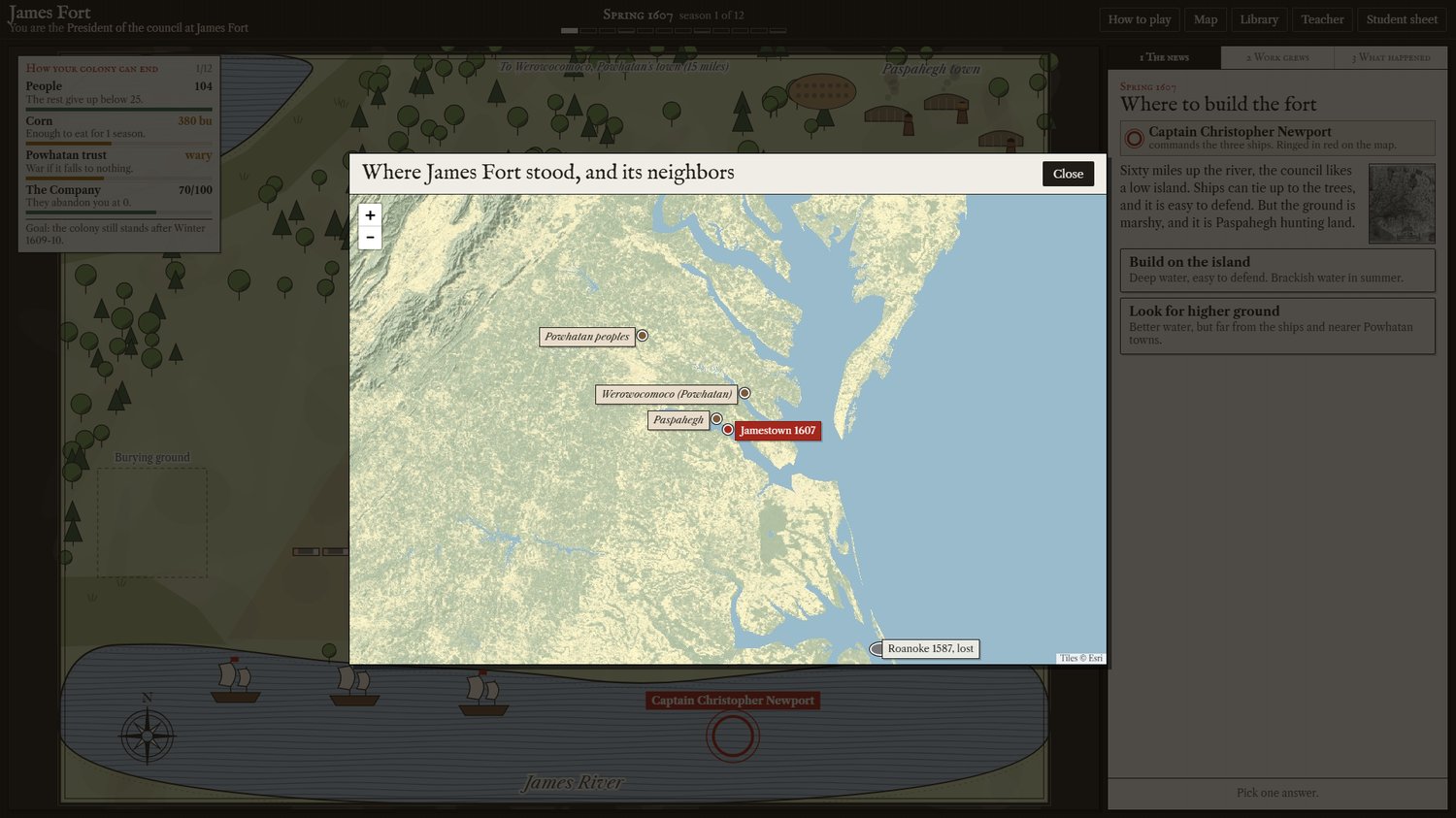
- 59 events and decisions built on the primary sources, from the first attack on the unfinished fort to the Germantown petition of 1688. Each card names a real person or place and rings it on the map
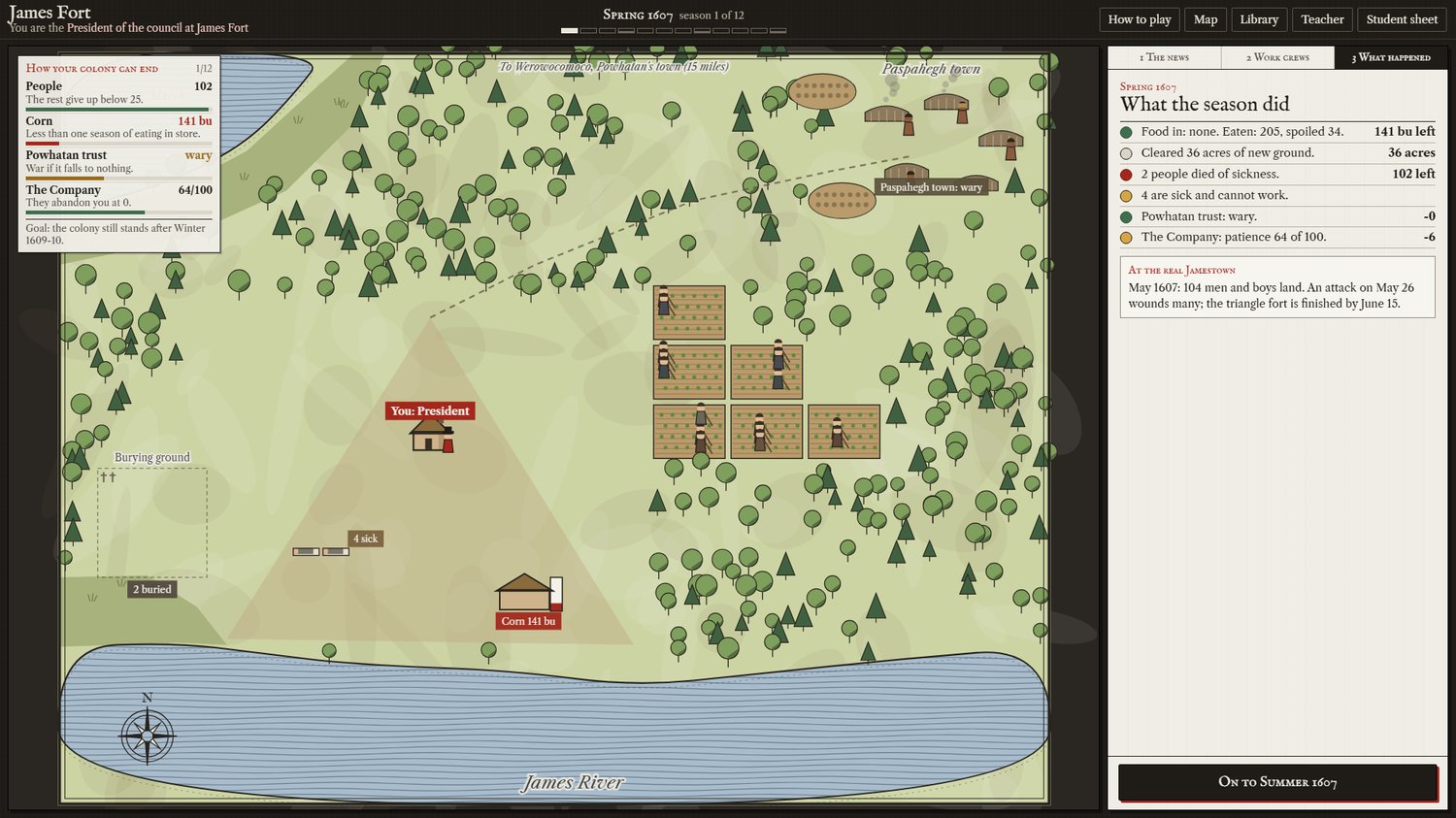
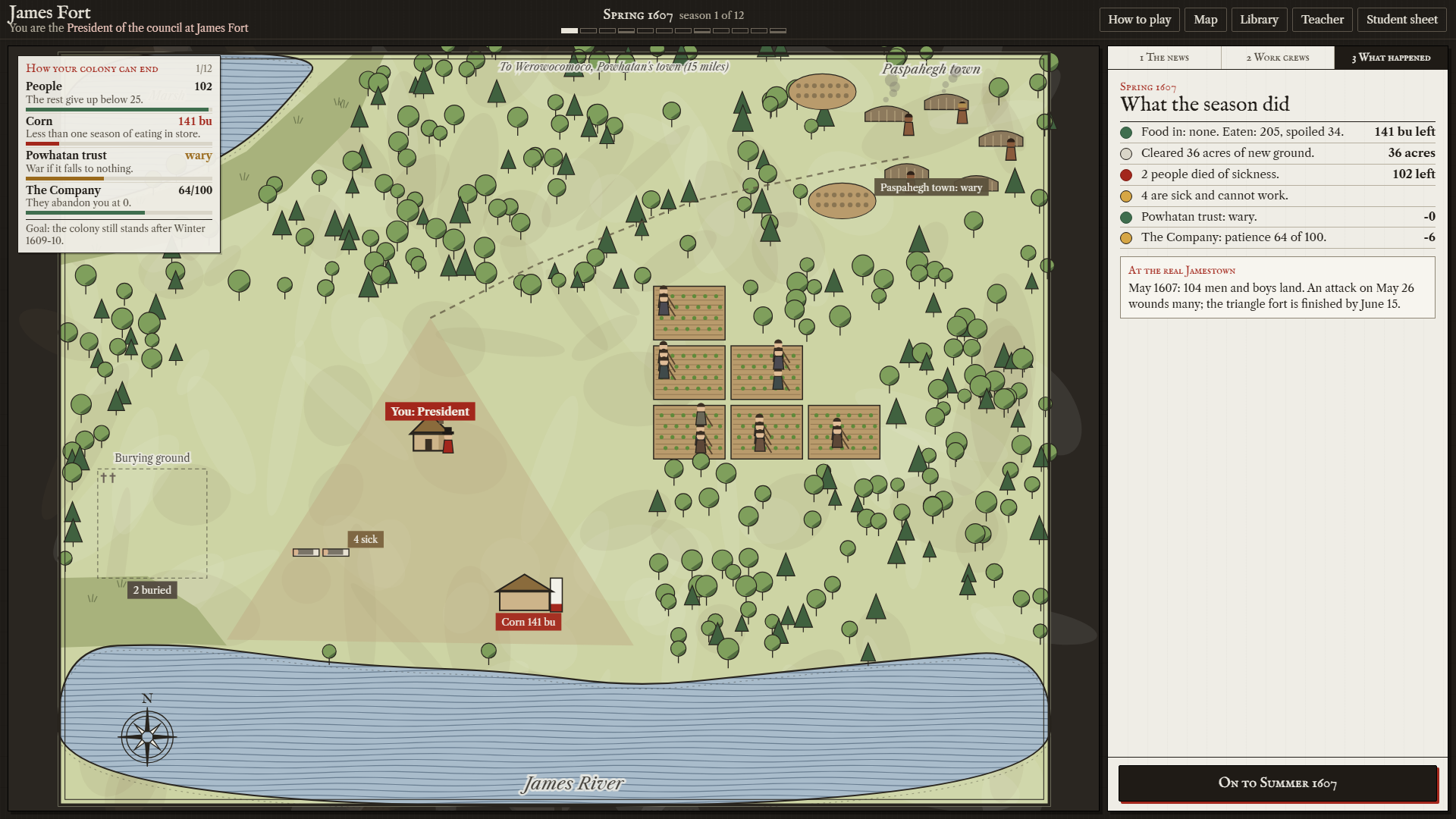
- A settlement board drawn the way 1600s mapmakers drew a town: fort or grid streets, houses, corn fields, the burying ground, and the Native town nearby, all changing as the numbers change
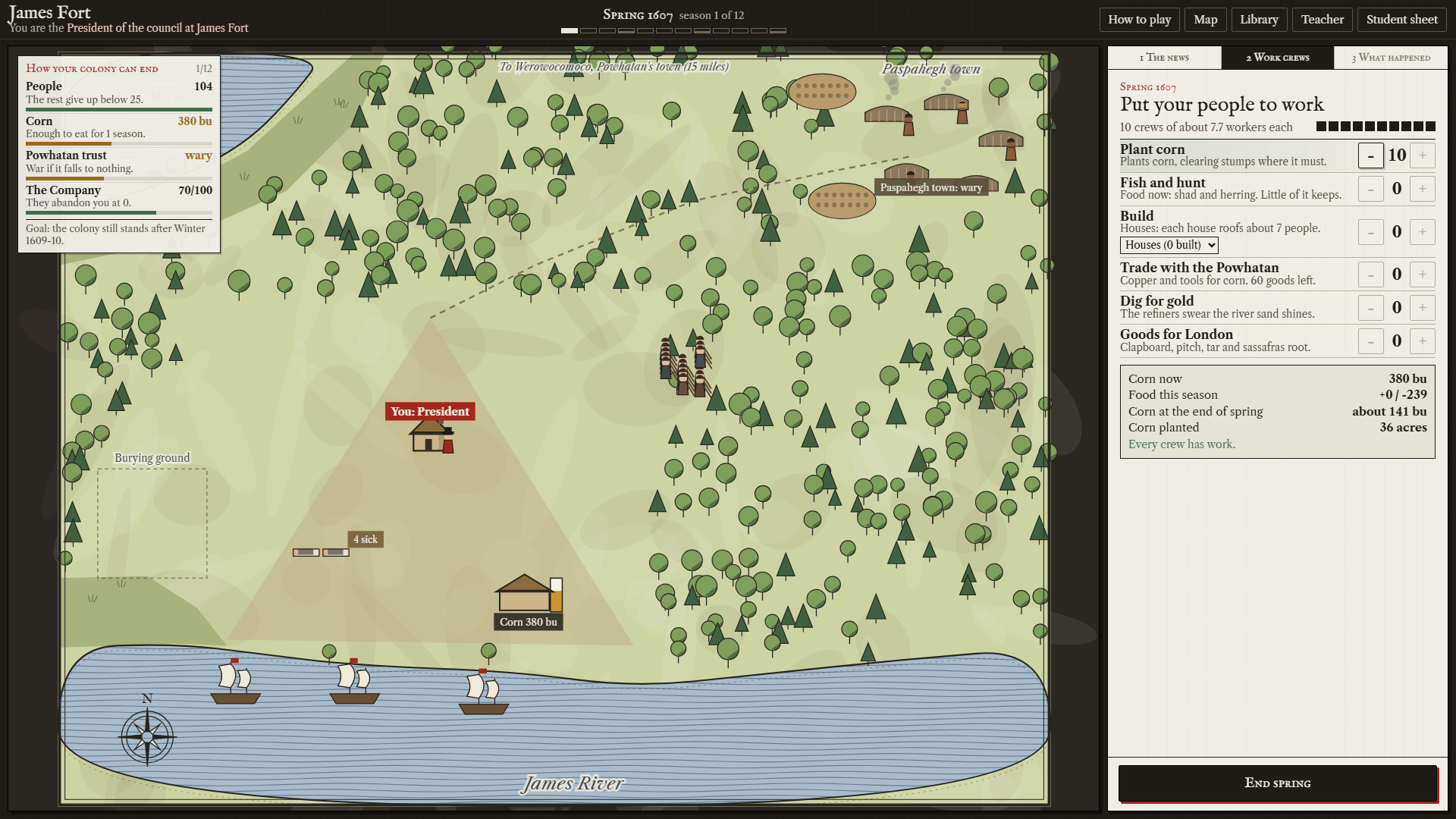
- Ten work crews a season to place across farming, fishing, building, trade, and in Virginia, digging for gold. The forecast says what the plan will cost before the season ends
- A real map of the Atlantic coast with the three colony sites and Roanoke marked lost, plus the Powhatan, Wampanoag and Lenape territories drawn alongside the English ones
- A library of 14 public domain period pictures with a written explanation on each, and the full text of all 19 primary sources the game quotes
- An end review that sets the student's run against the real colony, marks every choice as same or different from the record, and charts their people or houses against the real figures season by season
- Teacher notes with objectives, a 45-minute plan, discussion questions with answers, guidance on handling hard history, and the sources
- A 3-page printable student sheet: three regional readings, a region comparison table, five primary source questions, and a season-by-season colony record to keep, with a separate answer key
How It Works
- News: a card names a real person or place and rings it in red on the map. The student picks one answer
- Work: ten crews go to corn, fish, build, trade, gold or goods for London. The forecast warns before the season runs
- Season: the season resolves, sickness, raids, ships and fires land, and the settlement redraws itself
- Record: the report shows what the season did, and underneath it what happened at the real colony that same season
- Review: after twelve seasons the run is set beside the real colony and the student's choices are marked against the historic ones
How to Use
One region plays in about 12 to 15 minutes, so a class can play all three in a single period, or split the room three ways and compare. Play the first season together on the projector and let the guide walk the room through it, then hand the other regions to pairs. The printable student sheet stands on its own for homework or a substitute lesson.
Topics Covered
- The three colonial regions and why they differed: soil, climate, rivers and the crops that grew
- The Virginia Company, the Starving Time of 1609-10, and the drought the tree rings record
- Plymouth's first winter, the Wampanoag and Tisquantum, and the 1623 family plots
- Pennsylvania under William Penn: land bought from the Lenape before it was settled, an elected assembly, and a colony with no fort
- Cause and effect across seasons: clearing land past what was agreed costs trust, and trust at nothing brings war
- Reading primary sources as evidence, from Percy and Smith to Bradford, Penn and the Germantown Quakers
Built on the primary sources rather than on retellings, and the review says plainly which numbers are the record and which are modelled for play. Runs from the single file after download. The map draws live terrain imagery, so students need an internet connection for that tab; everything else runs from the file itself.
Grade level: 5th - 8th Grade | $4.99 | one file that opens in any browser