
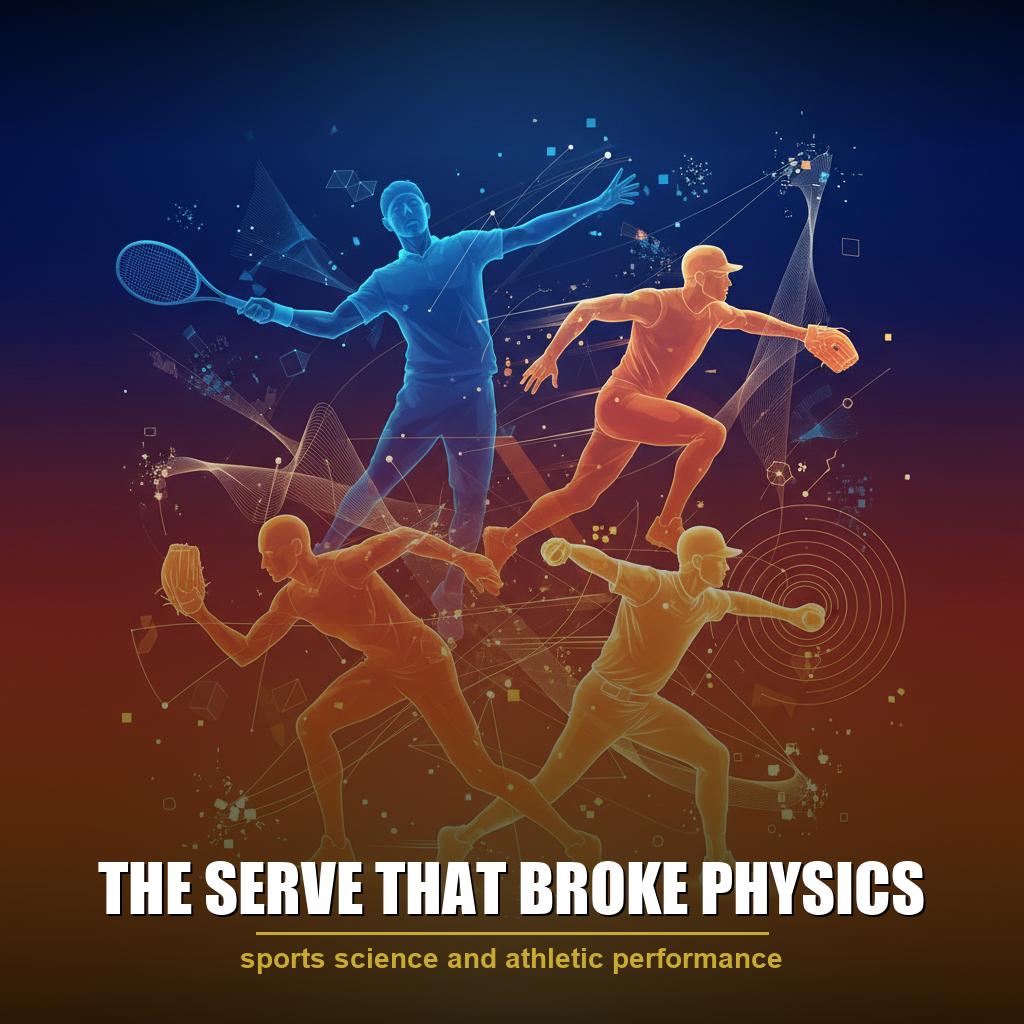
The Serve That Broke Physics
What actually happens in the 260 milliseconds it takes a 160 mph tennis serve to cross the net? How does a boxer's fist deliver enough force to end a fight in a single punch? And why does a perfectly executed bicycle kick feel like it bends the laws of nature — when in fact, it obeys them perfectly?
The Serve That Broke Physics takes you inside the most electrifying instants in sport and shows you the hidden mechanics that make them possible. Written for curious minds — no physics degree required — this book transforms the way you watch, understand, and appreciate athletic greatness.
Each chapter zeroes in on one iconic sporting moment and unpacks it frame by frame, using real biomechanics, fluid dynamics, and human physiology to reveal what your eyes can barely catch in real time. From the centrifugal forces sculpting a figure skater's triple axel to the precise geometry of a free throw that never misses, the science is as thrilling as the sport itself.
Inside the book, you'll explore:
- The aerodynamics and muscle mechanics behind a 160 mph tennis serve
- Why a knockout punch is more about timing and neuroscience than raw strength
- The angular momentum and split-second body control of the perfect bicycle kick
- How Olympic sprinters are essentially controlled falling machines
- What slow-motion cameras have permanently changed about sports science
- The probability calculus a goalkeeper runs in under half a second
This is sports science as it was meant to be experienced — not in a textbook, but in the roar of the crowd, the freeze-frame of a replay, and the sudden realization that physics was there all along.
Available in PDF and EPUB formats. Bilingual edition includes full Spanish text. Perfect for sports fans, science enthusiasts, educators, and anyone who has ever watched a highlight reel and thought: how is that even possible?