
3 A.M. Back-to-Sleep Plan PDF Guide
Wake up at 3 a.m. and struggle to fall back asleep?
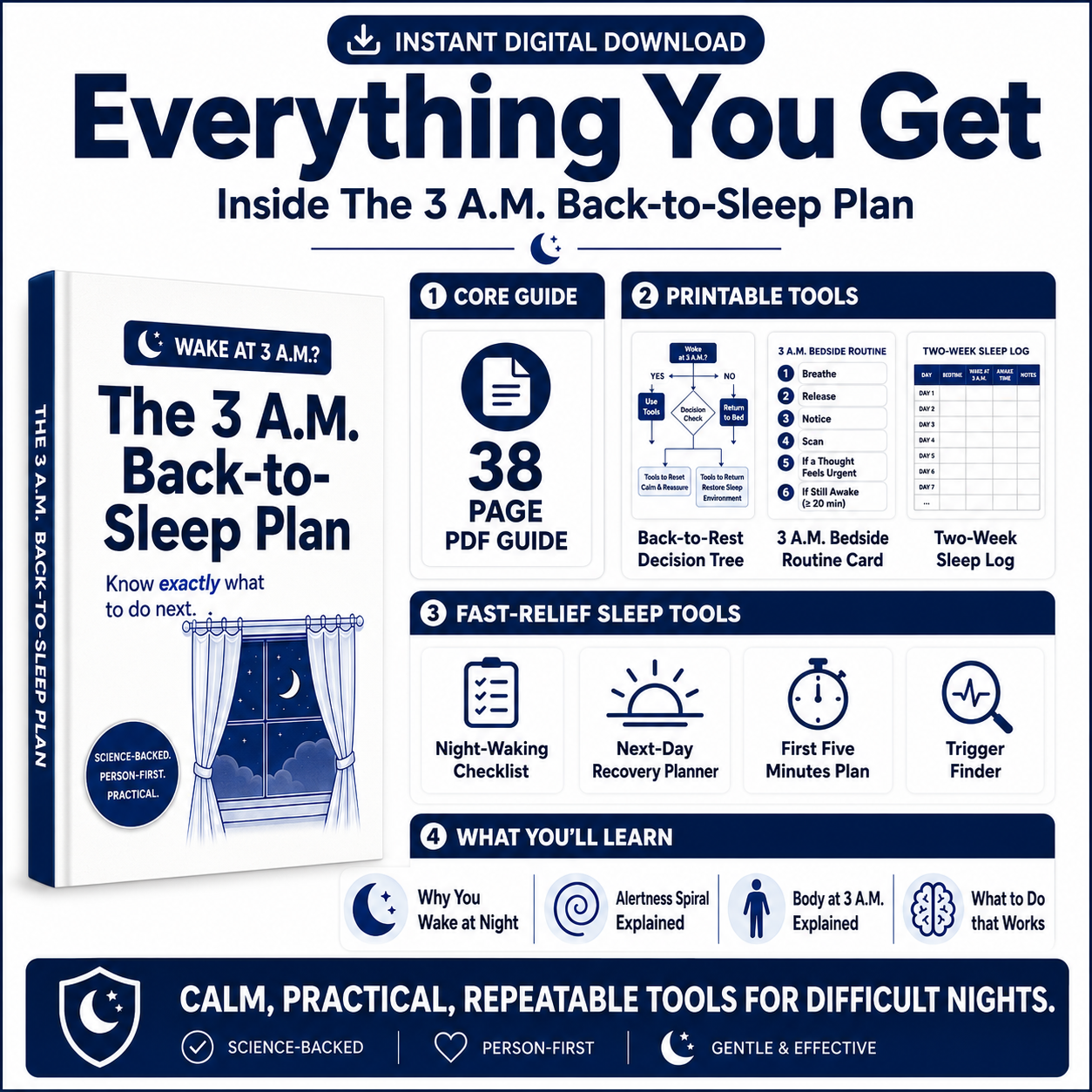
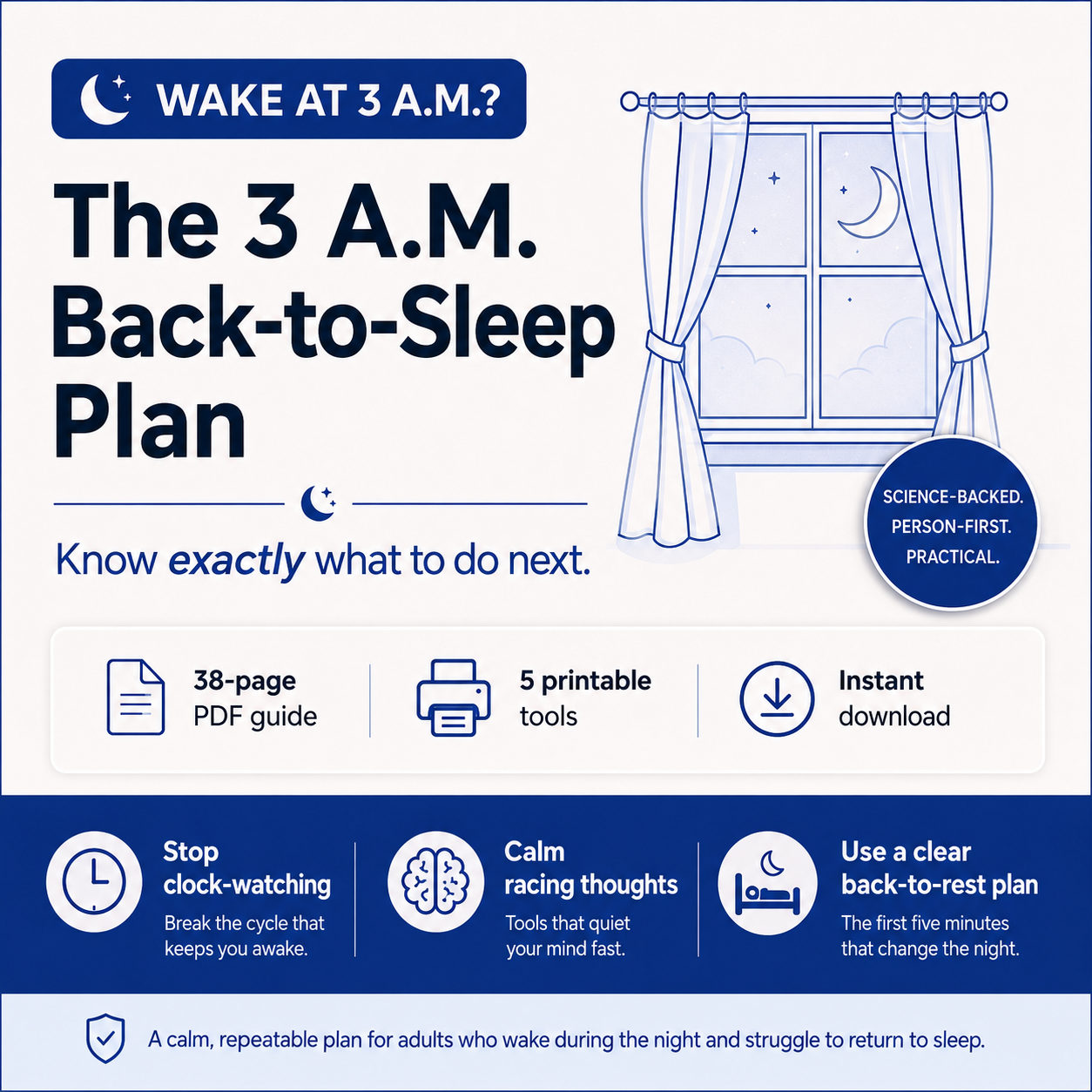
The 3 A.M. Back-to-Sleep Plan is a practical 38-page PDF guide for adults who wake during the night and become mentally alert or worried about the following day. Instead of checking the clock, reaching for your phone, or trying to force sleep, this guide offers a calm, repeatable plan for responding to nighttime awakenings. You will learn what to do during the first few minutes after waking, how to reduce unnecessary alertness, how to manage racing thoughts, how to improve your bedroom environment, and whether to remain in bed or get up for a quiet reset.
Inside the guide, you will learn:
• Why waking during the night is common
• How the nighttime alertness spiral begins
• What to do during the first five minutes
• Simple breathing and body-scan techniques
• How to stop checking the clock
• Ways to redirect racing thoughts
• How to use the bedside notepad method
• How temperature, light, and noise affect sleep
• When to stay in bed and when to get up
• How to recover after a difficult night
• How to protect the following night's sleep
You will also receive five practical tools:
• Night-Waking Checklist
• Back-to-Rest Decision Tree
• Printable Bedside Routine Card
• Two-Week Sleep Log
• Next-Day Recovery Planner
The guide is easy to follow, beginner-friendly, and designed to be read during the day so that you already know what to do when nighttime waking happens.
Product details:
Digital PDF download
38 professionally designed pages
Printable worksheets and sleep tools
Instant access after purchase
English language
For personal use only
This guide does not promise perfect sleep or guaranteed results. Its purpose is to help you develop a calmer, lower-pressure, and more consistent response when you wake during the night.
Download The 3 A.M. Back-to-Sleep Plan and keep a clear nighttime routine within reach whenever sleep is interrupted.
Important:
This guide is provided for general educational and self-help purposes only. It does not diagnose, treat, cure, or prevent insomnia or any medical condition. Persistent or severe sleep difficulties should be discussed with a qualified healthcare professional.