
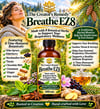
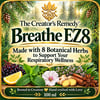
THE CREATOR’S REMEDY™ 🌲 BREATHE EZ8™
Eight Time-Honoured Medicinal Botanicals • Centuries of Herbal Wisdom
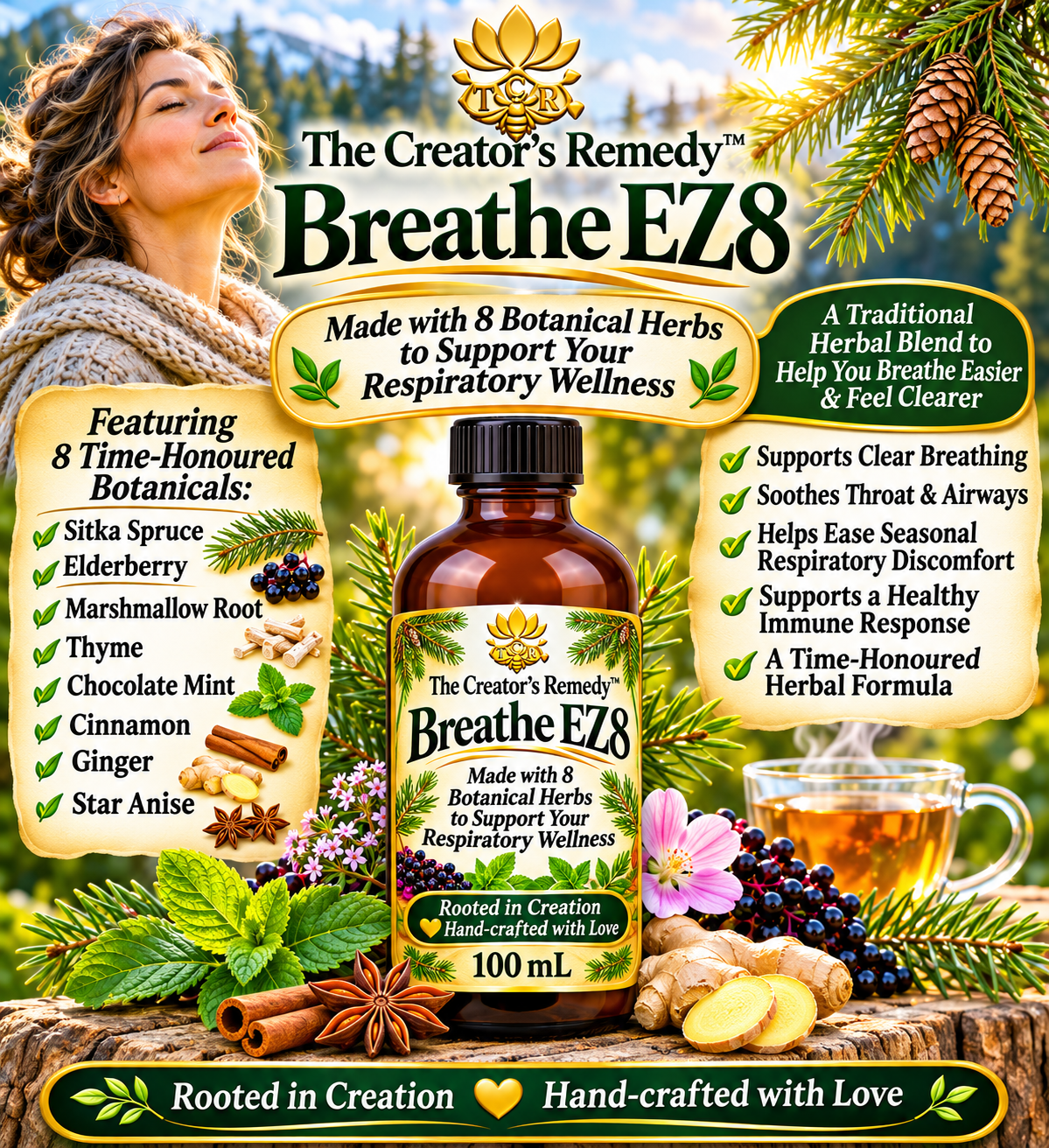
THE CREATOR’S REMEDY™ | 100 mL
🌿 BREATHE DEEPLY. DISCOVER THE FORGOTTEN WISDOM OF THE HERBAL WORLD.
For centuries, long before modern pharmacies, people relied on the remarkable plants growing in forests, gardens, and fields.
Herbalists understood that certain roots contained soothing substances, aromatic leaves produced fragrant oils, and deeply coloured berries contained valuable plant compounds.
These plants became treasured ingredients in traditional preparations for seasonal respiratory complaints, irritated throats, stubborn coughs, and general well-being.
Breathe EZ8™ honours that extraordinary history.
Our handcrafted botanical elixir brings together eight plants, each with its own remarkable story and traditional medicinal heritage.
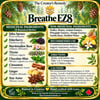
🌿 THE EIGHT BOTANICAL TREASURES — AND THEIR MEDICINAL HISTORY
🌲 1. SITKA SPRUCE (Picea sitchensis)
The Evergreen Treasure of the Pacific Northwest
Sitka spruce has a rich history of medicinal use among Indigenous peoples of the Pacific Northwest.
Traditionally, spruce needles and young tips were prepared as herbal infusions, while other parts of the tree were used in various traditional remedies.
Historical medicinal uses included:
- Herbal teas prepared during colds and seasonal respiratory complaints.
- Traditional preparations for coughs and sore throats.
- Use of spruce resin in certain topical preparations.
- Spruce-tip infusions as a source of vitamin C.
What makes spruce interesting?
Spruce needles contain aromatic terpenes and other phytochemicals. Their composition varies with the season, growing conditions, and preparation method.
The fresh evergreen aroma has long been associated with traditional forest-based herbal preparations.
A treasured example of the medicinal knowledge preserved by generations of Indigenous herbal practitioners.
🫐 2. ELDERBERRY (Sambucus nigra)
The Ancient Berry of European Herbal Medicine
Elderberry has been used in European folk medicine for centuries and remains one of the most recognizable traditional seasonal herbs.
Historically, herbalists prepared elderberries into syrups, cordials, and concentrated extracts during the cold and flu season.
Historical medicinal uses included:
- Traditional preparations for colds and influenza-like illnesses.
- Herbal syrups used during seasonal coughs.
- Folk remedies associated with fever and perspiration.
- General seasonal wellness preparations.
What makes elderberry interesting?
Elderberries contain anthocyanins, flavonoids, and other polyphenols.
These compounds exhibit antioxidant activity in laboratory studies.
Some clinical trials have investigated elderberry extracts for cold and influenza symptom duration, although findings are mixed and the overall evidence remains uncertain.
Elderberry is a remarkable example of an ancient botanical tradition that continues to attract scientific investigation.
Proper preparation is essential because raw or inadequately processed elderberries can contain potentially toxic cyanogenic compounds.
🌸 3. MARSHMALLOW ROOT (Althaea officinalis)
The Ancient Soothing Root
Marshmallow root has been valued since antiquity, particularly in European and Middle Eastern herbal traditions.
Unlike strongly aromatic herbs, marshmallow root is treasured for its exceptionally high content of natural mucilage.
Historical medicinal uses included:
- Soothing dry, irritated throats.
- Traditional relief of dry, irritating coughs.
- Comforting irritated mucous membranes.
- Gentle preparations for digestive irritation.
What makes marshmallow root special?
Marshmallow contains mucilage polysaccharides, which absorb water and form a soft, slippery substance.
This creates a protective, soothing coating when properly extracted and consumed.
Modern European herbal monographs recognize marshmallow root's traditional use for irritation of the mouth or throat and associated dry cough.
This is one of the clearest examples of how a plant's natural chemistry helps explain its centuries-old medicinal reputation.
🌿 4. THYME (Thymus vulgaris)
The Ancient Herb of the Respiratory Apothecary
Thyme has a distinguished history in Mediterranean and European herbal medicine.
Although familiar as a culinary herb, thyme also became a traditional ingredient in herbal cough preparations.
Historical medicinal uses included:
- Traditional remedies for productive coughs.
- Herbal preparations used during bronchial congestion.
- Supporting the clearance of mucus.
- Gargles and infusions for throat discomfort.
What makes thyme special?
Thyme contains aromatic compounds, particularly thymol and carvacrol.
These substances have demonstrated antimicrobial activity in laboratory research.
Thyme preparations have also been investigated for expectorant and antispasmodic properties.
European herbal authorities recognize certain thyme preparations for traditional use in productive coughs associated with colds.
Thyme's medicinal heritage extends far beyond the kitchen, making it one of the most historically significant respiratory herbs in this blend.
🍃 5. CHOCOLATE MINT (Mentha × piperita cultivar)
The Refreshing Herb of Traditional Herbal Medicine
Mint has been valued for centuries across European, Middle Eastern, and Asian herbal traditions.
Historically, mint leaves were steeped into teas, used in aromatic preparations, and included in traditional digestive remedies.
Historical medicinal uses of peppermint and related mints included:
- Comforting digestive discomfort.
- Traditional preparations during colds.
- Aromatic preparations associated with a refreshing sensation.
- Herbal teas used for general comfort.
What makes mint special?
Peppermint contains menthol and menthone, although their concentrations vary between cultivars.
Menthol interacts with cold-sensitive receptors, creating the familiar cooling sensation.
Research suggests menthol can produce a subjective sensation of easier nasal breathing, although this does not necessarily mean it physically opens congested nasal passages.
Chocolate mint contributes the refreshing character of the mint family, together with its delightful aroma.
🤎 6. CINNAMON (Cinnamomum verum)
The Precious Spice of Ancient Herbal Traditions
Cinnamon was treasured throughout ancient trade networks and became an important ingredient in traditional Asian, Middle Eastern, and European preparations.
Its value extended beyond flavour, with traditional practitioners using it in warming herbal combinations.
Historical medicinal uses included:
- Warming preparations during cold weather.
- Traditional remedies for digestive discomfort.
- Herbal combinations for nausea and bloating.
- Traditional formulations used during seasonal illness.
What makes cinnamon interesting?
Cinnamon contains cinnamaldehyde and various polyphenols.
Laboratory studies have investigated these compounds for antioxidant, antimicrobial, and anti-inflammatory activities.
However, these findings do not establish that cinnamon treats respiratory infections in people.
Cinnamon brings centuries of herbal history and a beautifully warming character to Breathe EZ8™.
🫚 7. GINGER (Zingiber officinale)
The Warming Root of Ancient Medicine
Ginger has been used for thousands of years in traditional Chinese medicine, Ayurveda, and other herbal traditions.
It became particularly valued for its warming nature and its traditional association with digestion, nausea, and seasonal wellness.
Historical medicinal uses included:
- Traditional warming preparations during colds.
- Herbal teas used for throat comfort.
- Relief of nausea and digestive upset.
- Traditional formulations associated with digestive stimulation.
What makes ginger special?
Ginger contains gingerols and shogaols, compounds responsible for much of its distinctive pungency.
These compounds have demonstrated anti-inflammatory and antioxidant activity in experimental studies.
Human clinical research provides stronger evidence for ginger in certain types of nausea than for respiratory conditions.
Ginger adds both a remarkable medicinal heritage and a comforting warmth to this botanical combination.
⭐ 8. STAR ANISE (Illicium verum)
The Fragrant Star of Traditional Asian Medicine
Star anise has been used for centuries in traditional Chinese herbal preparations.
Its striking star-shaped fruits were treasured for their sweet fragrance and distinctive warming flavour.
Historical medicinal uses included:
- Traditional remedies for digestive discomfort.
- Herbal preparations associated with bloating and gas.
- Warming herbal combinations.
- Traditional aromatic preparations during seasonal illness.
What makes star anise interesting?
Star anise contains anethole, an aromatic compound responsible for much of its distinctive licorice-like fragrance.
It also naturally contains shikimic acid, an industrial starting material used in the manufacture of certain pharmaceuticals.
Importantly, consuming star anise does not provide the antiviral effects of those medicines.
Only authenticated Chinese star anise (Illicium verum) should be used in food or herbal preparations because certain related species are toxic.
Star anise completes this traditional blend with its beautiful fragrance and centuries of herbal history.
🍯 BEAUTIFULLY BALANCED WITH HONEY & CITRUS
Eight remarkable botanicals deserve a beautifully balanced finish.
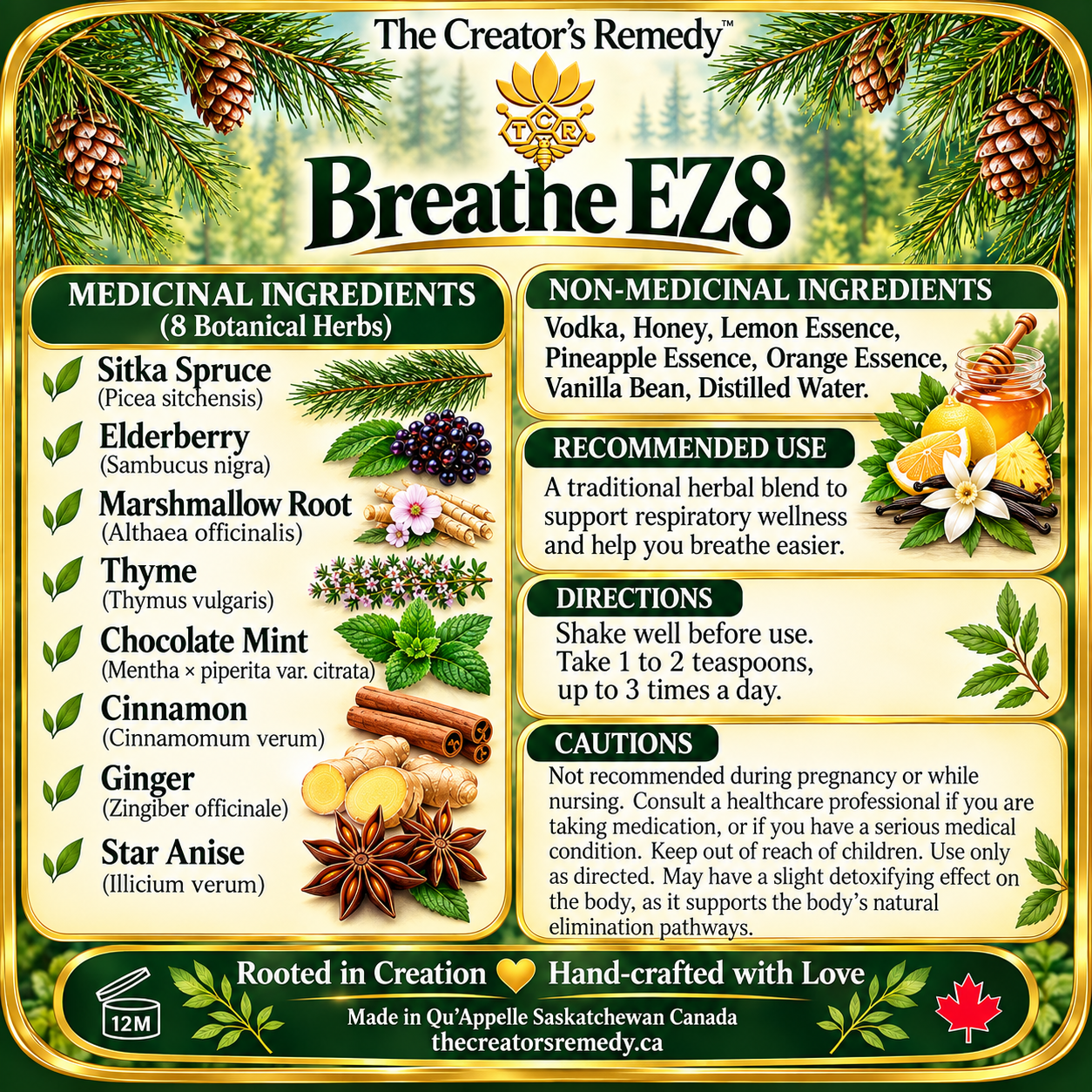
🍯 Honey — Used for centuries in traditional throat-soothing preparations. Modern research also supports honey's ability to modestly relieve acute cough symptoms in some populations.
🍋 Lemon Essence — A refreshing citrus note that brightens the herbal blend.
🍍 Pineapple Essence — A delicate tropical sweetness that balances the stronger botanical flavours.
🍊 Orange Essence — Adds a bright, naturally fragrant citrus character.
🌼 Vanilla Bean — A treasured aromatic ingredient that softens the warming herbal notes.
Together, they create a distinctive herbal elixir inspired by generations of botanical knowledge.
💚 WHY CHOOSE BREATHE EZ8™?
Because traditional herbal knowledge deserves more than being forgotten.
Every botanical in Breathe EZ8™ has a story.
Some were traditionally selected for irritated throats. Others became familiar ingredients in seasonal cough preparations, warming herbal teas, or digestive remedies.
Modern research has begun exploring the chemical compounds that make these plants so interesting, although traditional use does not always translate into proven clinical effectiveness.
Breathe EZ8™ brings eight of these historically valued botanicals together in one thoughtfully handcrafted preparation.
No forgotten traditions. No meaningless ingredients.
Just a genuine appreciation for the remarkable plants our Creator placed upon this earth.
🌿 ROOTED IN CREATION. HAND-CRAFTED WITH LOVE.
At The Creator's Remedy™, we believe that the botanical world is one of the Creator's most extraordinary gifts.
From the towering spruce forests to the smallest fragrant herb, every plant tells a story of remarkable design.
Our mission is to preserve the knowledge of traditional botanical preparations while respecting the importance of modern scientific understanding and responsible formulation.
Handcrafted with care in Qu’Appelle, Saskatchewan, Canada.
100 mL | Dark Amber Glass Bottle
🌐 thecreatorsremedy.ca
thecreatorsremedy@payhip.com
💛 Rooted in Creation • Hand-crafted with Love
Educational and safety information: This product should not be presented as a cure for all respiratory illness. Consult a qualified healthcare professional before using herbal preparations, particularly during pregnancy or breastfeeding, when taking medication, or for children.