











LUPUS AWARENESS MONTH Featuring Kim Peacock 2024
All donations can be made at Cash App $Retreats30
Lupus Awareness
Lupus is a disease that can affect people of all ages, races, and ethnicities. The signs and symptoms mimic those of other diseases, making it hard to diagnose.
What Is Lupus?
Lupus is a chronic, autoimmune disease that affects many different parts of the body. An autoimmune disease occurs when the body’s immune system attacks itself because it cannot tell the difference between healthy tissue and foreign invaders, such as bacteria and viruses.
Lupus symptoms can show up in many different ways and are often mistaken for symptoms of other diseases. This is why it can be hard to diagnose and is often called “the great imitator.” Lupus symptoms can range from mild to life threatening, so early diagnosis and treatment by a rheumatologist are important. A rheumatologist is a doctor who has additional training and experience in the diagnosis and treatment of arthritis, lupus, and other diseases of the joints, muscles, and bones.
Lupus Health Disparities
Systemic lupus erythematosus, or SLE, is the most common type of lupus and can affect multiple organs. While SLE can occur in anyone, it is more common among Black and Latina women and women of childbearing age (15 to 44). Ninety percent of people with lupus are women. Among women, Black and Latina women are 2 to 3 times more likely than White women to develop lupus and have more severe disease progression. In a study examining death rates among people with SLE, Black people had higher rates of death than White people, and deaths occurred sooner after diagnosis. Among those with SLE, Black people were significantly younger when they died than White people (average age of 52 vs. 64).
Signs and Symptoms of Lupus
People with SLE can have many different symptoms, including:
Fatigue or extreme exhaustion no matter how much they sleep
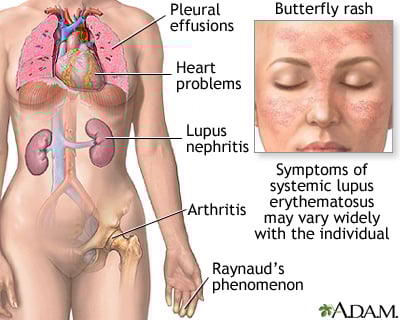
Muscle and joint pain or swelling
Skin rashes (in particular a butterfly-shaped face rash across the cheeks and nose)
Fever
Hair loss
Recurring mouth sores
Additional symptoms or conditions can include:
Sensitivity to the sun
Lung problems
Chest pain when deep breathing
Fingers or toes turning blue or white or feeling numb
Heart problems
Kidney problems
Psychosis (disruptive thoughts and perceptions about what is or is not real)
Blood cell and immunological abnormalities (anemia or clotting problems)
Eye diseases
Memory problems