
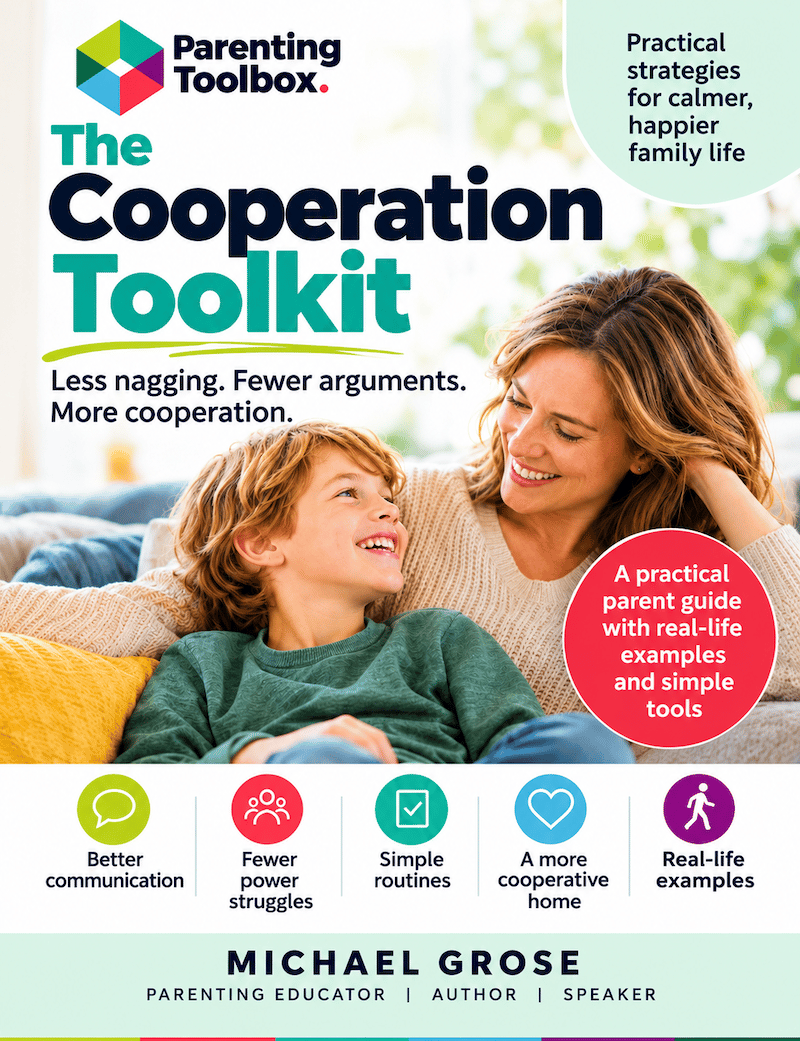
The Cooperation Toolkit
The Cooperation Toolkit
Less nagging. Fewer arguments. Practical ways to invite cooperation.
Put your shoes on. Pack your bag. Turn off the screen.
An ordinary request can quickly become another family battle. You repeat yourself. Your child digs in. Before long, both of you are frustrated.
The Cooperation Toolkit helps you change your side of these familiar exchanges. It starts with a simple idea: cooperation is invited, not demanded.
Inside, you’ll find clear explanations, realistic parent–child examples and practical activities to help you make expectations clear, support your child and reduce the arguments that wear everyone down.
Six parts to help you put the ideas into practice
• Understanding cooperation: recognise familiar patterns and focus on what you can change.
• Choosing your words: use practical language that makes expectations clear without adding blame.
• Putting cooperation into practice: follow worked examples for school mornings, screens, bedrooms & bedtime.
• Building helpful routines: use charts and visible reminders, and understand when children need more help.
• Activities and family tools: make your own plan with five practical worksheets and charts.
• Your seven-day practice plan: try one manageable action at a time and reflect on what helps.
Five Practical Activities
Change one familiar pattern. Find your cooperation language. Create a Family Helper Roster. Set up a Getting Ready for School Chart. Agree on a Screen Time Finishing Plan.
You also receive daily reflection and weekly review prompts to help you keep what works.
Read it Your Way
Your purchase includes a PDF for reading and printing and a reflowable EPUB for reading in a compatible ebook app on your phone or tablet.
The EPUB includes the activity prompts; use a notes app or notebook for answers, or print the PDF worksheets. The files are digital downloads. No physical book is supplied.
Written for parents of primary-school children, with examples and support you can adapt to your child. Start with the situation causing the most friction in your home.
The aim is to help children contribute while you provide calm guidance and reasonable boundaries. You don’t need to change everything at once.
Get the Cooperation Toolkit — A$29
About Michael Grose
Michael Grose is an Australian parenting educator, author and former teacher. His books include Why First-Borns Rule the World and Last Borns Want to Change It, Thriving, Spoonfed Generation and Anxious Kids. Through Parenting Toolbox, he shares practical ideas to help parents raise capable, confident children and build stronger family relationships.