


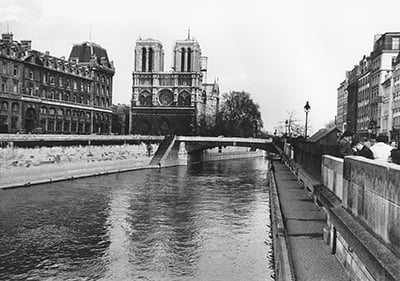
Notre Dame Cathedral and River Seine Paris France 1940's
Notre Dame Cathedral and River Seine Paris France 1940's
Free Digital Download
For Personal Usage Only
Usages of Image:
- Blogging
- Social Media Posts
- Education (No Selling, Commercial, Donating, or Giving Away is Not Allowed)
(Non-Commercial or Resale Not allowed)
IMAGE SIZE DETAILS BELOW:
All Images are JPEG
(S) Small Size Image JPEG
Image Size: 820.K
Pixel Size: 432 x 648px
Image Size 6 x 9 Inches
Resolution Size: 72
Notre Dame Cathedral and the River Seine, Paris, France, 1940's
The Notre Dame Cathedral is one of Paris’s most iconic landmarks, rising majestically on the Île de la Cité, an island in the middle of the River Seine. Together, they form one of the most recognizable and romantic vistas in France.
The Notre Dame Cathedral fire occurred on April 15, 2019, devastating its roof and iconic spire but leaving much of the stone structure and treasures intact. The blaze shocked the world, lasting about 15 hours, and sparked a massive global effort to restore the cathedral.' My late grandfather photographed the Notre Dame Cathedral, Paris, France, in the late 1940s and then developed the negative in his darkroom, and I used the original negative to print this wonderful historic image.
🏛 Notre Dame Cathedral
- Construction: Began in 1163, completed in 1345, a masterpiece of French Gothic architecture.
- Features: Famous for its twin towers, flying buttresses, gargoyles, and magnificent rose windows.
- Cultural Role: Site of coronations, royal ceremonies, and Victor Hugo’s The Hunchback of Notre Dame, which revived interest in Gothic architecture.
- Recent History: Severely damaged by fire in April 2019, with restoration ongoing.
🌊 The River Seine
- Geography: Flows through Paris, dividing the city into the Left Bank (Rive Gauche) and Right Bank (Rive Droite).
- Bridges: Over 30 bridges cross the Seine in Paris, including Pont Neuf (the oldest) and Pont Saint-Michel near Notre Dame.
- Cultural Life: The Seine’s banks are lined with bookstalls, cafés, and promenades, making it a UNESCO World Heritage site.
- Symbolism: The river has always been the lifeblood of Paris, inspiring countless artists, poets, and musicians.
✨ The Iconic View
Standing on the Pont de l’Archevêché or Pont Saint-Louis, you can see Notre Dame rising above the Seine, its reflection shimmering in the water. This pairing of cathedral and river embodies the essence of Paris—history, spirituality, and romance intertwined.
Key Facts About the Fire
- Date & Time: Began at 6:18 pm CEST on April 15, 2019.
- Cause: Investigators believe it was accidental, likely from a cigarette or electrical short circuit.
- Damage:
- Destroyed: The wooden spire (flèche) and most of the medieval oak roof known as la forêt.
- Severely damaged: Upper walls and vaulted ceilings.
- Survived: The altar, two pipe organs, and the three 13th‑century rose windows.
- Casualties: No deaths; three emergency workers injured.
- Firefighting Effort: Over 400 firefighters battled the blaze, preventing collapse of the towers and saving the bells.
🌍 Aftermath & Restoration
- Immediate Closure: The cathedral was closed right after the fire.
- Global Response: Donations poured in, surpassing €840 million by 2021.
- Macron’s Promise: French President Emmanuel Macron pledged to rebuild within five years.
- Reopening: After years of reconstruction, Notre Dame reopened on December 7, 2024.
- Legacy: The fire highlighted the fragility of cultural heritage and the resilience of global solidarity.
Notre Dame’s fire was not just a physical disaster—it became a symbol of loss and renewal, reminding the world of the importance of preserving historic monuments.
Would you like me to expand more on how firefighters saved the towers, the restoration process and techniques used, or the global fundraising and donations?