
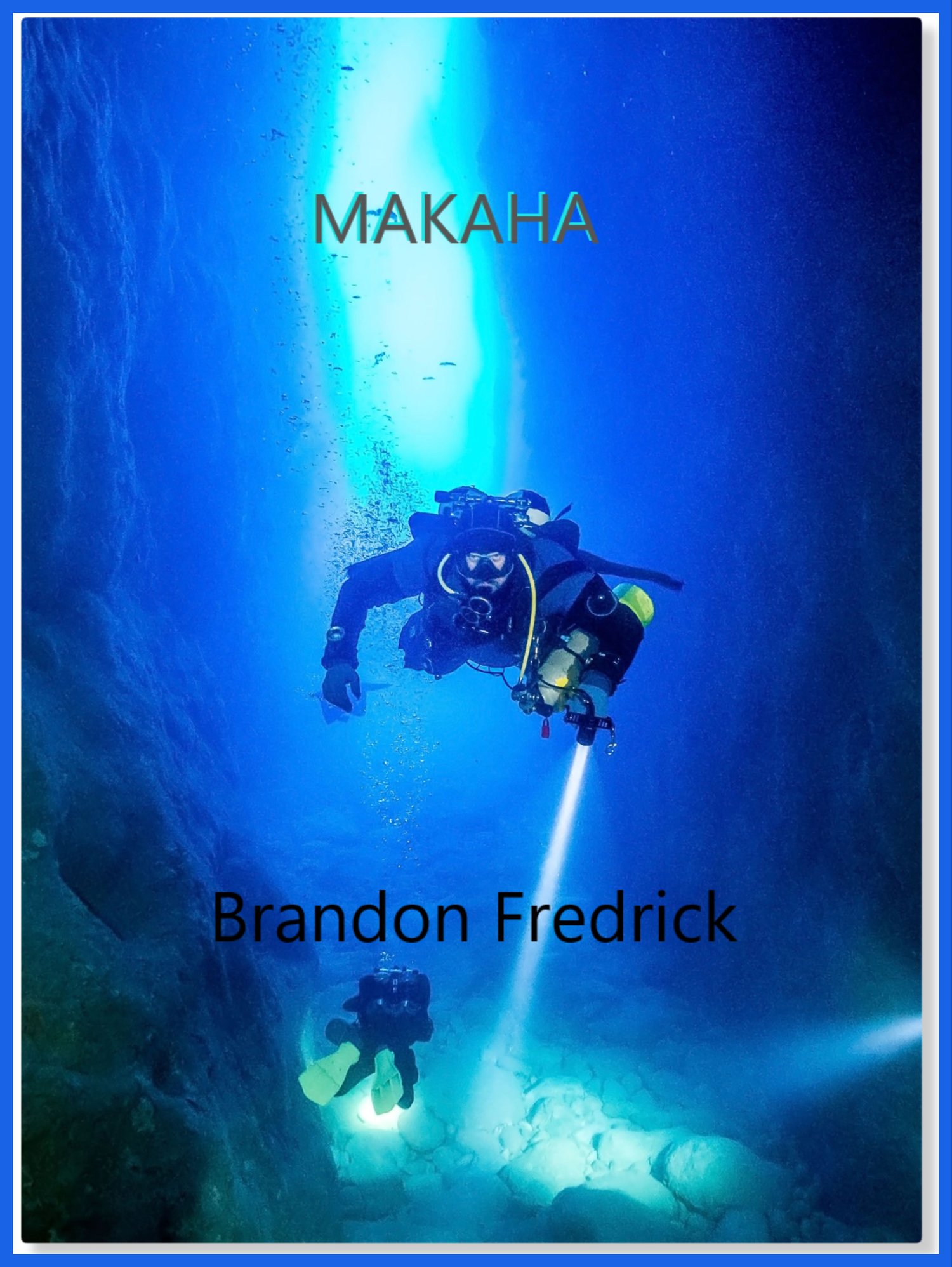
MAKAHA
Beneath the ash and ruins of Pompeii, archaeologists uncover a discovery that could shake the foundations of the world: the earliest known New Testament writings, lost for nearly two thousand years since the eruption of Vesuvius.
But before the secrets can be revealed, the priceless texts are stolen—setting off a deadly global chase.
The trail leads from the shadowed canals of Amsterdam to the turbulent waters off Oahu’s west coast, to a remote valley and beach named Makaha—“savage” in Hawaiian, and fitting for the outlaws who once ruled its shores.
In a desperate race against ruthless rivals, expert divers equipped with trimix and closed-circuit rebreathers plunge into depths few have dared to reach, battling the ocean’s darkness and mortal enemies alike.
The prize? A secret powerful enough to rewrite history—and others willing to kill to keep hidden.
AMAZON https://www.amazon.com/dp/B0C8DW9T9K
AMAZON EBOOK https://www.amazon.com/dp/B0C8DW9T9K
Inside Cover Blurb:
Merle hadn’t known what to expect of the couple that was going to occupy KKs old unit. ‘’Where are they from?’ ‘’Mexico.’ ‘’Sounds interesting what are their names?’ ‘’Cowboy and Marisol.’ ‘’Oh, a Mexican cowboy, what are they called, Vaquero’s right?’ ‘’Cowboys not Mexican, Merle.’ ‘’Then where is he from?’ ‘’The United States, the Rocky Mountains. He was born, and all except the years four through eight when raised in Japan by his stepmother grew up on the reservation.’ ‘’An Indian reservation?’ ‘’Yes.’ ‘’He was a cowboy there?’ he asked. ‘’No, Cowboy was never a cowboy, he’s Native American.’ ‘’Cowboy is an Indian but not a cowboy?’ ‘’Yes, now you’ve got it. But he’s only half Native American.’ she told him. ‘’His wife is Mexican though?’ he asked. ‘’Yes, Marisol is Mexican, twenty-six turns twenty-seven in a couple of months, she is the pueblo of Santa Cruz’s chief of police.’ ‘’A twenty-six-year-old is chief of police? How big is the department?’ ‘’Just her and her deputy Jorge, but he’s seventy-three and part-time.’ Sounds like an interesting couple. Merle decided, then told her; ‘’You people have strange names, KK’ ‘’You’re one to talk Merlin Fitzgerald.’ she replied: Chapter 14
Sample:
POMPEII 79 AD For four days minor earthquakes had rocked Pompeii, Herculaneum, and the small villages and agricultural communities surrounding Mount Vesuvius. Geologically active nobody paid much attention to the mountain less than six miles away that overshadowed them and its not uncommon tremors that rocked the region. On the morning of August 24th there were the usual sporadic spasms beneath the feet of the residents. By mid-morning the volcano had belched out a cloud of fine ash that crowned the summit. As the lunch hour approached Vesuvius had awakened enough to cause mild concern among the inhabitants. Most people continued with their business and daily chores though.
Pompeii and Herculaneum also are the winter and full-time home for many wealthy Romans, merchants, craftsmen, artisans, and a high percentage of slaves brought back from Romes many campaigns and conquests throughout the ancient known world. Plus, many unfortunate Asian captives in bondage. Purchased from the servitude market on the island of Delos. The volcano Vesuvius, regarded by the Romans as sacred to the demigod Hercules, is located on the western side of the Italian peninsula. An area blessed by a mild climate with abundant moisture harvested from the Mediterranean Sea by prevailing winds passing over the waters from the southwest. An agricultural paradise with fertile volcanic soil. A long growing season provides fruit, grain, vegetables and nuts in plentiful amounts. Livestock is raised, seafood from the sea is popular in the many dining establishments. Pompeii was famous throughout the Italian peninsula for its produce and honey spiced wine. Luxurious villas constructed of Carrara marble and other costly building materials are filled with works of art from across the ancient world. Pompeii is also a seaport, popular with sailors for its many diversions. Religious centers for worshipping the various gods of the time. A fine market next to the forum. Gymnasiums, a swimming pool, baths open for visitors and residents alike. Theaters, two dozen public fountains to quench your thirst. And of course, a Lupanar or two with prostitutes who, for a fee, would accommodate a lonely man of the sea, or many of the towns' wealthy and not so wealthy citizens.
An estimated twenty thousand or more people populated the area around Vesuvius. A sizeable number for that time. At about 1:00 in the afternoon an explosive force from deep inside the earth shoots ash and pumice into the air. Today, unlike most days, there are not the customary south-westerly winds. Unluckily for the residents the wind is from the north-north-west today. A combination of this ejected matter is blown over the city and accumulating on roofs and streets at an estimated half a foot an hour. Many take refuge inside their homes to escape the choking sharp edged volcanic ash abrading the throats and eyes of the populace. Others attempt to escape into the sea. It will be too late for most. By 5:00 pm day has turned into night. Baseball size rock lithics pelt those waiting to escape by sea. The roofs of houses collapse, unnoticed by those sheltering inside, the heat has turned their homes into ovens with temperatures above boiling. The heat eventually reaching close to 500 degrees Fahrenheit. Shortly after midnight the ash cloud that has reached heights of twenty miles collapses.
The first of many pyroclastic surges passes through the surrounding towns and settlements at speeds estimated at 100 miles per hour. These rivers of gas and ash with solid and molten rock reaching temperatures as high as 480 degrees Fahrenheit, that immediately extinguish the life of any man or beast that however unlikely, has managed to survive. Pliny the younger narrowly escaping with his life, an eyewitness to these events that killed his father, sends the only narrative available in modern times to the historian Tacitus. Pompeii is buried under more than eighty feet in places of ash, pumice, lithic stones and lava. After only a handful of generations Pompeii and Herculaneum are mostly forgotten with their location uncertain.
In the year 1738, while building a vacation manor for Charles of Bourbon, the King of Naples, workers discover Herculaneum. Twenty-five years later, August 20th, 1763, one thousand six hundred and eighty-four years later, to the very day that minor earthquakes started signifying the disaster that was to come, Pompeii was relocated. Now, more than two and a half centuries after its rediscovery, Pompeii is still being excavated. Generations of archaeologists have slowly opened the time capsules that reveal life as it was two millenniums ago in these two unfortunate cities. Two thirds of Pompeii have been uncovered but there are still decades of work to be done. The uncovered 44 hectares, 109 acres of ruins are large enough that visitors often become lost while exploring. The total number of deaths from Vesuvius’s eruption is unknown. More than a thousand casts of trapped occupants have been poured into the hardened cavities that were their grave, many are on display. A sobering reminder of how quickly paradise can turn into hell.