
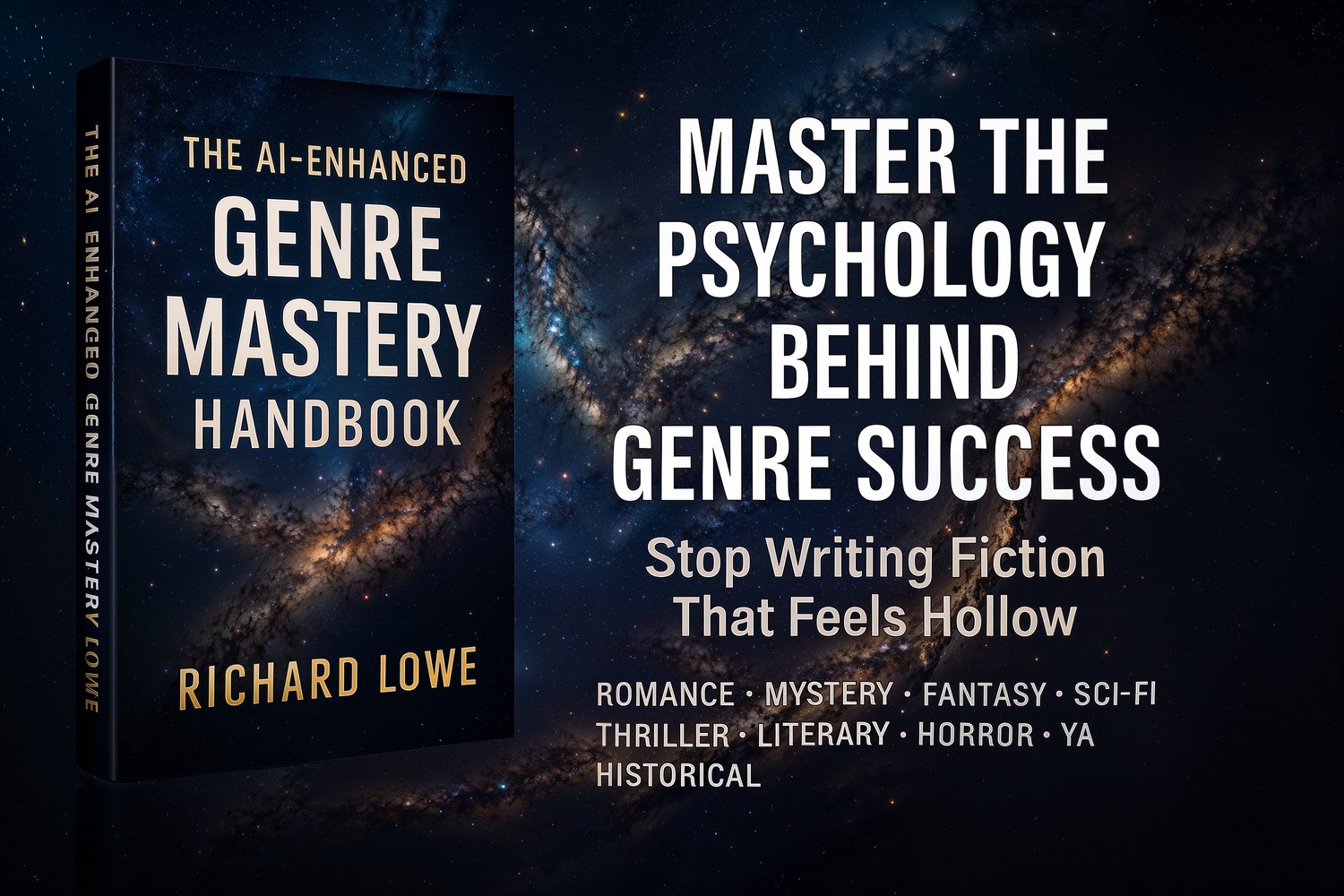
AI-Enhanced Genre Mastery Handbook
Stop Breaking the Promises You Don't Know You're Making
Beta readers say your writing is "technically excellent." They praise your dialogue, admire your prose, compliment your plot structure. Then they add: "I just couldn't get into it."
That's code for something they can't articulate. You violated the psychological contract they signed when they picked up a romance, mystery, or thriller. You delivered beautiful writing that failed to satisfy the emotional needs that brought them to your genre in the first place.
Genre isn't a marketing label you slap on after finishing your manuscript. It's a promise about emotional experience. Break that promise with technically perfect prose, and readers feel betrayed without understanding why.
Genre contracts exist because they serve fundamental human psychological needs. Romance readers seek validation of their capacity for connection. Mystery readers want intellectual challenges that prove their problem-solving abilities. Thriller readers need controlled experiences of danger from safety. Violate these contracts and no amount of craft excellence will save your reviews.
The Psychological Contracts Readers Expect
Every genre makes promises. Break them and readers punish you in reviews, even if they can't articulate what went wrong.
Romance serves readers' psychological need for validation of their capacity for connection. The contract promises genuine transformation through intimate relationship and an emotionally satisfying ending. Mystery serves readers' need for proof of their problem-solving ability. The contract promises fair play with clues and a logical solution the reader could have reached. Thriller serves readers' need for controlled experiences of danger. The contract promises genuine threat through character vulnerability and stakes that feel real. Fantasy serves readers' need for escape with internal logic. The contract promises consistent rules and magic that complicates rather than solves. Horror serves readers' need for safe experiences of authentic fear. The contract promises lasting dread, not cheap scares, with fears that follow readers home. Literary fiction serves readers' need for profound emotional insight. The contract promises substance that justifies slower pacing and style that serves meaning.
The handbook covers all 9 genres in depth, including YA, Historical Fiction, and Science Fiction, with guidance on what each audience needs and how to deliver it.
9 Complete Genre Chapters
Each chapter covers the psychological contract, what readers actually need, common violations, and how to honor the genre while maintaining your voice.
Romance covers attachment psychology, emotional transformation, and the contracts that create devoted readers. You'll understand why romance readers invest more emotionally than any other genre audience. Mystery covers fair play requirements, logical progression, and respecting reader intelligence. You'll learn why withholding clues or illogical solutions break trust reviews will punish. Fantasy covers internal consistency, magic system psychology, and grounding impossible worlds in human truth. You'll understand why convenient magic destroys engagement. Thriller covers sustainable tension, character vulnerability, and controlled danger experiences. You'll learn why external action without psychological stakes falls flat. Horror covers fear psychology, lasting dread, and authentic human terror. You'll understand why cheap scares violate the contract readers signed. Literary fiction covers balancing intellectual sophistication with emotional accessibility. You'll learn why pretentious prose that prioritizes style over substance fails. Science fiction covers speculation frameworks, technology psychology, and believable futures. You'll understand why idea-driven stories still need psychological authenticity. Young adult covers teenage psychology, age-appropriate intensity, and identity formation. You'll learn why adult writers often miss what YA readers actually need. Historical fiction covers period authenticity while maintaining emotional accessibility. You'll understand why historical accuracy alone doesn't create connection.
Built for Writers Who Use AI
AI can accelerate genre writing. It can also generate the same surface-level tropes that flood every category.
The problem isn't the AI. It's what you're asking for. "Write a romance scene" produces generic romance. AI needs psychological frameworks. Attachment styles for romance protagonists. Fair-play parameters for mystery clues. Vulnerability patterns for thriller tension.
The handbook shows you how to prompt AI for genre authenticity. Test whether your manuscript honors reader contracts. Identify violations before readers punish you in reviews. Generate genre elements that serve psychological needs instead of checking formula boxes.
AI is your genre analysis partner, not your creative authority.
What's Inside
The handbook opens with why genre mastery matters more than writing rules, explaining the psychology underneath genre conventions. Nine complete genre chapters cover romance, mystery, fantasy, science fiction, thriller, literary fiction, horror, young adult, and historical fiction. Each chapter provides the psychological contract, what readers actually need, common violations, and how to honor the genre while maintaining your voice.
Plus two deep-dive case studies analyzing genre successes versus failures, practical exercises for identifying and repairing contract violations, and genre blending techniques for satisfying multiple reader expectations.
From an Author With 113 Published Books
My ghostwriting clients have secured over $30 million in venture capital with books that understand their audience psychology. My brain doesn't accept "follow the romance beat sheet" as methodology. When I realized I'd been reading genre fiction for decades without understanding why some books in the same genre resonated while others fell flat despite identical plot structures, I dug until I found the systems underneath.
Genre conventions exist because they work psychologically, not because publishers invented arbitrary rules. Happy endings in romance validate readers' hope for lasting connection. Fair play in mystery respects readers' intelligence. Consistent magic systems in fantasy provide logical frameworks for exploring impossible scenarios.
260 pages of genre psychology. 9 complete genre chapters. 2 case studies. AI prompt library. Genre psychology quick reference. Short and sweet summary.
Genre mastery isn't about surrendering your voice to formulas. It's about channeling your voice through frameworks readers trust.