

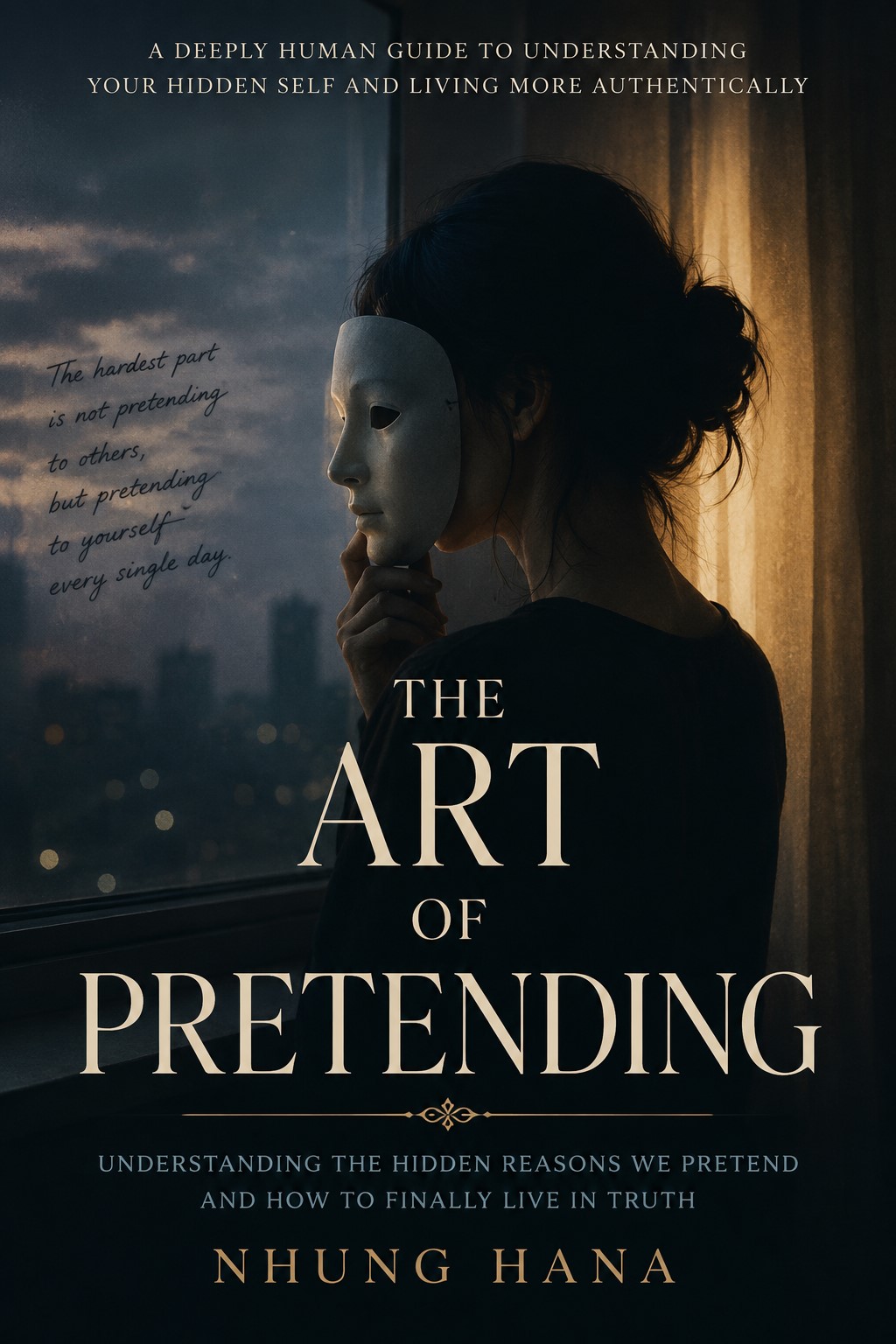
The Art of Pretending
We don’t learn how to pretend in a single moment. It doesn’t happen overnight, and no one ever sits us down to teach it. Instead, it slips quietly into our lives, woven through expectations, shaped by subtle reactions, and reinforced by the way the world responds to honesty. At some point, without even realizing it, we begin to understand that certain emotions are easier to hide than to explain. That certain truths are better left unspoken. That being “okay” is often more acceptable than being real.
So we adapt.
We learn to smile when we feel empty. We learn to nod when we don’t agree. We learn to say “I’m fine” even when something inside us is slowly falling apart. Not because we want to lie, but because telling the truth feels heavier, riskier, and far more complicated than we are ready to handle. And the more we practice, the better we become.
Pretending becomes a skill. Then a habit. Then, eventually, a part of who we are.
The problem is not that we pretend. The problem is that we forget we are pretending.
We begin to believe the version of ourselves we show to others. We measure our worth through filtered moments, rehearsed conversations, and carefully controlled emotions. We chase a version of happiness that looks right from the outside but feels strangely distant on the inside. And somewhere along the way, we lose the ability to tell the difference between what is real and what is simply well-performed.
This book is not here to judge you for pretending. Everyone does. In fact, pretending is often what helps us survive difficult moments, navigate complex relationships, and move forward when we don’t have the strength to stop and process everything we feel. But survival is not the same as living. And there comes a point when the cost of pretending becomes too high — when the distance between who you are and who you appear to be becomes impossible to ignore.
This is where the quiet questions begin.
Why do we hide what hurts us? Why do we feel the need to appear strong even when we are exhausted? Why is it so difficult to say “I’m not okay” in a world where everyone else seems to be doing just fine?
And perhaps the most important question of all: what happens when we stop pretending?