
Concrete Defects - Carbonation Depth Testing
Carbonation Depth Testing Guide —
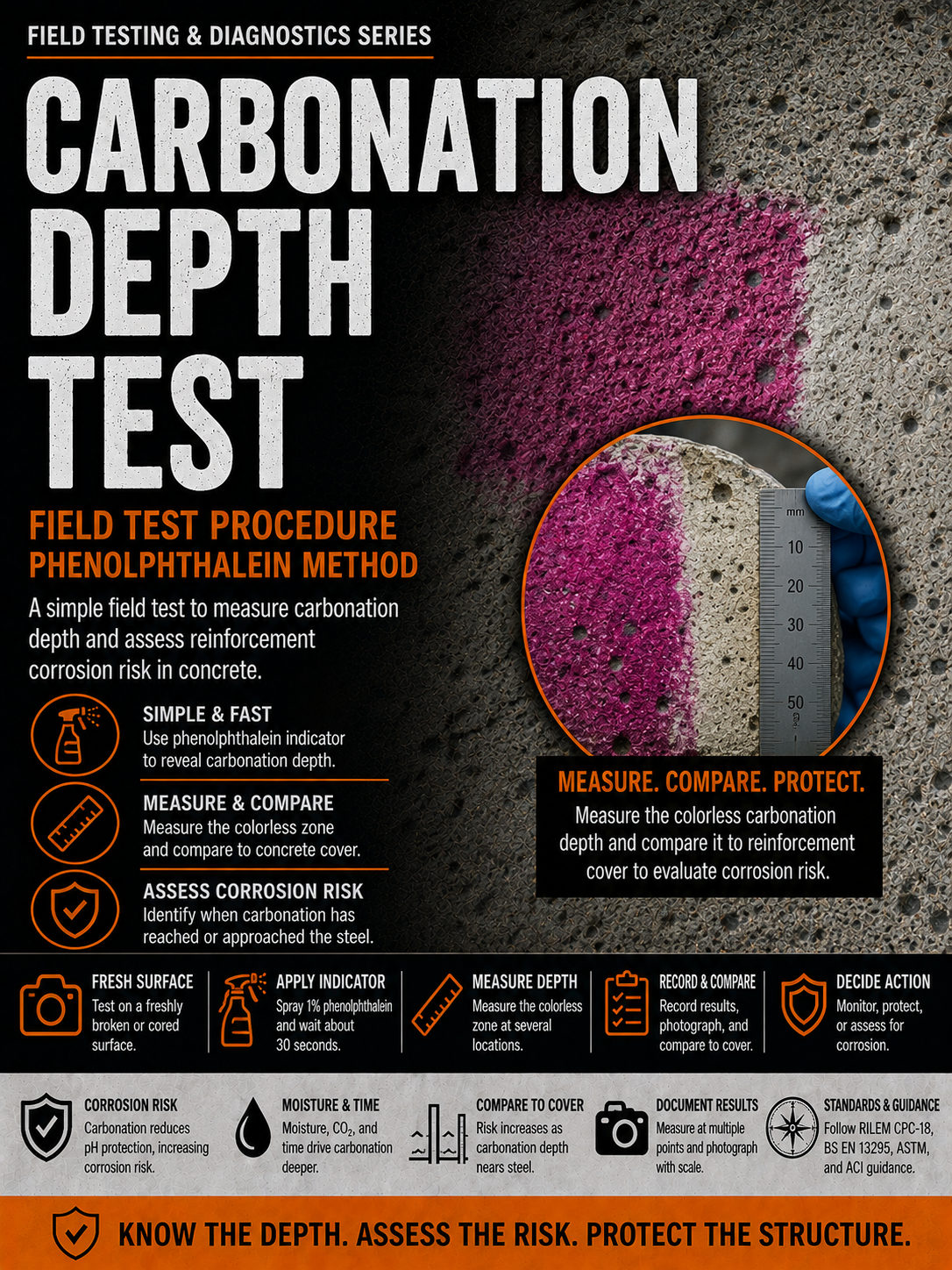
Measure carbonation depth, compare it to reinforcement cover, and understand when corrosion risk is becoming a real concern.
Carbonation is one of the major pathways that can lead to reinforcement corrosion in concrete. The Carbonation Depth Testing Guide gives concrete professionals a simple, practical field procedure for using the phenolphthalein method to identify the carbonated zone, measure its depth, and compare that depth to the actual concrete cover.
This guide is built for field use. It explains what the test does, how phenolphthalein reacts on fresh concrete surfaces, what the color change means, and how to interpret the results in relation to reinforcement protection. Pink indicates concrete that is still highly alkaline, while colorless areas indicate reduced alkalinity where carbonation has advanced. The key is not just measuring a number — it is comparing that carbonation depth to the steel cover to evaluate corrosion risk.
The Carbonation Depth Testing Guide walks users through the tools needed, the proper surface preparation, step-by-step testing, measurement, interpretation, limitations, best practices, documentation, and follow-up decisions. It is ideal for inspectors, technicians, repair contractors, QC professionals, engineers, and anyone evaluating older concrete, urban structures, cracking, spalling, or potential corrosion-related deterioration.
What’s Included
- Clear explanation of what the carbonation depth test is
- Field procedure using the phenolphthalein method
- Explanation of pink vs. colorless test results
- Required tools and materials list
- Step-by-step testing procedure
- Guidance for testing fresh fractures or fresh core faces
- Measurement procedure for average and maximum carbonation depth
- Instructions for comparing carbonation depth to actual reinforcement cover
- Interpretation categories: shallow / approaching cover / reached steel
- Quick field decision path for monitoring, protection, or corrosion assessment
- Limitations and cautions, including chlorides, saw-cut faces, weathered surfaces, fly ash / slag mixes, and transition zones
- Best practices for accurate field results
- Standards and reference list
- Carbonation test at-a-glance table
- Printable field checklist
Built for Field Use
This guide helps answer the questions that matter during an inspection:
Has carbonation advanced into the concrete?
How deep is the colorless carbonated zone?
Is the carbonation front still far from the steel, approaching the cover, or already at the reinforcement?
Does the structure need monitoring, surface protection, or a corrosion assessment?
The guide keeps the process simple and practical: test a fresh surface, apply phenolphthalein, wait for color development, measure the colorless zone, document the result, and compare it to the actual cover.
Best For
- Concrete inspectors
- Field technicians
- Repair contractors
- QC and QA professionals
- Engineers and engineering support staff
- Building maintenance teams
- Bridge, parking garage, and infrastructure inspectors
- Anyone evaluating carbonation-related reinforcement corrosion risk
Why This Guide Matters
Carbonation depth only becomes meaningful when it is compared to reinforcement cover. A shallow colorless band may only require monitoring, but carbonation approaching or reaching the steel can indicate increased corrosion risk and may require protective action or further corrosion assessment.
This guide helps users avoid guesswork by giving them a clear field procedure, interpretation path, and documentation checklist. It also highlights important limitations: phenolphthalein indicates alkalinity loss, not every corrosion risk; chlorides can still cause corrosion even where concrete remains pink; and testing must be done on a fresh fracture or fresh core face for reliable results.
Know the depth. Assess the risk. Protect the structure.