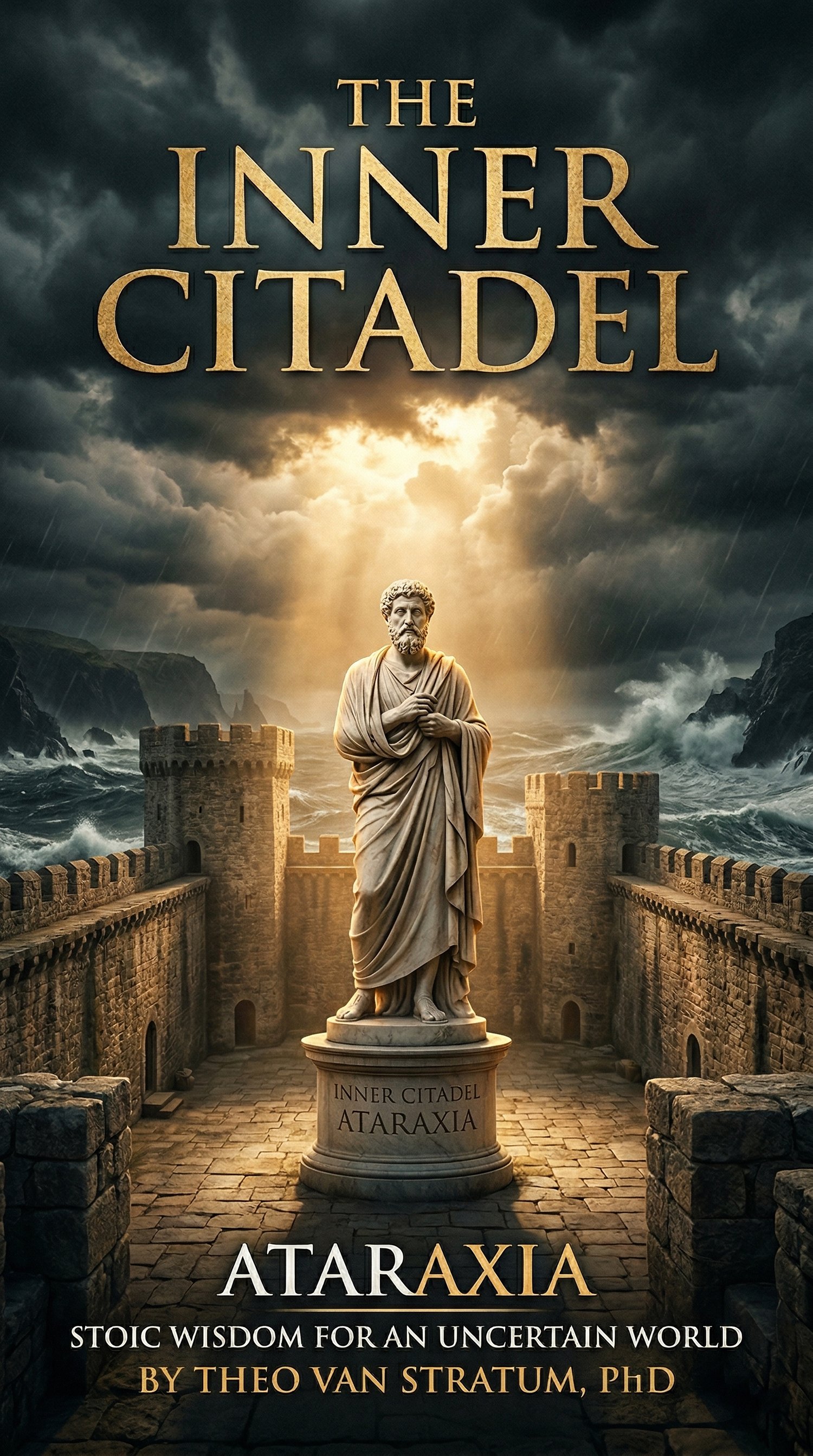
THE INNER CITADEL
A Stoic Mindfulness Course for Beginners
Ancient Wisdom. Modern Mind. Lasting Peace.

Ancient Wisdom. Modern Mind. Lasting Peace.
Stress, overwhelm, and a mind that won't stop.
You already know the feeling. The meeting that follows you home. The decision that keeps you awake at 3am. The constant noise of a world that never seems to slow down.
The solution is 2,000 years old — and most people have never heard it told properly.
The Roman emperors, generals, and philosophers who built and sustained the greatest empire in history were not immune to pressure, loss, or chaos. Marcus Aurelius governed an empire while managing plague, war, and betrayal. Seneca advised the most volatile ruler Rome ever produced. Epictetus was born a slave and became one of history's most influential teachers.
What they had was not an absence of difficulty.
They had a trained mind.
That training was called Stoicism — and it is the most practical, battle-tested approach to mental clarity and inner peace ever developed. Not a religion. Not a wellness trend. A rigorous philosophy forged in the real world by real people under genuine pressure.
This course teaches you exactly how to practice it.
The Inner Citadel is a complete beginner's course in Stoic mindfulness — combining the written wisdom of Rome's greatest minds with practical meditation and daily reflection exercises you can start using immediately.
Over 13 self-paced modules you will learn:
This is not a generic mindfulness course with Roman decoration.
Every lesson is grounded in 62 years of genuine Roman scholarship — taught by someone who has practiced Stoicism daily for decades and walked every mile of Hadrian's Wall to understand the men who built it.
This course is for you if:
This course is not for you if:
13 Complete Modules — Full Access at Your Own Pace
Each module includes a written lesson, an audio recording and a downloadable workbook.
Every module includes a downloadable companion workbook — designed to be your personal Stoic journal throughout the course.
These are not generic worksheets. Each workbook is crafted specifically for its module:
No payment. No account required. Just read the first module and decide for yourself whether this course is for you.
👉 [Start Module 1 Free — The Ancient Art of Awareness]
If it resonates, the rest is waiting.
I have been obsessed with ancient Rome since I was 10 years old.
Not the Hollywood version — the real one.
For 62 years I have read everything I could find about the Roman world. The politics, the military, the philosophy, the people behind the myths. I have walked every mile of Hadrian's Wall to understand the man who built it. I have lived on four continents and carried Rome with me to every one of them.
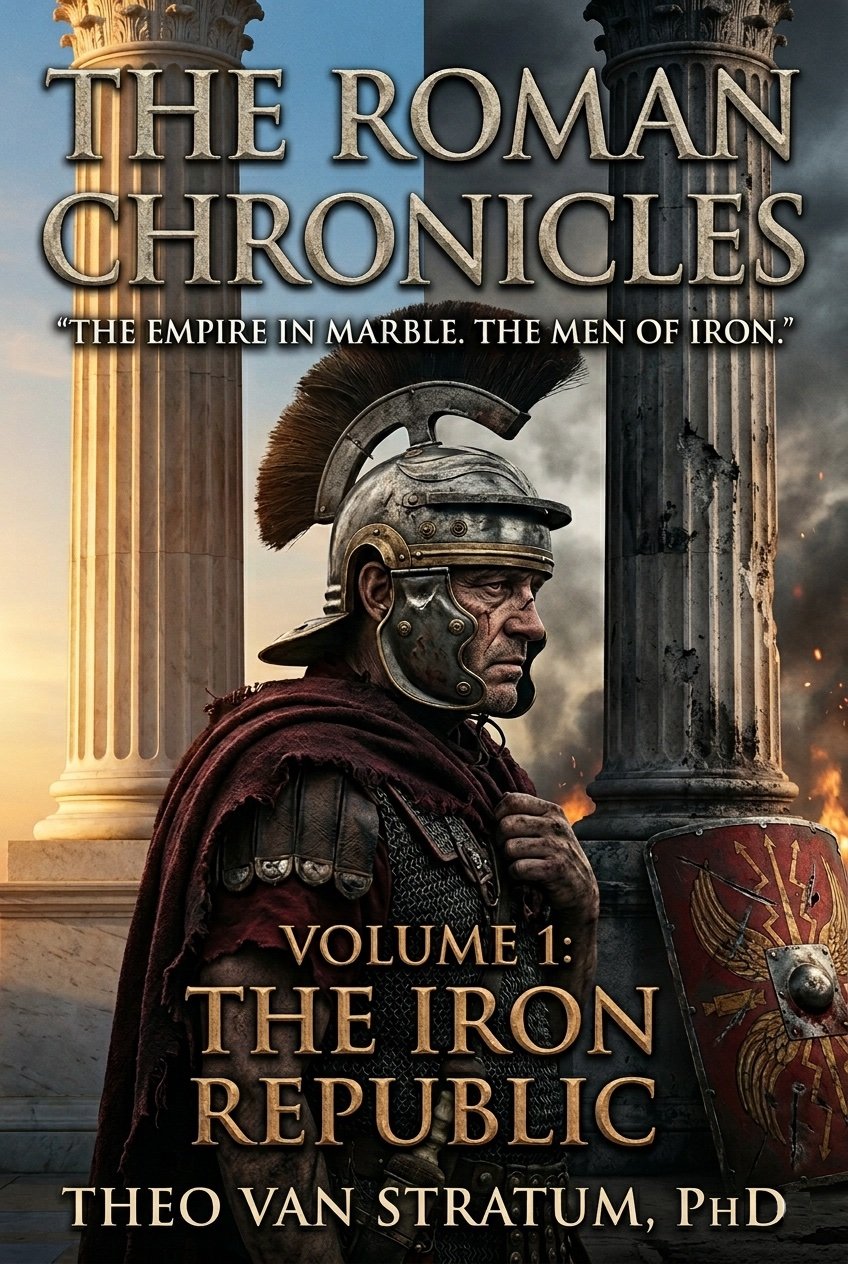
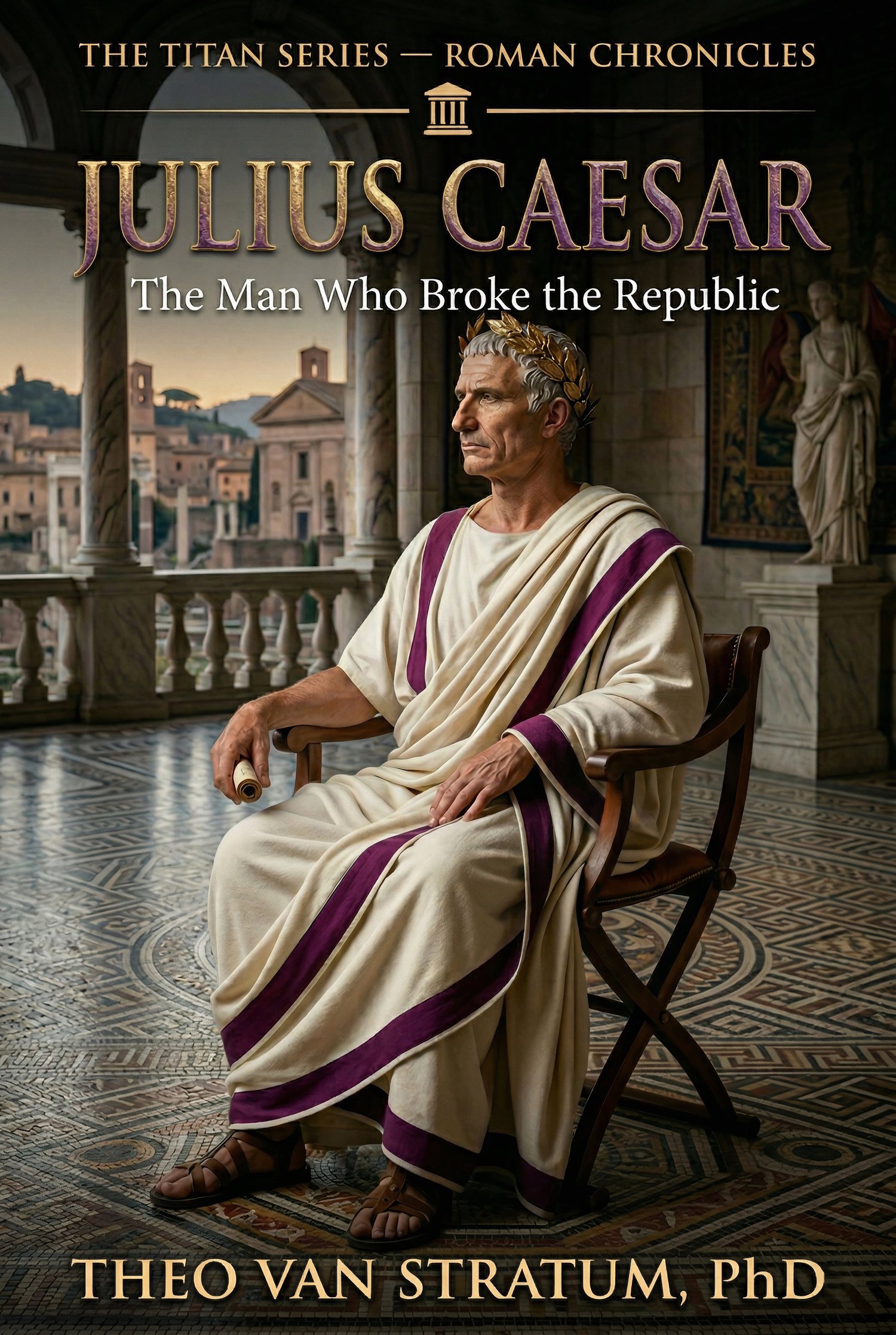
That obsession became 22 books — The Roman Chronicles series — written to give the world the Rome it actually deserves. Not Nero the monster. Not Cleopatra the seductress. The real, complicated, extraordinary human beings who built something that still shapes your world today.
Every date you write has a footing in Rome.
Stoicism is not something I teach from a distance. It is how I live. The evening reflections, the dichotomy of control, the practice of Amor Fati — these are daily companions, not academic concepts.
This course is what I wish had existed when I began.
By the time you complete Module 13 you will have:
The Inner Citadel is not a destination. It is a beginning.
Marcus Aurelius wrote his Meditations as private notes to himself — daily reminders to keep practicing. He never considered himself finished.
Neither will you.
But you will have the tools.
Do I need any prior knowledge of Stoicism or mindfulness? None at all. This course is designed specifically for complete beginners. If you have never meditated or studied philosophy, you are exactly the right student.
How long does each module take? Each module takes approximately 30 to 45 minutes to read and listen to. The workbook exercises are designed for daily use throughout the week following each module. At your own pace, most students complete the course in 8 to 13 weeks.
Is this a religious or spiritual course? No. Stoicism is a practical philosophy, not a religion. No beliefs are required or implied. The course is grounded in history, psychology, and practical daily application.
What format are the lessons? Each module is a written lesson with an accompanying audio recording — so you can read, listen, or both. Every module includes a downloadable PDF workbook.
Do I need any equipment or apps? No. Everything is delivered through your Payhip student account. You can access your lessons on any device at any time.
Is there a time limit on access? No. You have lifetime access to all modules and workbooks. Come back whenever you need to.
What if I try Module 1 free and want to upgrade? Simply purchase the full course and your free module counts — you pick up from Module 2.
Every date you write has Roman fingerprints on it.
January 1 exists because of a rebellion in Spain. July is named after Julius Caesar. The leap year was invented to fix a calendar so broken that harvest festivals were being held in summer. And the year number you write today was calculated by a sixth-century monk who got it wrong by four years — and nobody has changed it since.
The Architecture of Roman Time traces how the Romans built, broke, reformed, and ultimately bequeathed to the modern world the calendar you use without a second thought.
Free. No purchase required.
Already have it? The course is just above.
"The course teaches you the practice. The Stoic Pillar gives you the philosophy behind it — 187 pages on how Stoicism was actually built, who built it, and why it survived 2,000 years. Included free with every enrolment."
No account of Rome’s rise, reign, and legacy is complete without understanding the philosophy that shaped its leaders. The Stoic Pillar: Philosophy, Power, and the Roman Mind is more than a history of thought; it is an exploration of the moral architecture that allowed an empire to endure both triumph and catastrophe.
Stoicism was not a mere footnote in intellectual life—it was the operating system of the Roman elite. It was debated by senators in the Forum, carried into battle by generals, and recorded in the private journals of emperors. This volume serves as the essential philosophical companion to The Roman Chronicles, illuminating the inner world of the ancient West’s most influential figures.
"Waste no more time arguing about what a good man should be. Be one." — Marcus Aurelius