
Radiant Recovery: A 4-Week CBT and DBT Therapeutic Workbook for Addiction Recovery
Relapse is rarely a single decision. More often it is a loop that has been running for a while.
This workbook is four weeks of structured reflection for people in recovery, and its whole purpose is to make that loop visible. Once it is written down it stops being weather and becomes something with a shape you can interrupt.
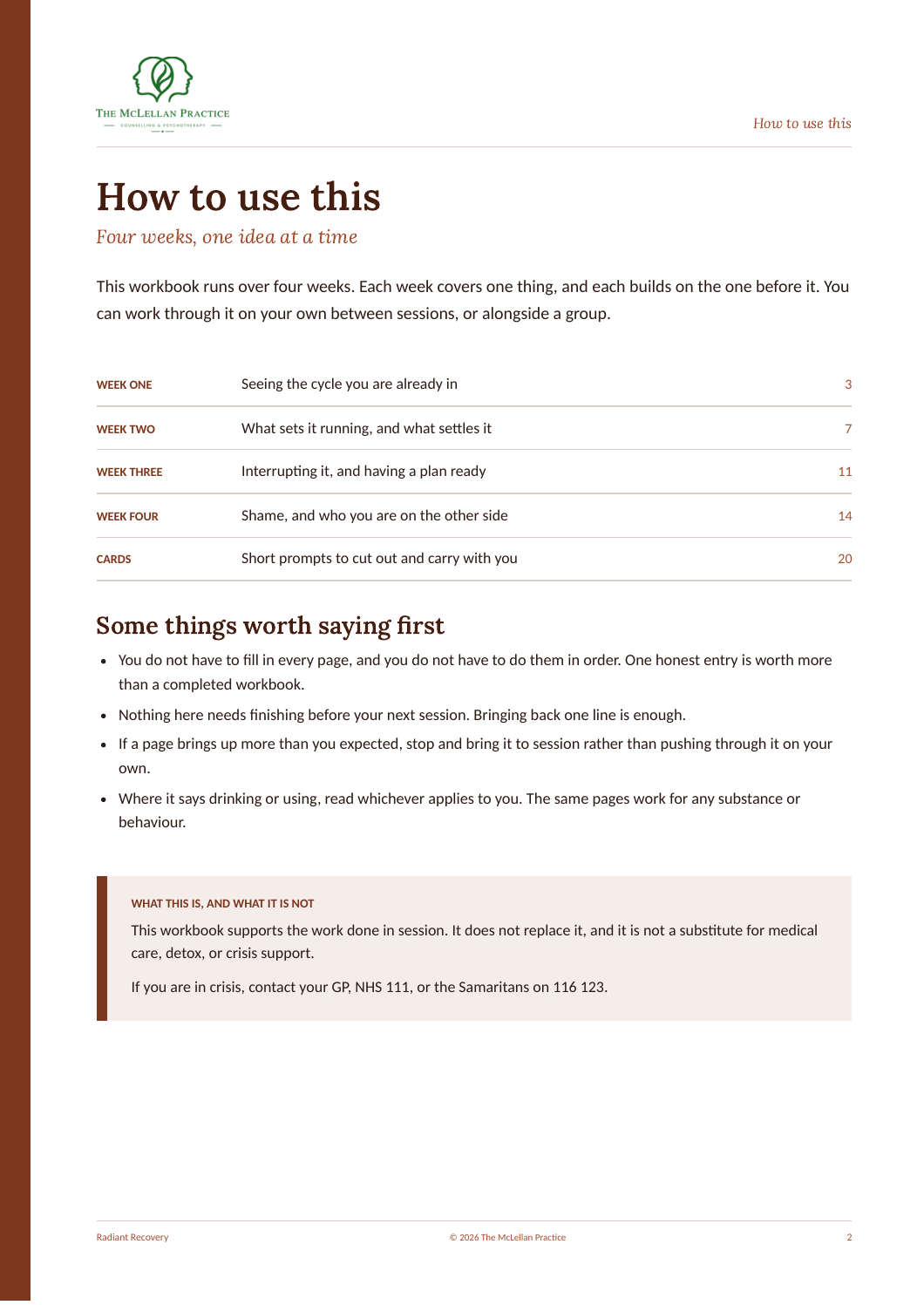
Each week covers one thing and each builds on the one before it. It can be worked through alone between sessions, or alongside a group.
Week one. Seeing the cycle you are already in
The six parts of the loop, set out separately so the whole thing slows down enough to find the gap. One occasion of your own written out in full. Four questions for loosening the thought that came with it, and the four shapes a thought tends to take under pressure.
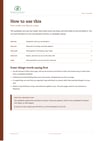
Week two. What sets it running, and what settles it
Where the pressure usually comes from, including the ones people do not expect. A simple tracker that needs only three or four entries to show a pattern. Where stress lands in your body before it arrives in words. Three ways of settling it that work on the body rather than the thinking, for when talking yourself round has stopped working.
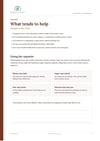
Week three. Interrupting it, and having a plan ready
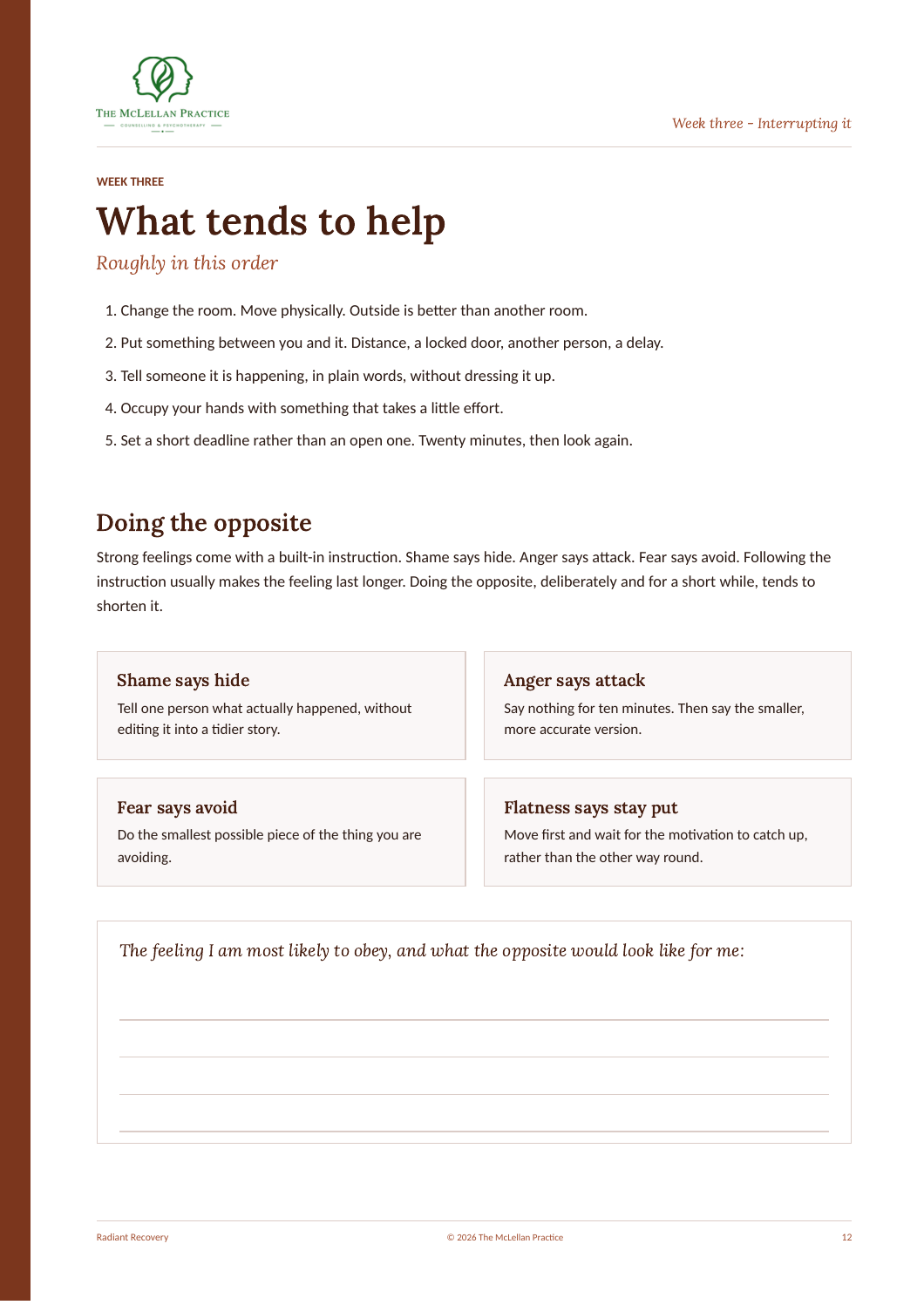
Mapping the chain to find the link where a choice was still possible, which is usually earlier than people expect. Five things that tend to help, roughly in the order worth trying them. Doing the opposite of what a feeling instructs. And a page on why a lapse is not a relapse, written to be read before it is needed rather than after.
Week four. Shame, and who you are on the other side
The difference between guilt and shame, and why one tends to end cycles while the other keeps them running. Rewriting the belief you wrote down in week one into something more accurate rather than something nicer. The difference between a repair and a case. And what is still open to you once you stop arguing with what cannot be changed.
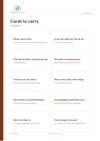
Cards to carry
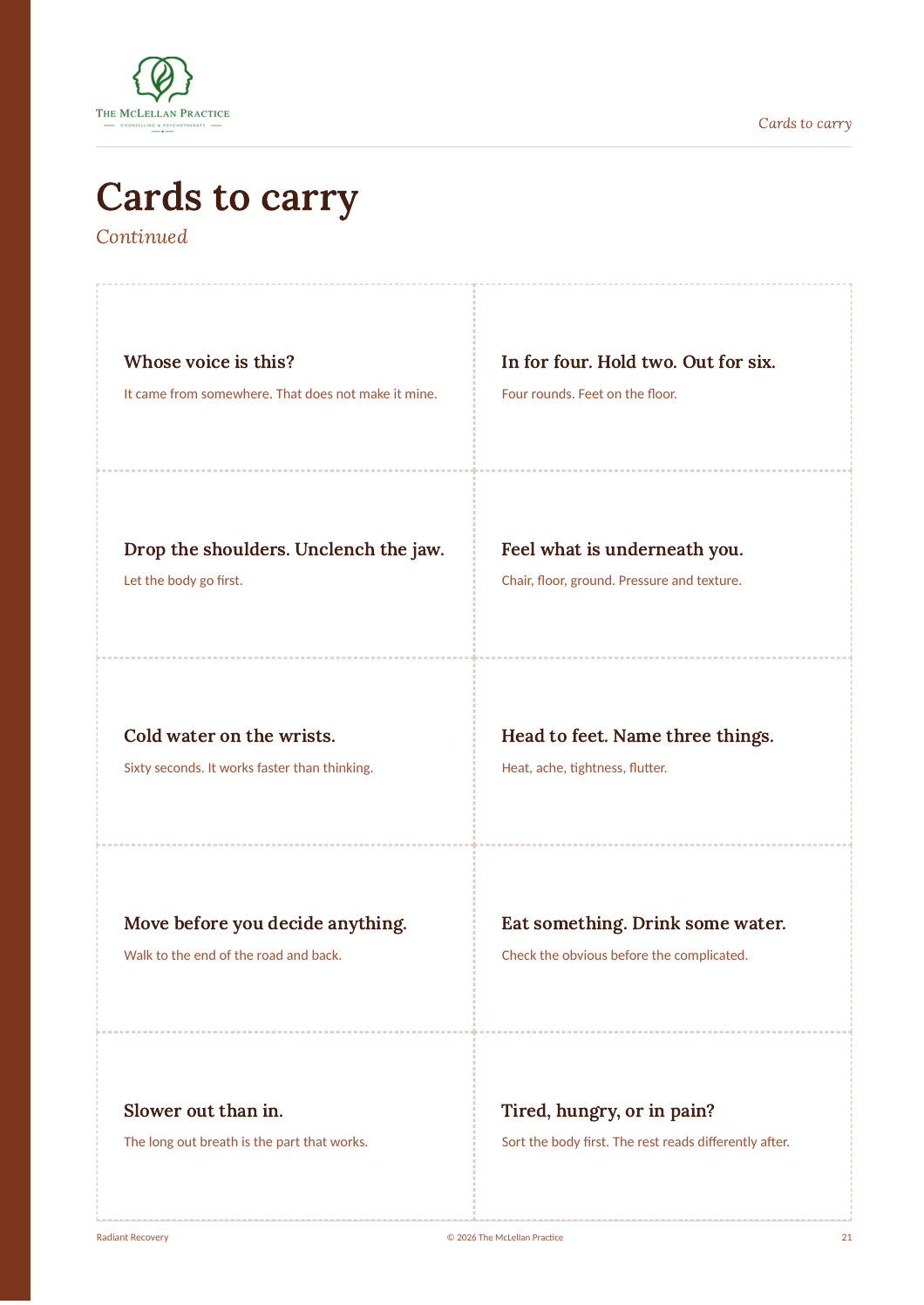
Thirty-eight short prompts to cut out, for the moments when reading a page is not realistic. Keep two or three in a wallet or a phone case rather than carrying the whole set.
Where the approach comes from
CBT and DBT, used rather than named. Checking a thought against evidence and looking for a more accurate reading come from CBT. Doing the opposite of what a feeling instructs, and settling the body with cold, movement and a longer out breath, come from DBT. Neither is labelled on the page, because the pages are written for the person using them rather than the person trained in them.
Who it is for
Anyone in recovery who can feel the same pattern coming round again and wants to see it written down. Also written to be usable by therapists, key workers and treatment services running group work, where it can be printed and worked through a week at a time.
Format
Twenty-four pages. A4. PDF, ready to print or to complete on screen.
Written by Soraya McLellan, BSc (Hons) Psychotherapeutic Counselling, MBACP. Integrative therapist and substance misuse therapist in residential rehabilitation.
This workbook supports the work done in session. It does not replace it, and it is not a substitute for medical care, detox or crisis support.