


Grade 2 | Unit 2 | Materials Lab
Get your Sundays back—and give your second graders something worth investigating.
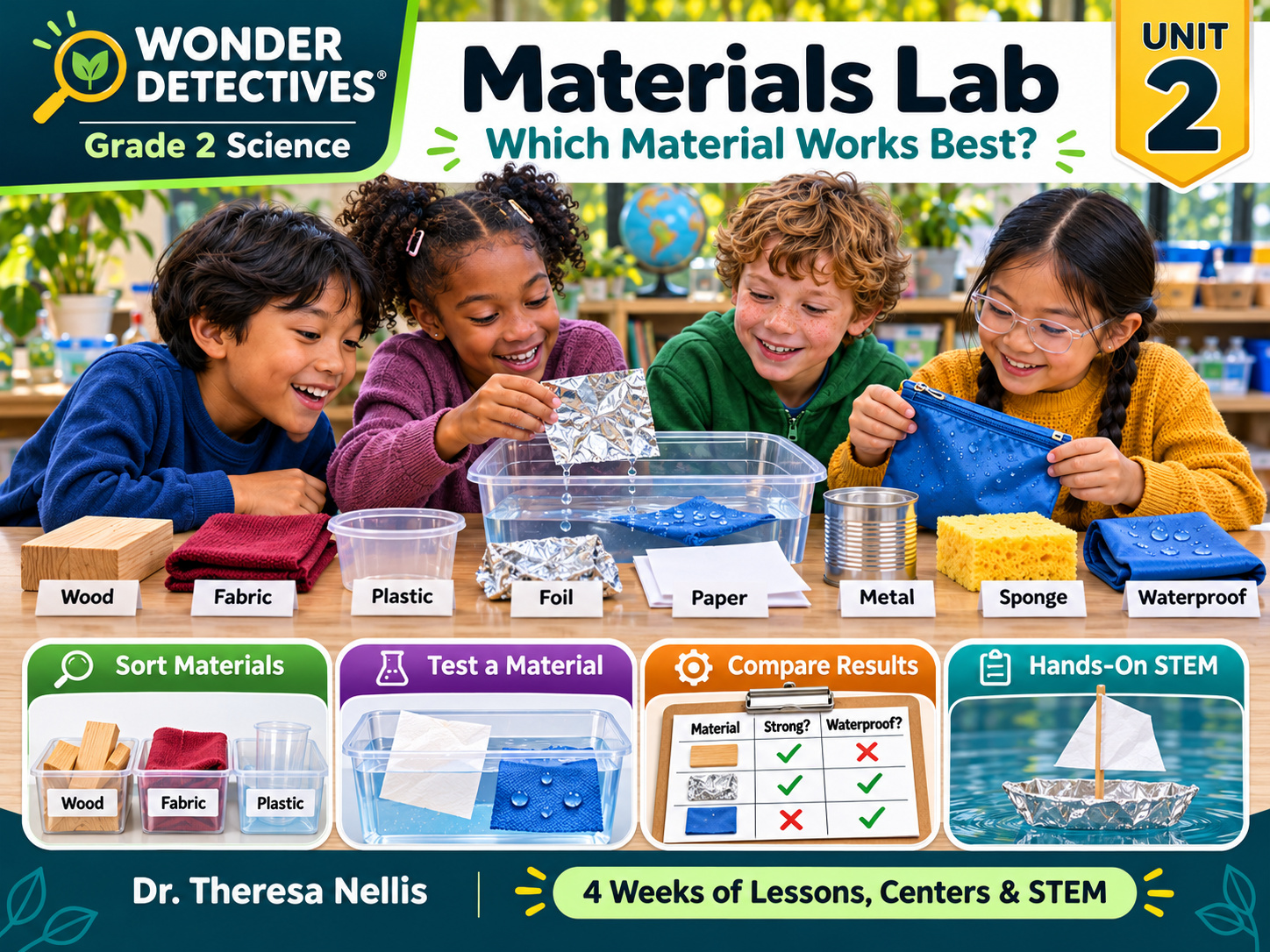
Materials Lab: Which Material Works Best? is a complete four-week science unit that helps children answer a question with real-world importance: which material should we choose for this job, and what evidence supports that choice?
Across 20 connected lessons, students explore absorbency, water resistance, flexibility, strength, and surface grip using familiar classroom materials. They investigate first, build vocabulary from their observations, and discover why a material that works beautifully for one purpose might fail at another.
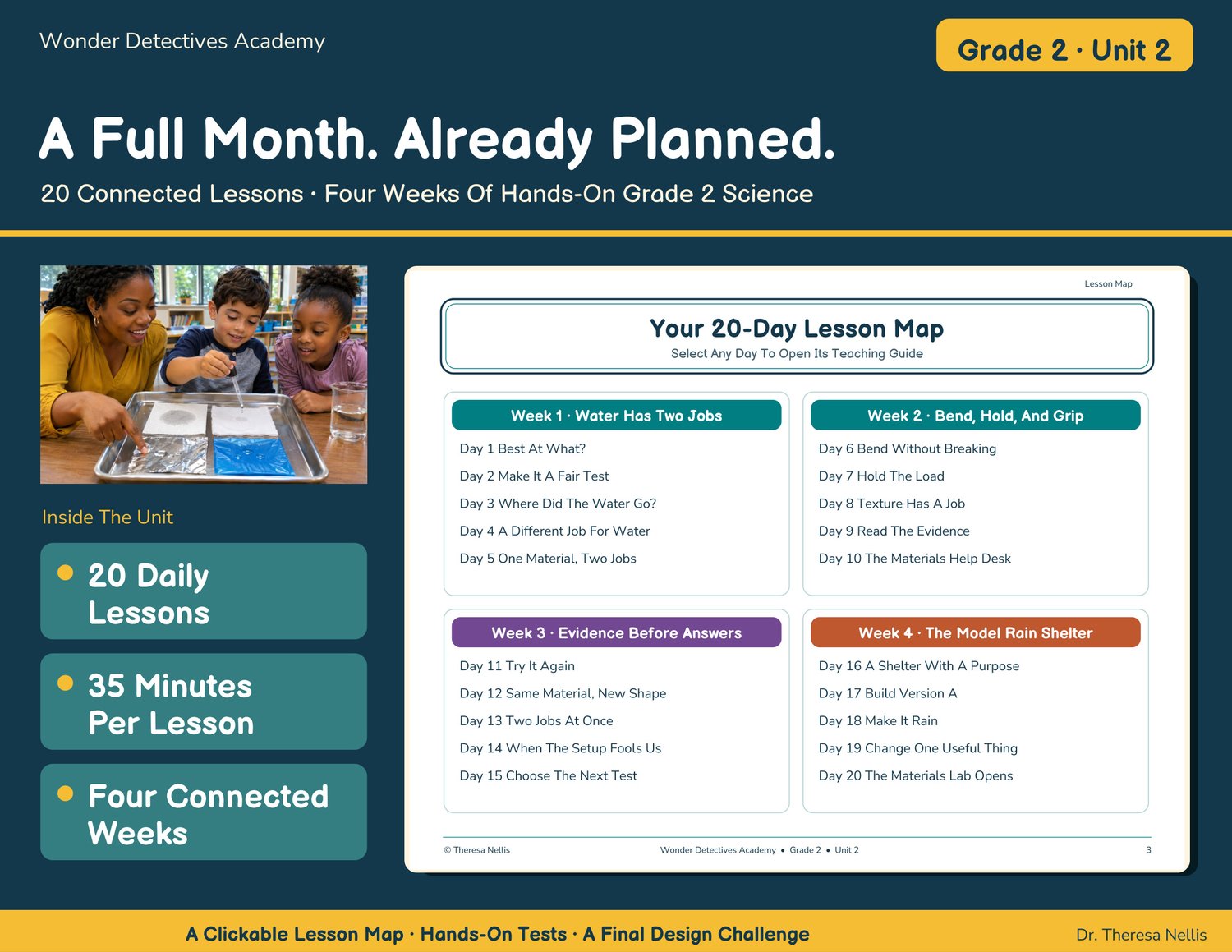
The month moves through a purposeful progression. During Week 1, students compare materials that take water in with materials that keep the space below dry. Week 2 introduces bending, supporting a small load, and helping an object stay in place. In Week 3, children investigate conflicting results, distinguish material properties from changes in shape or construction, and plan tests to answer unresolved questions.
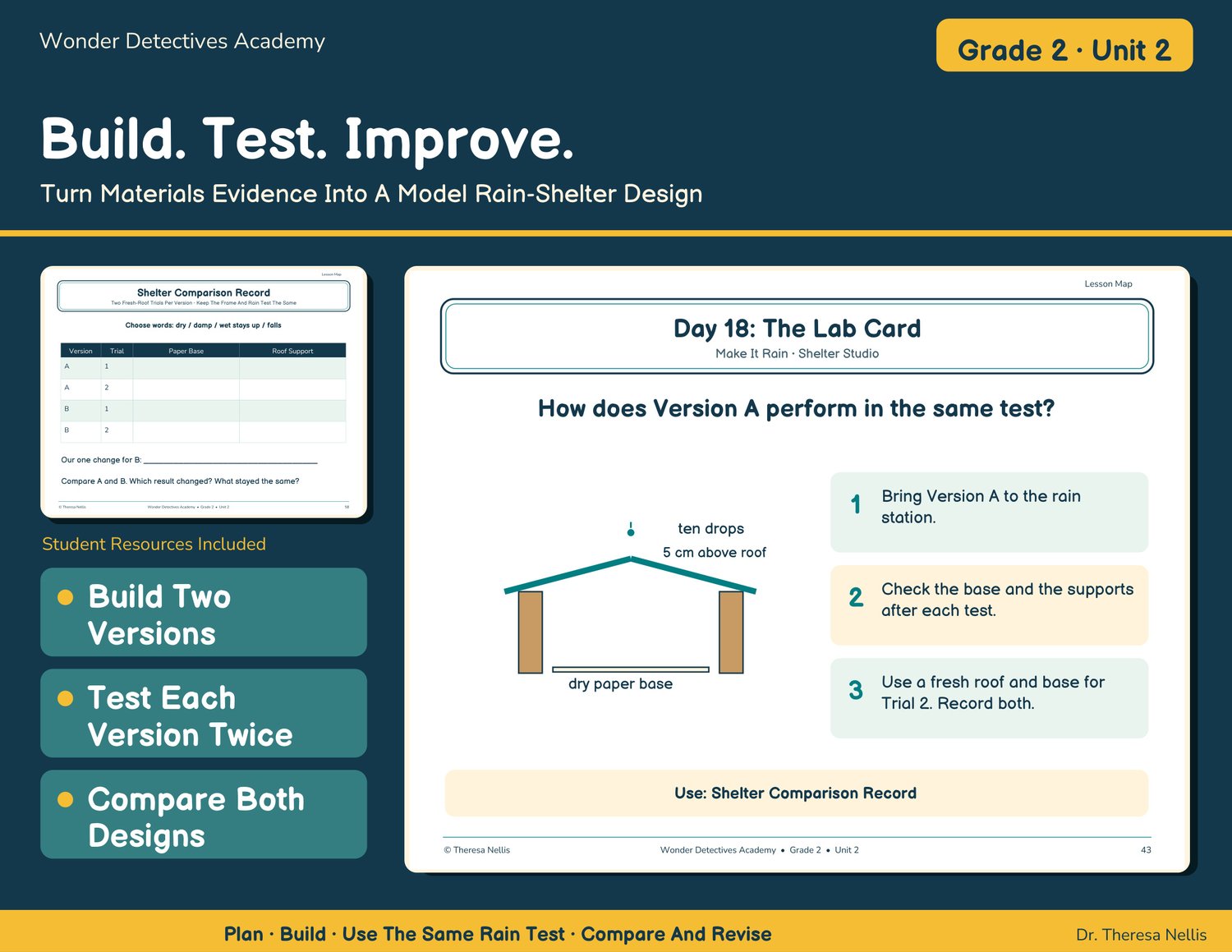
Week 4 brings their learning together in a model rain-shelter challenge. Teams select materials using their earlier evidence, draw two possible designs, build a roof, and test it under a shared rain procedure. They then change one design feature, test again, and compare both versions. A successful explanation matters as much as a successful roof.
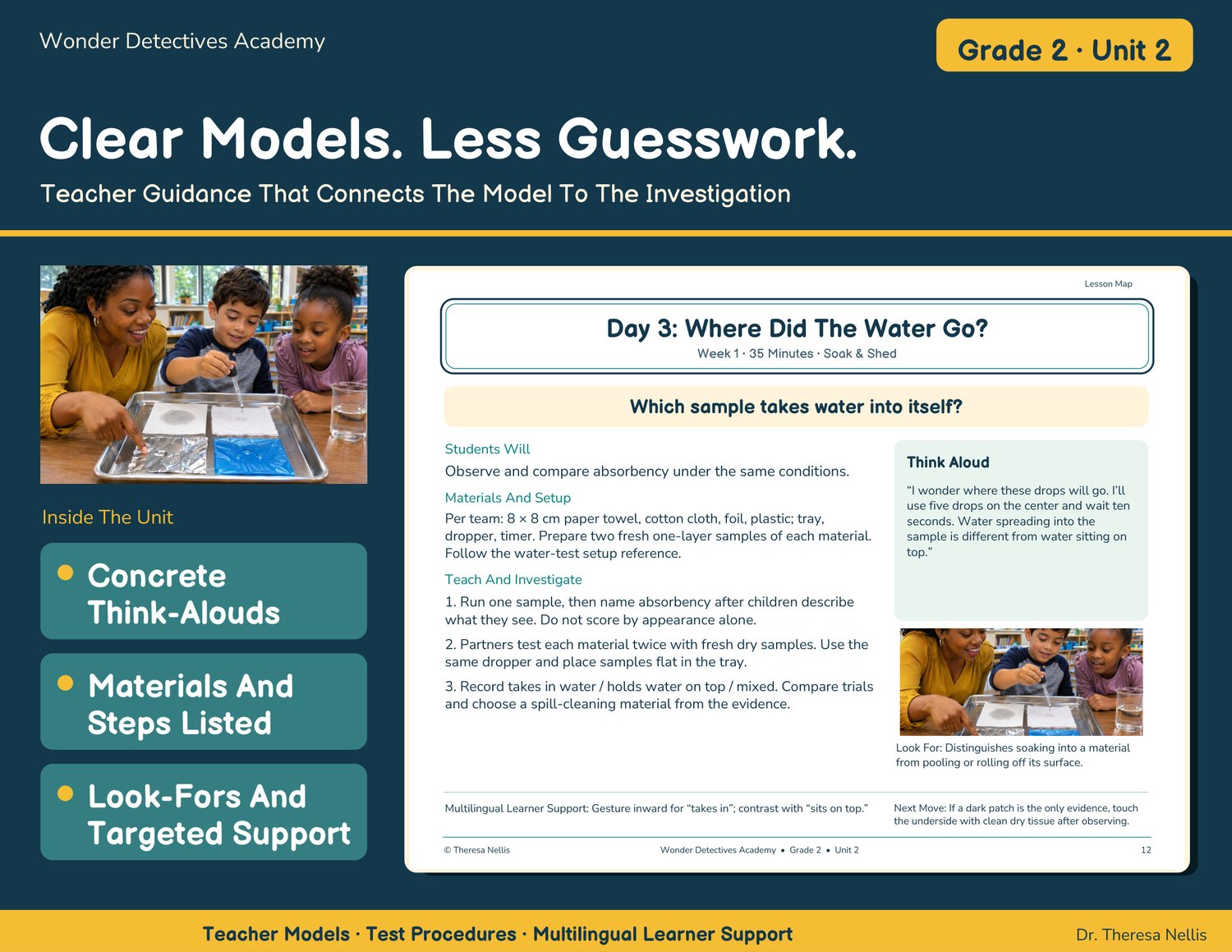
The 73-page complete unit includes daily teacher lessons, concrete think-alouds, materials and setup directions, observable learning targets, look-fors, targeted next steps, and multilingual learner support. Lessons are planned for approximately 35 minutes, including cleanup, with materials prepared beforehand.
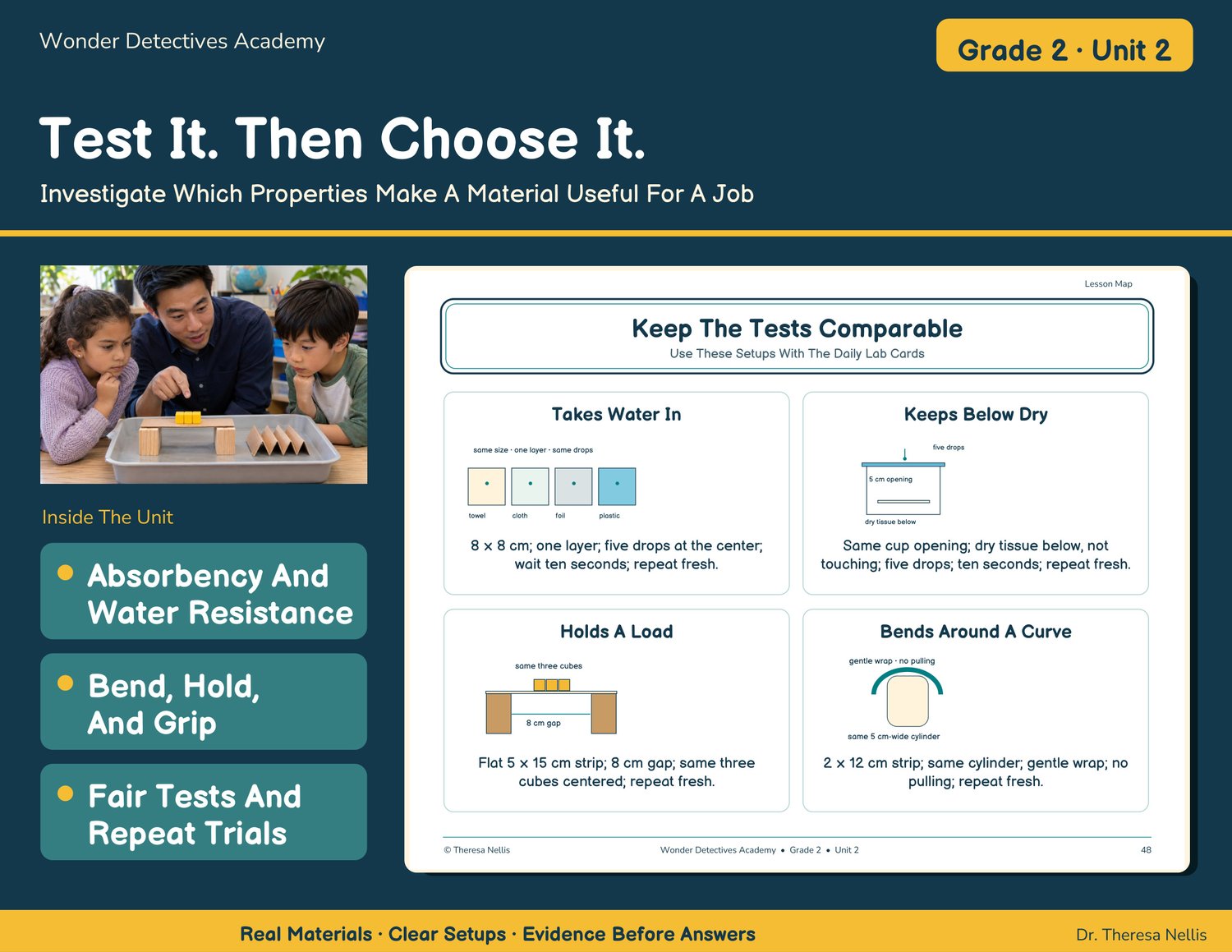
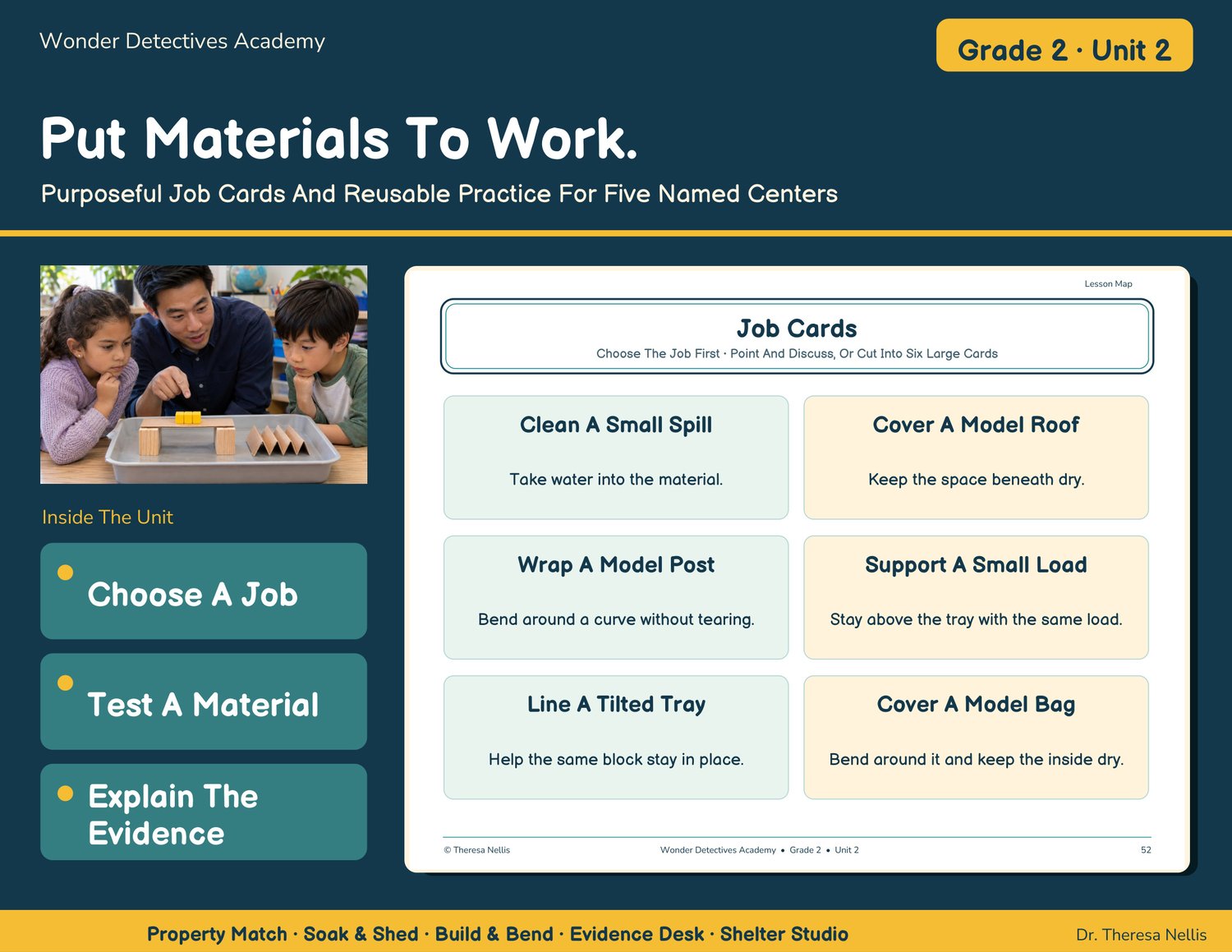
Classroom resources include 20 daily lab cards, clear test-setup diagrams, a reusable test-plan card, material vocabulary, six purpose-based job cards, four evidence cards with clearly labeled practice data, and shared testing records. Five named centers connect the teaching to student practice: Property Match, Soak & Shed, Build & Bend, Evidence Desk, and Shelter Studio.
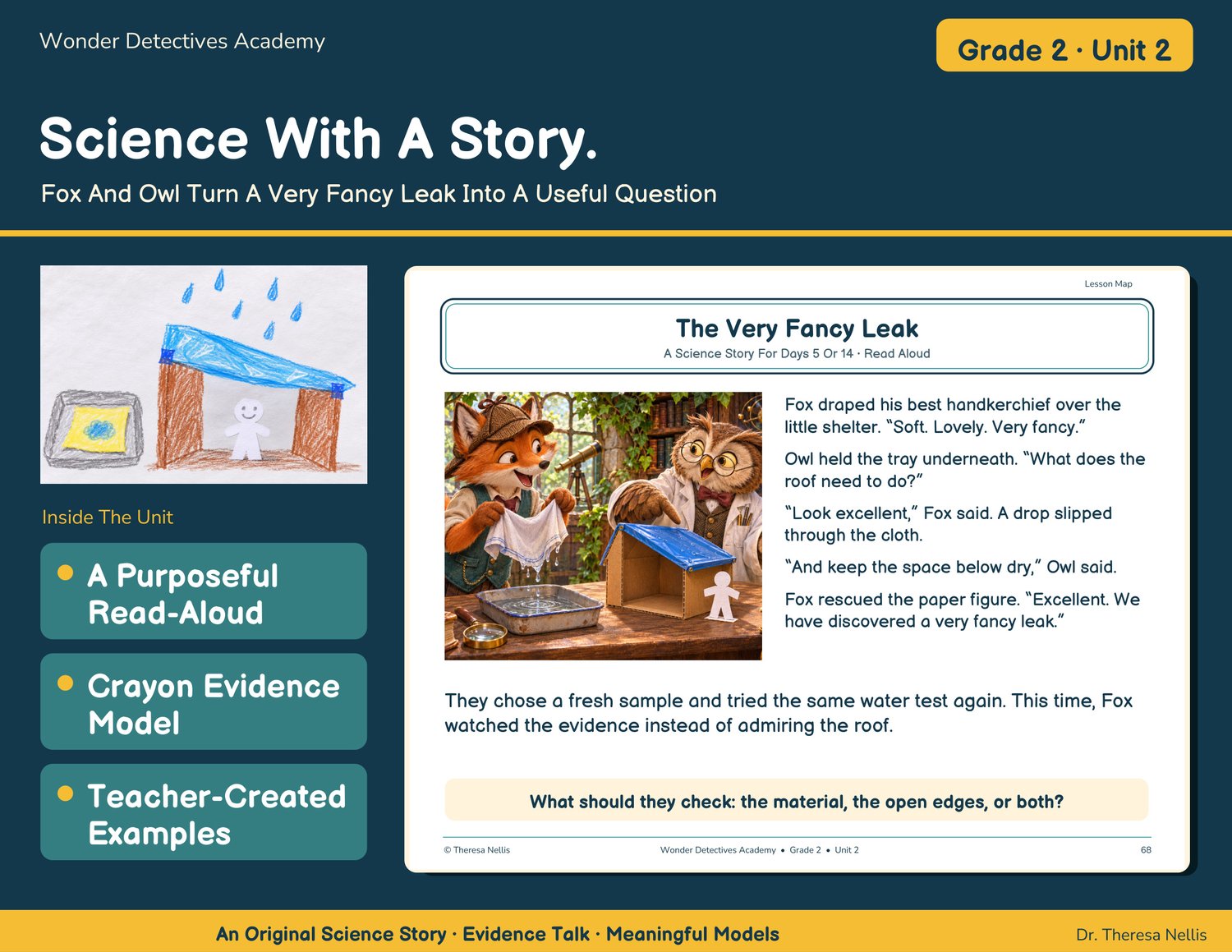
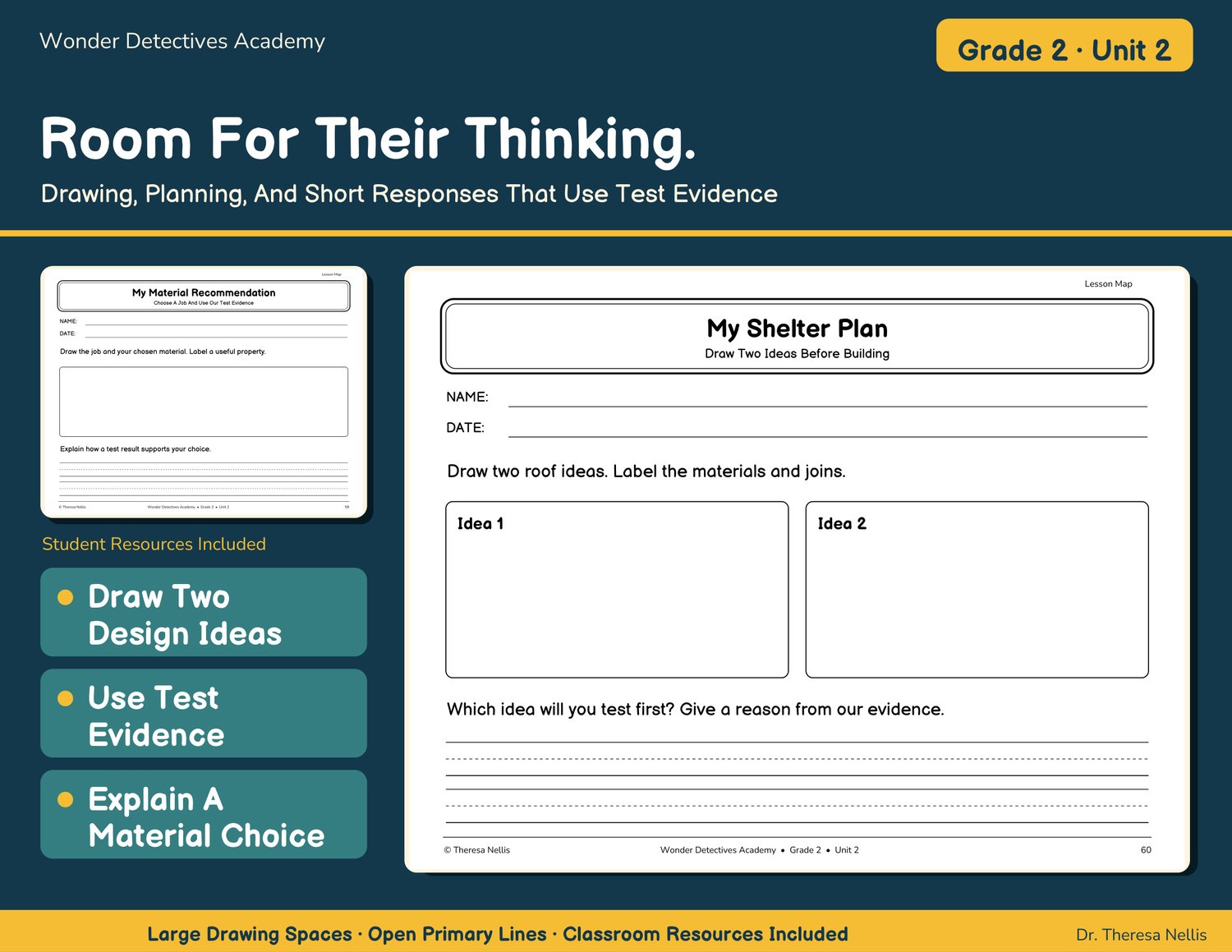
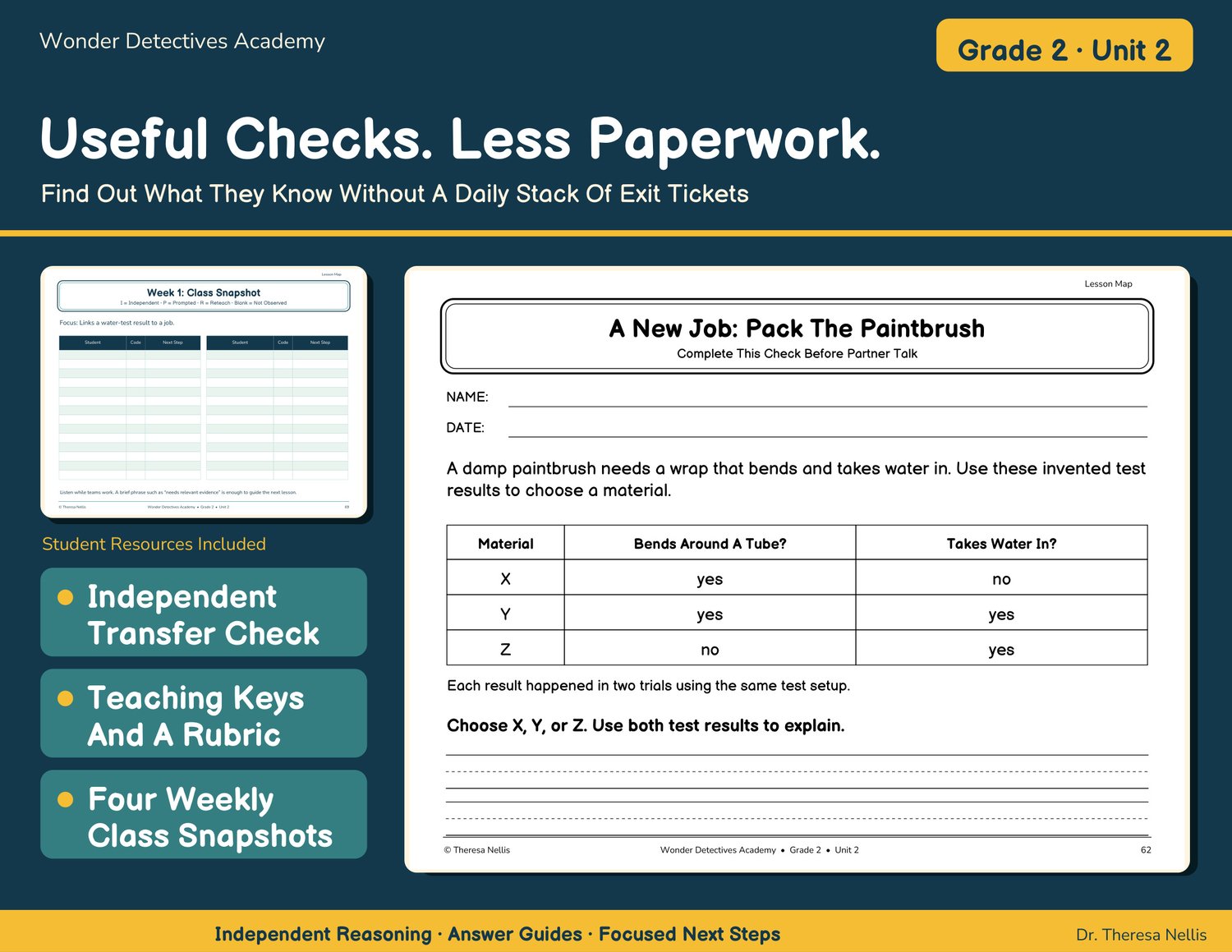
Students also receive purposeful space to draw, plan, recommend materials, and explain their findings. An original Fox and Owl science story, a crayon evidence model, and teacher-created examples help make scientific reasoning visible. Teaching keys, a focused rubric, four weekly class snapshots, and an independent final transfer check help you identify what students understand and what needs another look.
A separate 38-page classroom companion gathers the unit’s shared and student-facing resources for convenient projection or selective printing. These pages are drawn from the complete unit. Reuse cards and records in dry-erase sleeves, build shared class charts, and print individual response pages when they serve a learning purpose.
The unit focuses on Grade 2 NGSS 2-PS1-2: using test evidence to determine which materials have properties suited to an intended purpose. It also applies earlier property-classification learning and supports K–2 engineering design through defining needs, drawing solutions, testing, and comparing designs.
Created by Dr. Theresa Nellis for Wonder Detectives Academy. Digital PDF resources; investigation materials are gathered separately.