
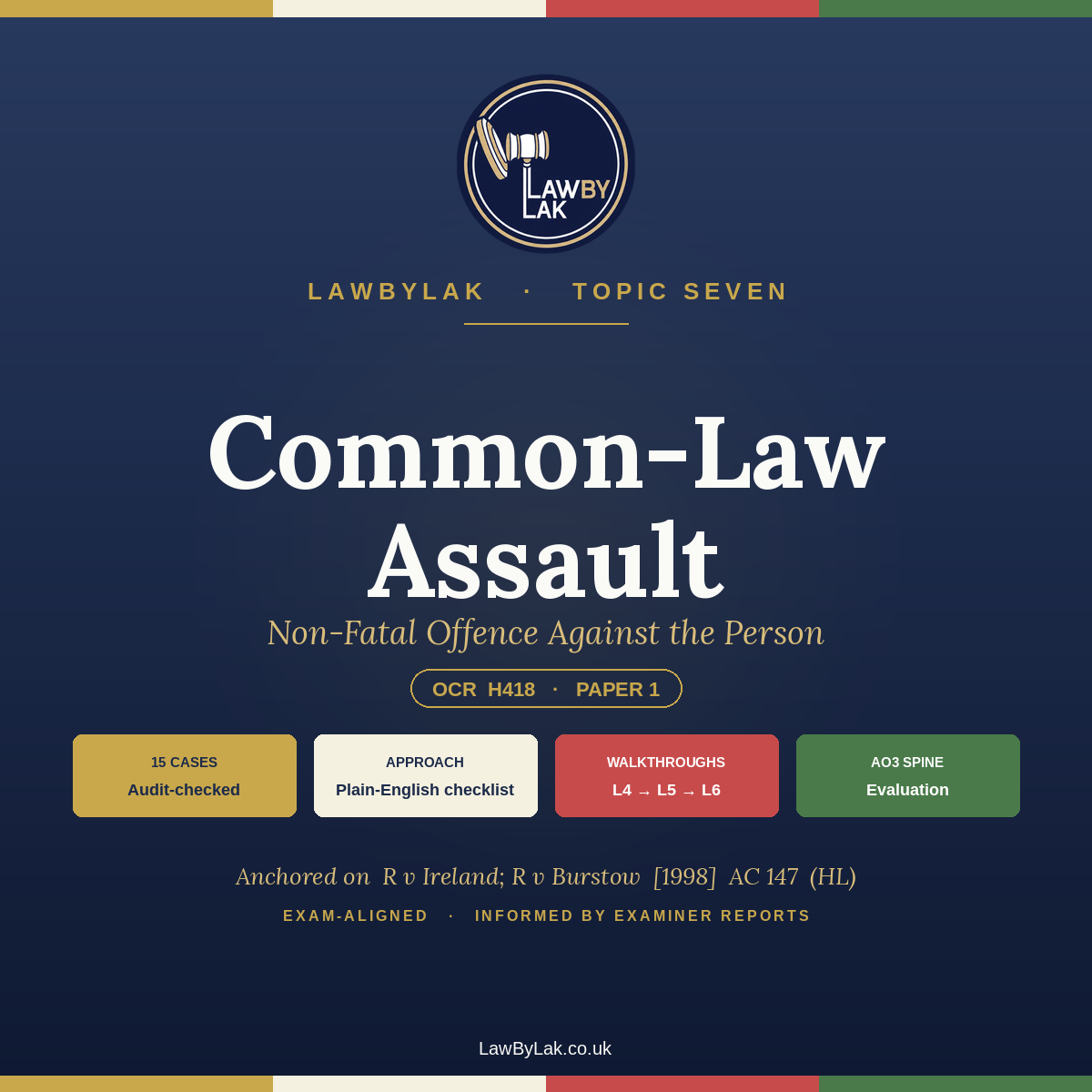
LawByLak — Topic 7: Common-Law Assault (OCR H418, Paper 1)
Topic 7 — Common-Law Assault
The complete LawByLak revision module for A-Level Law, covering Common-Law Assault to the OCR H418 (A-Level) and OCR H018 (AS-Level) specifications. Core content substantially covers AQA 7162; dedicated AQA modules coming soon.
━━━━━━━━━━━━━━━━━━━━━━
WHAT'S INSIDE
- 14 interactive tabs — Foundations, Elements, Cases, Practice, AO3 Evaluation, Model Answers, Reference, Mnemonics, Wellbeing, and more
- 50+ audit-corrected case authorities with Facts / Held / Ratio, cross-referenced to the OCR mark scheme
- 22 practice questions across 5 difficulty tiers, from AO1 recall through to Level 6 essay planning
- 10 AO3 evaluation paragraphs ready-built with mark-scheme language and worked answers
- RAG confidence tracker — mark your progress topic-by-topic and revisit weak spots
- Printable PDF revision guide + one-page cheat sheet
- Mnemonics + spec-point map — every OCR H418 point cross-referenced to a card, case, or paragraph
━━━━━━━━━━━━━━━━━━━━━━
WHAT YOU'RE BUYING
A self-contained interactive HTML module (opens in any modern browser — no software to install) plus a branded PDF summary. Lifetime access. Free lifetime updates as case law evolves and new examiner reports drop.
━━━━━━━━━━━━━━━━━━━━━━
INCLUDED FREE WITH ANY LAWBYLAK TUTORING PACKAGE
Book a Single Session (60min, £45), a Paper Package (6 sessions, £395), or the Full A-Level (24 sessions over 6 months, £995) and every relevant LawByLak module is included at no extra cost.
Free 15-min Trial Lesson available: lawbylak.co.uk/pricing
━━━━━━━━━━━━━━━━━━━━━━
WHO BUILT IT
Lakshan Satheeskumar — working lawyer with a First-Class Law degree and a Master's in Law. 1,000+ hours of A-Level Law tutoring specialising in OCR H418.
━━━━━━━━━━━━━━━━━━━━━━
14-DAY NO-QUESTIONS REFUND
If it's not right for you, email hello@lawbylak.co.uk within 14 days for a full refund. Every question read personally. No support tickets. No autoresponders.