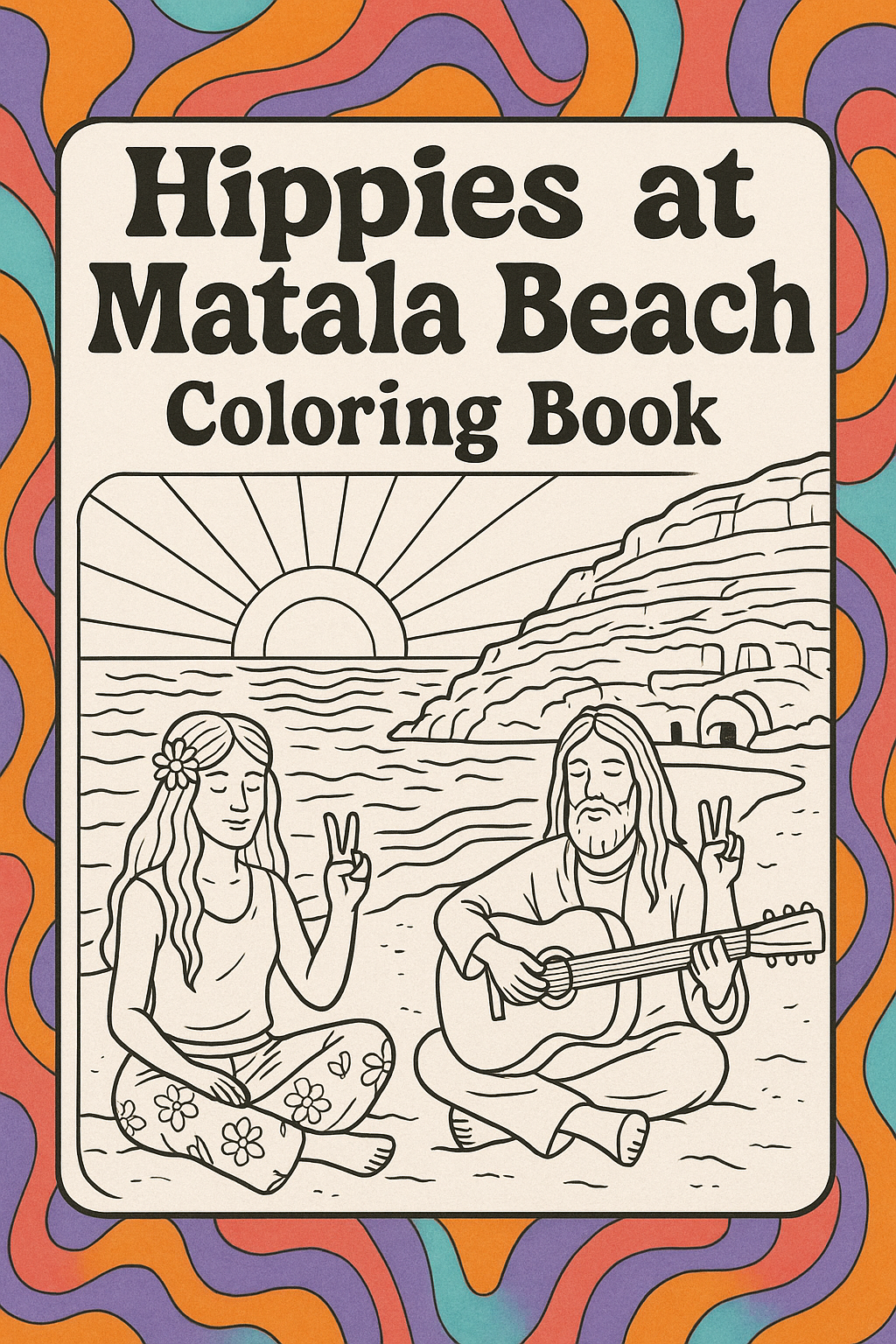
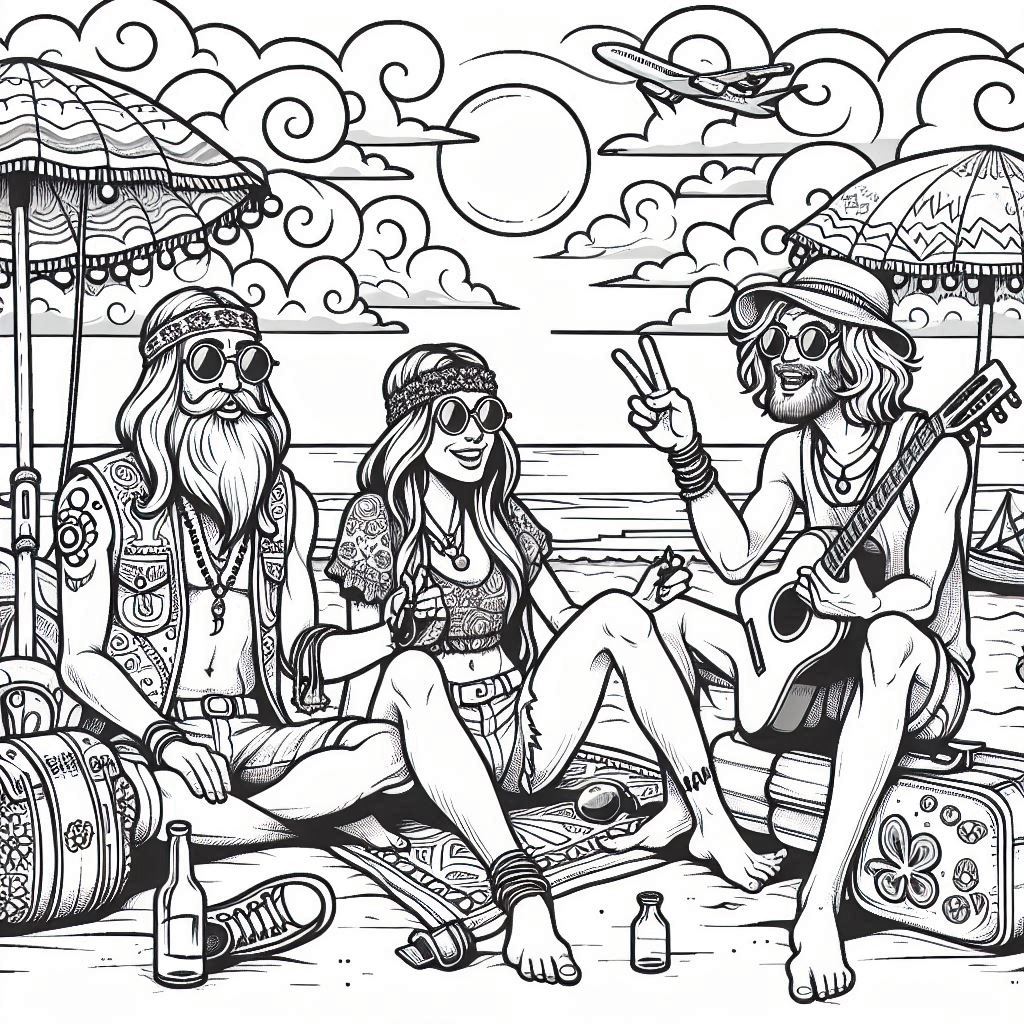

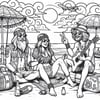
Hippies at Matala-Crete, coloring ebook, 64 designs, digital printable product, instantly download
Hippies at Matala-Crete, coloring ebook, 64 designs, digital printable product, instantly download.
The Hippies of Matala: Freedom, Peace and Music in the Caves of Crete
Introduction
In southwestern Crete, where the rocks of Messara plunge into the Libyan Sea, lies a small fishing village that became a symbol of freedom and counterculture: Matala.
During the 1960s and 1970s, this village became world-famous as a haven for hippies — young people who abandoned Western consumerism in search of meaning, peace, simplicity and spirituality. Today, Matala remains a legendary memory of hippie culture.
What was the Hippie movement?
The Hippies were born in the USA in the 1960s, in a time full of turmoil: the Vietnam War, racism, the nuclear threat, consumerism. They responded with love, freedom, music and a return to nature.
They embraced pacifism, vegetarianism, experimented with psychedelic experiences, and sought alternative ways of life, far from urban societies.
How did they end up in Matala?
In the late 1960s, Crete was still far from mass tourism development. Matala was a quiet village, known only to fishermen and a few local farmers. The caves in the rocks, carved by the Romans as tombs, were located next to the sea and were empty and accessible.
The first Hippies found the place magical:
They lived in caves,
They slept on mattresses made of seaweed and blankets,
They cooked on makeshift stoves,
They played music on the beach around fires,
They swam naked,
They lived without watches, rules or money.
As they said, "We came to live, not to survive".
Famous visitors
According to local stories and testimonies, Matala was visited by:
🎸 Joni Mitchell (she wrote the song Carey there),
🧙♂️ Cat Stevens,
🎶 Bob Dylan (according to some unconfirmed rumors),
Artists, travelers, poets, nomads from all over the world.
The conflict with the authorities and society
Although at first the locals treated the hippies with curiosity or even acceptance, over time:
Their presence grew greatly,
Frictions began with the Church and the State,
which considered them "anarchists" and "dangerous".
In 1977, the authorities evacuated the caves and banned residence. Most hippies fled or dispersed to other places (Samothrace, Ikaria, India).
The Heritage of Matala
Today, Matala is a tourist destination, but it maintains the spirit of freedom.
Every summer, the Matala Beach Festival is held with music, street art, body painting and a revival of the hippie era. The caves remain open to visitors (but not habitable).
Matala as a symbol
Matala is not just a village in Crete. It is:
A myth of living freedom,
A hillside full of memories of laughter, songs and hugs,
A personal and collective utopia,
A hymn to unconventionality and the simplicity of life.
Conclusion
Matala was and remains a refuge for souls who do not fit into the narrow boxes of society. The hippies who passed through there left behind them much more than graffiti or music: they left a message of peace, acceptance and freedom. And this still resonates, every time the sun sets behind the caves.