

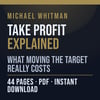

Take Profit Explained — Measured (PDF Guide)
You were told to let winners run, or to bank at a fixed multiple, and both pieces of advice arrive with no number attached. A wider target is reached less often, and nobody ever says by how much.
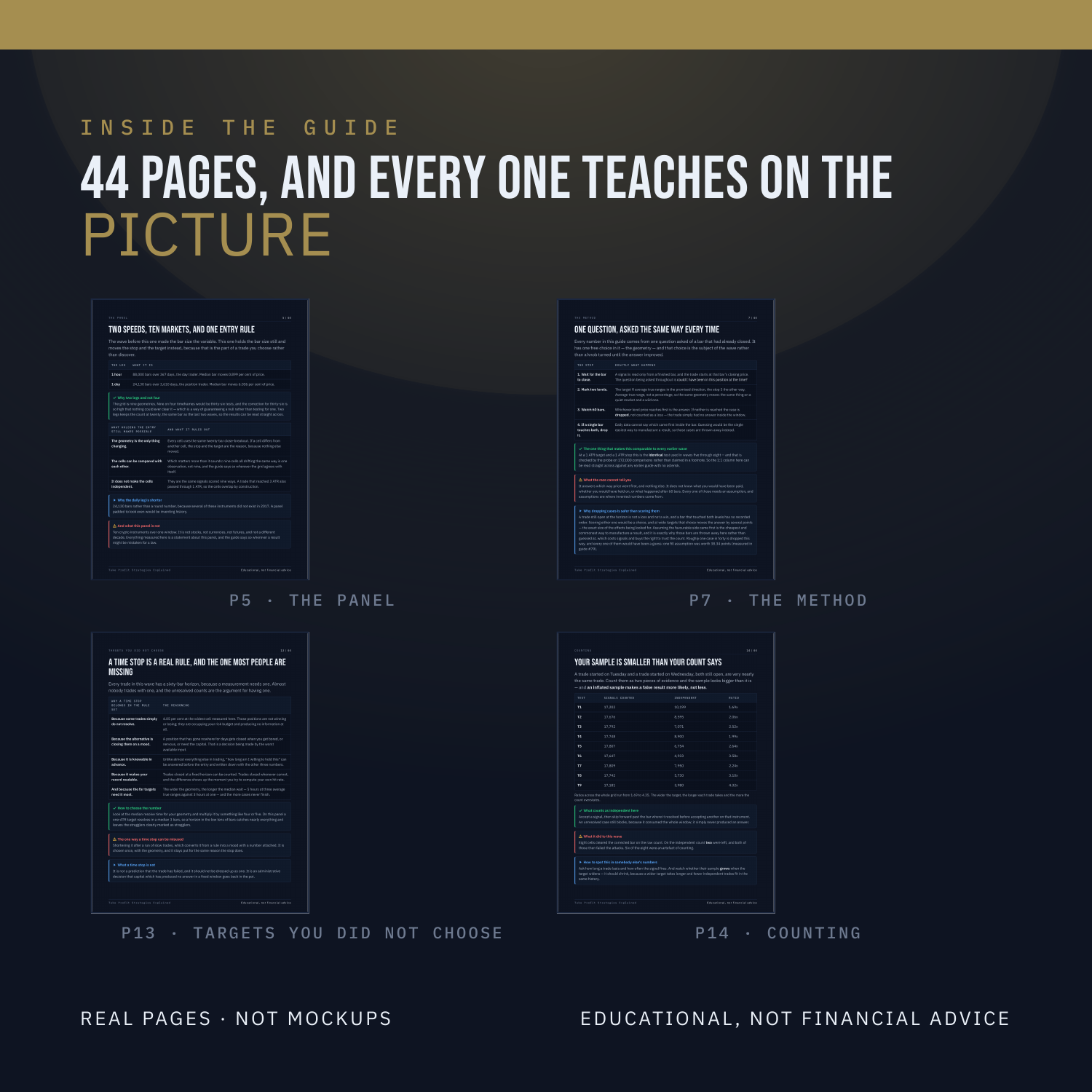
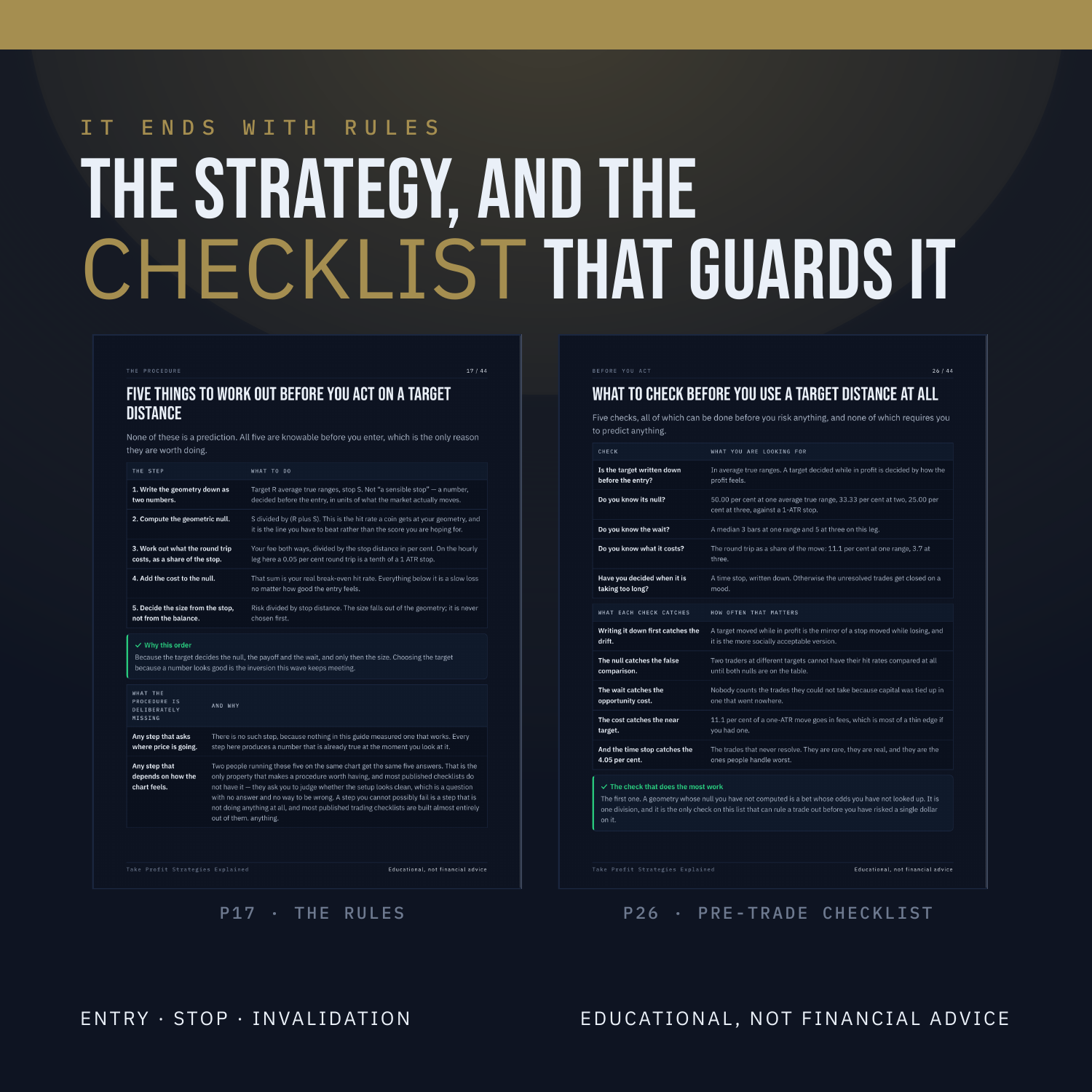
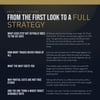
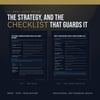
This guide measures nine target-and-stop geometries on two bar sizes, prints what each one reached against its own control, and counts how often a trade simply never resolves at all. Every figure carries the sample it came from. This is a 44-page PDF that teaches Take Profit from the first thing you see on the screen through to a written strategy with an entry, a stop and an explicit rule for when the trade is wrong.
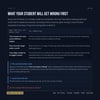
Nothing is taught underneath a chart. Every label sits on the candle, the line or the level it is describing, on real BTC, ETH, SOL and LINK charts. There are three quizzes on real charts, each followed by the same chart re-shown annotated with the reasoning, plus faded practice pages where the first steps are filled in and you finish the rest.
WHAT'S INSIDE
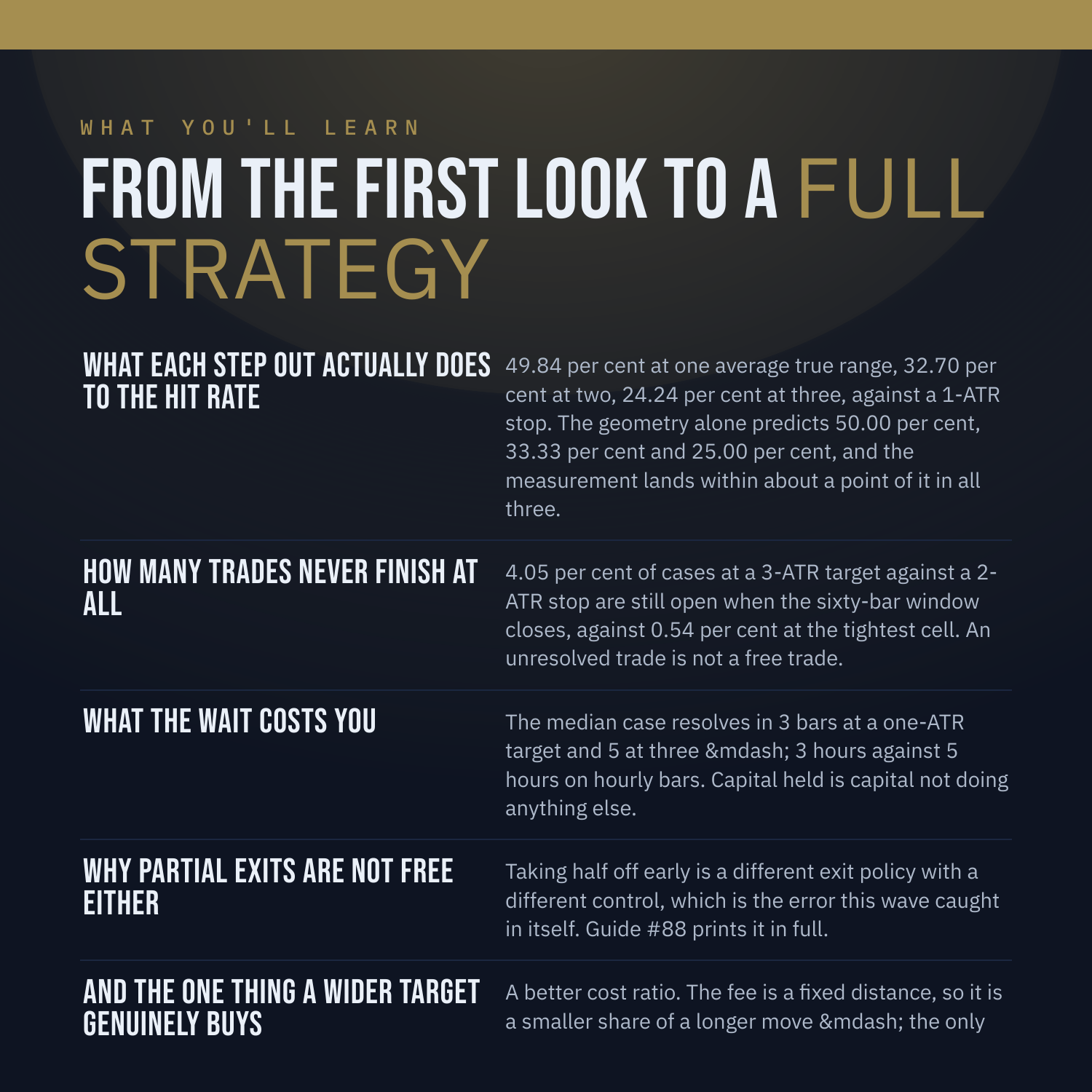
What each step out actually does to the hit rate -- 49.84 per cent at one average true range, 32.70 per cent at two, 24.24 per cent at three, against a 1-ATR stop. The geometry alone predicts 50.00 per cent, 33.33 per cent and 25.00 per cent, and the measurement lands within about a point of it in all three.
How many trades never finish at all -- 4.05 per cent of cases at a 3-ATR target against a 2-ATR stop are still open when the sixty-bar window closes, against 0.54 per cent at the tightest cell. An unresolved trade is not a free trade.
What the wait costs you -- The median case resolves in 3 bars at a one-ATR target and 5 at three -- 3 hours against 5 hours on hourly bars. Capital held is capital not doing anything else.
Why partial exits are not free either -- Taking half off early is a different exit policy with a different control, which is the error this wave caught in itself. Guide #88 prints it in full.
And the one thing a wider target genuinely buys -- A better cost ratio. The fee is a fixed distance, so it is a smaller share of a longer move -- the only place in this guide where moving the target changes the answer.
WHAT YOU'LL BE ABLE TO DO
Say what a target distance does to your hit rate before testing it.
Price the wait as well as the payoff.
Count how often your own trades never resolve.
Tell a better target from a different one.
Spot a partial-exit claim that has no control behind it.
AN HONEST NOTE
Take Profit is a clue, not a crystal ball. It describes what price has already done. This guide contains no win-rates, no backtest results and no promises about what you will make, because nobody can verify those and you should not trust anyone who prints them. What it hands you instead is a set of rules you can test yourself on TradingView in an afternoon. Educational, not financial advice.
Instant download. 44 pages, PDF.