

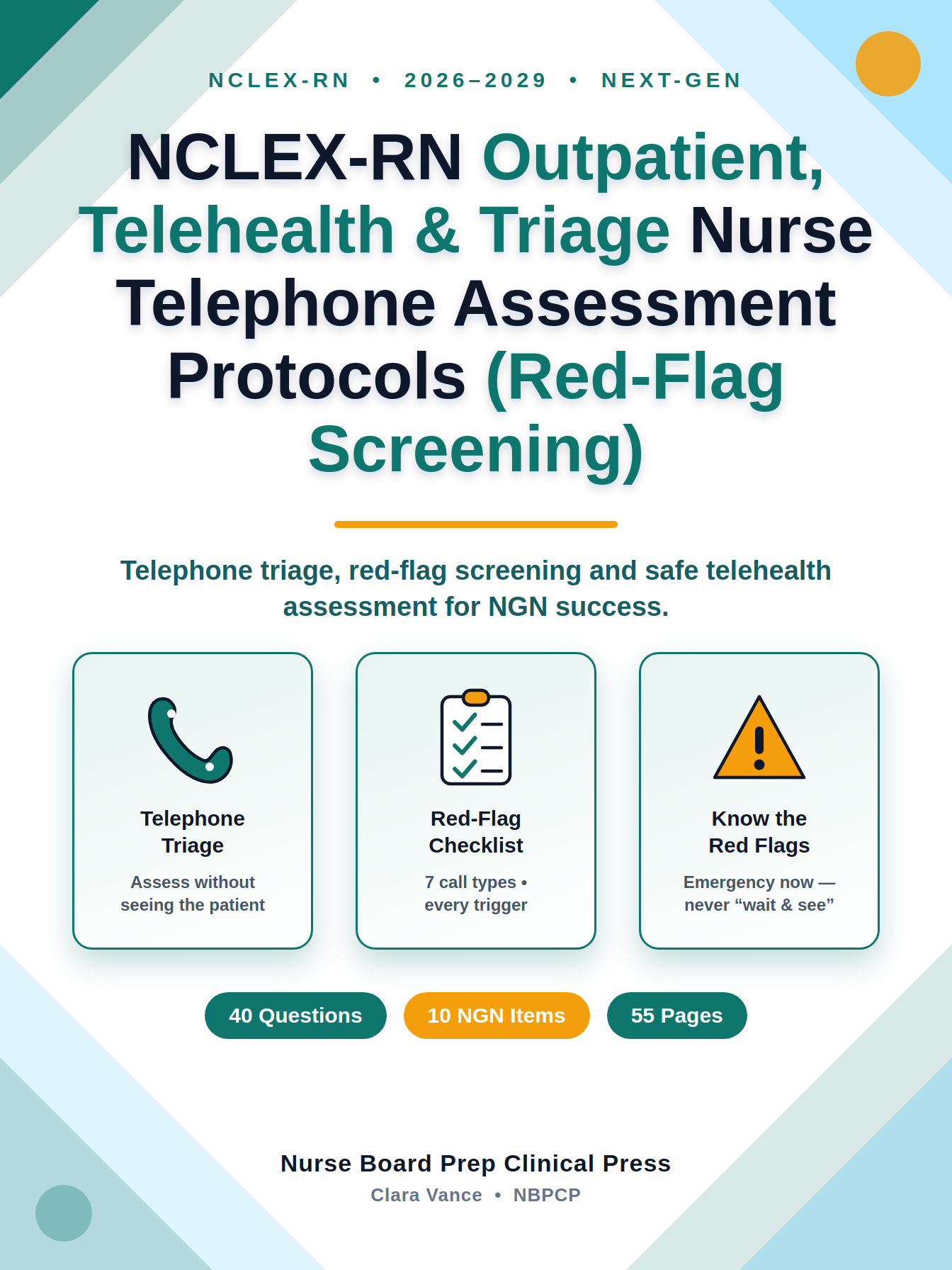
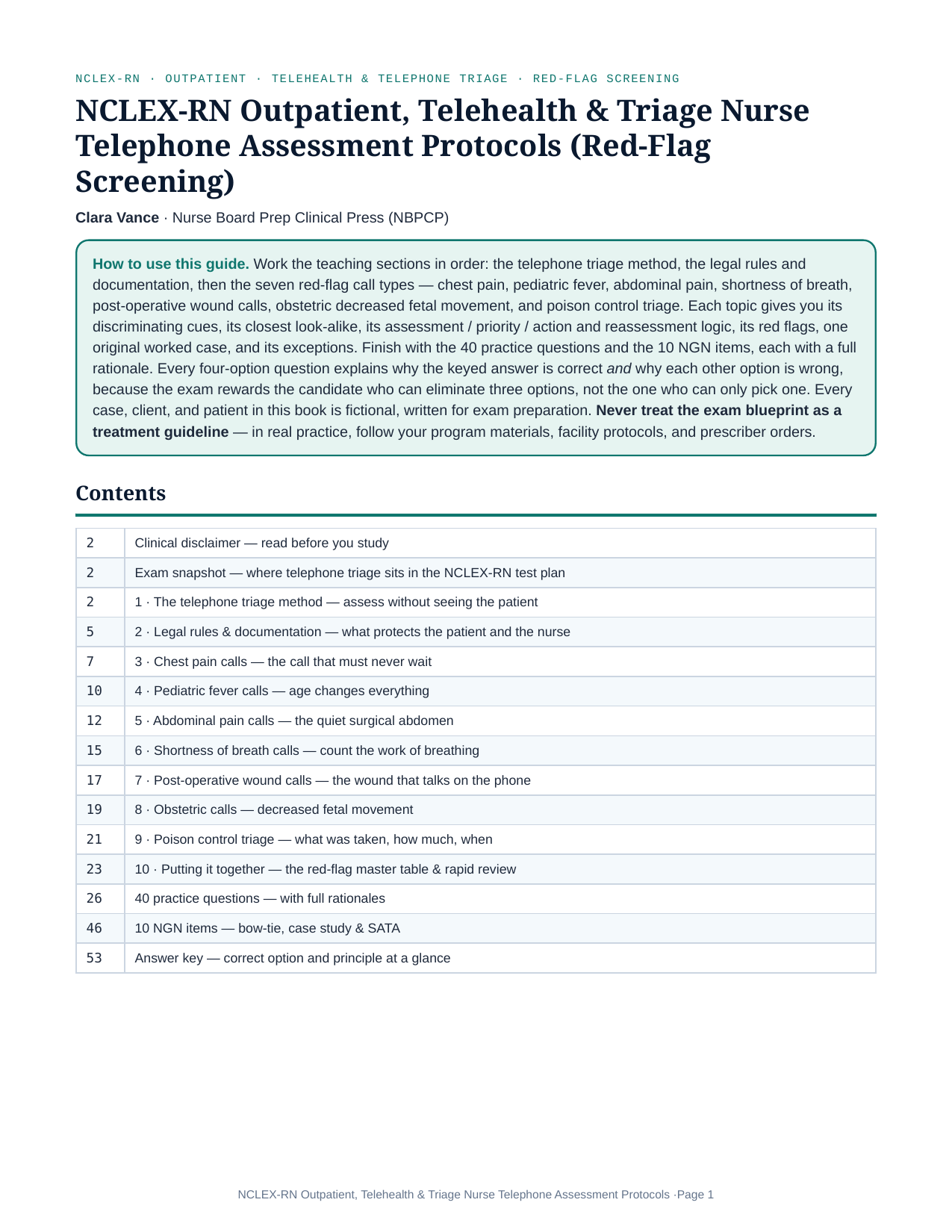
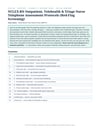
NCLEX-RN Outpatient, Telehealth & Triage Nurse Telephone Assessment Protocols (Red-Flag Screening)
On Sale
$22.00
(60% off)
$8.80
Telephone triage for the Next-Gen NCLEX-RN — every call type with its exact exam scope, its discriminating cues, its closest look-alike, and its disposition.
Inside:
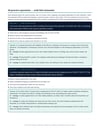
- The telephone triage method: the five-step call, OPQRST on the phone, and what to ask when you cannot see the patient — including what to do when the caller cannot answer a discriminating question
- Legal rules & documentation: scope of practice (triage is RN judgment, never delegated to unlicensed staff), what a complete triage record must contain, confidentiality, and the caller who is not the patient
- Chest pain calls: cardiac until proven otherwise; the look-alikes that never rule out the heart on the phone; the worked "indigestion" case
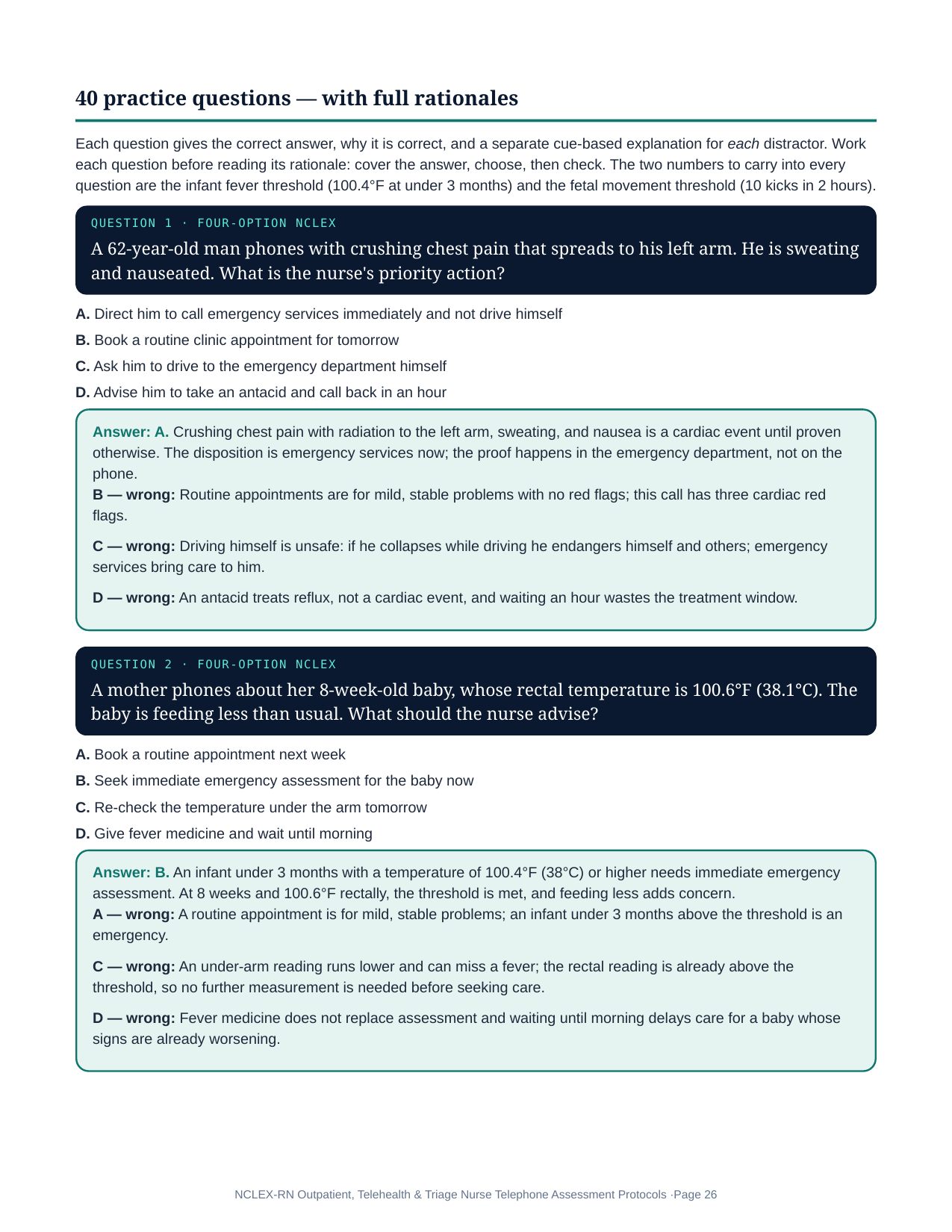
- Pediatric fever calls: infant under 3 months with temperature 100.4°F (38°C) or higher = immediate emergency assessment; method, behaviour, hydration, and the 8-week-old worked case
- Abdominal pain calls: the quiet surgical abdomen — migration, pain before vomiting, guarding and rebound; the worked case of the pain that moved
- Shortness of breath calls: the sentence test, work of breathing, and the reliever that stopped working; the worked case of the sentences that got shorter
- Post-operative wound calls: spreading redness, drainage, separation, evisceration; better or worse than yesterday; the worked case of the redness that kept moving
- Obstetric calls: decreased fetal movement — fewer than 10 kick counts in 2 hours is the red flag; the worked case of the evening the baby did not move
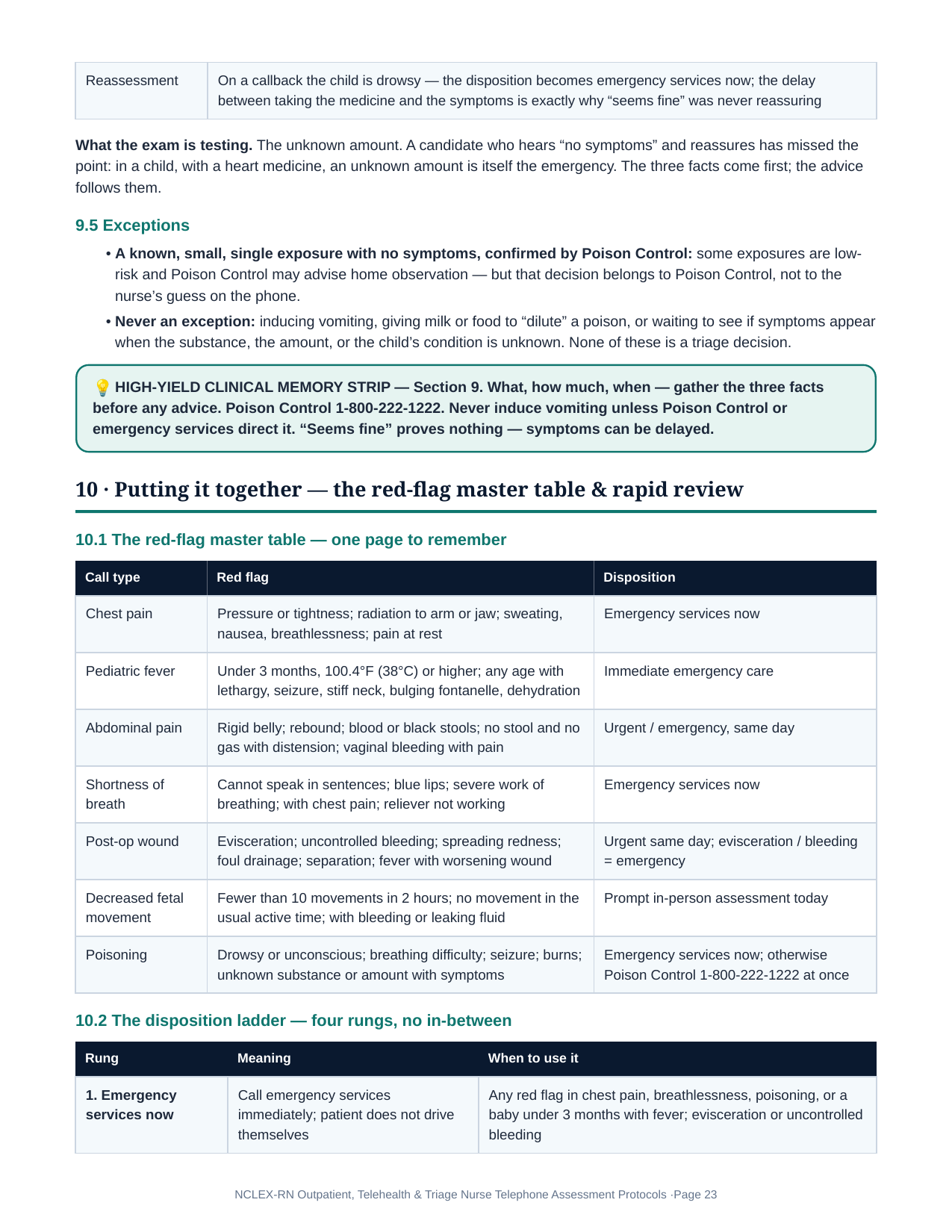
- Poison control triage: what, how much, when; Poison Control 1-800-222-1222; never induce vomiting; the worked case of the bottle on the floor
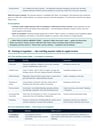
- The red-flag master table (all 7 call types), the four-rung disposition ladder, 10 rapid-review cases, and a glossary
- 40 practice questions with full rationales — why the keyed answer is correct AND why each other option is wrong (key letters balanced A 10, B 10, C 10, D 10) — plus 10 NGN items (4 bow-tie, 3 case study, 3 SATA), each with EHR tabs, a dated cue timeline, response structure, rationale, and an answer-to-cue crosswalk, plus an answer key
No real medicine doses are asserted in this book — dosing is prescriber-ordered and product-specific. Original teaching cases written for exam practice. This guide is not affiliated with NCSBN and does not guarantee a pass. If you find an error, a corrected version will be sent free.