
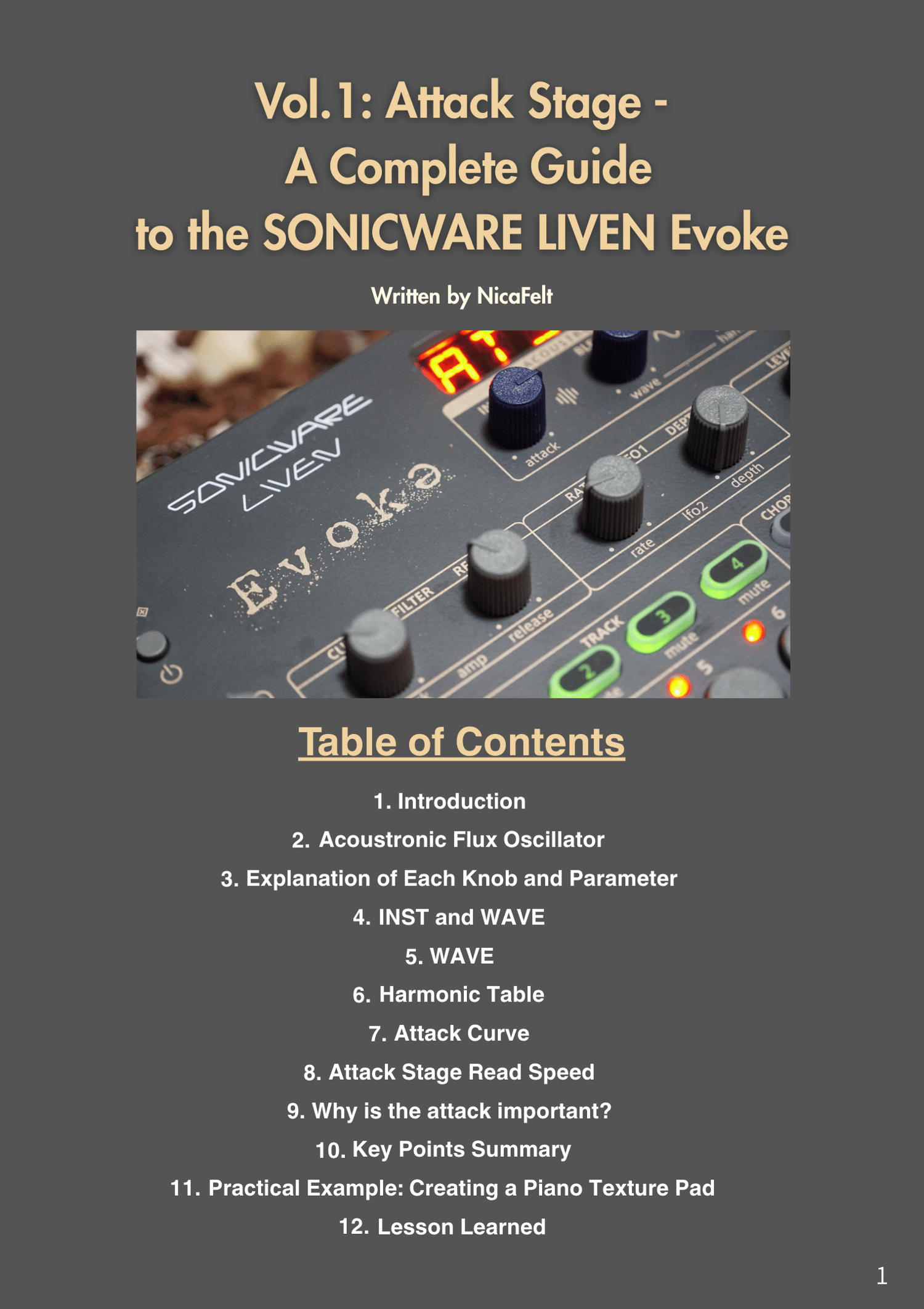
Vol.1: Attack Stage - A Complete Guide to the SONICWARE LIVEN Evoke
Introduction
Unlock the true potential of Evoke.
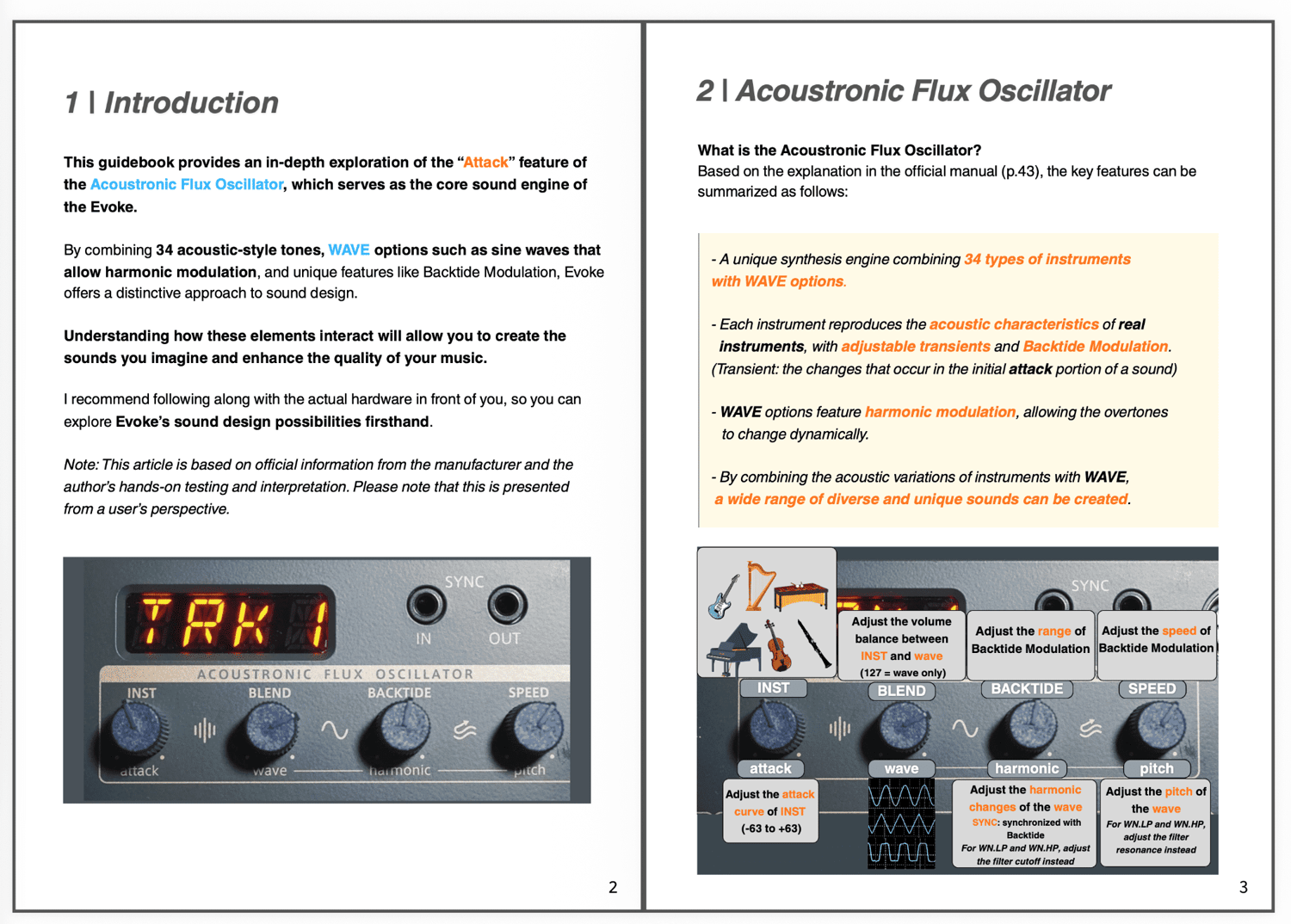
This 35-page PDF guide takes a deep dive into “Attack,” one of the most important parameters in the SONICWARE LIVEN Evoke, and explains it in a clear, practical, and approachable way.
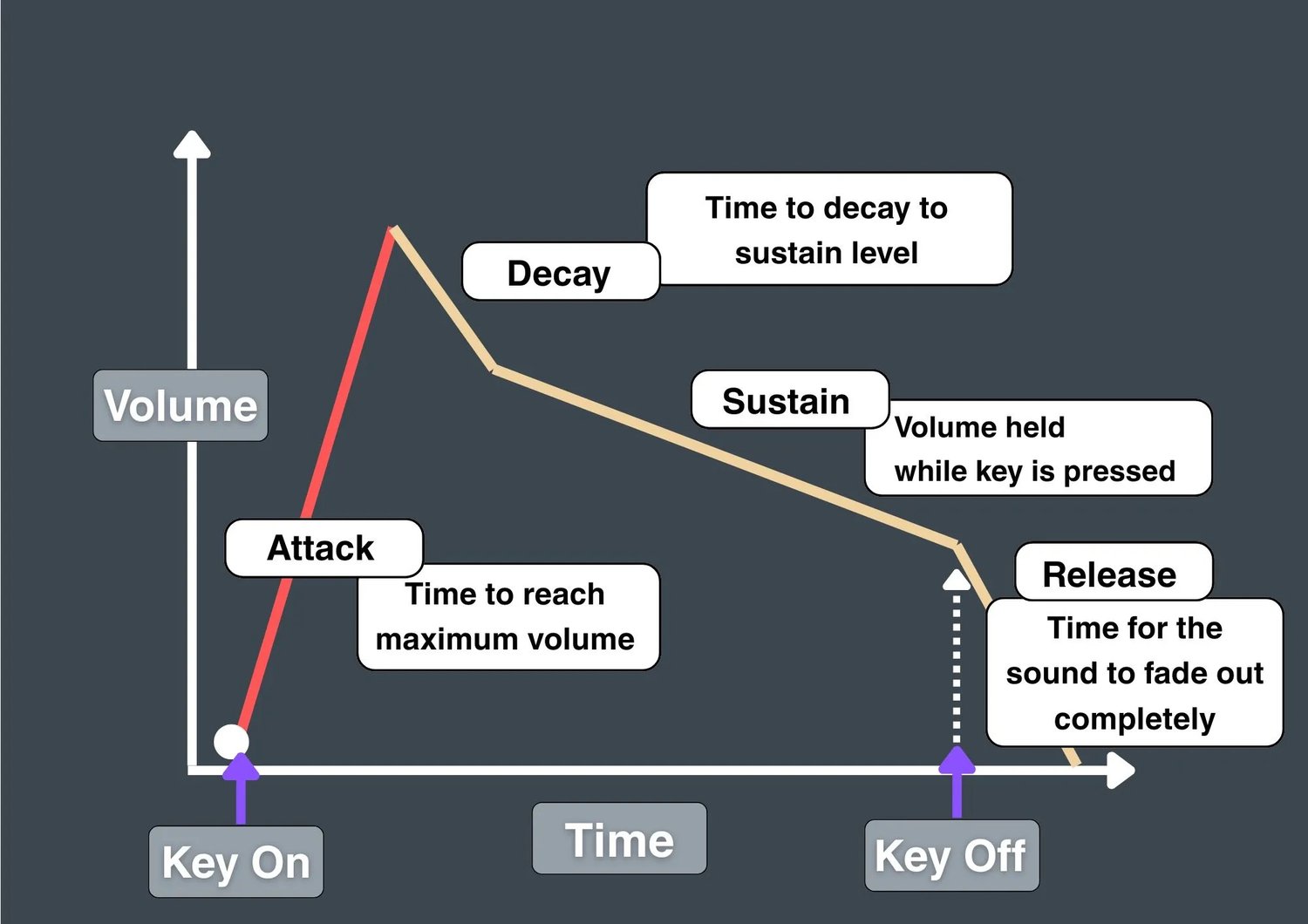
Evoke’s sound engine is based on acoustic instrument modeling, and the attack is where the character of an acoustic instrument is most strongly expressed.By understanding how the attack works, you can dramatically expand your sound design possibilities.
This guide carefully explains these concepts so they are easy to grasp and apply in real-world use.
Whether you're a new owner or an experienced user, this guide will help you harness the full power of Evoke.
✅ You’ll learn
- The parameters of the Acoustronic Flux Oscillator
- The difference between INST and WAVE
- WAVE oscillators and harmonic tables
- How the attack curve works
- Why the attack is so important in acoustic-based sound design
- How to create a piano texture pad step by step
✅ Ideal for
- Evoke users seeking deeper control
- Ambient and electronic music producers
- Anyone who wants to fully understand Evoke’s operation
📄 Format
- 35 pages / PDF format
- Based on official documentation + real-world hands-on use
- Written in English by NicaFelt. While the author was previously commissioned by SONICWARE to create two factory preset patterns included in Evoke, this guide is an independent work and is not officially affiliated with SONICWARE.
All interpretations are user-based and not officially affiliated with SONICWARE.
💡 For the best experience, I highly recommend reading this guide with the actual Evoke unit in front of you.
Please note: While this guide is based on official documentation from the manufacturer, all explanations and analysis are the result of hands-on use and personal interpretation from a user’s perspective.
Table of Contents
1. Introduction
2. Acoustronic Flux Oscillator
3. Explanation of Each Knob and Parameter
4. INST and WAVE
-Role of the BLEND knob
-Important Note
5. WAVE
6. Harmonic Table
-What are overtones?
-Harmonic Tables
-Observing Overtone Changes in the Waveform
7. Attack Curve
8. Attack Stage Read Speed
-Visualizing with Waveforms
9. Why is the attack important?
-1. The Importance of Attack
-2. The Role of Sound Design and the Attack
-3. Key Points for Blending Sounds Naturally
10. Key Points Summary
11. Practical Example: Creating a Piano Texture Pad
12. Lesson Learned
Last updated: December 13, 2025