
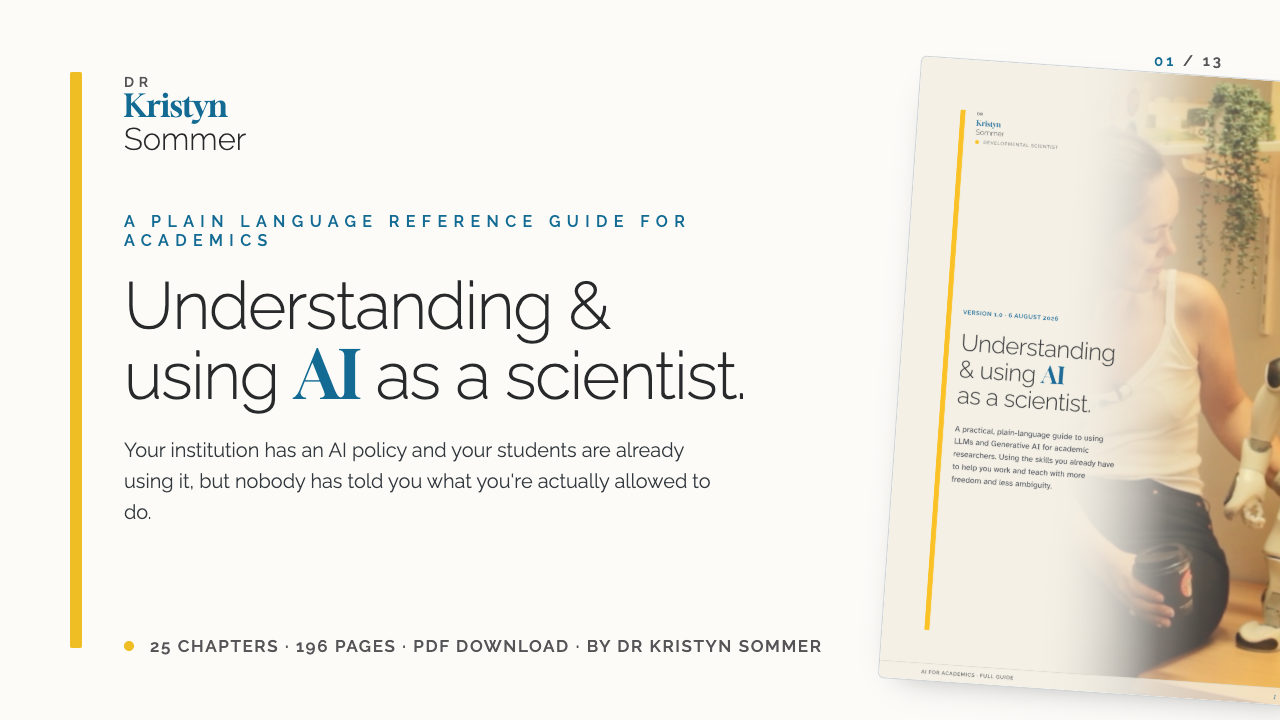

Understanding & Using AI as a Scientist: A Plain Language Reference Guide for Academics
Your institution has an AI policy and your students are already using it, but nobody has told you what you're actually allowed to do.
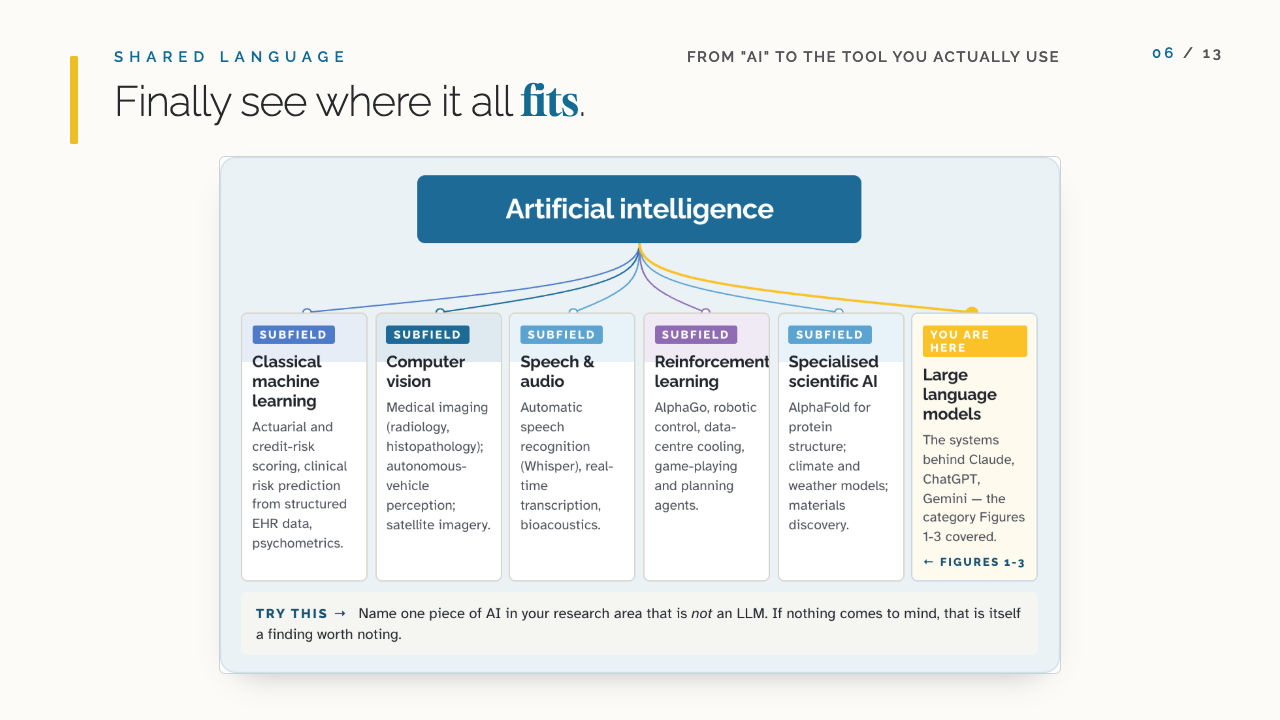
Understanding & Using AI as a Scientist is a 25-chapter plain language reference guide for academics working out where AI fits in their research and teaching, or who just need enough knowledge to guide their students. It assumes no technical background. It covers what these tools actually are, how to decide what data can safely go near them, a four-check loop for verifying what comes back, disclosure templates for manuscripts and grants, and how to handle AI in your teaching, your peer review, your ethics application, and your students' work. It shows you how to make AI output sound like you, instead of the garbled nonsense you're used to.
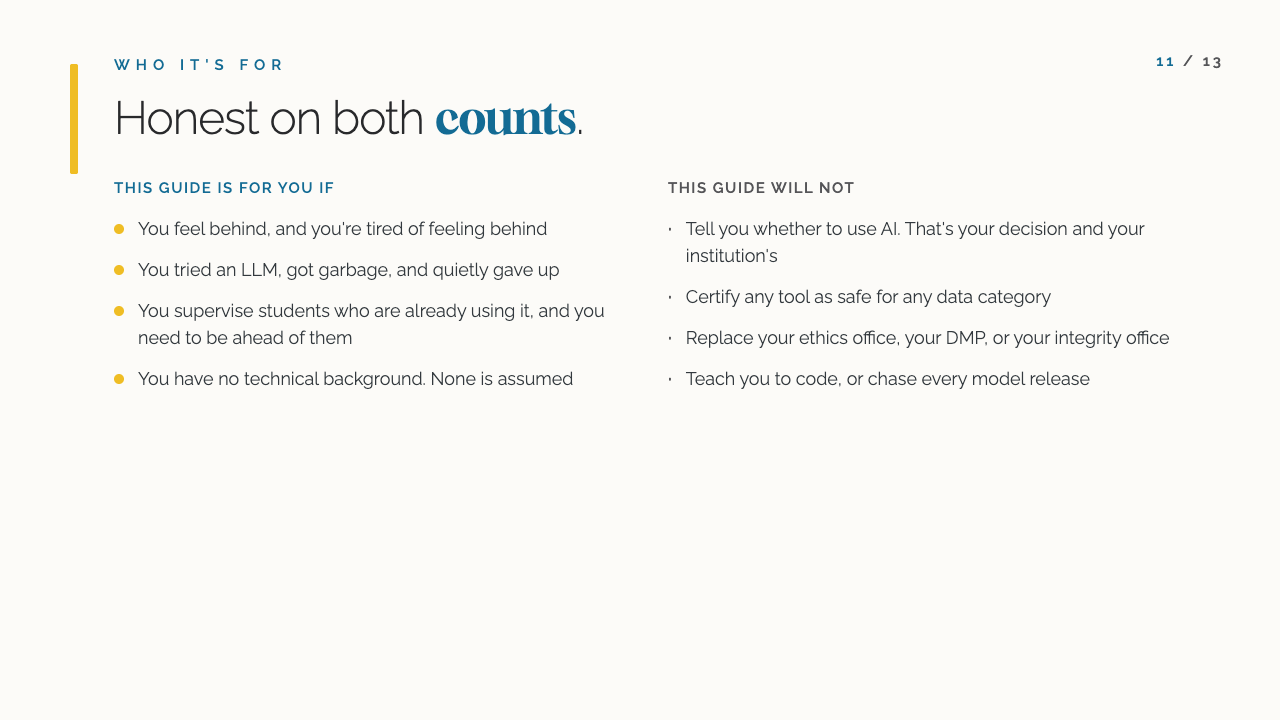
It's for the scientist who feels left behind by the AI revolution, or who's been deeply dissatisfied by an LLM while everyone else sings its praises.
INSIDE
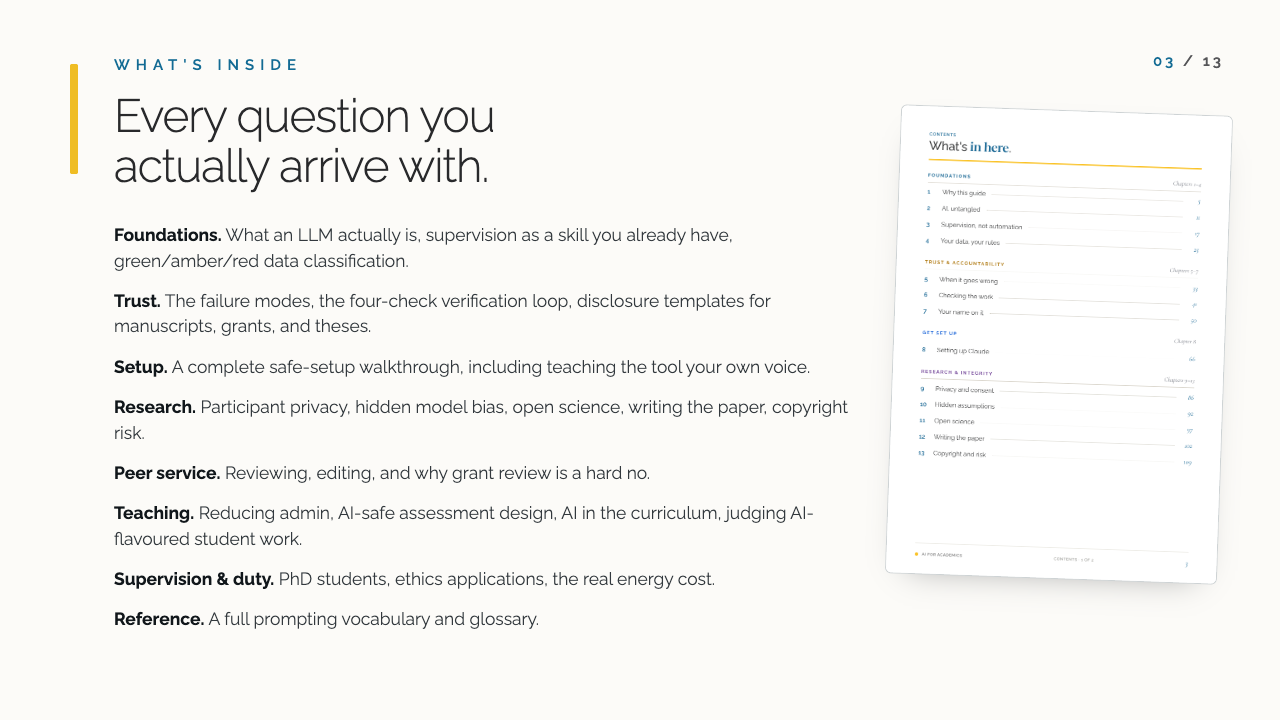
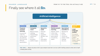
• Foundations: what an LLM actually is, supervision as a skill you already have, green/amber/red data classification
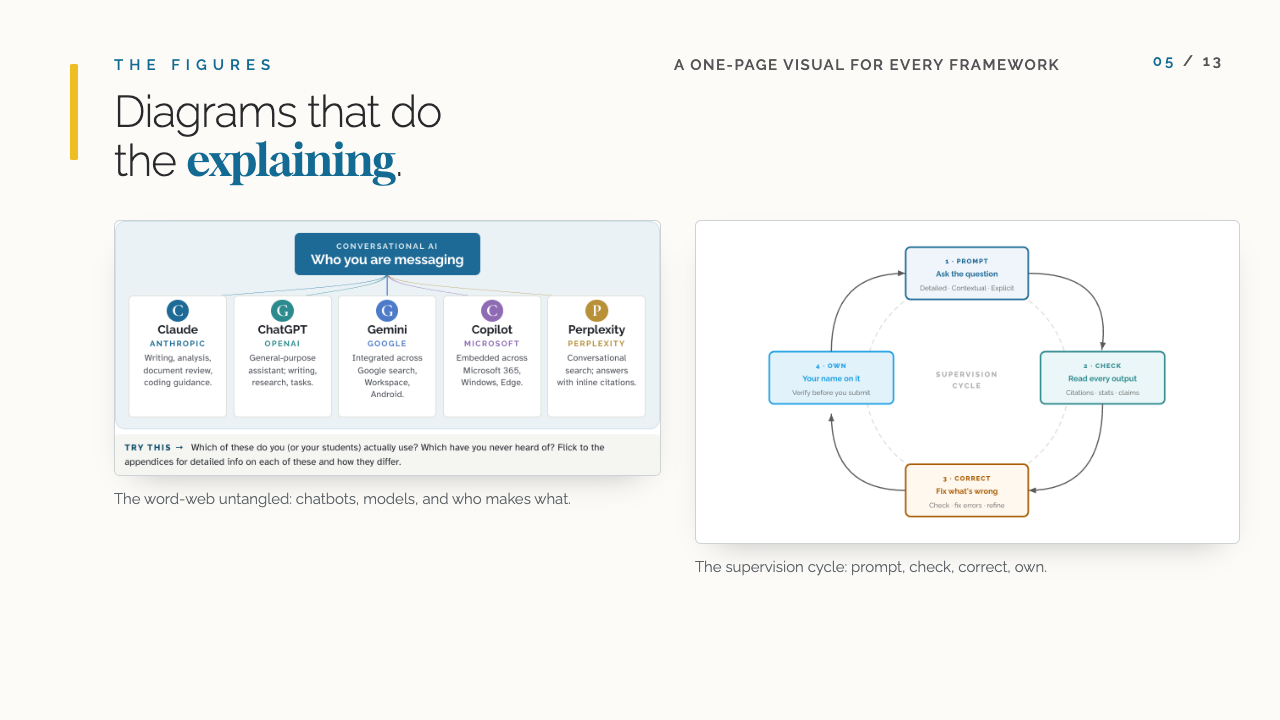
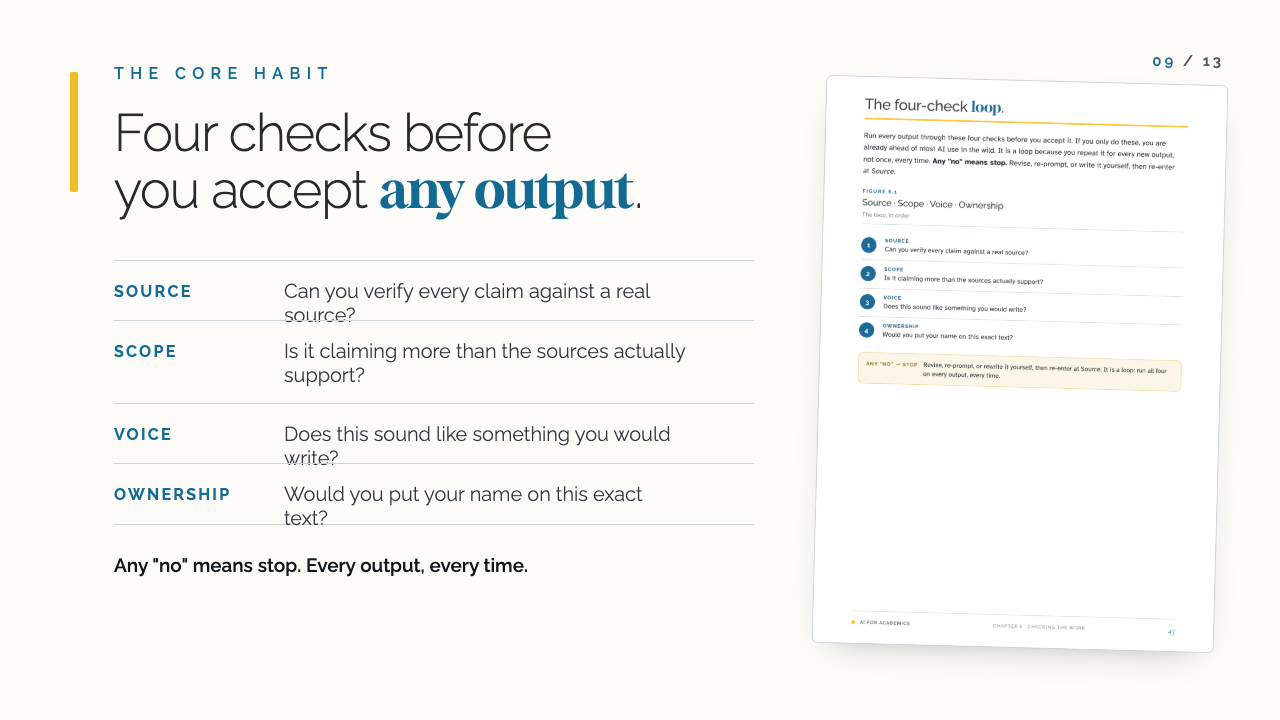
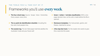
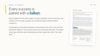
• Trust: the failure modes, the four-check verification loop, disclosure templates for manuscripts, grants, and theses
• Setup: a complete safe-setup walkthrough, including teaching the tool your own voice
• Research: participant privacy, hidden model bias, open science, writing the paper, copyright risk
• Peer service: reviewing, editing, and why grant review is a hard no
• Teaching: reducing admin, AI-safe assessment design, AI in the curriculum, and judging AI-flavoured student work
• Supervision & duty: PhD students, ethics applications, the real energy cost
• Reference: a full prompting vocabulary and glossary
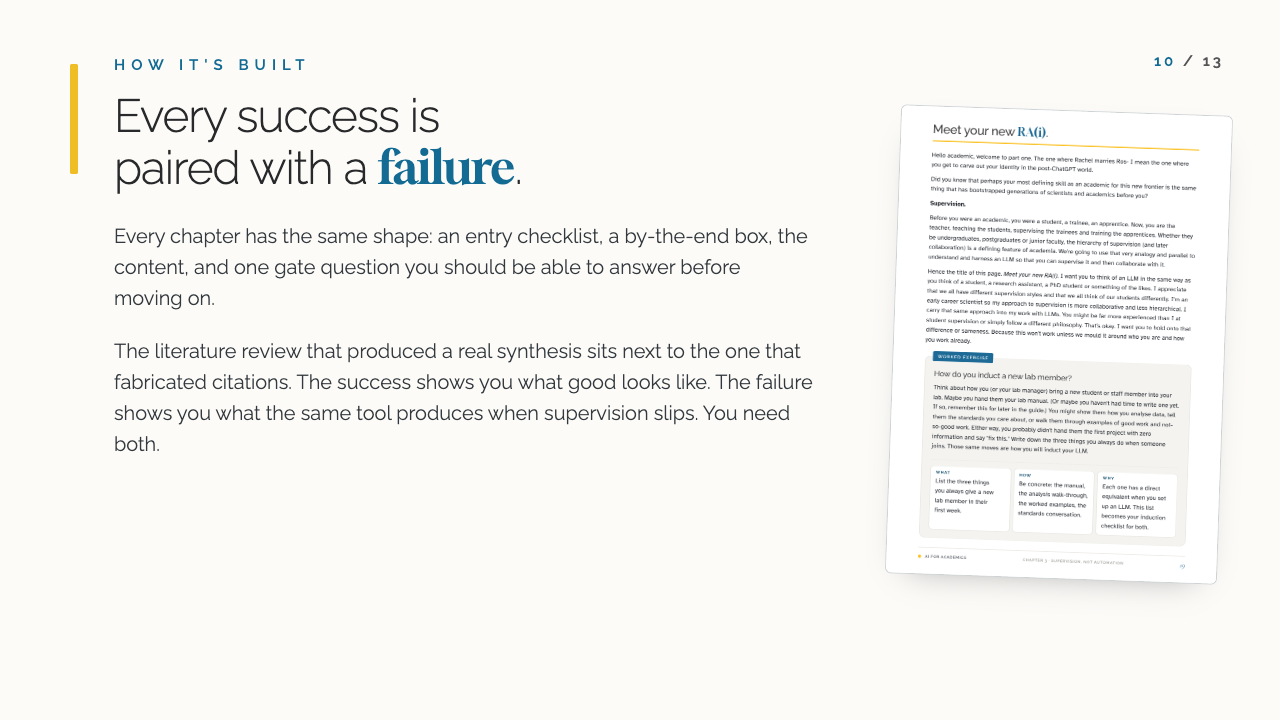
Every chapter opens with the question you actually have, and every worked success is paired with a worked failure.
WHAT YOU GET
Five files, not just the book.
• The guide. 196 pages, 25 chapters, designed for screen and for print.
• Start here. A short orientation: what to open first, and a one-hour route in if you don't have a week.
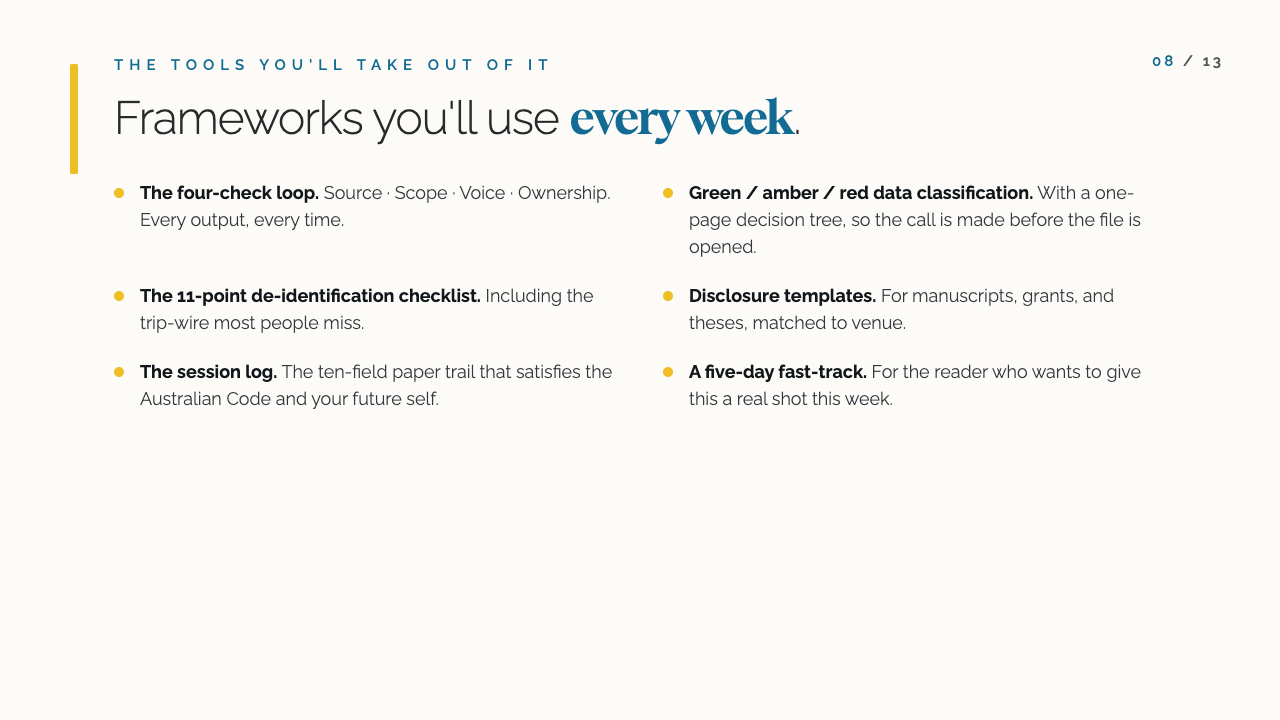
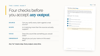
• Working tools. The things meant to live next to your keyboard, pulled out so you can print them on their own. The four-check loop, the data classification tree, the 11-point de-identification checklist, a blank session log, and the disclosure templates.
• Starter files. The context files Chapter 8 teaches you to build, ready to fill in rather than retype, plus the same four already filled in so you can see what finished looks like. With a how-to that assumes you've never edited a plain text file on purpose.
• A changelog, so you always know which version you're holding.
Format: PDF and plain text, delivered instantly.
Guarantee: Not useful? Email me within 5 days for a refund.
PhD and grad students: email me and ask, and I'll send you a code for 80% off. No proof needed, no explanation.
THIS GUIDE KEEPS CHANGING
I'm always updating what I know, and I'd rather hear that something is wrong than leave it sitting there being wrong. Feedback and constructive criticism are genuinely welcome, and most of what changes between versions comes from readers. There's a two-minute form inside the download, and updates are free to anyone who's already bought it.
Written by Dr Kristyn Sommer: developmental scientist, autism advocate, science communicator. Drafted with Claude's assistance and fully supervised, reviewed, and owned by the author. The guide practices what it teaches, full disclosure inside.