








Rosie and the Christmas Poinsettia
Rosie and the Christmas Poinsettia
A gentle Christmas story about imagination, emotional bravery, and the seeds of appreciation.
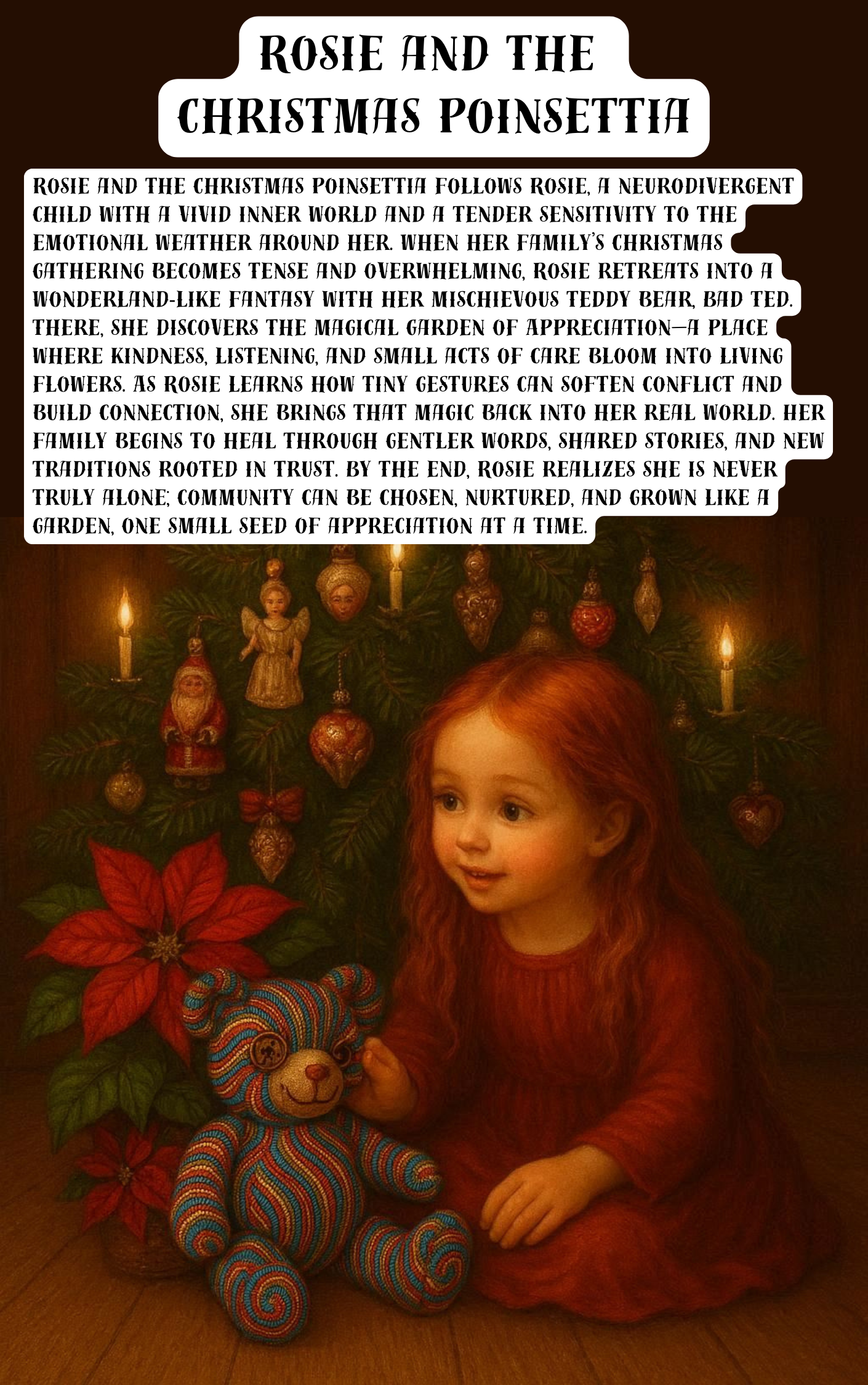
Rosie Dayy is a sensitive, curious child who experiences the world through colors, textures, and emotional weather. When holiday noise grows too loud, she slips into her imagination—not to escape, but to translate the world into something she can hold. With her mischievous companion Bad Ted, Rosie discovers the Garden of Appreciation, a symbolic place where gratitude becomes light, trust grows like flowers, and community is built through small, steady promises.
This story blends Victorian floriography, emotional literacy, and neurodivergent wisdom into a warm, accessible Christmas tale for families, educators, and anyone who believes small kindnesses can change a room. Rosie’s journey shows that emotional courage is quiet, relational, and grown one seed at a time.
Perfect For:
- Parents and caregivers
- Teachers and counselors
- Neurodivergent children and families
- Fans of symbolic storytelling
- Readers of the FloriographyStories universe
- Anyone seeking a meaningful holiday tradition
What’s Inside:
- A heartwarming Christmas story
- A symbolic journey through the Garden of Appreciation
- A character profile for Rosie Dayy
- A companion profile for Bad Ted
- Subtle floriography references and emotional‑literacy themes
- Gentle neurodivergent representation
- A message of hope, connection, and community
What This Story Teaches:
- How imagination can help children process big emotions
- The power of noticing small kindnesses
- How trust grows through consistent, gentle actions
- The meaning of appreciation through a floriographic lens
- That community is built, not assumed
Why This Story Matters:
This book is part of a growing ecosystem of emotional storytelling designed to help children and families build trust, connection, and resilience. It introduces floriographic symbolism in a way that is simple, warm, and accessible—inviting readers to see kindness as something that grows.