

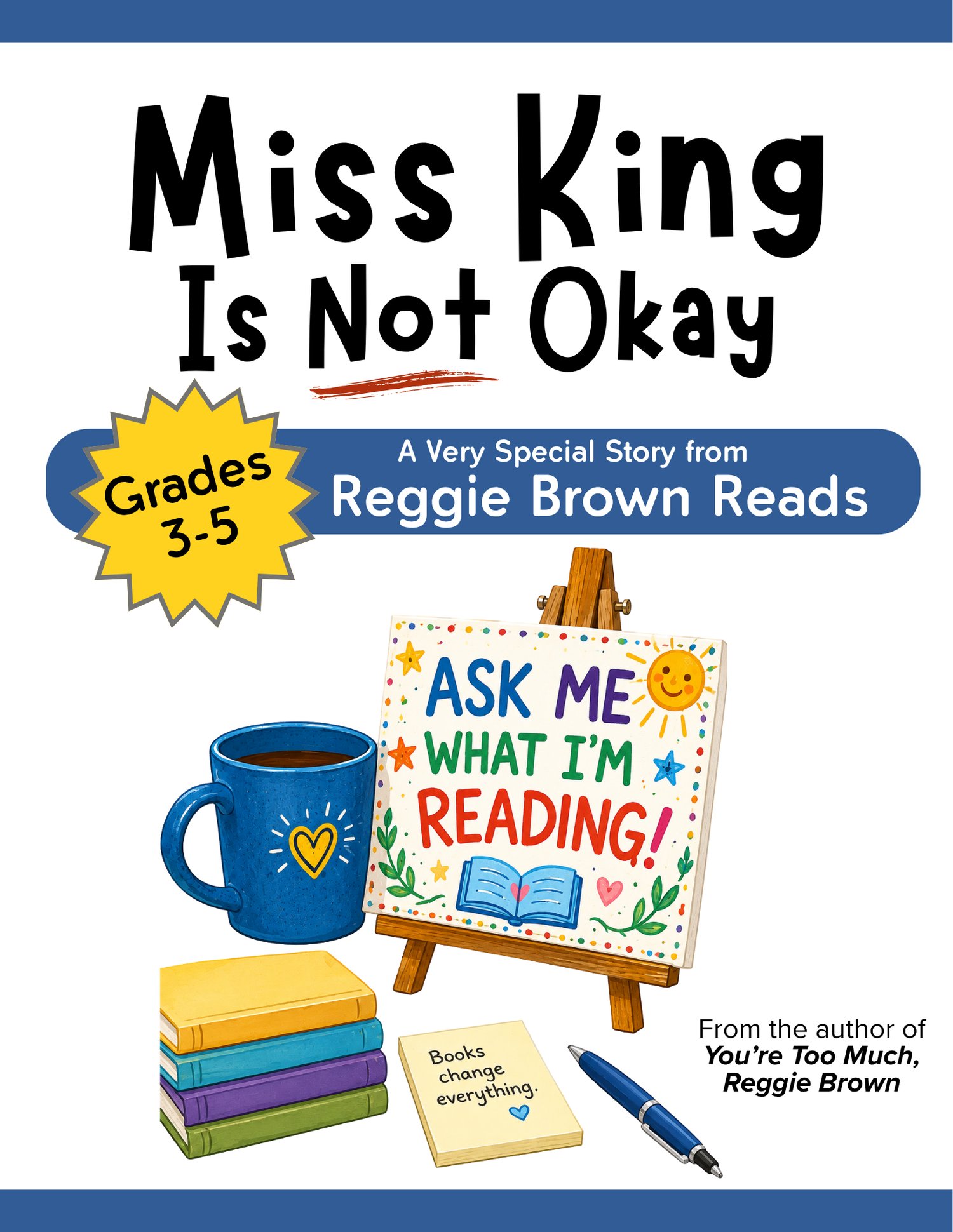
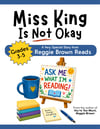

Miss King Is Not Okay | SPECIAL DOWNLOAD
Sometimes what we see is only part of the story.
When 9-year-old Reggie Brown’s favorite librarian suddenly disappears, Reggie and her best friend CeCe are determined to find out why. But when they learn that Miss King is in the hospital getting help because she hasn’t been feeling well emotionally, the girls struggle with a question that feels impossible: How can someone who is always smiling not be okay?
Miss King Is Not Okay is a special Reggie Brown Reads story and literacy activity packet for Grades 3–5 that gently explores empathy, kindness, emotional well-being, privacy, asking for help, and the important understanding that we cannot always know how someone is feeling simply by looking at them.
Rather than asking children to diagnose Miss King or share their own personal experiences, the story keeps the focus on Reggie and CeCe as they learn that people can experience more than one feeling at the same time, some kinds of hurt cannot be seen, and caring about someone does not mean we have to understand—or fix—everything they are going through.
THE STORY
The story is presented in three manageable sections, making it easy to read at once or pause for discussion:
Part 1: Where Is Miss King?
When Miss King suddenly disappears from the library, Reggie and CeCe start looking for clues. But their investigation leads to an answer more serious than they expected.
Part 2: The Smile You See
Reggie can't understand how someone who smiles, laughs, loves books, and seems happy could also be hurting. A thoughtful Brown family conversation helps Reggie and CeCe discover that two things can be true at the same time.
Part 3: Maybe Caring Is Enough
The girls still don't have all the answers—and begin to understand that maybe they don't need them. They discover that they can notice, listen, respect Miss King's privacy, and simply be kind.
WHAT'S INCLUDED
This 31-page printable PDF resource includes the three-part original story plus:
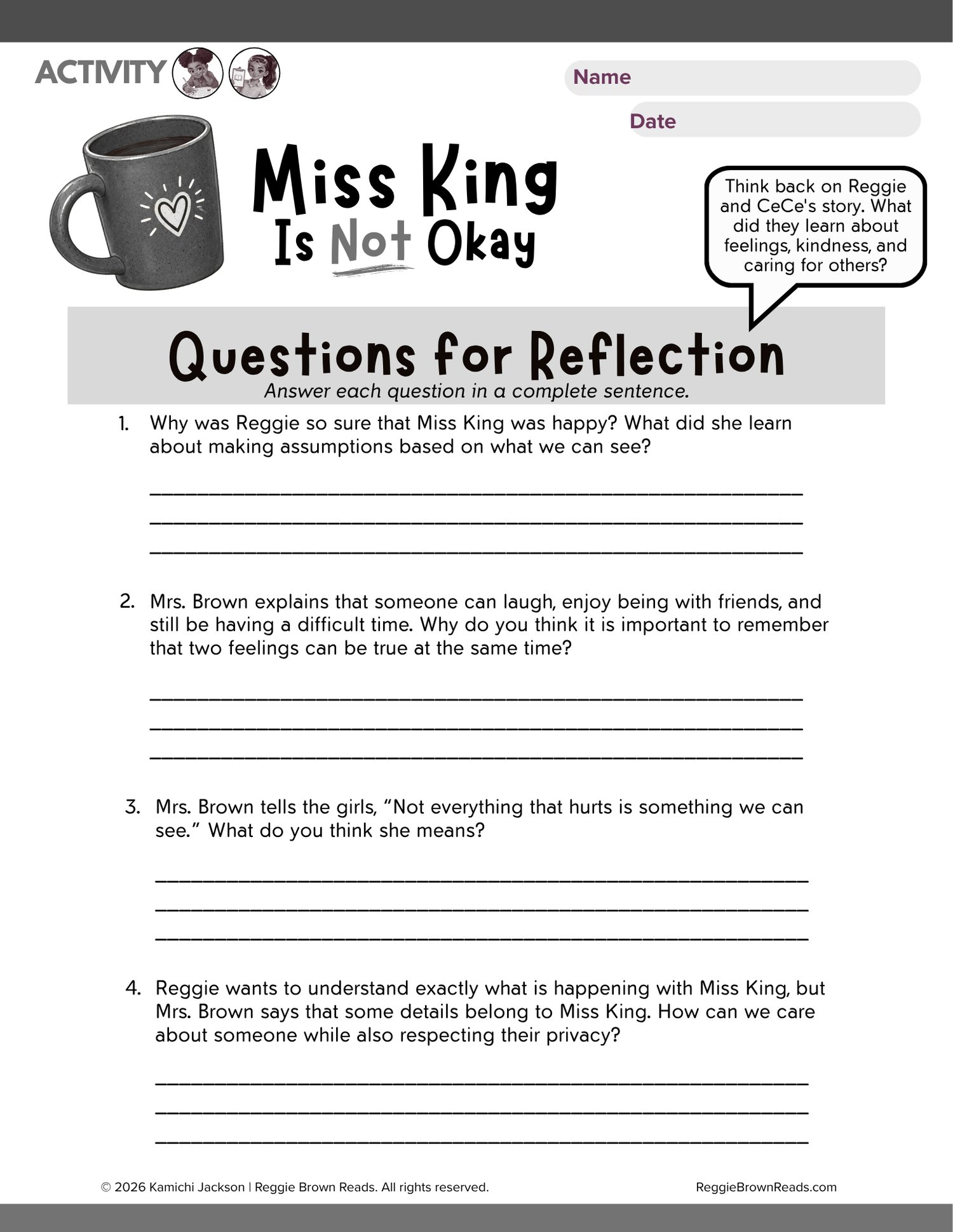
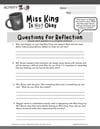
- Questions for Reflection — thoughtful reading-response questions addressing feelings, kindness, privacy, help-seeking, and lessons learned by Reggie and CeCe
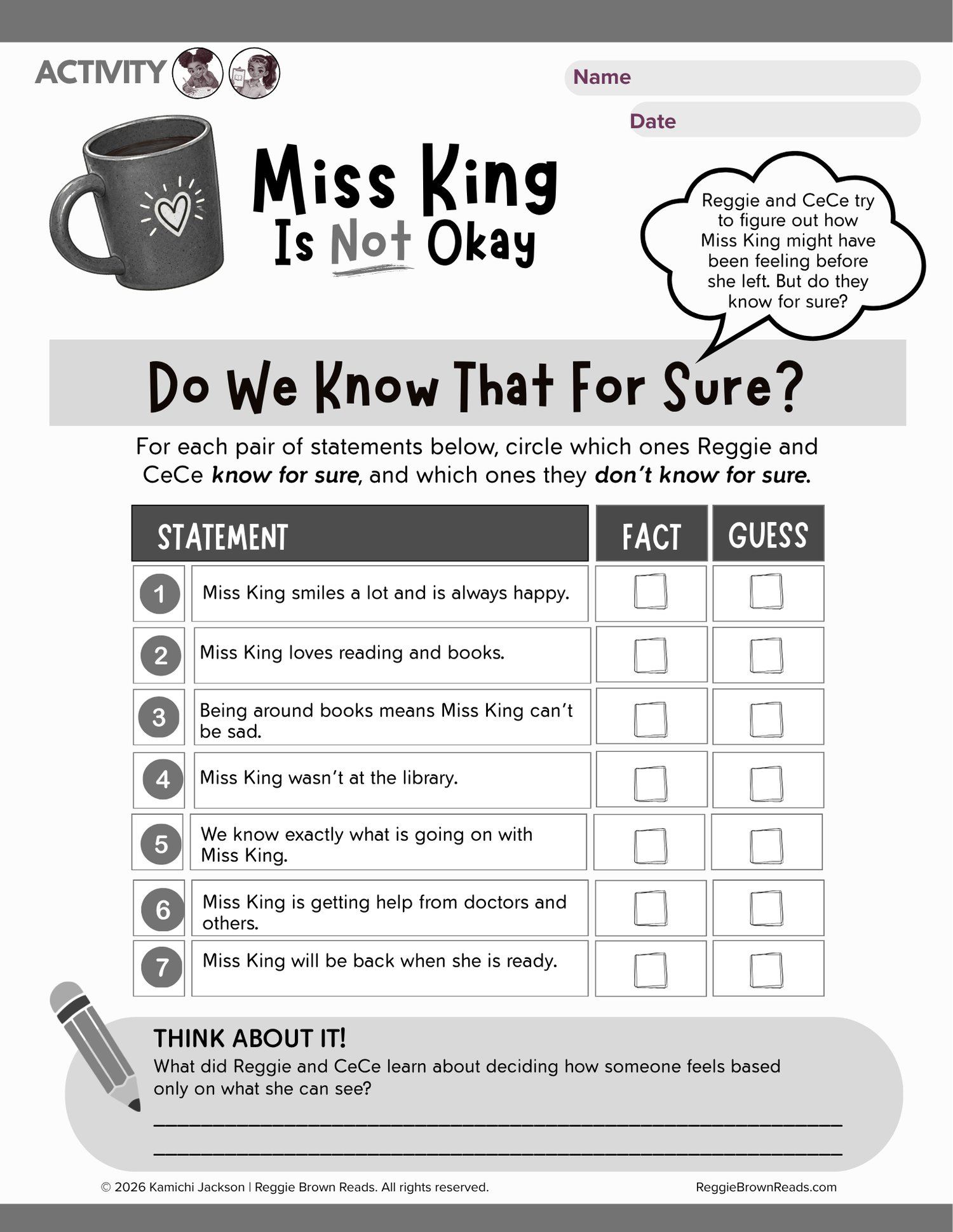
- Do We Know That for Sure? — a reading comprehension and critical-thinking activity that asks students to distinguish what the girls actually know from what they cannot know for certain
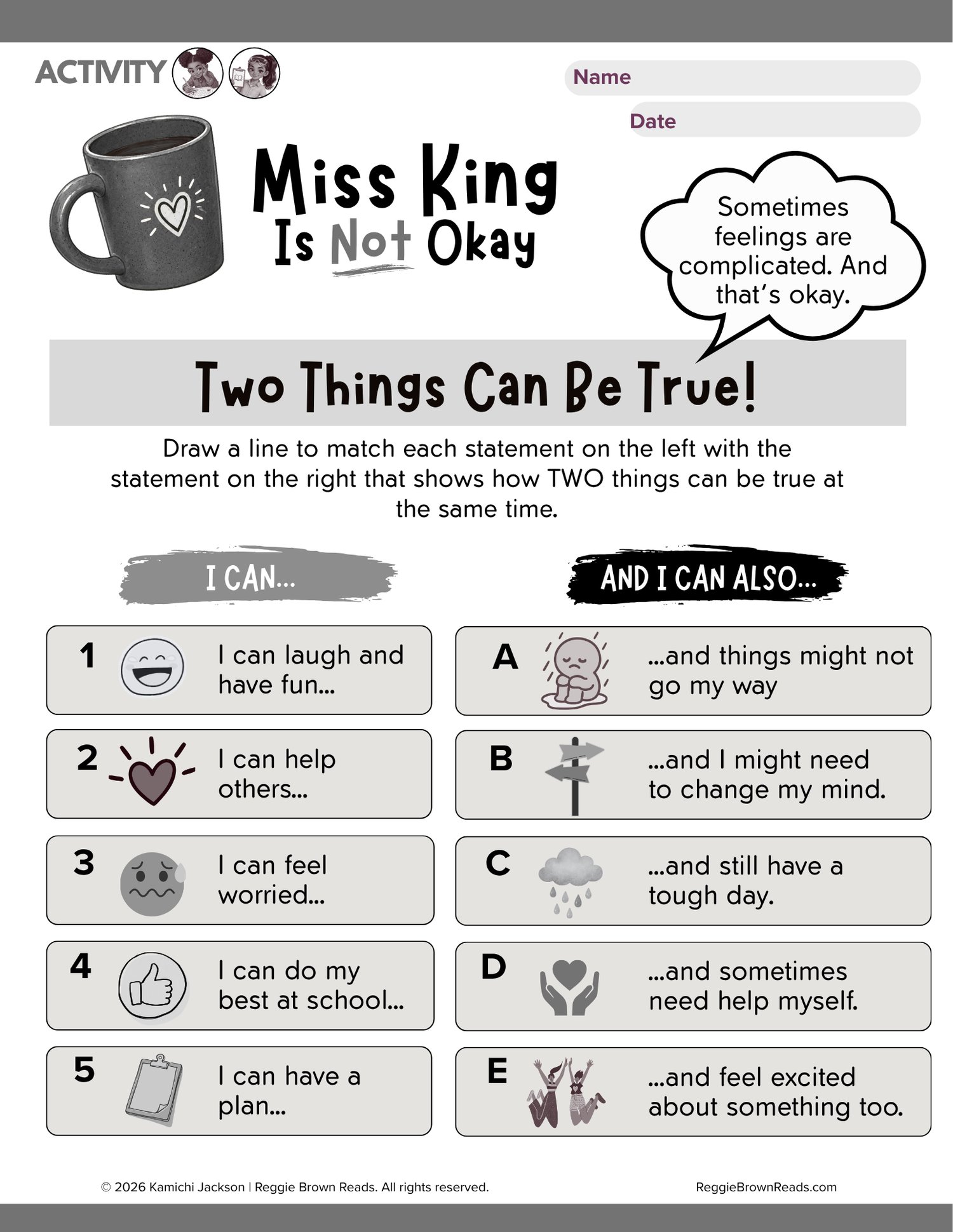
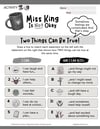
- Two Things Can Be True! — a matching activity reinforcing the idea that different feelings and experiences can exist at the same time
- Words That Help — a word search featuring words such as kindness, caring, listen, help, friend, support, courage, trust, privacy, and hope—plus a special Reggie bonus word!
- Comprehensive Facilitator Guide
DESIGNED WITH GROWN-UPS IN MIND TOO
Because Miss King Is Not Okay addresses emotional distress and hospitalization, this resource includes unusually robust facilitator support.
The guide encourages adults to keep conversations centered on the fictional characters rather than requiring children to discuss their own experiences. It also explains why Miss King's diagnosis, treatment, and timeline are deliberately left unspecified: those details belong to Miss King.
The resource also emphasizes a particularly important message for children: caring does not mean fixing. Reggie and CeCe can be kind, listen, talk to trusted adults, and respect someone's privacy—but they are not responsible for solving another person's problems.
GREAT FOR
- Upper-elementary classrooms
- homeschool families
- library programs
- literacy groups
- small-group reading
- SEL-connected literacy instruction
- guided classroom discussion
- parent/caregiver read-alouds
Recommended Grades: 3–5
Format: Printable PDF
Pages: 31
Skills & Themes: Reading Comprehension • Critical Thinking • Social-Emotional Learning • Empathy • Kindness • Emotional Vocabulary • Privacy • Help-Seeking • Perspective Taking
PLEASE NOTE
This story contains age-appropriate references to emotional distress, difficult feelings, hospitalization for emotional or mental well-being, and receiving help from doctors and other trained professionals. Adults are encouraged to review the story and activities before sharing them with children and determine their appropriateness for their particular students or group.
This is an educational literacy resource, not therapy, counseling, crisis intervention, medical advice, or mental-health treatment. The author is not a licensed mental-health professional, and the resource is not intended to diagnose, assess, prevent, or treat any mental-health condition.