
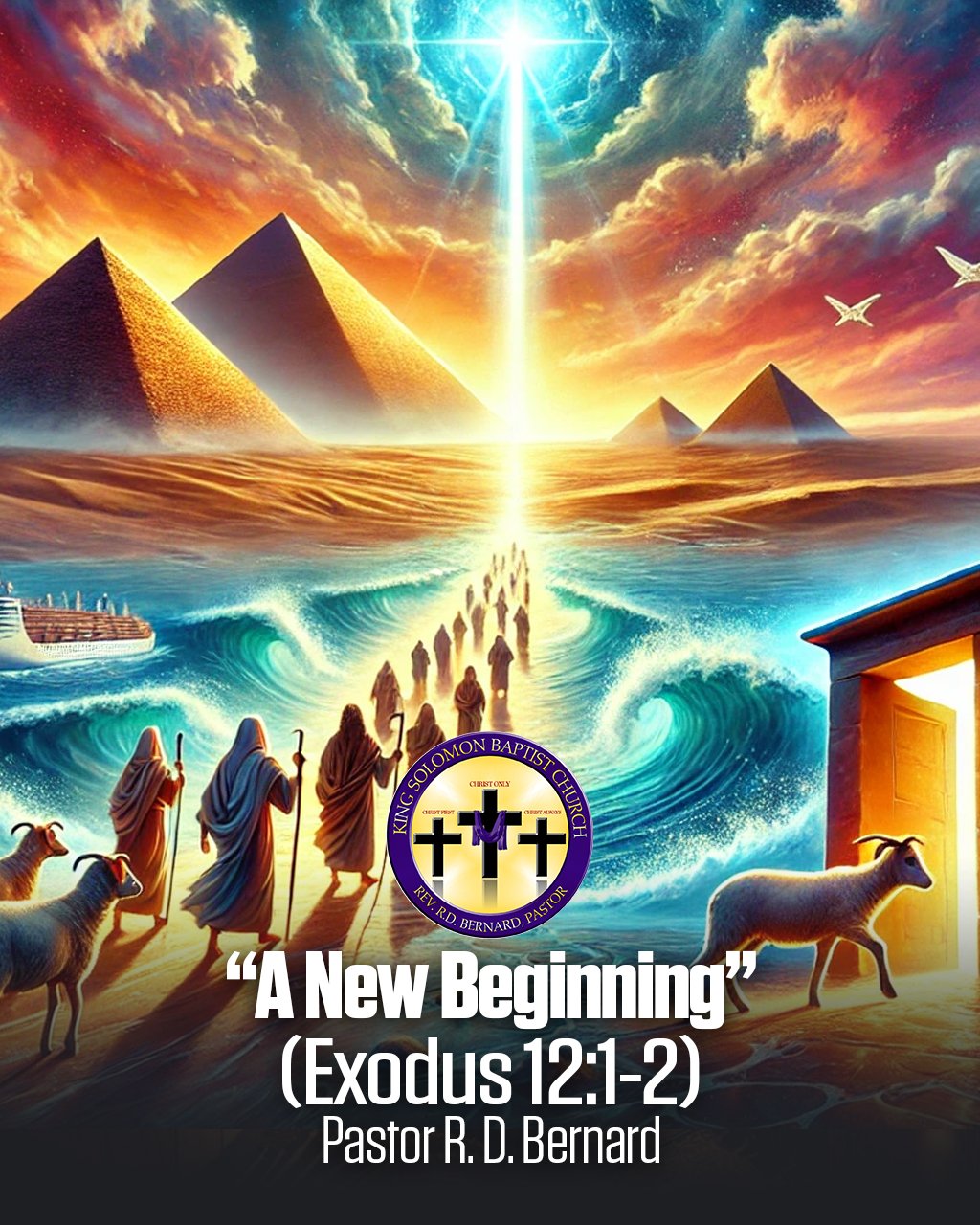
“A New Beginning” (Exodus 12:1-2)
“A New Beginning” (Exodus 12:1-2)
God is the great timekeeper: not only of creation, but also of our individual lives. In the passage under our consideration, God gives His people a new beginning. He does this by establishing a calendar or a way of timekeeping for them.
He marks the period as the beginning. He tells Moses and Aaron in Exodus 12:2 in the NLT: “From now on, this month will be the first month of the year for you.” In Hebrew terms, the first month of the religious year falls in either Abib or Nisan. In other words, this time was to be their January.
This is significant because it also marks their first dealings with God. Just as God dealt with Adam in a book called “Genesis” or “the beginning”; now God is dealing with Moses and Israel, and He marks the occasion by establishing a starting point.
When you first come to Christ, or have any dealings with Him, it is your starting point. Everybody ought to be able to remember when and where they were brought into their relationship with God, because it marks the beginning.
This was Israel’s true beginning as the people of God. When we hear words like “Exodus” (which is the name of this book); “Egypt” (which is the physical place where God began His dealings with Israel); and “Passover” (this is the event that marks the beginning of their religious calendar — or their January); it all points back to a new beginning. These words are mentioned in association with one another. They remind us of the season of new beginnings.
A true new beginning is marked by an Egypt, an Exodus, and a Passover.
When you experience all three, in a short period of time, then you know that you have had a new beginning. Consider the following three points:
1. A new beginning begins in Egypt.
a. The Jewish nation had spent four hundred or so years in Egypt (Exodus 12:40-41).
I. The Israelites were making bricks without straw (Exodus 5:6-11).
II. Their Egyptian taskmasters made life grievous for them (Exodus 5:13-14).
III. The Israelites were skeptical about anything changing in Egypt (Exodus 6:9).
IV. Though the Israelites worshipped and acknowledged Jehovah while they were in Egypt (Exodus 4:31), they did not immediately leave.
b. God promised Abraham that his descendants would live in Canaan or the Promised Land (Genesis 17:8).
c. The Bible reads that God called His Son out of Egypt (Hosea 11:1).
2. A new beginning has an exodus.
a. The word Exodus has a double meaning:
I. In Old Testament Hebrew, the word “exodus” focuses on those who were once associated with Jacob (Exodus 1:1).
II. In the Greek of the Septuagint, the word means “departure,” “going out,” or “leaving.”
b. At the time that Jacob and his sons moved to Egypt, Joseph was second in power only to Pharaoh (Genesis 41:46).
c. Israel did not leave Egypt until every firstborn in the land, from the firstborn in Pharaoh’s house to the firstborn of the livestock in the field, had died (Exodus 12:29-30).
d. The Hebrews would have stayed there, in the midst of death, had Pharaoh not forced them out in the middle of the night (Exodus 12:31-32).
3. A new beginning requires a Passover.
a. Jehovah declared that the move was so imminent that the Israelites were to eat their last meal with their belts fastened, shoes on, and walking sticks in hand (Exodus 12:11).
b. That was the night of the tenth and final plague — the death of the firstborn (Exodus 12:29-30).
I. God did not slay any Israelites due to their obedience in one simple act: the blood of the lamb that they would eat in the meal had to be smeared on their doorpost (Exodus 12:7).
II. Under the New Covenant, Christians are also passed from death to life (1 John 3:14).
c. God tells Israel over and over to remember the Passover (Exodus 12:14, 17; 13:3, 9; Leviticus 23:5-8; Deuteronomy 5:15, 16:3, 12, 24:18; Joshua 4:24).
“Christ First, Christ Only, Christ Always”