
PIP Assessment Preparation Guide 2026/7
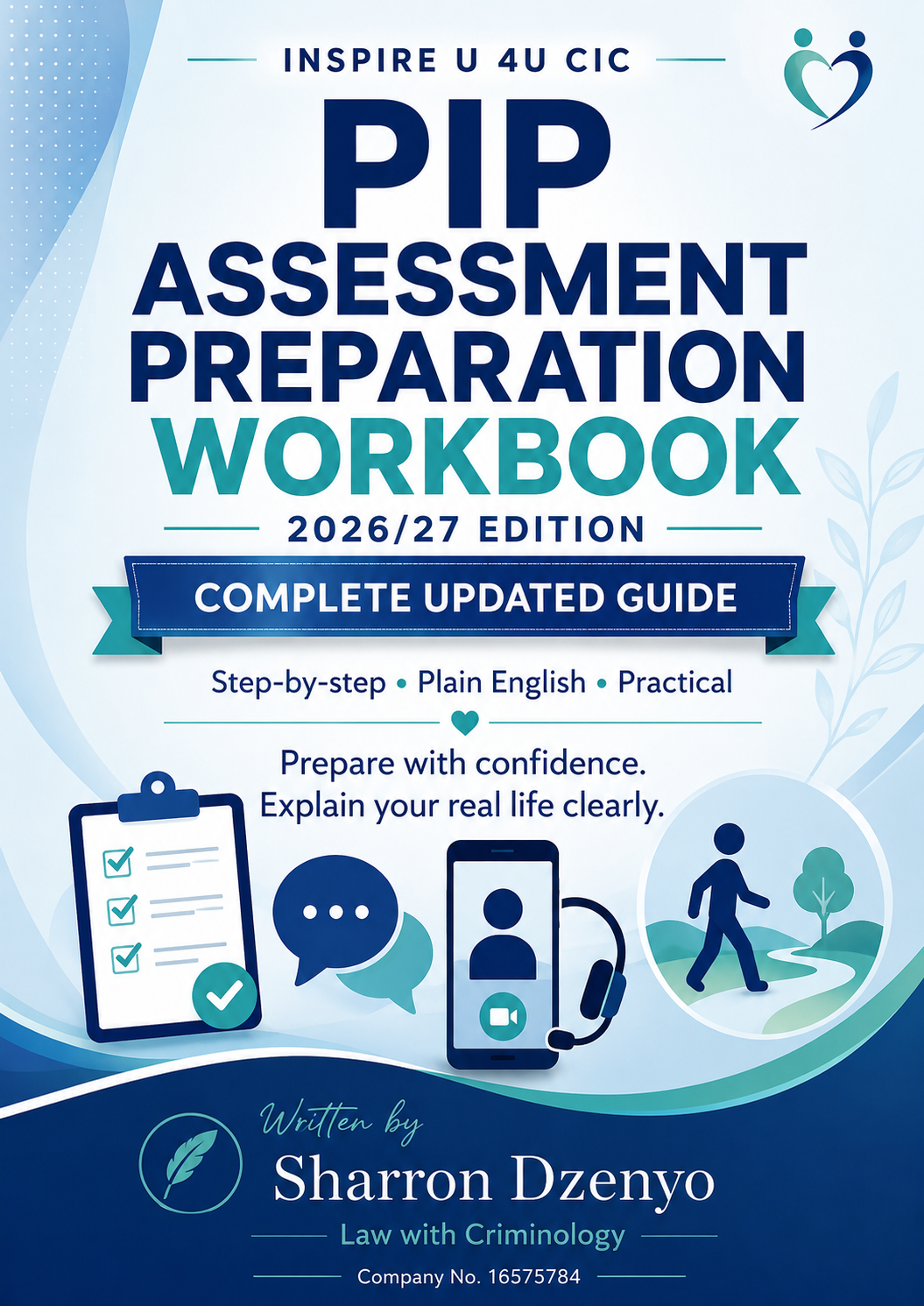
PIP Assessment Preparation Workbook 2026/27 – Complete Updated Edition
Going into a PIP assessment can feel overwhelming — especially when you do not know what the assessor may ask, what they are actually looking for, or how to explain the difficulties you experience every day.
This 81-page PIP Assessment Preparation Workbook from Inspire U 4U CIC breaks the whole process down into clear, simple English so you can prepare properly without trying to memorise answers or use complicated DWP language.
Inside the guide you will learn:
- What happens before, during and after a PIP assessment
- The 12 PIP activities explained
- PIP descriptors and points
- The difference between standard and enhanced rate
- The 3-month and 9-month qualifying-period rules
- How DWP considers good days, bad days and fluctuating conditions
- The four reliability tests: safely, repeatedly, to an acceptable standard and within a reasonable time
- What prompting, supervision, assistance and aids actually mean
- When DWP can consider whether it would be reasonable for you to use an aid
- How to explain pain, fatigue, breathlessness, mental-health difficulties, cognitive problems and invisible conditions
- How assessors use questions about your daily routine, work, driving, shopping and hobbies
- What the assessor may observe during the assessment
- Functional movements and your right not to push yourself into pain or discomfort
- Phone, video, face-to-face and home assessments
- Reasonable adjustments and additional support
- Having a friend, relative, advocate or appointee involved
- Current PIP assessment recording arrangements
- How to request and understand your assessment report
- What PA3 and PA4 reports are
- What to do if you miss an assessment or technology fails
- How new evidence can be considered
- PIP review assessments
- Special Rules for End of Life
- Detailed guidance on Planning and Following Journeys
- Detailed guidance on Moving Around
- Realistic assessment questions and what the assessor is trying to establish
- Common mistakes people make during assessments
- What to do immediately after your assessment
- What to check when your PIP decision arrives
- The difference between making a complaint and requesting a Mandatory Reconsideration
NEW – Motability Scheme section
The updated edition also explains:
- Who may qualify for the Motability Scheme
- Using the enhanced-rate PIP mobility component
- Cars, Wheelchair Accessible Vehicles, scooters and powered wheelchairs
- What a Motability lease can include
- Insurance, servicing, breakdown cover and tyres
- Named drivers
- Vehicle adaptations
- Advance Payments
- Motability grants
- What happens if your qualifying mobility award changes
- 2026 Motability changes, including updated mileage arrangements and other changes affecting new leases
Practical workbook pages included
This is not just something to read.
You also receive practical worksheets including:
- Condition summary
- Medication and treatment sheet
- Real-life example planner
- Activity-by-activity preparation worksheet
- Good-day/bad-day preparation
- Supporter prompt sheet
- Assessment-day checklist
- Post-assessment notes
- Assessment report and decision comparison worksheet
- Plain-English glossary
No scripts. No telling you what to say. No promises of an award.
The aim is to help you understand the PIP assessment process, organise your own information and explain your real day-to-day difficulties clearly and truthfully.
Suitable for people preparing for their own assessment, family members, carers and supporters.
Updated August 2026 using current official guidance.
Inspire U 4U CIC
Company No. 16575784
Independent of DWP, assessment providers and HMCTS. This workbook provides general information and practical guidance and does not guarantee the outcome of any PIP claim or assessment.