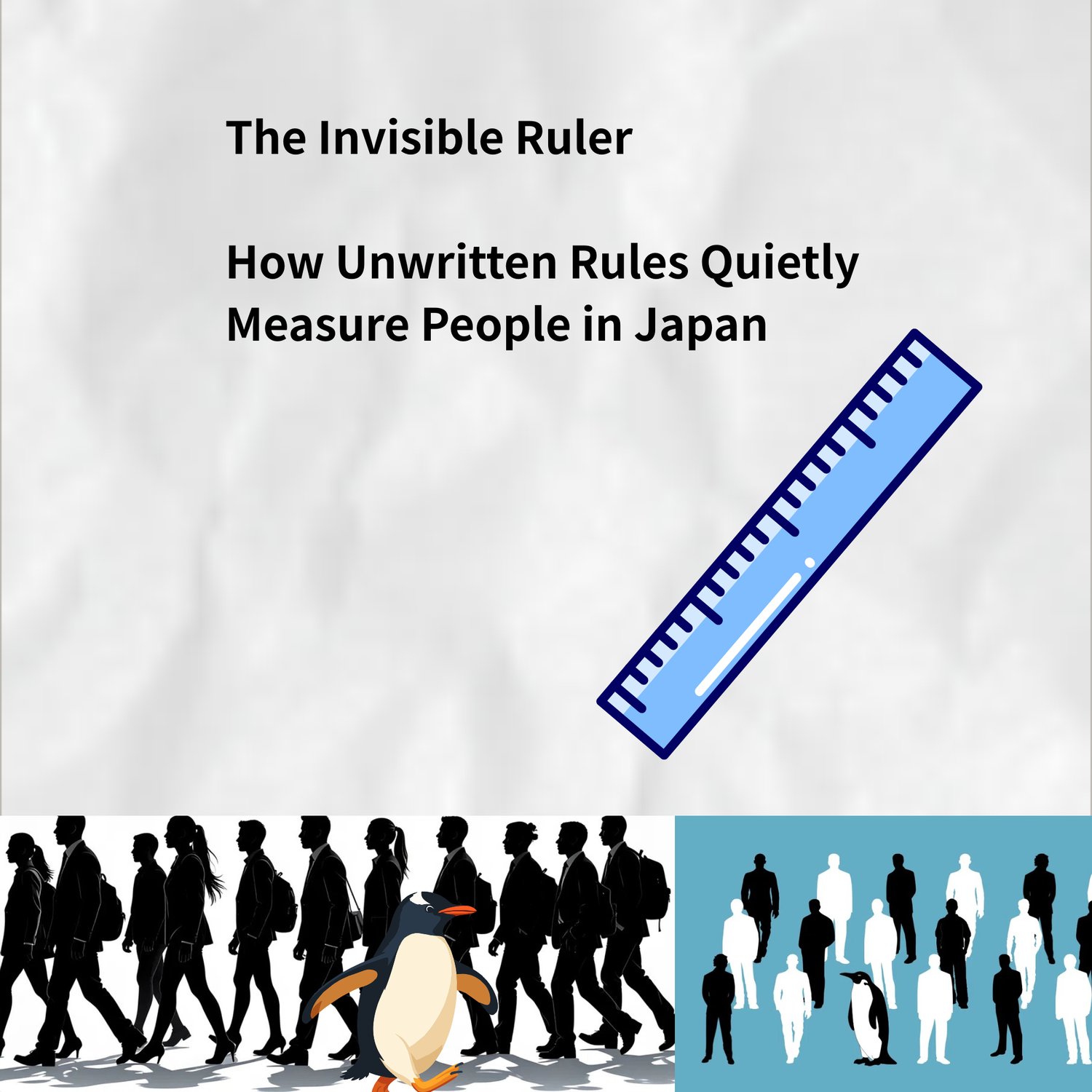
The Invisible Ruler
The Invisible Ruler
How Unwritten Rules Quietly Control Life in Japan
In Japan, people are often judged by rules that are never clearly explained.
There is no official ruler.
But somehow, many people seem to know what is considered “normal,” “proper,” “too different,” “too loud,” “too late,” “too casual,” or “not Japanese enough.”
This short digital guide explores the invisible ruler that quietly measures people in Japanese society.
It is not only about laws or official rules.
It is about unwritten expectations, social pressure, group standards, appearance, age, behavior, timing, politeness, and the quiet fear of standing out.
In this guide, you will learn:
・Why many Japanese rules are not written clearly
・How people are quietly measured by social expectations
・Why being “normal” can become a powerful pressure
・How rigid thinking affects schools, workplaces, and daily life
・Why many people follow rules even when they do not make sense
・What this reveals about freedom, individuality, and conformity in Japan
Japan is often praised for order, politeness, and harmony.
But behind that order, there is often an invisible system of measurement.
People may not be directly forced.
But they are often quietly compared, corrected, and judged.
This guide looks at that hidden ruler — and why it matters.
---
⭐️ There Is More Behind the Surface
Most books about Japan talk about politeness, traditions, and beautiful places.
My books explore something different:
- Invisible rules
- Social pressure
- Education
- Freedom
- Investing
- The gap between appearance and reality
If that interests you, you can find my Kindle books here: