
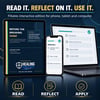

Before the Breaking Point – Interactive Digital Book
You don’t need to reach breaking point before you take action.
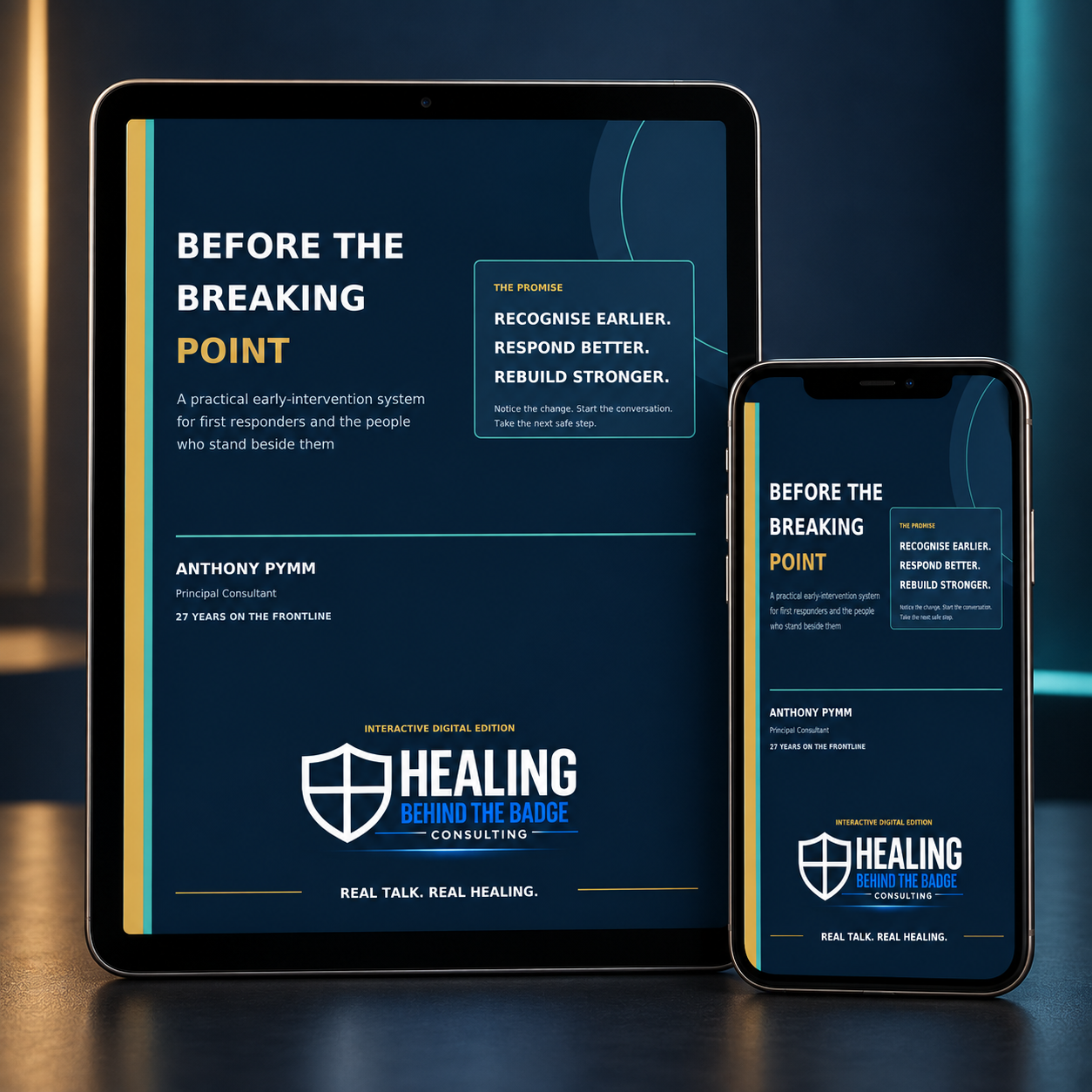
Before the Breaking Point is an interactive digital book designed to help first responders, high-pressure professionals and the people who stand beside them recognise the warning signs earlier, understand what may be happening beneath the surface and take practical steps before things escalate.
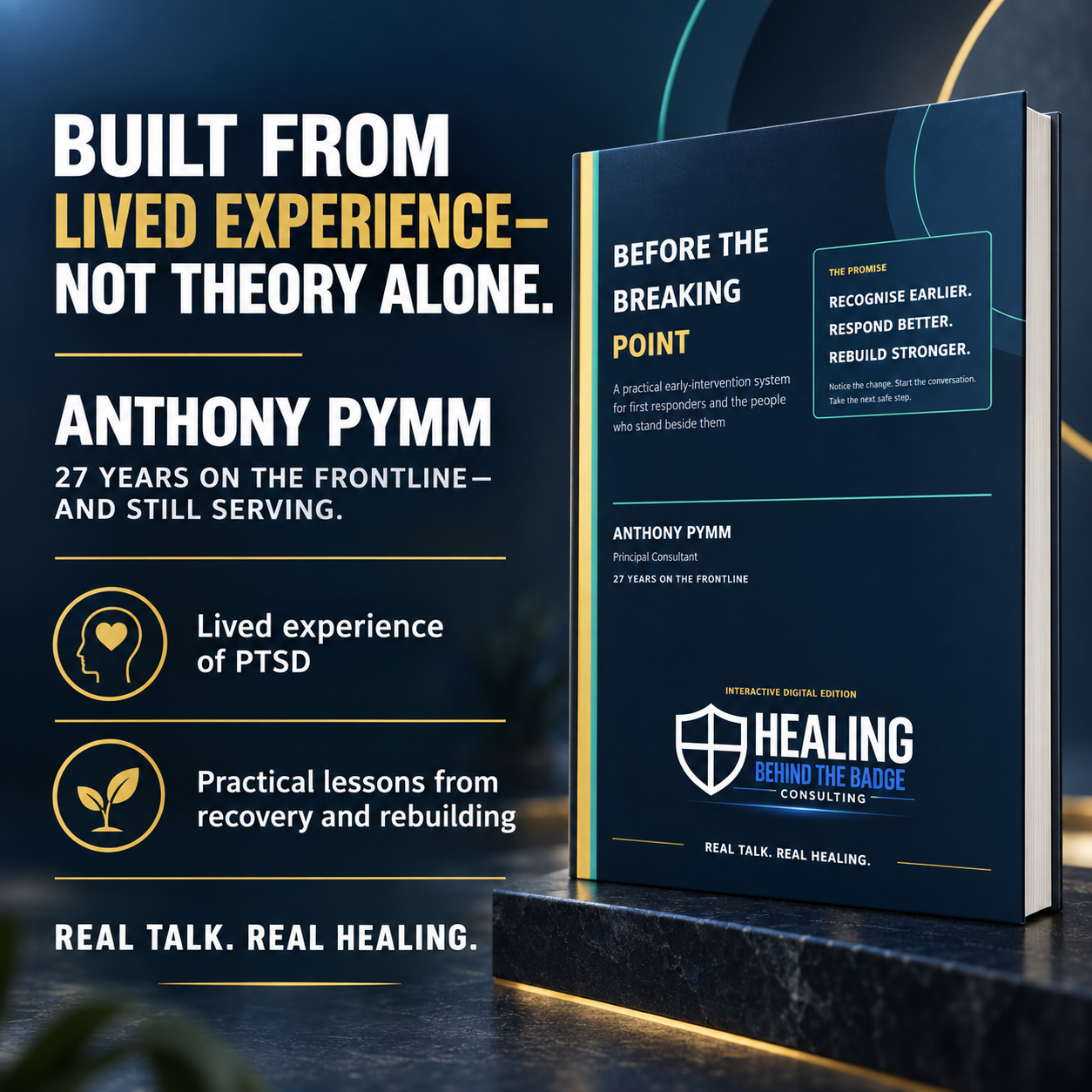
Written by Anthony Pymm and shaped by 27 years of frontline service, lived experience of PTSD and the lessons of recovery and rebuilding, this is not a clinical textbook. It is honest, practical and written in language that feels real.
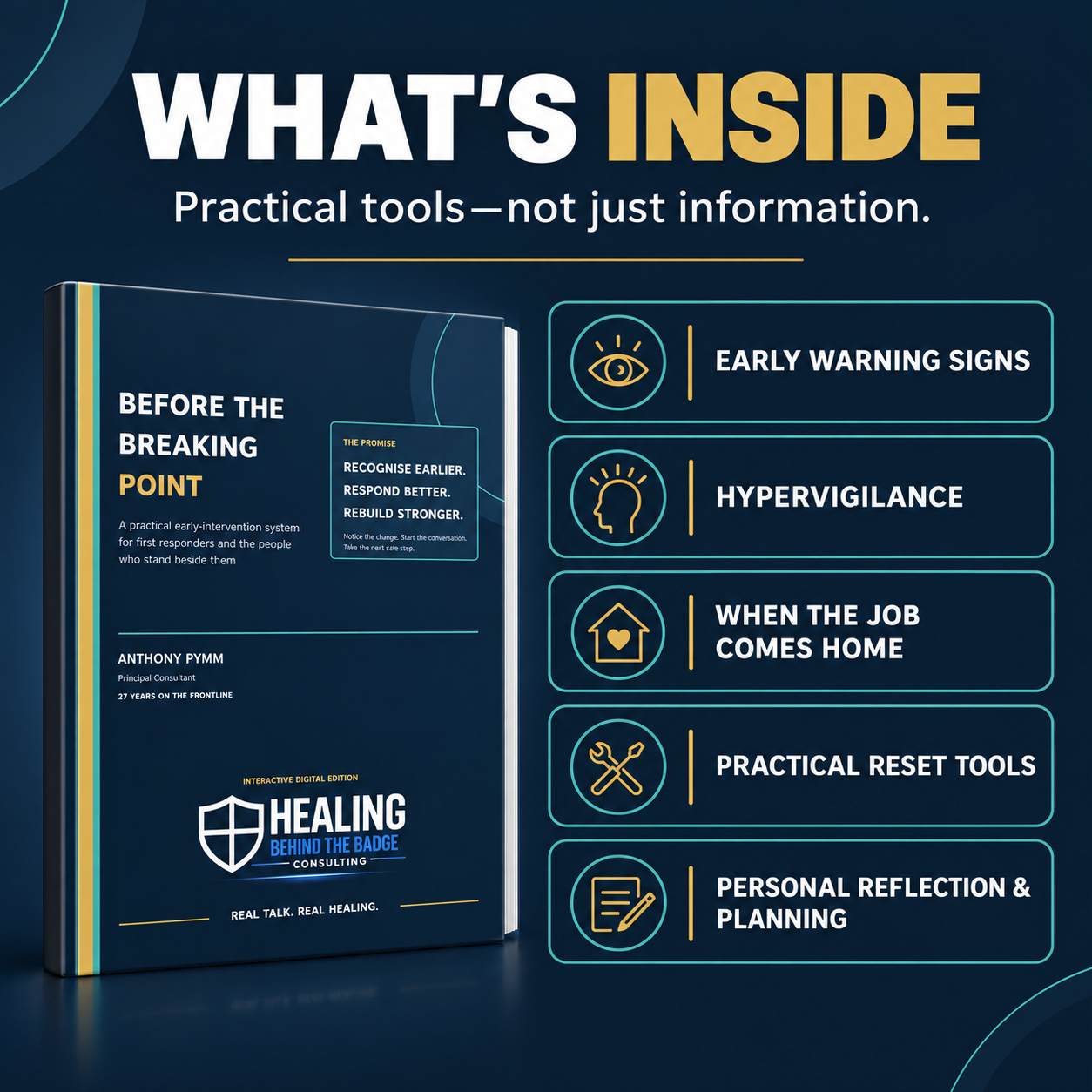
Inside, you’ll explore:
• Early warning signs of chronic stress, burnout and trauma
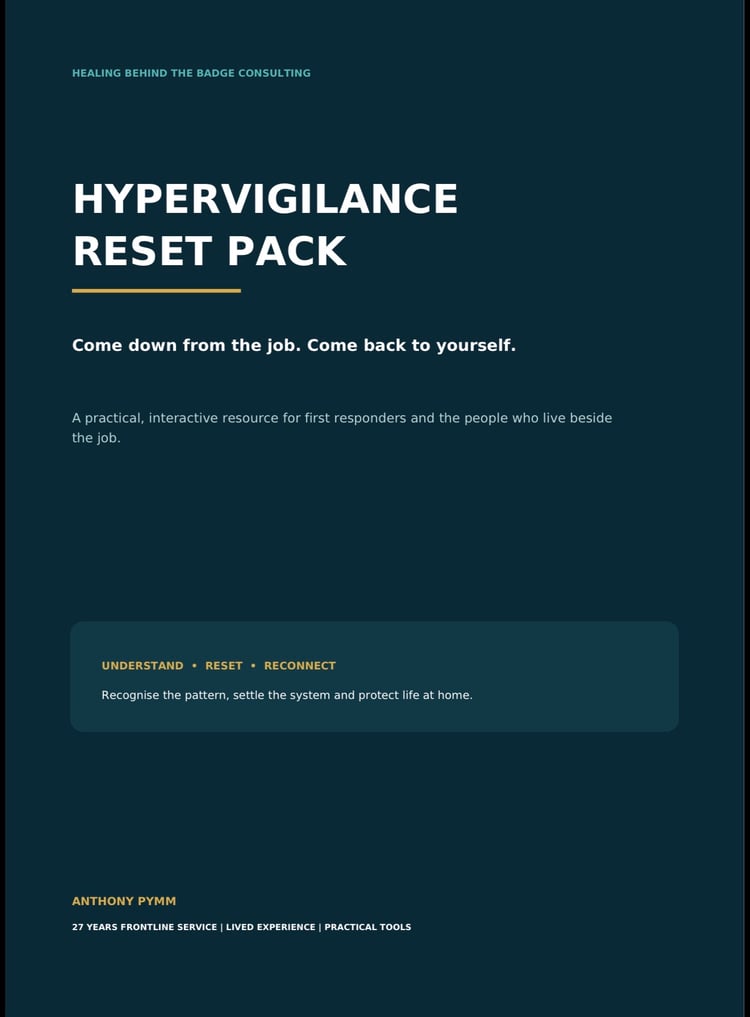
• Hypervigilance and why switching off can become difficult
• Changes in sleep, mood, identity and relationships
• What happens when the job follows you home
• Practical reset and grounding strategies
• Reflection prompts to help you notice patterns
• Clear steps for starting difficult conversations
• When—and how—to seek additional support
• A personal roadmap for moving forward
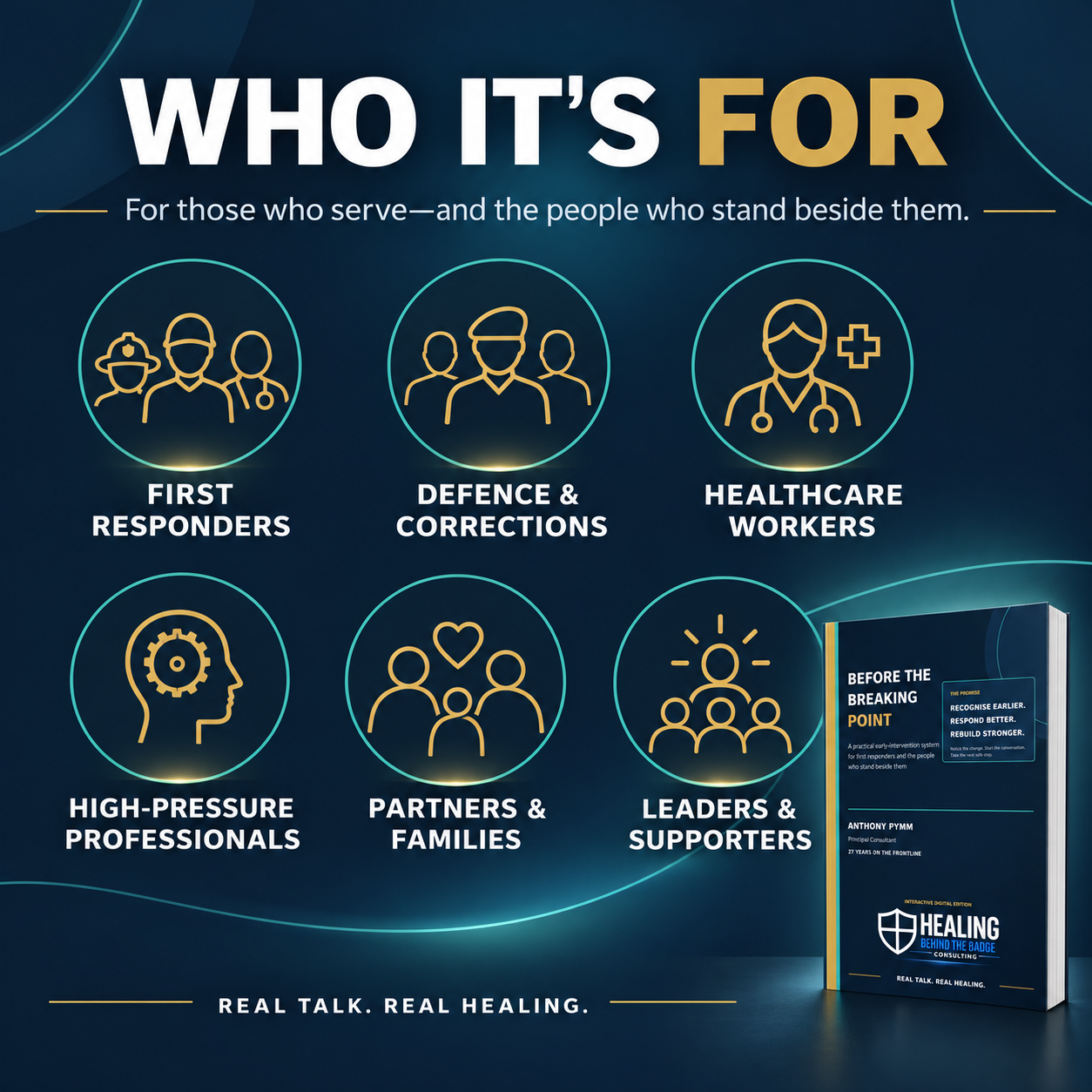
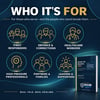
This book is for:
• First responders and emergency-service personnel
• Defence, corrections and healthcare workers
• People working in demanding or high-pressure environments
• Partners and families trying to understand the changes
• Leaders, trainers and workplace wellbeing professionals
What you’ll receive:
• The complete interactive digital edition
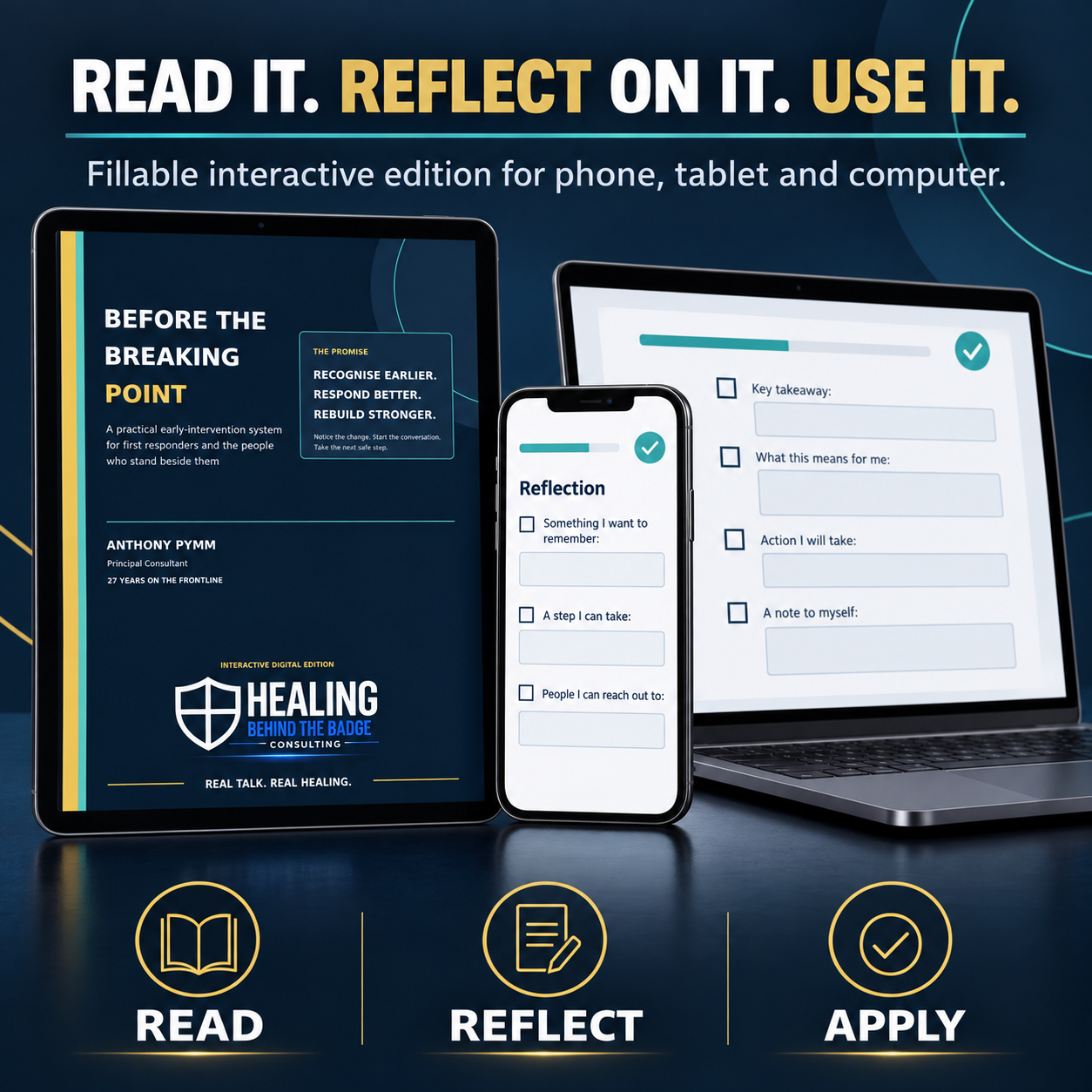
• Fillable reflection fields and check-ins
• Practical exercises and personal planning pages
• Immediate PDF access after purchase
• A resource you can revisit on your phone, tablet or computer
For the best interactive experience, download the PDF and open it in a PDF reader that supports fillable fields.
Recognise earlier. Respond better. Rebuild stronger.
Notice the change. Start the conversation. Take the next safe step.
REAL TALK. REAL HEALING.
Please note: This resource provides general education and practical wellbeing support. It is not a substitute for individual medical, psychological or emergency care. If you are concerned about your immediate safety or someone else’s, contact emergency services or an appropriate crisis-support service in your location.