
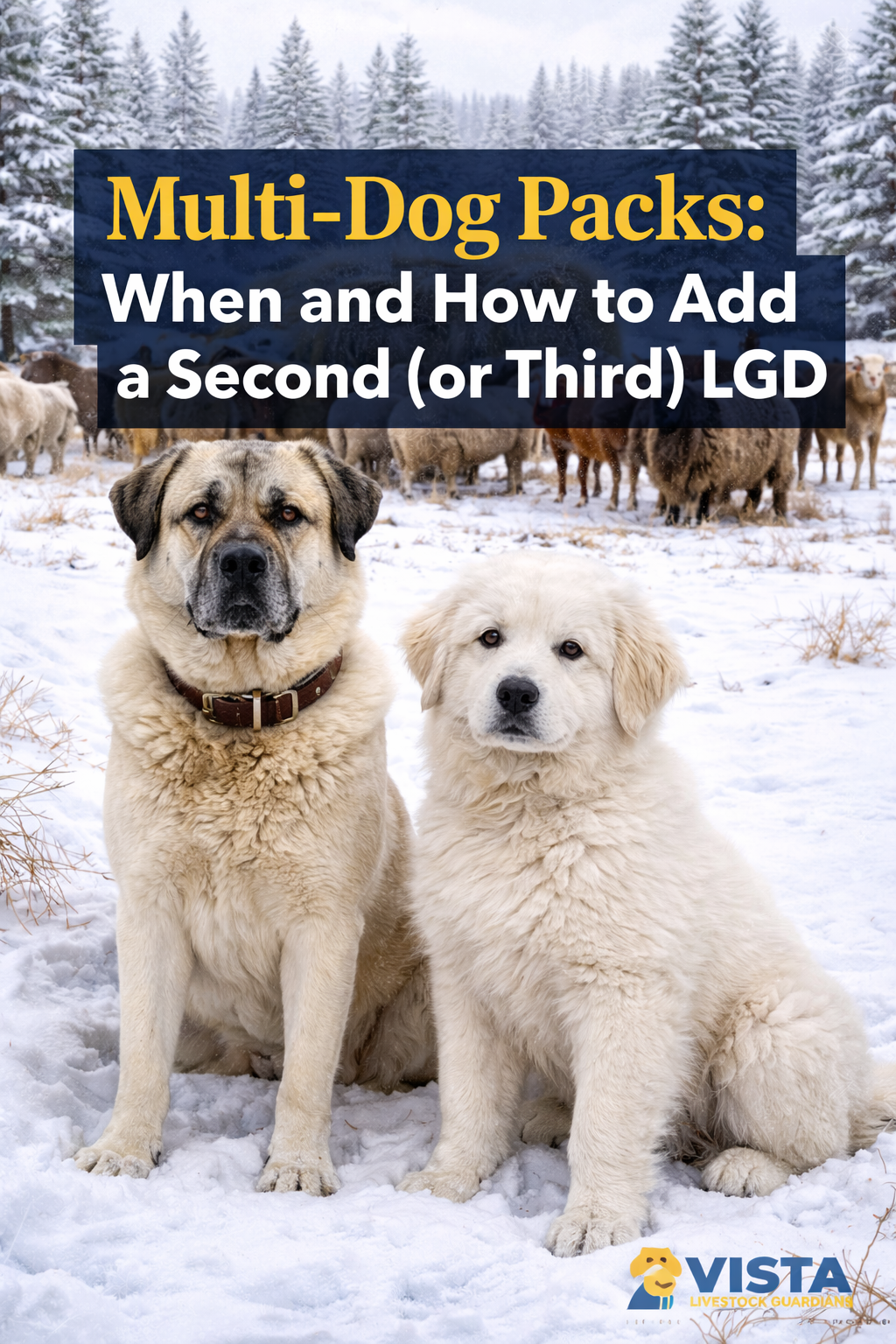
Multi-Dog Packs: When and How to Add a Second (or Third) LGD
Multi-Dog Packs: When and How to Add a Second (or Third) LGD
Introduction
Many Manitoba livestock owners start with one Livestock Guardian Dog (LGD) and see great results—better predator deterrence, reduced losses, and peace of mind during coyote-heavy winters or wolf pressures on the prairies. But as flock sizes grow, predator activity ramps up, or one dog shows signs of overload (like excessive roaming or fatigue from constant patrolling), adding a second or third LGD becomes a smart move.
Multi-dog packs offer real advantages: broader territory coverage, shared workload (one rests while another patrols), mutual support during confrontations (dogs often work as a team to drive off threats), and better protection in large or spread-out pastures common in rural Manitoba. Studies and producer experiences show packs reduce predation more effectively than singles, especially against multiple or persistent predators. They also provide companionship for the dogs, reducing stress in isolated winter conditions.
However, poor introductions can lead to fights, disrupted flock bonds, injuries, or even failed guardians. This chapter covers when it’s time to expand your pack, choosing the right additions (age, sex, breed), step-by-step introduction strategies, preventing common issues like same-sex rivalry, and long-term management for a cohesive, effective team.
When to Add Another LGD
Don’t rush—adding too early or without need can cause more problems than benefits.
• Flock/Pasture Size: One solid LGD can handle 100-300 head in a smaller, fenced setup. For larger operations (500+ head), multiple pastures, or open range, a second dog helps cover more ground.
• Predator Pressure: If losses persist despite one good dog (e.g., coyotes hitting multiple spots, wolves testing boundaries), a pack multiplies deterrence through barking choruses and coordinated responses.
• Dog Workload Signs: Your current LGD is overworked—constant patrolling without rest, weight loss, excessive barking, or roaming far for “help.”
• Seasonal Factors: In Manitoba, winter snow makes patrols harder; multiple dogs share warmth and vigilance. Summer heat or calving/lambing seasons also benefit from backup.
• Age of Current Dog: Adding a pup to an established adult (especially opposite sex) is often easiest. Adding to a single adolescent can lead to play-fighting or hierarchy issues.
Aim for gradual growth—start with two, then consider three if needed. Pairs often work best for most prairie setups.
Choosing the Right Addition: Age, Sex, and Breed Considerations
Selection impacts success more than many realize.
• Age Differences:
• Best: Add a young pup (8-16 weeks) to an established adult—the older dog often mentors naturally, teaching boundaries and flock respect.
• Good: Two similarly aged pups raised together (littermates or close in age) bond easily and learn as peers.
• Challenging: Adding an adult to an established adult—requires careful intro; same-age adults can clash over dominance.
• Sex Combinations:
• Easiest/Lowest Conflict: Opposite sex (e.g., male + female). They balance naturally with less same-sex rivalry.
• Workable but Higher Risk: Same sex (two males or two females)—more hierarchy fights possible, especially females (research shows female-female pairs can escalate seriously). Spay/neuter helps reduce hormone-driven issues.
• Avoid: Multiple intact males together—fighting spikes during maturity.
• Prairie Tip: Many Manitoba producers run opposite-sex pairs successfully; one intact male with spayed females is common for balance.
• Breed Matching: Stick to compatible LGD breeds (e.g., Great Pyrenees with Anatolian, or Maremmas together). Mixing with non-LGD types risks prey drive issues.
Health-check the new dog (vaccines, deworming, hips/joints for large breeds) and ensure good genetics from working lines.
Step-by-Step Introduction Process
Calm, supervised intros prevent most problems. Stay neutral—your energy sets the tone.
1. Preparation:
• Quarantine new dog 2-4 weeks for health.
• Neutral meeting spot: Away from flock/home turf (e.g., empty pasture or neighbor’s field).
• Have leashes, separate vehicles, and backup help.
2. First Meetings (Neutral Ground):
• Walk parallel at distance—allow sniffing/sniffing without direct contact.
• Positive signs: Relaxed tails, play bows, mutual interest.
• Red flags: Stiff posture, growling, staring—separate and retry later.
• Short sessions (10-20 min), build up.
3. Supervised On-Farm Integration:
• Bring new dog near flock in controlled way (e.g., trailer or pen adjacent).
• Let established dog(s) approach on their terms—don’t force.
• Supervise all interactions 24/7 initially—no unsupervised time.
• Feed separately to avoid resource guarding.
4. Flock Exposure:
• Once pack accepts newcomer (no tension), introduce to livestock together.
• Monitor for chasing/play that could harm stock—correct gently.
5. Ongoing Monitoring:
• Watch for subtle fights (e.g., over food, beds, attention).
• Intervene early—separate temporarily if needed.
• Spay/neuter timing: Often after intro to avoid added stress.
For adult additions: Trust your calm presence—many experienced owners let them mingle immediately if groundwork is solid, but supervise closely.
Preventing and Handling Conflicts
• Common Issues: Same-sex dominance fights (especially maturity 1-3 years), resource guarding, or redirected frustration.
• Prevention: Opposite sex + age stagger, ample space/food/bedding, neutering, regular exercise.
• Correction: Use calm verbal commands, separate briefly, reward calm pack behavior. Severe fights? Consult vet/behaviorist—may need permanent separation.
• Manitoba Realities: Winter isolation can heighten tension—ensure multiple shelters, shared warmth spots.
Benefits Recap and Long-Term Management
Packs excel: Better coverage (one patrols while another rests with flock), stronger deterrence (team barking/drives off threats), resilience (if one is injured/sick, others cover).
Manage for success:
• Feed high-energy diet for working packs.
• Vet care for all—joint issues common in big breeds.
• Rotate duties if possible for rest.
• Enjoy the teamwork—many owners report packs become “family units” that bond deeply with livestock.
Adding wisely turns one good guardian into a powerhouse team. If starting small, raise two pups together for easiest success. Refer to our puppy raising or bonding chapters for foundations.
No refunds