

Pricing Handmade Work: Cost, Value & Channel Math for Makers (Book + Operator Toolkit)
Your mug sells. Your booth is busy. And the business still doesn't pay.
A potter discovers her $28 mug pays her about eight dollars an hour once clay, kiln time, fees, and her own hours are counted. A woodturner who thought his time was free finds his $45 bowl doesn't cover the wood and the finish. A weaver's gallery sales — her proudest — turn out to be her least profitable. A silversmith's rings sell steadily while silver prices quietly push some of them below cost. A leatherworker learns that every wallet he sells wholesale loses money. None of them was careless. They priced the way most makers do: by matching someone else's number and leaving it there.
This book shows how to set the number on the tag on purpose, so you can explain it to a shop owner, a customer, a tax preparer, and yourself.
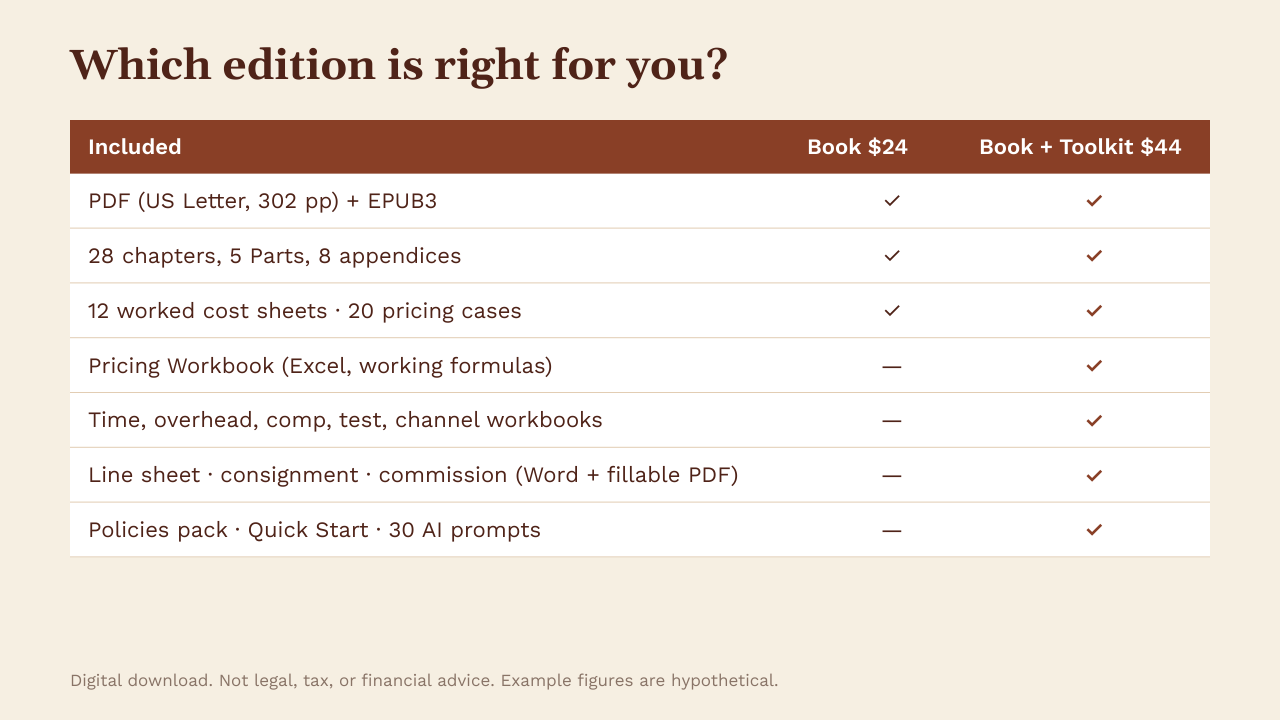
What's inside the book (302 pages, US Letter PDF + EPUB):
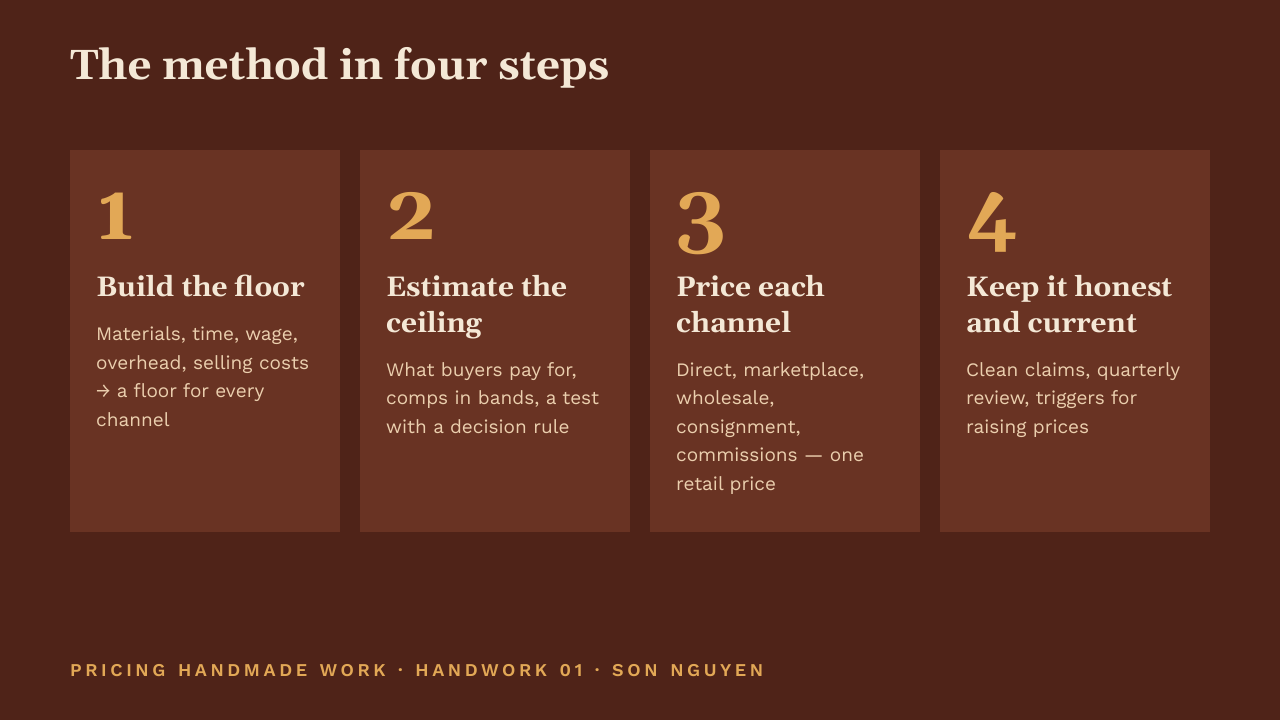
- Part One — The Floor: the four ways handmade prices go wrong; costing materials with yield, loss, and replacement cost; timing your work without turning your studio into a factory; setting a wage for your hours on purpose; overhead as an hourly rate; every selling cost; and a cost sheet that gives you a floor price for each channel.
- Part Two — The Ceiling: what buyers actually pay for, reading the market without copying it, building a product line where every item has a job, presenting prices honestly, and testing a price when you sell dozens of pieces a month, not thousands.
- Part Three — The Channels: markets and pop-ups, your own website, Etsy and Amazon Handmade, wholesale (keystone, line sheets, Faire), consignment and galleries, commissions and custom work, shipping math, and keeping one retail price consistent everywhere.
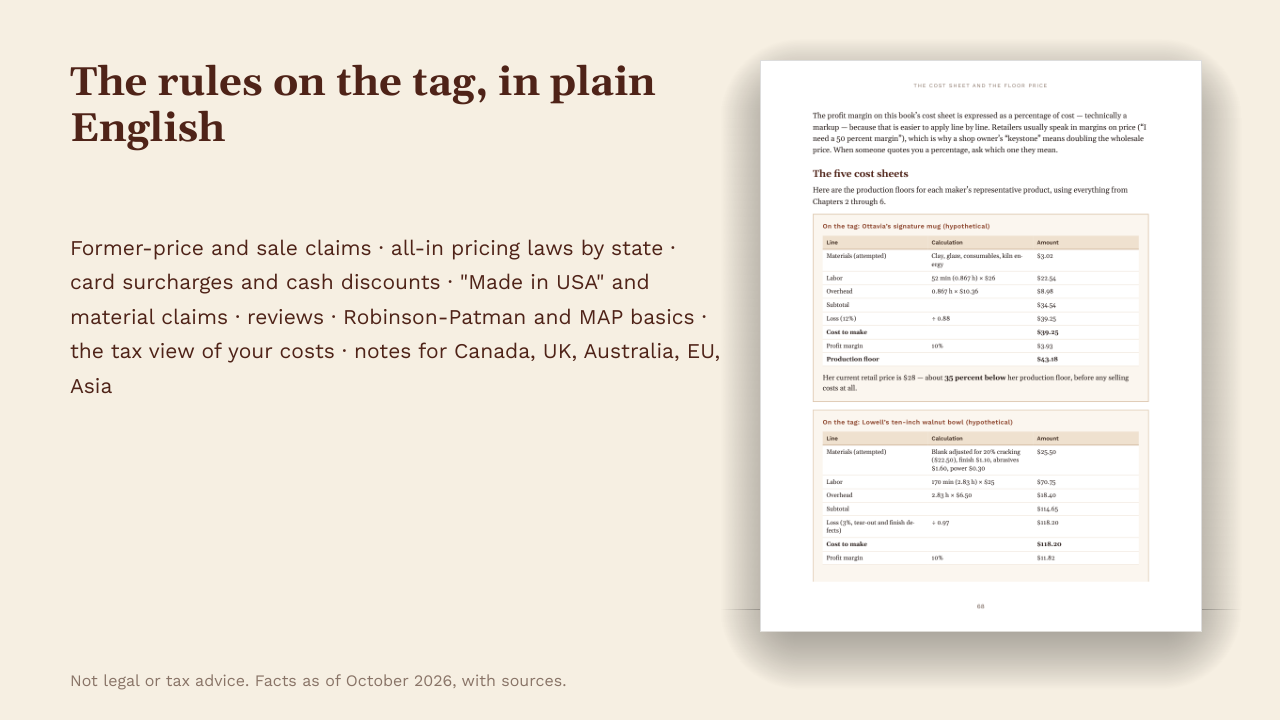
- Part Four — The Truth on the Tag: sale and "was" price claims, the state all-in pricing laws, card surcharges and cash discounts, "Made in USA" and material claims, the tax view of your costs, and raising prices with customers, stockists, and galleries.
- Part Five — Living With Your Prices: a 90-minute quarterly review, a discount policy and the people who ask, AI in the pricing back office, notes for makers outside the US, and your whole pricing system on one page.
- Five makers, five price sheets: a potter, a woodturner, a weaver, a silversmith, and a leatherworker, with their price sheets revised after every Part so you can see what changed and why. All fictional.
- Appendices: glossary, 57 common questions, reference tables, 12 worked cost sheets across crafts, 20 short pricing cases, toolkit sample pages, printable worksheets, and sources.
The Operator Toolkit ($44 version), 12 tools:
Every tool has a filled example (a fictional pottery studio) and a blank version for you.
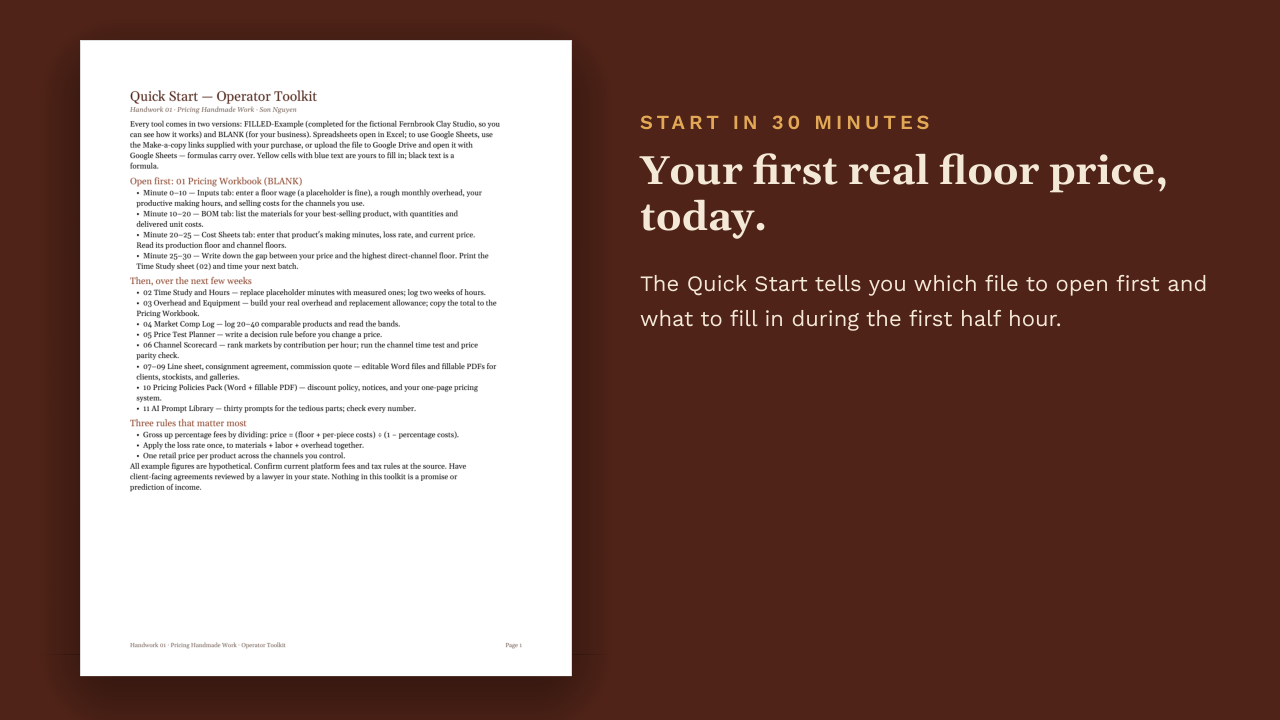
- Quick Start (which file first, what to fill in during your first 30 minutes)
- Pricing Workbook (inputs, bills of materials, cost sheets with floors for six channels, channel calculator, effective hourly pay, discount break-even, material index, commission job cost, version log, quarterly review)
- Time Study & Productive Hours (with a printable timing sheet)
- Overhead & Equipment Replacement Allowance
- Market Comp Log, with automatic price bands and a positioning statement
- Price Test Planner (decision rule, break-even unit loss, results)
- Channel Scorecard (market ranking by contribution per hour, channel time test, price parity check)
- Wholesale Line Sheet (Word + fillable PDF)
- Consignment Agreement & Inventory Schedule, with drafting notes (Word + fillable PDF)
- Commission Quote, Agreement & Change Order (Word + fillable PDF)
- Pricing Policies Pack: discount policy, gift and donation budget, price-change notices, one-page pricing system (Word + fillable PDF)
- AI Prompt Library: 30 prompts written for the tasks in this book
Who it's for: potters, woodworkers, weavers, jewelers, leatherworkers, candle and soap makers, quilters, and every maker who sells handmade work at markets, on Etsy, on their own site, wholesale, or through galleries — side business or full time.
Please note: This is education, not legal, tax, or financial advice. Platform fees, postal rates, and laws change; confirm current figures at the sources listed. All examples use fictional people and businesses and hypothetical numbers; they are not predictions or promises of any result. US rules are primary, with notes for Canada, the UK, Australia, the EU, and Asia. Facts are current as of October 2026. The book was written with the assistance of AI tools and edited, fact-checked, and approved by the author.
Digital download. No physical item will be shipped.