

School, Explained: A practical guide to understanding school — without feeling like you should already know.
Does school sometimes feel like a language you were never taught?
ARE. SENCO. Interventions. Assessments. Parents' evenings. Progress. Reading records. Homework.
And then there's the question you might be too embarrassed to ask: “What does that actually mean?”
If you've ever left a conversation with school feeling confused, worried or like everyone else understands something you don't, School, Explained was made for you.
I'm Abby.
I spent 16 years working in primary education, from Reception through to Year 4, and I've had countless conversations with parents about learning, behaviour, progress, homework, friendships, interventions and the things that can make school feel complicated.
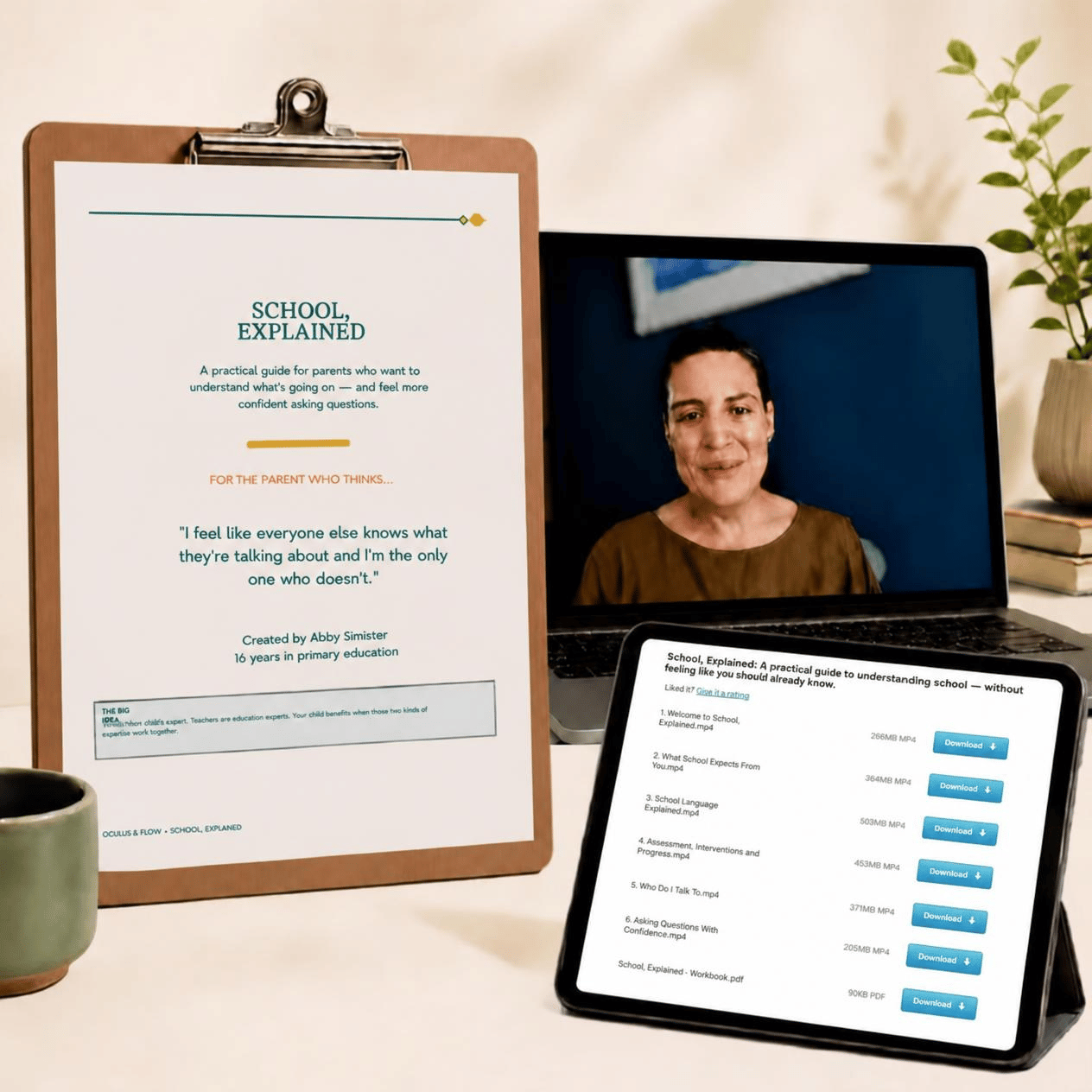
I've created these short videos and accompanying workbook to help you understand how primary school works at a practical, everyday level.
We'll look at things like:
- What schools expect from parents — and what they don't.
- What you can reasonably expect from your child's school.
- Common school terminology and what it actually means.
- How assessment, progress and interventions work.
- Who to speak to when you're worried.
- How to approach teachers without feeling intimidated.
- Questions you might be too embarrassed to ask.
- Five questions you can take into school tomorrow.
You don't need to know all the answers.
You don't need to understand every bit of school terminology.
And you don't need to feel embarrassed about asking questions about your own child.
Think of this as sitting down with a teacher-friend who says:
“Right. Let's work out what that actually means.”
What's included:
🎥 6 Practical video guides
Relaxed, straightforward explanations from someone who has spent 16 years inside primary education.
📖 The School, Explained workbook
A downloadable guide to use alongside the video, with quick-reference information and questions you can come back to when you need them.
💬 Questions to take into school
Because sometimes the hardest part isn't knowing that you're worried — it's knowing what to say.
This isn't about telling you how to parent.
It isn't about criticising schools.
And it isn't about turning you into an education expert.
It's about helping you feel more informed, more confident and less intimidated when it comes to your child's school life.
You know your child.
Teachers know education.
Your child benefits when those two kinds of expertise work together.